
Open Kitchen Cabinets: The Ultimate Guide to a Bright, Airy Kitchen
If you’ve been scrolling design boards lately, you’ve probably noticed open kitchen cabinets popping up everywhere. This simple swap — removing cabinet doors or installing open face cabinets kitchen designs from the start — is one of the easiest ways to make a kitchen feel bigger, brighter, and more personal. Whether you’re renovating from scratch or just want to update a few upper cabinets, an open kitchen cabinet layout gives you a chance to show off pretty dishware while keeping everyday items within easy reach.
In this guide, we’ll walk through what open cabinet kitchen designs actually are, the real pros and cons, styling ideas that work for small and large kitchens alike, and a practical checklist so your open kitchen cupboards stay functional (not just photogenic).
What Are Open Kitchen Cabinets?
Open kitchen cabinets are exactly what they sound like: cabinetry without doors, so the shelves and their contents are visible at all times. Some homeowners remove doors from existing cabinets, others use floating shelves instead of upper cabinets entirely, and some choose glass-front cabinets for a softer, semi-open look. All of these fall under the broader open face kitchen cabinets trend that’s been gaining popularity in modern farmhouse, coastal, and minimalist kitchens.
Unlike closed cabinetry, an open kitchen cabinet setup turns storage into a design feature. Instead of hiding your plates, glasses, and cookbooks behind a door, you curate them the way you’d style a bookshelf.
Pros of Open Kitchen Cabinets
- Visual openness — a kitchen open cabinet layout makes small kitchens feel less boxed-in.
- Easy access — no doors to open means faster meal prep.
- Style showcase — great for displaying colorful dishes, glassware, or vintage finds.
- Budget-friendly — removing doors is far cheaper than a full cabinet renovation.
- Encourages tidiness — since everything is visible, clutter naturally gets minimized over time.
Cons to Consider
- Dust and grease exposure — open kitchen cupboards need more frequent wiping down.
- Requires organization — messy stacking is very visible with an open cabinet kitchen.
- Less forgiving — mismatched dishware can look chaotic rather than curated.
- Not ideal for renters — permanent door removal may not suit every lease.
Pro Tip: Start with just one or two upper cabinets near your sink or coffee station. It’s a low-commitment way to test whether open kitchen cabinets suit your daily habits before converting the whole kitchen.
Design Ideas for Open Kitchen Cabinets
There’s no single “right” way to style open face cabinets kitchen spaces — the best layout depends on your kitchen’s size, lighting, and existing color palette. Below are a few popular approaches.
| Design Style | Best For | Key Materials |
| Modern Farmhouse | Cozy, lived-in kitchens | Painted wood shelves, white dishware |
| Minimalist | Small apartments | Floating oak or walnut shelves |
| Coastal | Bright, airy homes | Whitewashed wood, woven baskets |
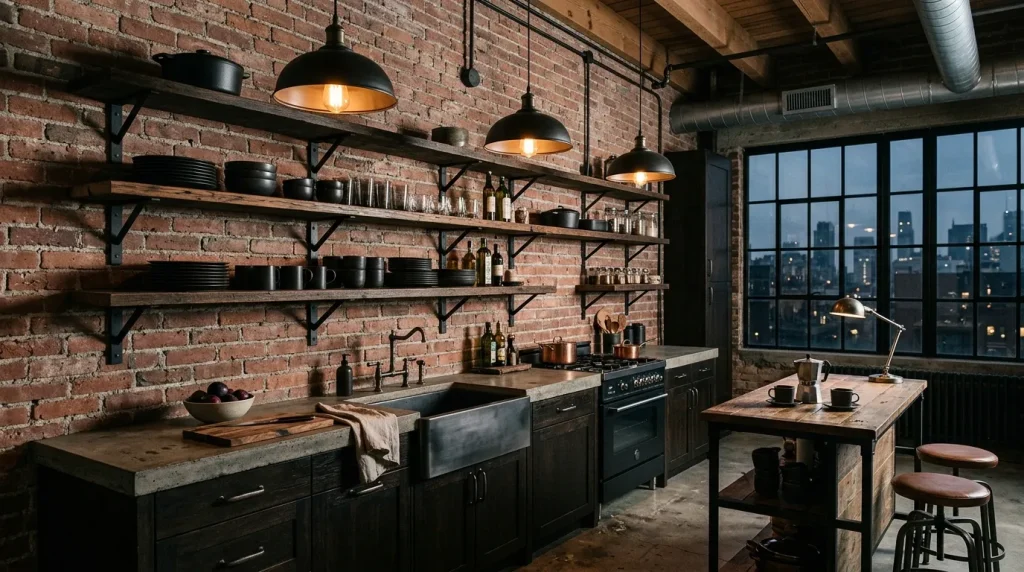
| Industrial | Loft-style kitchens | Black metal brackets, exposed brick backdrop |
| Traditional Glass-Front | Formal dining-adjacent kitchens | Glass-paned cabinet doors, brass hardware |
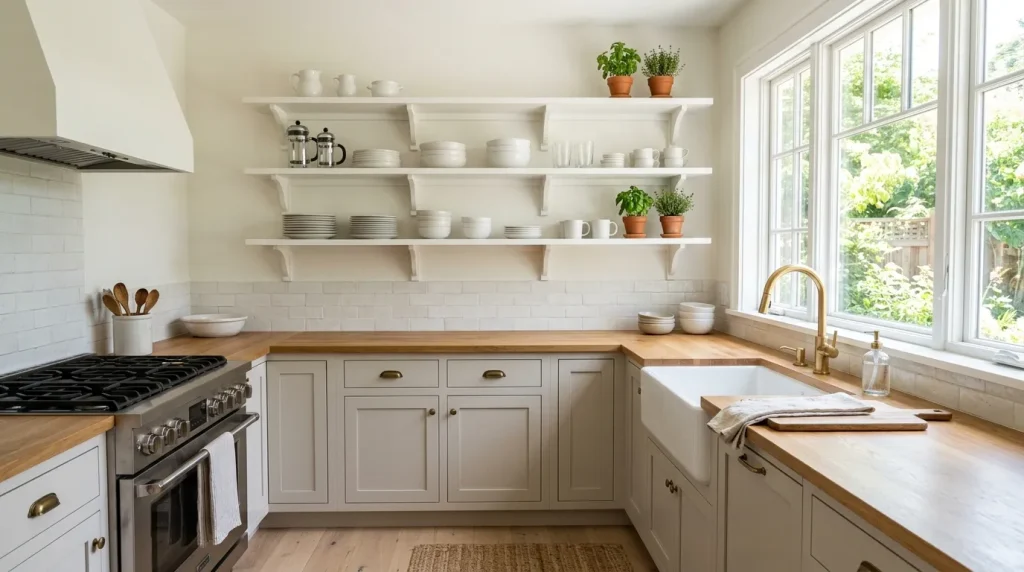
A few practical styling ideas for your open kitchen cabinet:
- Group dishware by color or material for a cohesive look.
- Add a few plants or a small vase to break up rows of dishes.
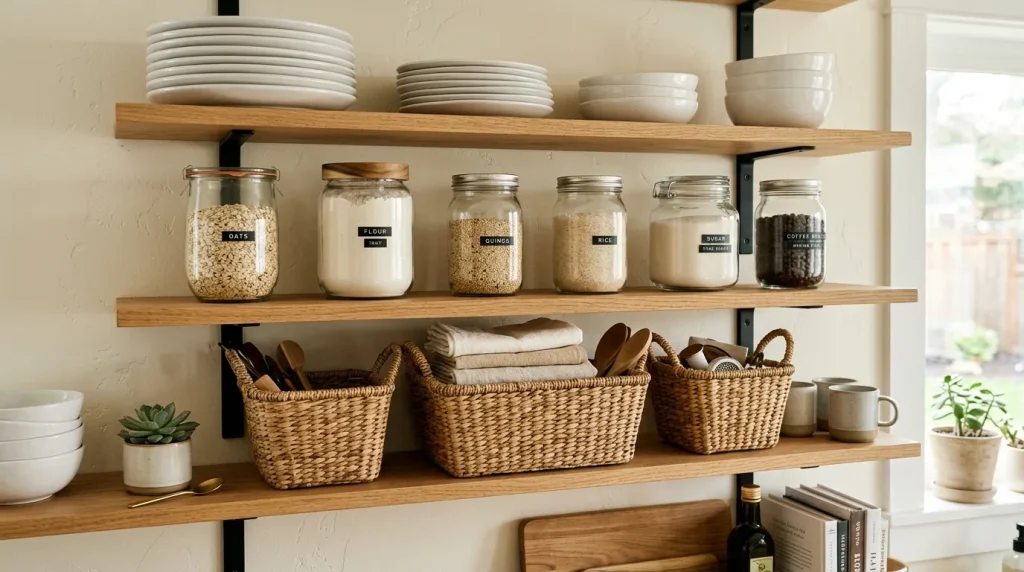
- Use matching storage bins for pantry staples like flour and rice.
- Layer plates vertically using a plate rack for easy grabbing.
- Keep everyday mugs and glasses at eye level; store rarely-used items higher up.
Small Kitchen Layouts
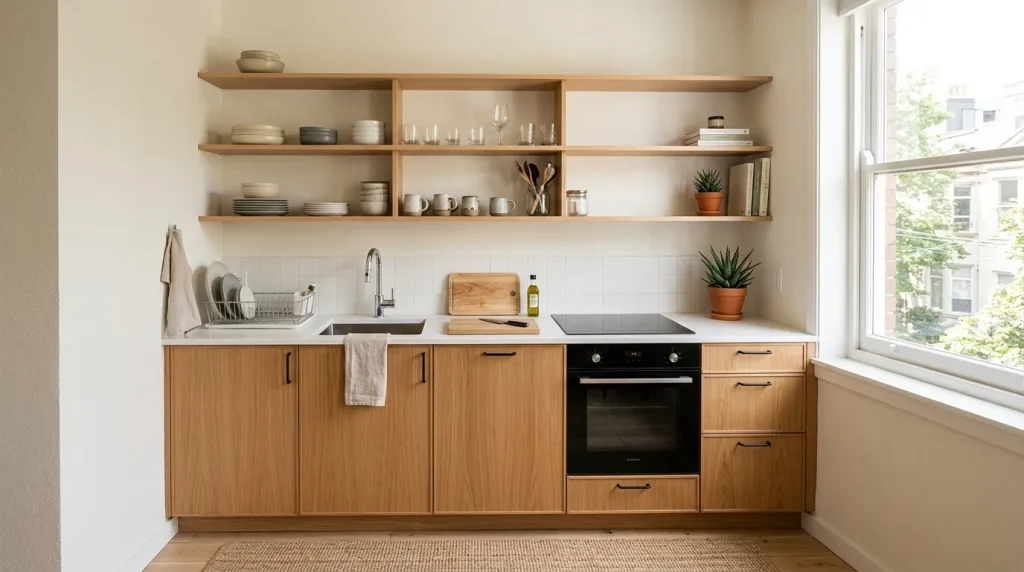
In tighter spaces, open kitchen cupboards can do double duty as both storage and decor. Choose one wall — often above a countertop with good natural light — and keep the rest of your cabinetry closed. This creates a focal point without overwhelming the room.
Large Kitchen Layouts
In bigger kitchens, you have more freedom to mix open cabinet kitchen sections with an island, pantry, or butler’s pantry. Consider open shelving on one side of the kitchen paired with closed cabinetry on the other for balance between style and practicality.
Important Note: If you’re converting existing cabinets, check that the interior finish (paint or laminate) looks presentable once exposed — many cabinet interiors are left unfinished since they were never meant to be seen.
How to Organize Open Kitchen Cabinets
Because everything is on display, organization is what separates a stylish open kitchen cabinet from a cluttered one. Here’s a simple approach:
- Edit down your dishware. Keep only what you use regularly and love the look of.
- Group like with like. Plates with plates, bowls with bowls, glasses with glasses.
- Use trays and bins. These corral smaller items like spices or tea bags.
- Leave breathing room. Don’t pack shelves edge-to-edge — negative space keeps things visually calm.
- Rotate seasonally. Swap in seasonal mugs or servingware to keep the display fresh.
Warning: Avoid storing cast iron pans or unsealed wooden cutting boards directly above the stove in open kitchen cabinets — rising heat and grease can damage finishes and create a fire hazard over time. Keep a safe clearance and wipe cookware down before storing.
Cleaning and Maintenance Checklist
Use this quick checklist to keep your open kitchen cupboards looking their best:
- Wipe down shelves weekly to remove dust
- Deep clean glassware and dishware monthly
- Check for grease buildup near the stove every two weeks
- Rotate or declutter items seasonally
- Inspect shelf brackets for stability every few months
- Keep a small cloth or duster nearby for quick touch-ups
Conclusion
Open kitchen cabinets are more than a passing design trend — they’re a practical, budget-friendly way to open up your kitchen visually while keeping daily essentials within easy reach. Whether you go all-in with a full open cabinet kitchen makeover or simply remove the doors from one or two upper cabinets, the key is thoughtful organization. Keep items grouped, edited, and clean, and your open kitchen cupboards will stay as functional as they are beautiful.
If you’re on the fence, start small: convert a single cabinet, live with it for a few weeks, and see how the open face kitchen cabinets look fits your routine before committing to a full kitchen transformation.