

Kitchen Open Cabinet Ideas: How to Design a Bright, Functional Space
A kitchen open cabinet setup is one of the simplest renovation choices that makes a real visual difference. By removing cabinet doors or installing shelving instead of boxed cabinetry, you create a lighter, more welcoming kitchen where your dishware becomes part of the design rather than something hidden away.
This guide walks through everything you need to know about open kitchen cabinet design — the upsides and downsides, styling approaches for different kitchen types, and a practical checklist to keep everything looking organized.
Understanding Kitchen Open Cabinet Design
A kitchen open cabinet is any upper cabinet without a door, whether that’s achieved by removing existing doors, installing floating shelves, or designing the kitchen with open shelving from the start. Some homeowners also opt for open face kitchen cabinets with glass fronts, which offer a similar visual effect while still providing a layer of dust protection.
This design approach works especially well in kitchens that could use a bit more visual breathing room, since open shelving doesn’t create the same visual “wall” that stacked upper cabinets can.
Advantages of a Kitchen Open Cabinet
- Opens up the room — reduces the boxed-in feeling of traditional cabinetry.
- Faster daily use — no doors to open and close while cooking.
- Showcases personal style — dishware and glassware become part of the decor.
- Budget-friendly — a low-cost way to refresh a kitchen without a full remodel.
Disadvantages to Weigh
- Requires more cleaning — open kitchen cupboards attract dust more quickly.
- Needs consistent styling — mismatched pieces can look disorganized.
- Grease exposure near cooking areas — items need to be wiped more often.
- Reduced hidden storage — less space to tuck away everyday clutter.
Pro Tip: Start with a single kitchen open cabinet near a low-traffic area, like above a coffee bar, before converting cabinets closer to your stove or sink.
Design Ideas for a Kitchen Open Cabinet
There are several ways to approach this style, depending on your space and taste.
| Style | Description | Best For |
| All-White Display | Matching white dishware on light shelving | Clean, minimalist kitchens |
| Warm Wood Tones | Natural wood shelving with earthy dishware | Farmhouse, rustic kitchens |
| Layered Textures | Mixing ceramics, glass, and woven baskets | Eclectic, boho kitchens |
| Glass-Front Hybrid | Semi-open look with protective glass doors | Family or high-traffic kitchens |
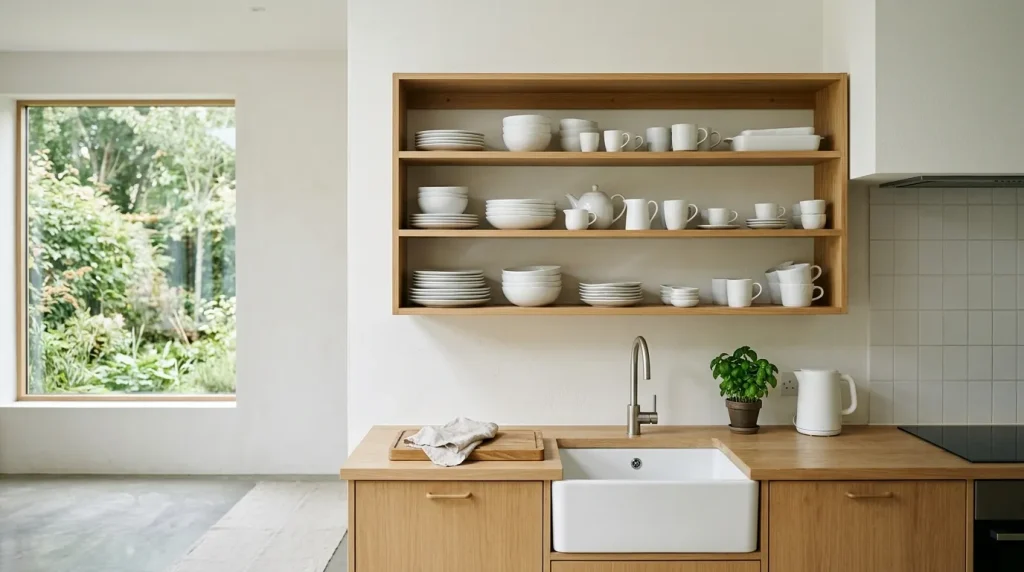
A few tips for styling your open kitchen cabinet:
- Arrange dishware by height, tallest items toward the back.
- Keep a consistent color story to avoid visual clutter.
- Use small trays to group loose items like tea or spices.
- Add one or two decorative pieces, like a small plant or vase.
- Leave gaps between stacks so the shelf doesn’t feel overcrowded.
Working With Limited Space
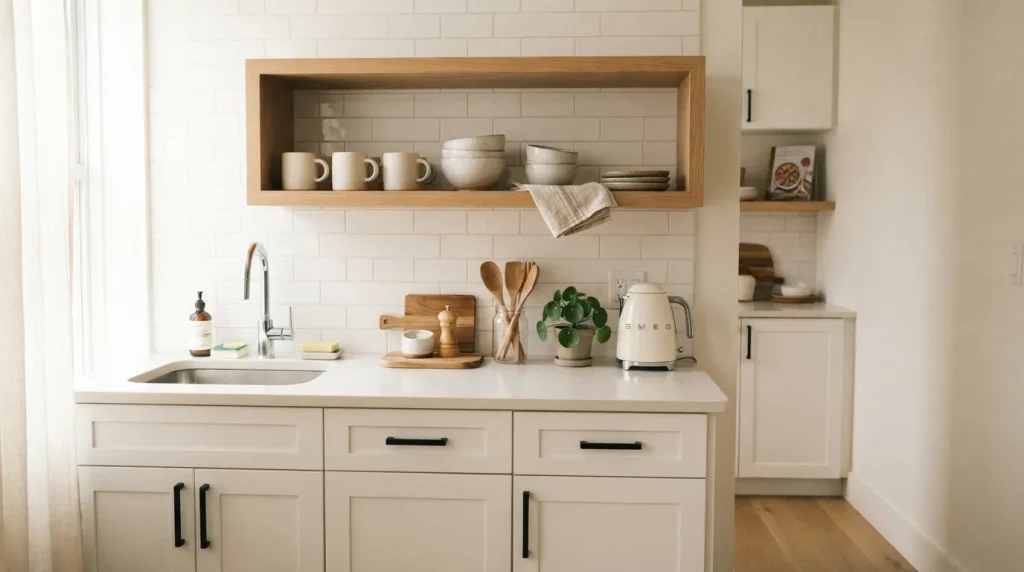
In smaller kitchens, a kitchen open cabinet can replace bulky upper cabinetry entirely, making the room feel larger without sacrificing storage. Stick to one wall or a small section to keep the look intentional.
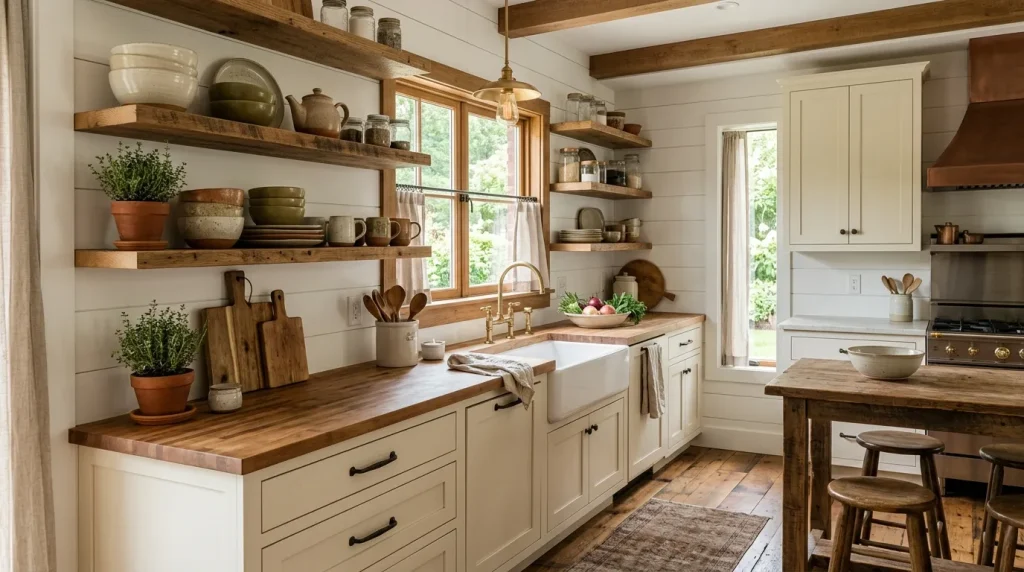
Working With Larger Kitchens
In bigger kitchens, you can afford to mix multiple open cabinet kitchen sections with closed pantry storage, giving you the visual benefits of open shelving without giving up practical storage space.
Important Note: If you’re converting existing cabinetry, inspect the interior panels before finalizing your design — cabinet interiors are sometimes left unfinished since they weren’t originally meant to be visible.
Keeping a Kitchen Open Cabinet Organized
Since everything is visible, a bit of regular maintenance keeps your open kitchen cabinet looking polished.
- Pare down your collection. Keep only what you use and enjoy displaying.
- Group similar items together. This creates a calmer, more cohesive look.
- Use bins or trays. Corrals smaller items that would otherwise look messy.
- Wipe shelves weekly. Prevents dust and grease from building up.
- Refresh seasonally. Swap in different pieces to keep the display feeling current.
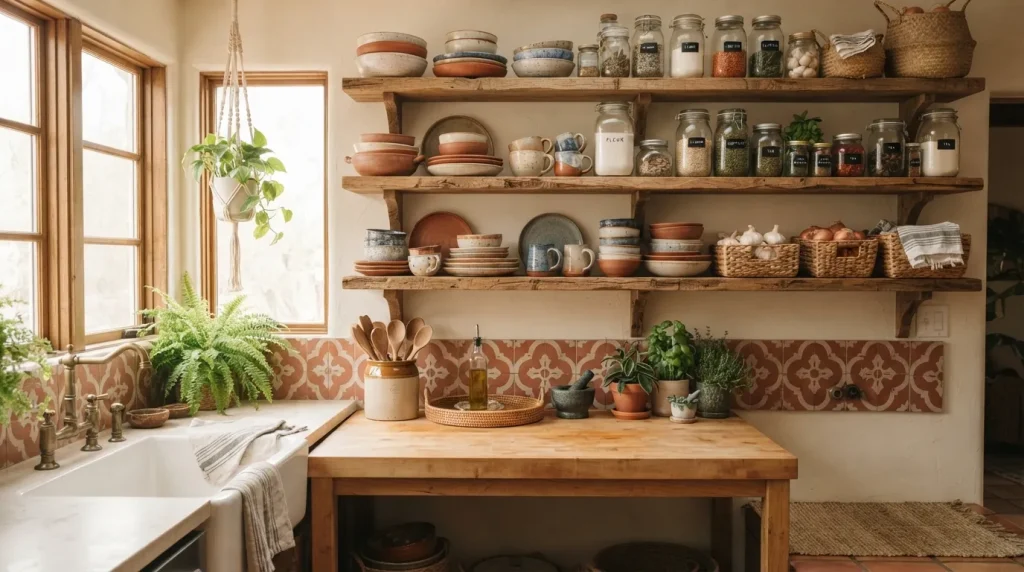
Warning: Avoid storing cast iron, unsealed wood, or delicate glass directly above the stove on a kitchen open cabinet — heat and grease can cause damage and create a safety risk over time.
Setup and Maintenance Checklist
- Choose which cabinets to convert to open shelving
- Remove doors or install floating shelves
- Select a consistent dishware color palette
- Add task lighting if the area is dim
- Style with a mix of everyday and decorative items
- Set a recurring cleaning schedule
Conclusion
A kitchen open cabinet is a small design change that can make a big visual impact. It brings more light into the room, puts your favorite dishware on display, and costs far less than a full renovation. As with any open shelving design, a bit of regular upkeep goes a long way — keep your collection edited, grouped, and clean, and your open kitchen cabinet will stay both functional and beautiful for years to come.


