

Why Trellis Roses Are a Perfect Garden Feature
A garden becomes more attractive when flowers are not only planted on the ground but also used to decorate vertical spaces. Trellis roses are one of the most elegant ways to add height, color, and structure to outdoor areas. By training climbing roses over a trellis, gardeners can transform plain fences, empty walls, patios, and entrances into stunning natural displays.
Many gardening enthusiasts ask, do roses need a trellis? The answer depends on the type of rose. While many bush roses grow independently, climbing roses have long flexible stems that need proper support. A strong trellis allows these roses to grow upward, spread evenly, and produce a more impressive floral display.
A trellis is not only useful for supporting plants; it also improves garden design. It can create privacy screens, decorate outdoor seating areas, and make small gardens appear larger. When roses climb across wooden lattice or metal structures, they create a romantic and timeless landscape feature.
This guide explains how to grow healthy trellis roses, whether climbing roses need a trellis, how to use lattice supports, and the best care practices for long-lasting blooms.
What Are Trellis Roses and How Do They Grow?
Trellis roses are climbing or rambling rose varieties trained to grow along a vertical support system. The support can be made from wood, metal, vinyl, or other durable materials. The purpose of the trellis is to guide rose canes and provide stability as the plant grows.
Unlike vines such as ivy or grape plants, roses do not naturally attach themselves to structures. Their long stems need manual training. Gardeners usually secure the canes with soft ties and position them across the trellis to encourage balanced growth.
The main advantage of growing roses vertically is space efficiency. A climbing rose can cover a large area without requiring a wide planting space. This makes trellis-supported roses ideal for small gardens, balconies, fences, and narrow pathways.
A mature rose-covered trellis creates a living wall of flowers. It can hide unattractive areas, improve privacy, and become the main attraction of a landscape.
Benefits of Growing Roses on a Trellis
| Benefit | Explanation |
| Saves space | Uses vertical areas instead of large ground spaces |
| Improves appearance | Creates attractive flower walls and arches |
| Supports healthy growth | Keeps branches organized and elevated |
| Makes maintenance easier | Simplifies pruning and training |
| Enhances privacy | Creates natural screens |
Do Roses Need a Trellis? Understanding Support Requirements
The question do roses need a trellis depends on the variety and growth habit of the rose plant. Not all roses require support. Shrub roses, miniature roses, and many groundcover roses usually grow well without additional structures because they naturally maintain a compact shape.
However, climbing roses are different. They produce long canes that can grow several feet in length. Without support, these stems may spread across the ground, become tangled, or grow in unwanted directions.
A trellis provides a controlled environment where roses can develop properly. It keeps branches away from soil, improves air circulation, and allows flowers to receive better sunlight exposure.
Although a rose plant can survive without a trellis, using one improves its appearance and performance. Gardeners who want a dramatic vertical garden feature should consider installing a strong support system.
Rose Support Guide
| Rose Type | Trellis Requirement | Best Support |
| Climbing roses | Required | Strong wooden or metal trellis |
| Rambling roses | Recommended | Large arch or pergola |
| Shrub roses | Not needed | Open garden bed |
| Miniature roses | Not needed | Containers |
Important Note:
A trellis is not just decoration. For climbing varieties, it works as a training system that improves growth direction, flower production, and plant health.
Do Climbing Roses Need a Trellis?
Many gardeners search for do climbing roses need a trellis because they are unsure if these plants can grow without support. The answer is yes, especially if the goal is to achieve healthy growth and maximum flowering.
Climbing roses develop long, flexible canes that naturally spread outward. Unlike climbing vines, they cannot attach themselves firmly to walls or fences. A trellis provides the structure needed to guide these branches.
Gardeners should attach rose stems gently using soft ties. The canes can be arranged horizontally across the support, which encourages more side shoots and increases flower production.
A strong trellis also protects the plant from weather damage. Heavy branches filled with leaves and flowers can become difficult to manage, especially during windy conditions.
Installing the support before planting is the best approach because it prevents root disturbance. With proper training, climbing roses can cover a trellis beautifully and create a stunning garden feature.
Pro Tip:
Train climbing rose branches sideways instead of allowing all stems to grow vertically. Horizontal growth encourages more flowering shoots and creates a fuller appearance.
Choosing the Best Trellis Material for Roses
Selecting the correct material is important for successful rose growth. A trellis must be strong enough to support mature plants while also matching the style of your garden.
Wooden trellises are popular because they provide a natural appearance. Cedar and treated wood are excellent choices because they resist outdoor conditions.
Metal trellises offer extra strength and durability. They are ideal for large climbing roses that become heavy over time. Decorative metal arches can also create elegant garden entrances.
Vinyl supports require less maintenance and work well for modern landscapes. Wire panels are another affordable option for fences and walls.
Trellis Material Comparison
| Material | Advantages | Suitable For |
| Wood | Natural and attractive | Cottage gardens |
| Metal | Strong and durable | Large climbing roses |
| Vinyl | Low maintenance | Modern gardens |
| Wire | Affordable and flexible | Fence areas |
Climbing Roses on Lattice: Creative Garden Ideas
Climbing roses on lattice are a beautiful landscaping solution for homeowners who want privacy and decoration together. A lattice structure allows roses to spread evenly while creating a charming vertical garden.
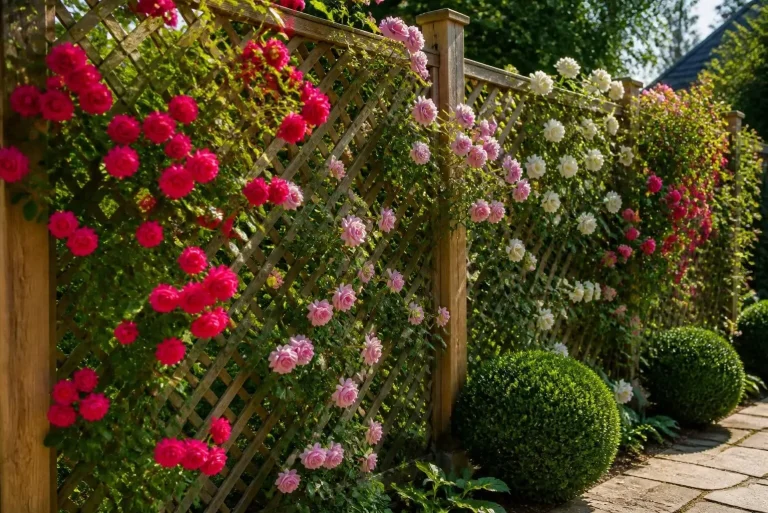
A lattice panel can be installed against a wall to cover empty spaces. It can also be used as a privacy screen around patios or outdoor seating areas.
Popular design ideas include:
- Rose-covered garden entrances
- Decorative fence panels
- Patio privacy walls
- Balcony climbing rose displays
- Pergola flower coverings
Lattice designs are especially attractive because they allow air movement while providing enough structure for rose branches.
How to Care for Trellis Roses Throughout the Year
Healthy trellis roses require regular maintenance to remain attractive and productive. Proper care includes watering, pruning, feeding, and checking the plant structure.
Important maintenance steps include:
- Water deeply during dry periods
- Remove dead flowers regularly
- Prune weak or damaged branches
- Check ties and supports
- Apply rose fertilizer during growth season
- Monitor pests and diseases
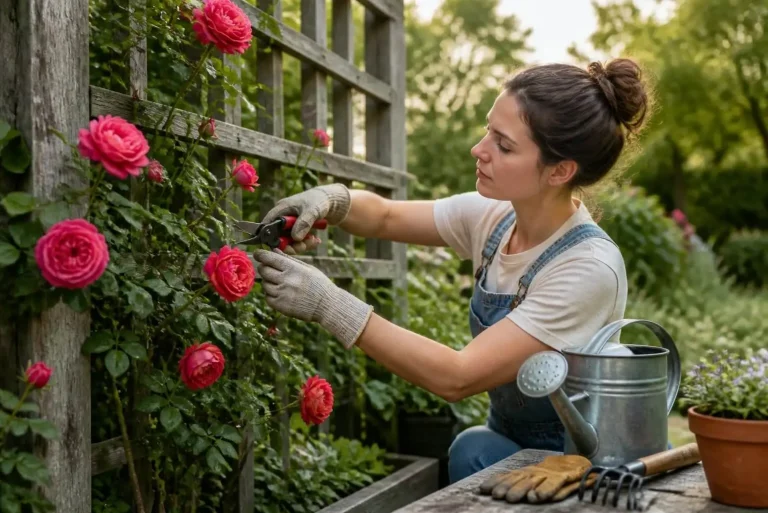
Regular pruning prevents overcrowding and improves airflow around the plant. This helps maintain healthy growth and encourages better flowering.
Maintenance Checklist
☐ Check trellis stability
☐ Secure new branches gently
☐ Remove dead leaves
☐ Water consistently
☐ Apply fertilizer when needed
☐ Inspect for insects
☐ Prune after flowering
Warning:
Avoid using weak supports for climbing roses. Mature plants can become heavy, and an unstable trellis may break during strong winds.
Modern Trellis Roses Design Ideas for Every Garden
Modern landscapes use trellises as both plant supports and decorative elements. A carefully designed rose structure can become the centerpiece of any outdoor area.
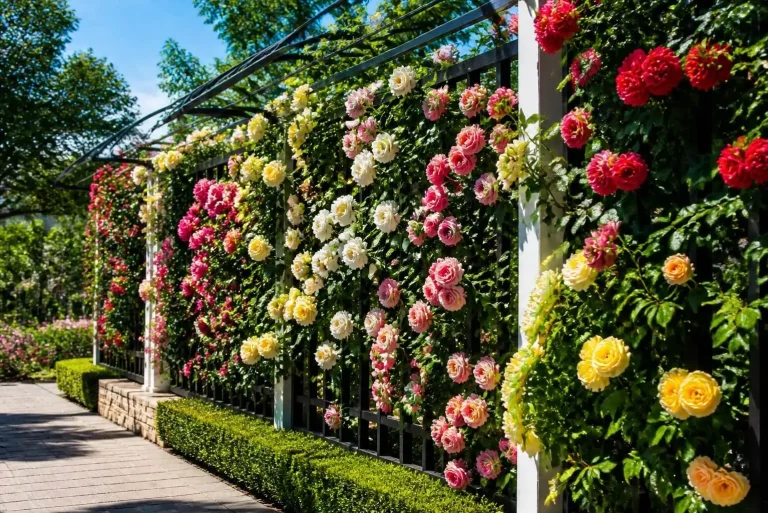
For small gardens, vertical trellises help maximize space. For larger landscapes, pergolas and arches create dramatic entrances covered with flowers.
Popular design styles include:
- Rustic wooden lattice with pink roses
- Black metal frames with white roses
- Garden arches with mixed rose colors
- Wall-mounted trellises for patios
The right design depends on garden size, available sunlight, and personal style.
Conclusion: Create a Beautiful Garden With Trellis Roses
Trellis roses offer one of the most attractive ways to enhance outdoor spaces. While not every rose requires support, climbing roses benefit greatly from a strong trellis that guides growth and improves flowering.
Whether you choose wooden lattice, metal frames, or decorative arches, the right support system can transform your garden into a colorful vertical landscape. Understanding proper planting, training, and maintenance techniques will help your roses remain healthy and beautiful for years.
From privacy screens to romantic garden entrances, climbing roses on lattice provide endless design possibilities. With the right care, your trellis can become the foundation of a stunning floral display.


