

Fall Bark: Complete Guide to Using Bark Mulch for Beautiful Autumn Landscapes
Why Fall Bark Is Popular in Seasonal Landscaping
Autumn is one of the best times to refresh outdoor spaces because cooler weather allows gardeners to improve soil, protect plants, and create attractive landscapes. Fall bark is a popular landscaping material that adds natural beauty while providing practical benefits for gardens, flower beds, pathways, and outdoor areas.
Many homeowners choose bark mulch during the fall season because it creates a clean and polished appearance while helping plants prepare for winter. The rich earthy colors of bark complement autumn leaves, pumpkins, ornamental grasses, and seasonal decorations.
Beyond appearance, bark mulch works as a protective layer. It helps maintain soil moisture, reduces weed growth, regulates temperature changes, and protects plant roots from harsh weather conditions.
A well-designed garden can combine bark mulch with other seasonal features such as decorative stones, small ponds, and hanging baskets. For example, adding bark around waterfall designs for small ponds creates a natural environment that blends water features with landscape elements.
This guide explains everything about fall bark, including its benefits, types, garden uses, design ideas, maintenance tips, and ways to create an attractive autumn landscape.
What Is Fall Bark and Why Do Gardeners Use It?
Fall bark is a type of organic mulch made from tree bark that is commonly used in landscaping projects. It is placed around plants, trees, shrubs, and garden beds to improve appearance and protect soil.
Unlike decorative gravel or synthetic materials, bark mulch creates a natural look that blends well with outdoor environments. Its earthy texture helps gardens feel warmer and more connected to nature.
During autumn, bark mulch becomes especially useful because falling temperatures can affect plant roots. A layer of bark acts as insulation, reducing sudden temperature changes and helping plants survive colder conditions.
Gardeners also appreciate bark because it improves soil quality over time. As organic bark breaks down, it adds nutrients back into the soil and supports healthier plant growth.
Benefits of Using Fall Bark
| Benefit | Explanation |
| Moisture protection | Helps soil retain water |
| Weed control | Blocks unwanted plant growth |
| Temperature regulation | Protects roots during seasonal changes |
| Natural appearance | Creates attractive garden beds |
| Soil improvement | Adds organic material over time |
Best Types of Fall Bark for Landscaping Projects
Choosing the right bark type is important because different varieties provide different textures, colors, and levels of durability. The best choice depends on your garden style, plant requirements, and maintenance preferences.
Large bark pieces are useful for decorative areas because they last longer and create a bold appearance. Fine bark mulch works better around smaller plants because it spreads evenly and improves soil coverage.
Common bark options include:
| Bark Type | Features | Best Use |
| Pine bark | Long-lasting and natural | Flower beds |
| Cedar bark | Pleasant scent and insect resistance | Decorative gardens |
| Fir bark | Lightweight texture | Shrubs and plants |
| Hardwood bark | Rich color | Large landscapes |
When selecting bark, consider the color you want. Dark brown bark creates a modern appearance, while lighter shades provide a traditional woodland feel.
Fall Bark Landscaping Ideas for Beautiful Outdoor Spaces
Using fall bark creatively can transform ordinary outdoor areas into attractive seasonal landscapes. It works well in gardens, pathways, around trees, and decorative planting areas.
One popular idea is creating layered garden beds. Place bark around colorful autumn plants such as chrysanthemums, ornamental grasses, and evergreen shrubs. The contrast between plants and mulch creates a professional landscaping appearance.
Another option is using bark around outdoor features. For example, gardens with waterfall designs for small ponds often use bark, stones, and plants together to create a natural environment.
Popular Fall Landscaping Uses:
- Flower bed borders
- Tree rings
- Garden pathways
- Pond surroundings
- Outdoor seating areas
- Raised planting beds
Bark can also be combined with decorative rocks and landscape lighting to create a beautiful evening garden display.

Waterfall Designs for Small Ponds With Fall Bark Surroundings
Small ponds become even more attractive when surrounded by natural landscaping materials. Combining fall bark with waterfall designs for small ponds creates a peaceful garden feature that looks beautiful throughout the autumn season.
Bark mulch works well around ponds because it softens the transition between water and landscape. When combined with rocks, moss, and plants, it creates a natural woodland appearance.
Small pond waterfall ideas include:
- Rock waterfall edges
- Wooden bridge designs
- Plant-covered pond borders
- Small cascading streams
- Natural stone arrangements
The key is maintaining balance. Bark should be placed away from areas where it may constantly wash into the water. Using stones around the pond edge helps keep the mulch in place.
Pro Tip:
Combine bark mulch with natural stones around pond areas. The contrast between soft bark texture and hard stone creates a more realistic outdoor environment.
Fall Winter Hanging Baskets and Seasonal Garden Decoration
Seasonal containers are another excellent way to enhance outdoor spaces. Fall winter hanging baskets allow homeowners to add color and texture even when many summer plants stop blooming.
Hanging baskets can include seasonal plants such as:
- Pansies
- Ornamental kale
- Evergreen plants
- Ivy
- Small decorative branches
These baskets work well near entrances, patios, and garden structures. When combined with bark-covered planting areas, they create a complete seasonal design.
For winter preparation, choose plants that tolerate cooler temperatures. Adding decorative elements like pinecones, ribbons, and branches can extend the seasonal appearance.

How to Install Fall Bark Correctly
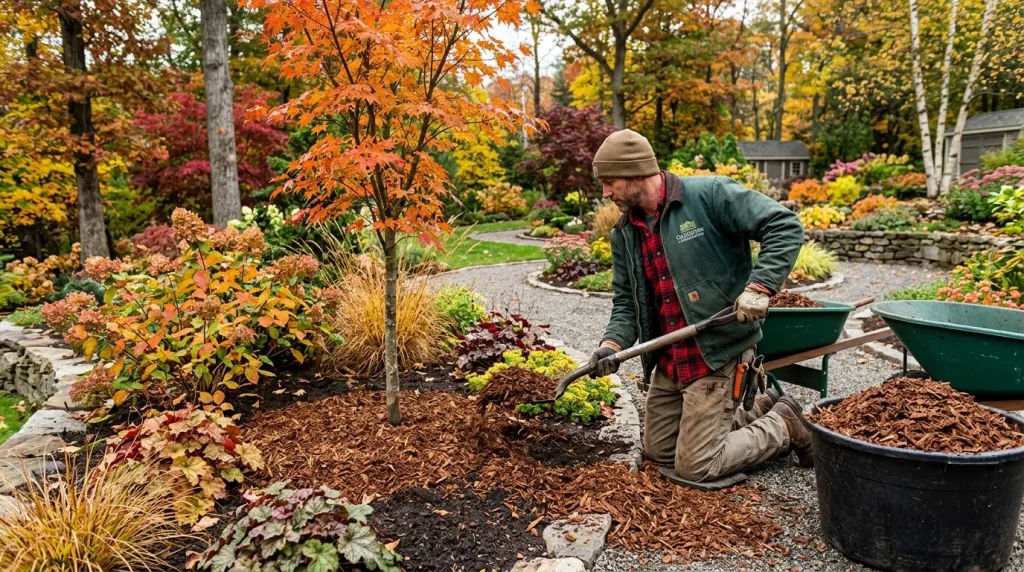
Proper installation helps bark mulch perform better and last longer. Before adding bark, prepare the garden area by removing weeds and cleaning the soil surface.
Follow these steps:
- Remove existing weeds.
- Level the planting area.
- Add landscape fabric if needed.
- Spread bark evenly.
- Keep mulch away from plant stems.
A layer of approximately two to four inches is usually effective. Too much bark can prevent water and air from reaching plant roots.
Regular maintenance includes checking the mulch depth and adding fresh material when needed. Over time, organic bark breaks down naturally and may require replacement.
Common Mistakes When Using Bark Mulch
Although bark is easy to use, incorrect application can create problems.
Avoid these mistakes:
- Applying mulch too thickly
- Covering plant stems
- Ignoring drainage
- Using unsuitable bark types
- Forgetting seasonal maintenance
Warning:
Do not pile bark directly against tree trunks or plant stems. Excess moisture around the base can encourage disease and damage plant health.
Fall Bark Maintenance Checklist
Use this checklist to keep your landscape looking attractive:
☐ Remove weeds before applying bark
☐ Maintain proper mulch thickness
☐ Keep bark away from stems
☐ Refresh mulch when needed
☐ Check drainage areas
☐ Clean fallen leaves regularly
☐ Inspect pond areas if included
Modern Fall Bark Design Ideas for Homes
Modern landscapes often combine simple materials with natural textures. Bark mulch fits perfectly into contemporary outdoor designs because it creates contrast with stone, concrete, and plants.
Popular modern ideas include:
- Bark with minimalist plant beds
- Bark pathways with stone borders
- Bark around outdoor seating areas
- Bark combined with lighting features
For homeowners who prefer low-maintenance gardens, bark provides an attractive solution without requiring frequent care.
Conclusion: Create a Beautiful Autumn Landscape With Fall Bark
Fall bark is a practical and attractive landscaping material that can completely transform outdoor spaces during the autumn season. It improves garden appearance, protects soil, reduces weeds, and creates a natural environment for plants.
Whether you are designing flower beds, enhancing waterfall designs for small ponds, or decorating entrances with fall winter hanging baskets, bark mulch provides a warm seasonal foundation.


