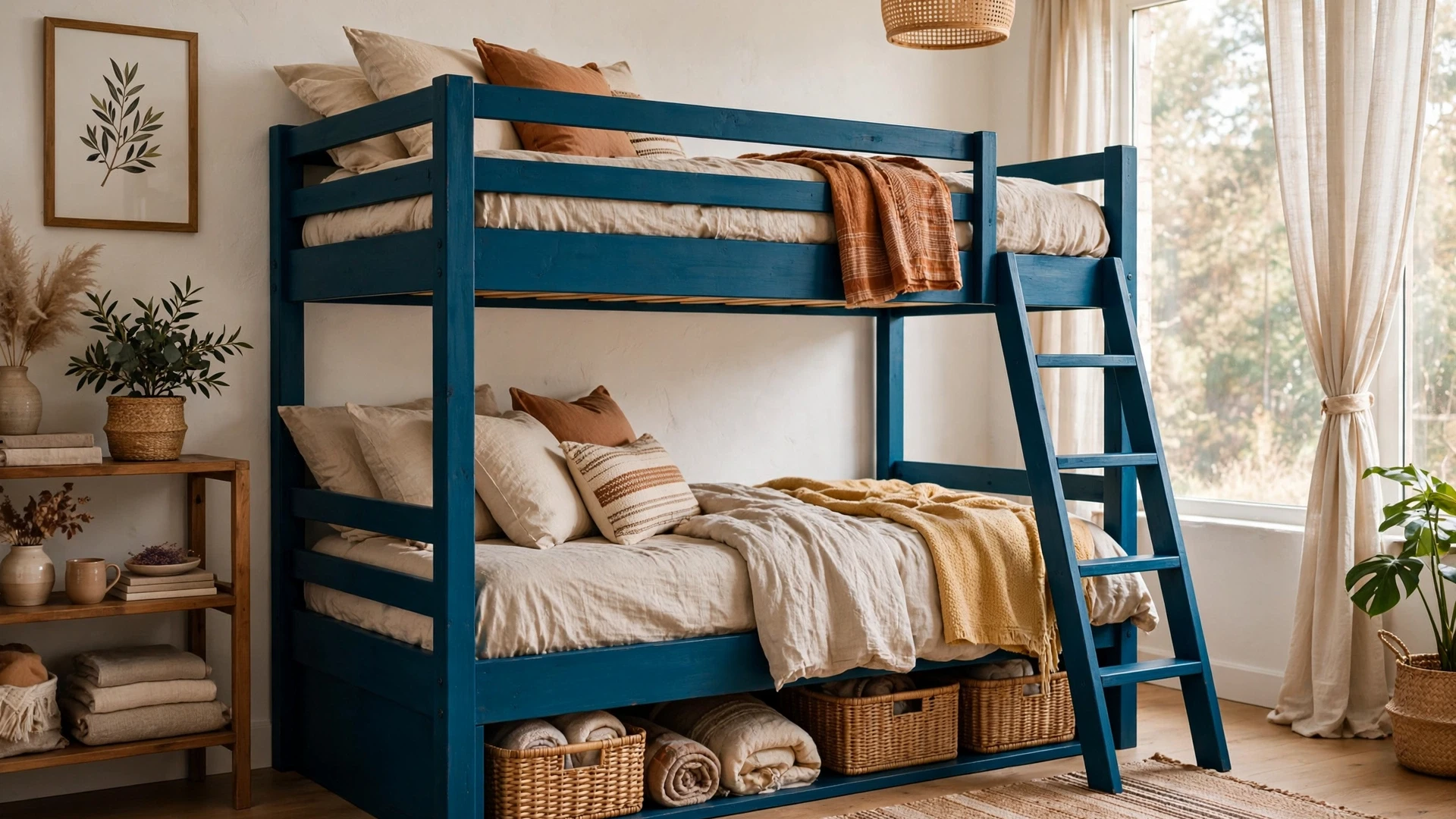

15 Space-Saving Bunk Bed Ideas
There's something magical about a bunk bed. Maybe it's the way it turns an ordinary bedroom into a little world of its own, or maybe it's just the pure genius of stacking two sleeping spots into the footprint of one. Whether you're outfitting a shared kids' room, carving a guest nook out of a home office, or making a studio apartment work harder, a bunk bed might be the smartest piece of furniture you ever buy.
But here's the thing: a bunk bed doesn't have to mean basic metal frames and scratchy bedding. Done right, bunks are cozy, stylish, and surprisingly grown-up. Think plush linens, soft glow lighting, clever built-ins, and textures that make both bunks feel like the best seat in the house. The right styling turns that vertical space into something you actually love looking at.
In this guide, we've gathered 15 space-saving bunk bed ideas that go way beyond the standard twin-over-twin. You'll find options for tiny apartments, shared sibling rooms, guest corners, teen hangouts, and more — each one packed with specific colors, fabrics, furniture pairings, and finishing touches to inspire your own setup. Grab a cup of coffee and let's climb up.
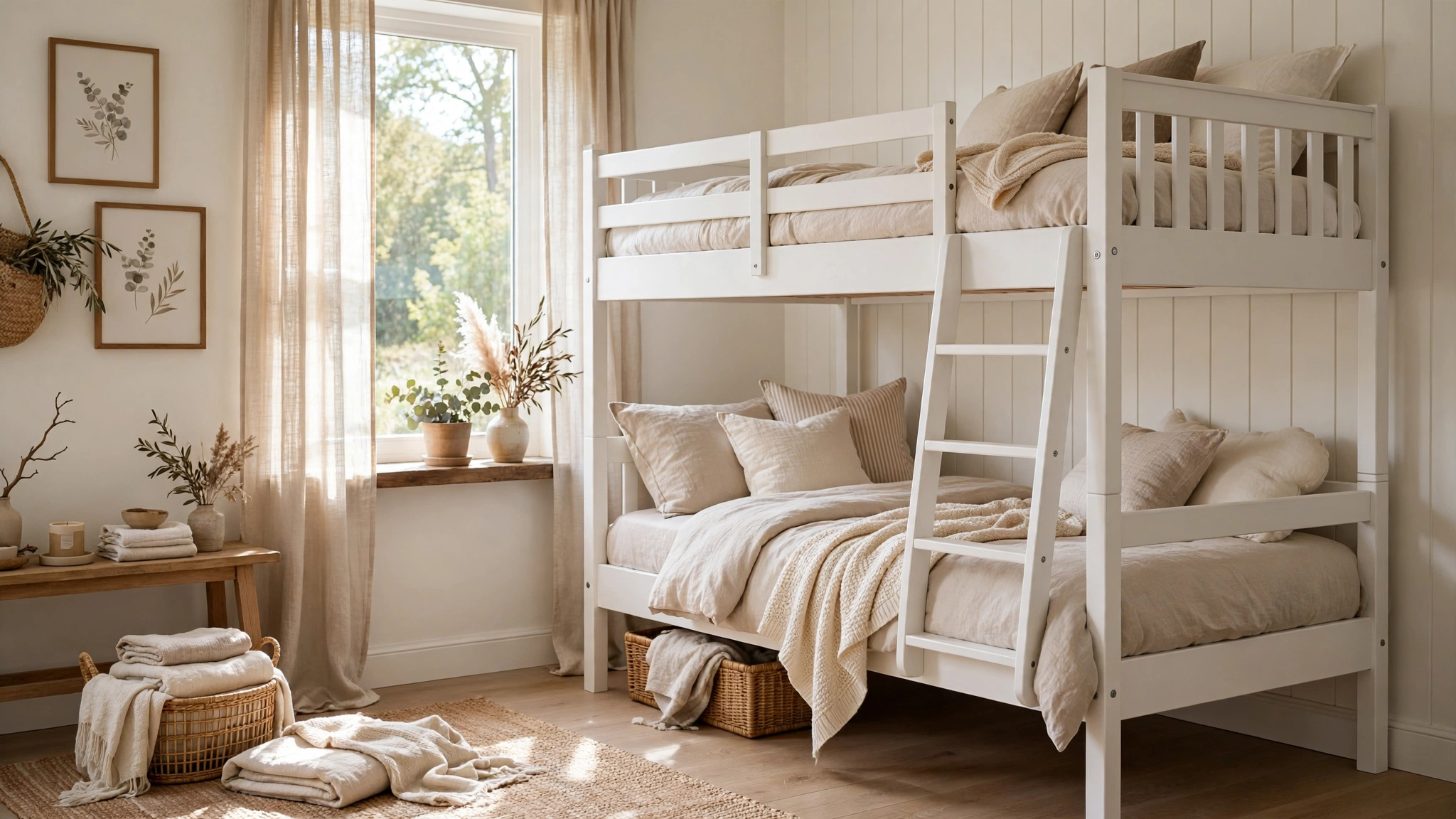
1. Classic White Wooden Bunks with Soft Neutral Bedding
You can't go wrong with a classic. A white wooden bunk bed frame feels fresh, airy, and timeless — the kind of piece that works for toddlers, teens, and even guests. The trick to keeping it from looking bland is all in the bedding. Layer each bunk with crisp white sheets, then add texture with a chunky knit throw in warm oatmeal or soft taupe draped across the foot. Pick duvet covers in a subtle tone-on-tone pattern like a fine stripe or tiny gingham so the two bunks feel coordinated but not identical.
For pillows, stack two sleeping pillows plus one decorative lumbar cushion in a natural linen or washed cotton. On the walls, keep it light — pale gray, warm white, or a whisper of sage — and hang a simple framed print above the top bunk. A small woven basket at the base of the ladder corralled slippers or bedtime books. The overall feel is calm and uncluttered, and because the palette is neutral, you can swap accent colors seasonally with nothing more than new cushion covers.
2. Built-In Bunk Nooks with Reading Lights
If you want the cozy factor turned all the way up, consider bunks built right into an alcove or recessed wall. Painting the inside of the nook a rich, enveloping color — deep forest green, inky navy, or warm terracotta — instantly makes each bunk feel like a private cabin. Add a beadboard or shiplap backing for texture, and install a slim brass or black reading sconce on the wall beside each pillow so both sleepers get their own pool of warm light.
Keep bedding simple and plush: solid-colored duvets in cream or soft gray, a folded wool-blend throw at the foot, and a bolster pillow for lounging. A narrow floating shelf at the head of each bunk holds a book, a glass of water, or a small alarm clock — no nightstand needed. Curtain panels mounted on a slim track across the front of the nook give each bunk its own "door" for privacy, which kids absolutely love and guests genuinely appreciate. This setup eats almost zero extra floor space while feeling like a boutique hotel room.
3. L-Shaped Bunks That Open Up the Corner
An L-shaped bunk arrangement — one bed elevated, the other tucked perpendicular beneath it — does something wonderful: it frees up a corner of the room for play, a desk, or a reading chair. This layout works beautifully in square kids' rooms where a standard stacked bunk would block the window or crowd the door. Choose a sturdy wood frame in a natural oak or warm pine finish for a relaxed, Scandinavian feel.
Dress the lower bunk like a daybed with a tailored cover in a muted chambray blue or soft sage, piled with throw pillows in mixed patterns — a ticking stripe here, a small floral there, all in the same color family so it reads as intentional. The top bunk gets lighter treatment: white or pale gray bedding with one cheerful accent pillow. Under the elevated section, tuck a small round rug in a flatweave cotton, a floor cushion, and a basket of toys or books. The corner that opens up becomes the room's hangout zone, and the whole arrangement feels spacious rather than stacked.
4. Loft Bed with a Desk Underneath for Small Bedrooms
For a teen's room or a studio apartment, nothing beats a loft bed with a full workspace underneath. You're essentially getting a bedroom and a home office in about 30 square feet. Look for a loft frame with a built-in desk surface or a clean open area where you can slide in your own desk — a simple white or light-wood tabletop keeps it bright underneath.
Style the upper bunk with bedding in calming tones — dusty blue, soft lavender-gray, or warm sand — and add a clip-on reading lamp or a string of warm fairy lights along the safety rail for evening coziness. Underneath, paint the wall behind the desk a slightly deeper shade than the rest of the room to define the work zone, and add a comfortable chair, a small desk organizer in natural materials, and a pinboard or framed art above the desk. A slim rug under the desk chair softens the space and marks it as its own little room-within-a-room. Finish with a trailing pothos plant on the desk shelf for a touch of green.
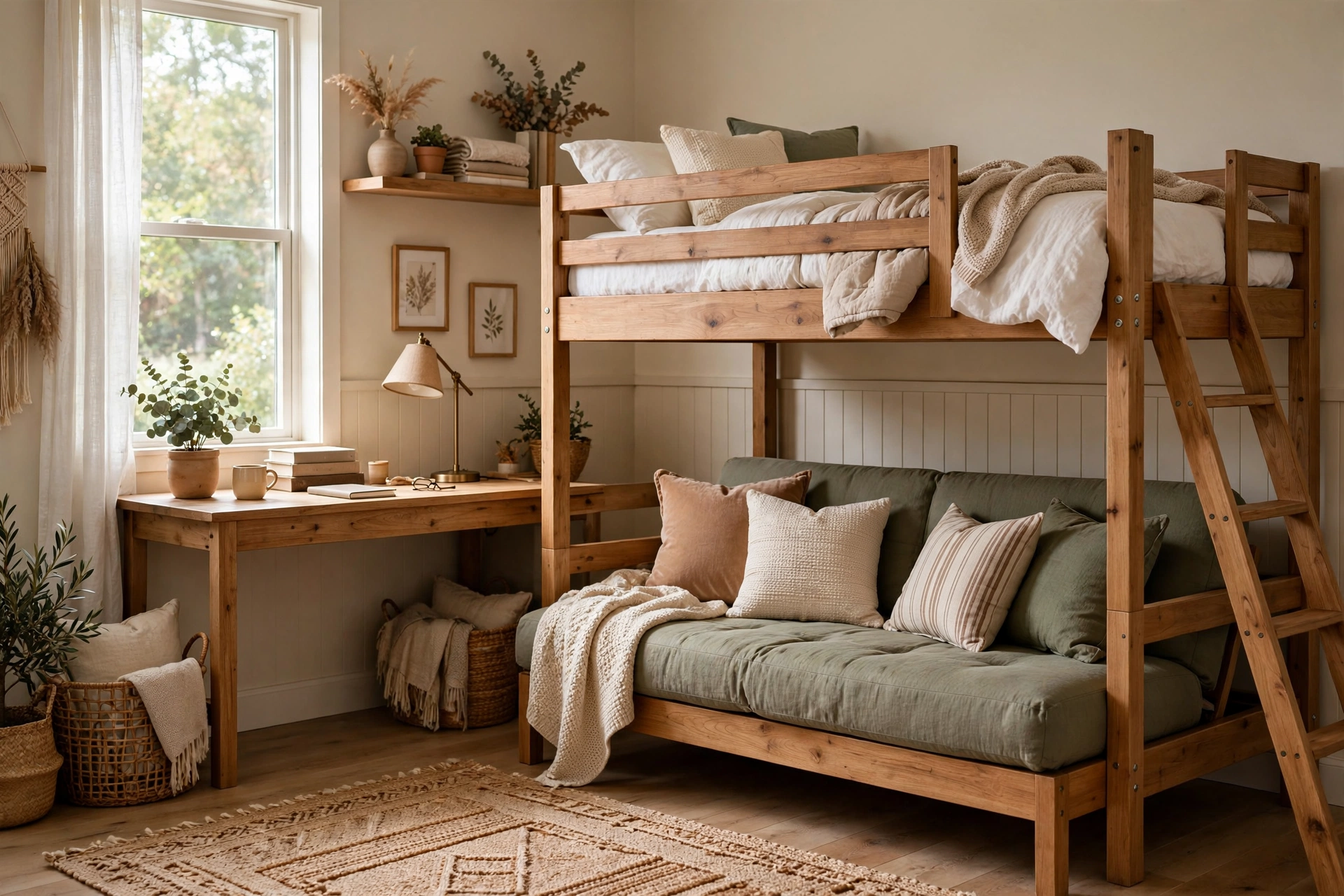
5. Twin-Over-Futon Bunk for Guest Rooms
A twin-over-futon bunk is the ultimate guest-room multitasker: an upper twin for one sleeper and a futon below that serves as a sofa by day and a full-size bed by night. This is perfect for a home office or den that doubles as guest quarters. Choose a frame in a dark bronze or matte black metal for a clean, modern look, or warm wood for something softer.
Style the futon with a tailored slipcover in a performance fabric — think stonewashed linen in greige or a subtle herringbone — and dress it like a proper sofa with two or three throw pillows and a folded throw blanket over one arm. The top bunk gets hotel-style white bedding with a single accent pillow that echoes the futon's palette. Keep a lidded storage ottoman nearby holding spare sheets, a spare blanket, and a small welcome tray with water and a candle. Guests get real comfort, and on the other 350 days of the year, you have a cozy reading sofa.
6. Rustic Farmhouse Bunks in Weathered Wood
For a cabin, lake house, or farmhouse-style kids' room, weathered-wood bunks bring instant warmth and character. Look for frames with a distressed or whitewashed finish — the kind that shows the grain and feels like it has a story. Pair them with bedding in classic farmhouse patterns: buffalo check in red and cream for one bunk, a simple ticking stripe in navy and white for the other. The slight mismatch feels collected and charming rather than chaotic.
Layer in texture with a chunky braided jute rug under the beds, galvanized metal storage bins for toys, and a couple of vintage-style enamel lanterns (battery-operated for safety) on a wall shelf. Walls in warm white with a shiplap accent wall behind the bunks complete the look. Hang a simple wreath — eucalyptus, dried lavender, or seasonal greens — on the end of the frame for a finishing touch. The whole room feels like a cozy retreat, and the sturdy wood frame will survive years of climbing, jumping, and growing up.
7. Bunks with Built-In Storage Drawers and Shelves
When floor space is precious, every inch of the bunk bed should work for you. Storage bunks — with deep drawers built into the base and open cubbies in the headboard or stair unit — can swallow an astonishing amount of stuff: extra bedding, out-of-season clothes, toys, books, and all the little things that usually end up on the floor. Choose a frame in painted white or soft gray so the storage reads as built-in millwork rather than bulky furniture.
Keep the styling crisp so the storage shines: solid-color duvets in complementary shades (like dusty rose on top, warm gray below), minimal pillows, and bedding pulled smooth. Label the drawers with small brass tags or chalkboard labels — it looks adorable and actually helps kids put things away. Use the headboard cubbies for a curated few: a small stack of favorite books, a tiny potted succulent, a framed photo. Because everything has a home, the room stays tidy with almost no effort, and the bunk area feels calm instead of cluttered.
8. Canopy-Style Bunks with Draped Fabric
Draping sheer fabric over a bunk bed transforms it from furniture into a hideaway. This works with almost any frame — just mount a ceiling track or a simple canopy hoop above the top bunk and let gauzy white or ivory curtains fall softly down the sides. For a dreamier look, choose fabric with a subtle shimmer or a soft blush tint; for a bohemian vibe, try a lightweight muslin in natural ecru.
Inside the canopy, keep bedding soft and romantic: a ruffled or pintucked duvet cover in white or pale blush, plenty of pillows in mixed whites and creams, and a faux-fur or chunky knit throw for texture. A string of warm-white fairy lights woven through the top of the canopy makes the whole thing glow at night — pure magic for kids, and surprisingly lovely in a guest room too. Tie the curtains back with simple linen sashes during the day so the room still feels open. The fabric adds privacy, softness, and a serious dose of whimsy without taking up a single extra inch of floor.
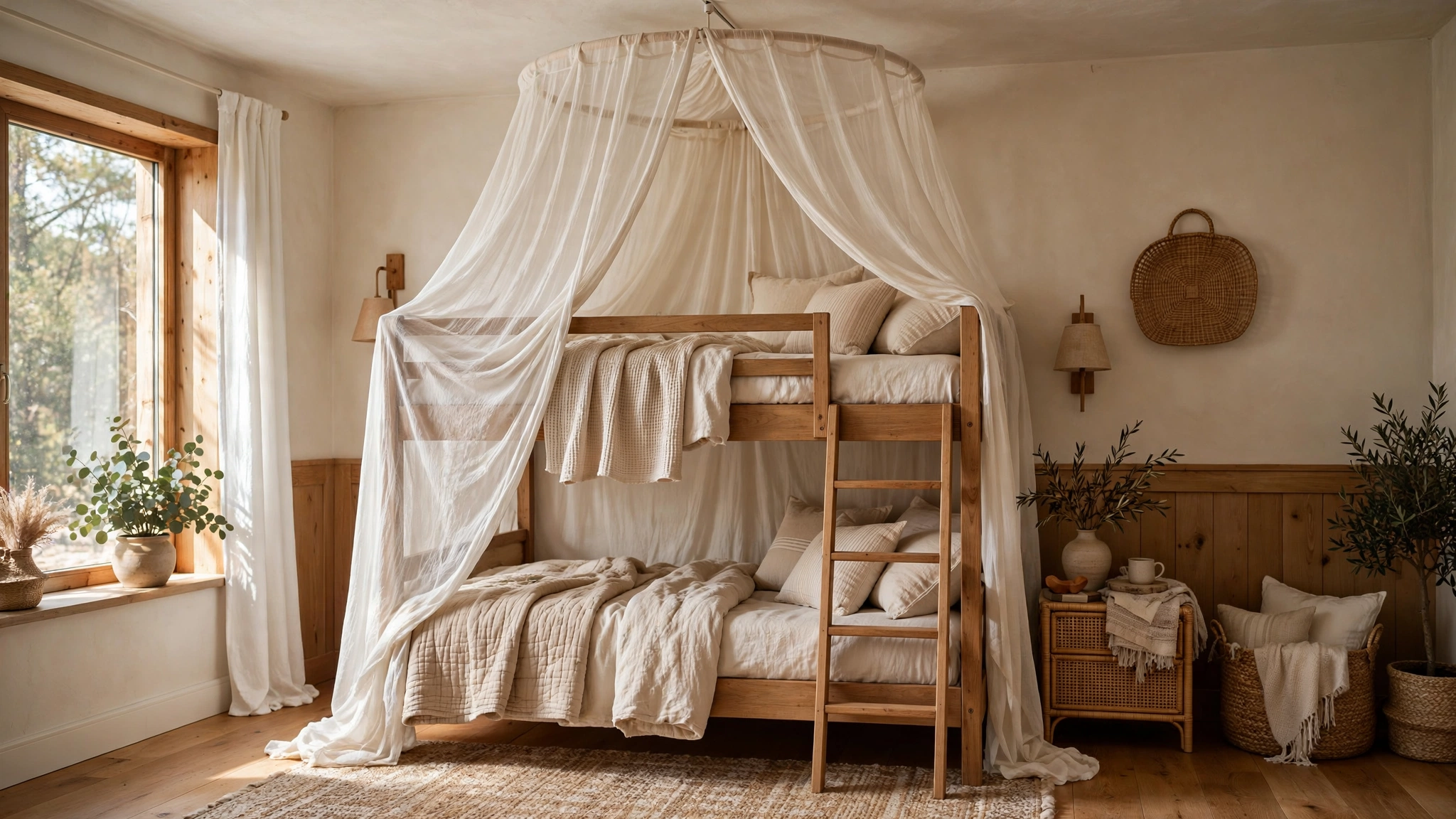
9. Modern Minimalist Bunks in Matte Black
For a teen room, a guest space, or a modern apartment, matte black bunk frames look sharp, graphic, and grown-up. The dark frame becomes a strong architectural line in the room, so keep everything around it light and simple to balance the contrast. Walls in warm white or very pale gray, light wood or pale flooring, and bedding in crisp whites with one bold accent — a mustard-yellow throw, a terracotta lumbar pillow — keep it from feeling heavy.
Add a slim black metal wall shelf beside each bunk for a phone, book, and small lamp; matching black finishes make it look custom. A low-pile rug in a neutral tone grounds the bed, and a single piece of oversized abstract art on the opposite wall gives the room gallery energy. The beauty of this look is its restraint: fewer, better pieces, each one earning its place. It photographs beautifully, feels current without being trendy, and transitions effortlessly from a teen's room to a stylish guest setup.
10. Triple Bunks for Big Families and Vacation Homes
When two bunks aren't enough, a triple bunk — three beds stacked vertically — is a space-saving superhero. It's a favorite for vacation homes, cabins, and big families where bedroom count is limited. Because the unit is tall, keep the styling light and vertical: white or pale-wood frames, bedding in a single cohesive palette (all whites with varying textures, or a gradient of blues from pale to deep) so the tower feels unified rather than towering.
Give each level its own identity with a different accent pillow and a small personal touch — a wall-mounted reading light and a tiny shelf per bunk makes each sleeper feel they have their own spot. A striped flatweave runner rug alongside the bed adds color without bulk. Make sure there's a sturdy, wide ladder with good handholds, and consider a guardrail that runs the full length of the top two bunks. Styled well, a triple bunk looks intentional and charming — like the coziest hostel suite you've ever seen — and sleeps three in the footprint of one twin bed.
11. Bunk Beds with a Slide for Playful Kids' Rooms
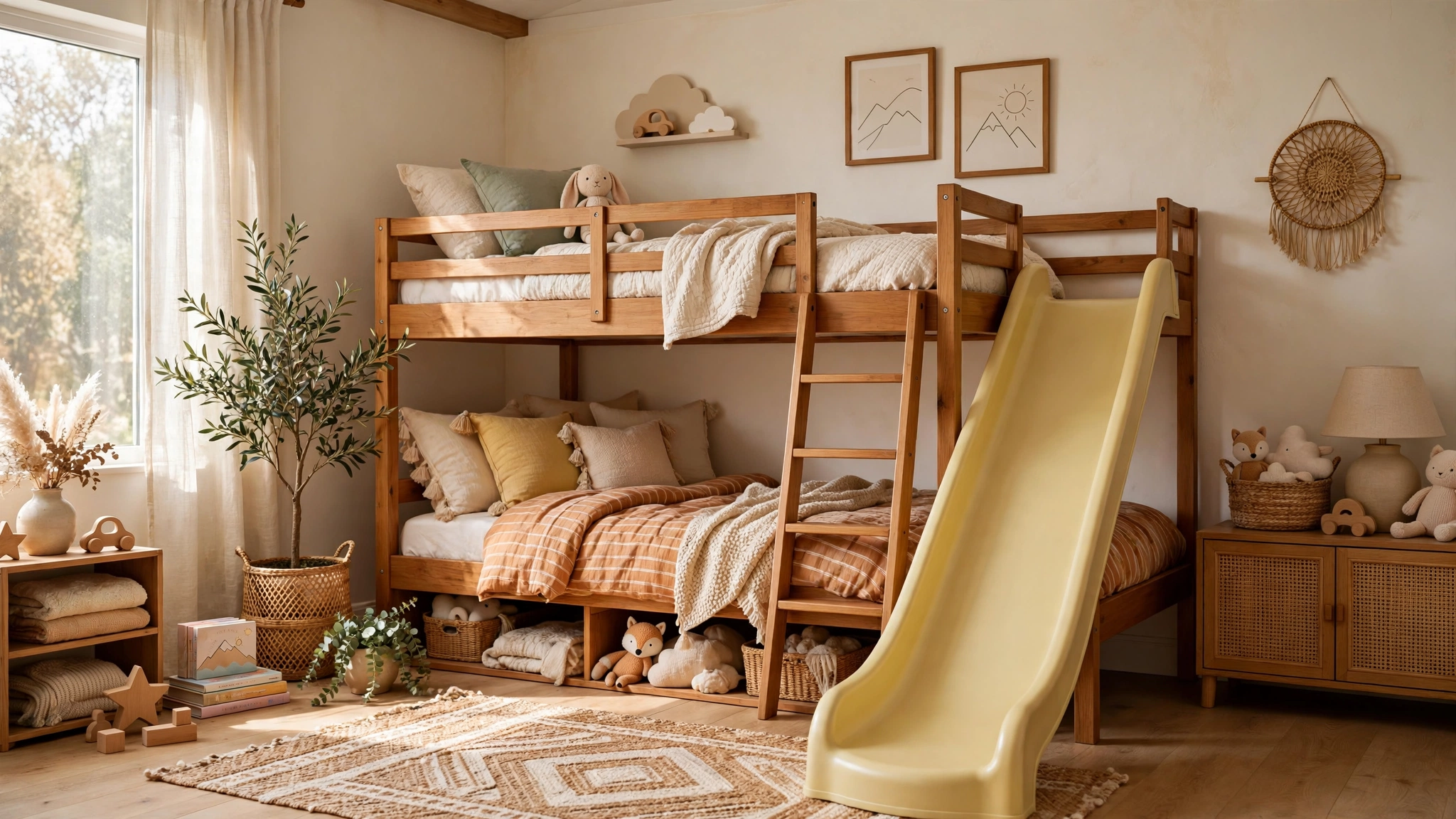
Let's be honest: a slide turns a bunk bed from furniture into the best part of the day. Bunk beds with an attached slide are pure joy for younger kids, and they can still look great with the right styling. Choose a frame in white or natural wood so the slide (often the same finish) blends in rather than screaming "playground." Position the slide so it lands on a soft rug, not hard flooring.
Style around the fun: bedding in cheerful but not chaotic colors — a sunny yellow duvet on top, a sky-blue one below, with white sheets tying them together. A round, washable play rug in a playful pattern anchors the landing zone, and low open bins nearby hold the toys that will inevitably migrate there. Wall decals — clouds, stars, or a simple mountain scene — add whimsy without commitment. Keep the rest of the room calm so the bed stays the star. The slide will get daily use for years, and when the kids outgrow it, many models let you remove it and keep the classic bunk.
12. Daybed-Style Lower Bunk with Trundle
Here's a clever hybrid: a bunk bed where the lower level is styled as a daybed, plus a trundle drawer underneath that pulls out into a third bed. By day it's a lounge spot; by night it sleeps three. This is ideal for a playroom-guest-room combo or a shared kids' room that needs maximum flexibility. Pick a frame with clean lines in white, gray, or natural wood.
Dress the daybed bunk with a tailored daybed cover in a sophisticated fabric — a small-scale geometric or a textured solid in slate blue, warm taupe, or soft green — and arrange pillows along the back like a sofa: two large Euro pillows, two standards, and a couple of smaller accents. The top bunk gets simpler coordinating bedding. Store the trundle bedding (a folded duvet and pillow) inside the trundle itself so sleepover setup takes thirty seconds. A floor lamp with a linen shade beside the daybed end makes it a genuine reading spot. Nobody would guess this hardworking setup sleeps three.
13. Corner Bunks That Maximize Awkward Layouts
Some rooms have that one awkward corner — a weird angle, a low eave, a window that rules out a standard bed placement. Corner bunk configurations, where two bunks meet at right angles in the corner, turn dead space into the room's best feature. This works especially well under sloped ceilings in attic rooms or in small square bedrooms. A natural wood or white frame keeps the corner feeling open rather than boxed in.
Because the bunks wrap the corner, treat the corner itself as a design moment: paint the two meeting walls a soft accent color — pale terracotta, dusty sage, or warm greige — and hang a pendant light or a paper lantern in the angle above where the beds meet. Bedding in coordinating solids with one shared accent color unifies the L of beds. The space under the raised bunk becomes a tucked-away reading nook with a floor cushion and a small bookshelf. What was once the room's problem corner becomes its coziest spot, and the center of the room stays gloriously open.
14. Adult-Friendly Bunks with Upholstered Headboards
Bunk beds aren't just for kids. In a vacation rental, a city pied-à-terre, or a guest room that needs to sleep four adults comfortably, upscale bunks with upholstered headboards feel genuinely luxurious. Look for frames with tall, padded headboards in a performance linen or velvet — warm greige, deep olive, or classic navy — and a sturdy wood or metal structure that doesn't wobble or creak.
Dress each bunk like a boutique hotel bed: crisp white sheets with a high thread count, a light duvet in white or ivory, a folded coverlet at the foot in a complementary tone, and four pillows per bunk (two sleeping, two Euro) for that plush, sink-in look. Individual brass reading sconces and a small wall shelf per bunk give adults the amenities they expect. A rug with a subtle pattern under the whole unit, plus blackout curtains on the room's windows, completes the grown-up feel. Guests will fight over the top bunk — in the best way.
15. DIY Painted Bunks in a Bold Accent Color
If you're working with a basic bunk frame — or a secondhand find — a bold coat of paint is the fastest transformation in this whole list. A bunk bed painted in a rich, saturated color becomes the room's statement piece: think deep teal, warm mustard, dusty coral, or a moody forest green. Use a durable satin or semi-gloss furniture paint so it stands up to daily climbing.
Let the painted frame be the star and keep bedding calm: white or cream sheets, a simple duvet in a tone that plays nicely with the frame (soft white with a teal frame, warm sand with a coral frame), and one or two accent pillows that pick up the frame color. Paint the wall behind the bunks the same color for a dramatic color-drenched look, or keep walls white and let the bed pop. Add simple wood or brass hooks on the frame ends for hanging pajamas or a tote bag. This is a weekend project with a huge payoff — proof that the most stylish bunk in the neighborhood might be the one you painted yourself.
Styling Tips
Start with a cohesive palette. Pick two to three colors and repeat them across both bunks, the rug, and the walls. Cohesion is what separates a styled bunk setup from a cluttered one — even if the two bunks aren't identical, shared colors make them feel like a pair.
Light each bunk individually. A small clip-on lamp, a wall-mounted sconce, or even a strand of fairy lights per bunk gives each sleeper their own glow and makes the whole unit feel intentional after dark. Battery-operated options mean no electrician required.
Use vertical space for storage. The wall above and beside bunks is prime real estate: floating shelves, hanging organizers, peg rails, and wall-mounted baskets keep essentials within arm's reach without eating floor space. This matters most in rooms where the bunk already fills the footprint.
Choose washable everything. Bunk bedding gets climbed on, spilled on, and fort-fied. Machine-washable duvet covers, washable rugs, and slipcovers you can throw in the laundry will keep the setup looking fresh for years instead of months.
Mind the scale of patterns. In the compact visual field of a bunk bed, oversized patterns can overwhelm. Small-to-medium prints — ticking stripes, mini florals, petite geometrics — read better at bunk scale and mix more easily between the two levels.
Keep the ladder zone clear. Style around the ladder, not across it. Baskets, rugs, and furniture should sit clear of the climbing path so getting in and out of the top bunk stays safe and easy — especially for sleepy midnight trips.
Add one soft landing. A plush rug or a couple of floor cushions beside the bunk gives the room a cozy landing pad for morning wake-ups, bedtime stories, and everything in between. It also protects floors and toes.
FAQ
Are bunk beds safe for young children?
Most manufacturers recommend the top bunk for kids aged six and up. For younger children, keep them on the lower bunk, always use guardrails on both sides of the top bunk, and make sure the ladder is sturdy with easy-grip rungs. Place the bunk in a corner against two walls for extra stability, and teach kids that the top bunk is for sleeping — not jumping.
What size room do you need for a bunk bed?
A standard twin bunk needs roughly the same floor space as a single twin bed — about 40 by 80 inches — plus a couple of feet of clearance for the ladder. The key measurement is ceiling height: you want at least 33 to 36 inches between the top mattress and the ceiling so the top sleeper can sit up comfortably. Eight-foot ceilings work fine for most bunks.
Can adults sleep comfortably in bunk beds?
Absolutely, as long as you choose a frame rated for adult weight (look for at least 250 pounds per bunk, preferably more) and a quality mattress at least 8 inches thick. Full-size or queen bunks exist for even more room. Adult-friendly styling — real bedding, reading lights, upholstered headboards — makes all the difference in comfort perception.
How do I make the top bunk easy to change?
Top bunks are notoriously annoying to make. Use a duvet with a cover that zips or buttons closed so it stays put, and consider bedding with elastic straps or a fitted sheet with deep pockets. Some people swear by sleeping bags or quilt-style covers on the top bunk for grab-and-go simplicity. Making the bed from the ladder side, one corner at a time, is easier than leaning over the rail.
What's the best bedding for bunk beds?
Look for bedding that's low-maintenance and stays in place: duvet covers rather than loose top sheets and blankets, fitted sheets with strong elastic, and pillows that aren't so overstuffed they tumble off the rail. Medium-weight fabrics like washed cotton, linen blends, and microfiber hold up well to the climbing and fort-building that bunks invite.
How can I give each bunk sleeper privacy?
Curtain panels on a ceiling-mounted track, a simple tension rod with curtains at the open side, or a draped canopy all create a sense of personal space. Even partial solutions help: individual reading lights, personal shelves, and distinct (but coordinating) bedding let each sleeper feel the bunk is truly theirs.
In the end, the best bunk bed is the one that fits your space, your sleepers, and your style — and as these 15 ideas show, "fitting" leaves a lot of room for personality. Whether you go for a breezy white classic, a moody built-in nook, or a bold DIY paint job, the formula is the same: a sturdy frame, bedding you love to touch, light where you need it, and a few thoughtful details that make each bunk feel like somebody's favorite spot. So measure your ceiling, pick your palette, and start styling — the top bunk is calling.