

15 Fun Kids’ Room Design Ideas
There is something magical about designing a kids' room. Unlike the rest of the house, this is one space where playful rules and practicality has to share a bunk bed with imagination. A great kids' room does triple duty: it is a cozy spot for sleep, a lively space for play, and a calm corner for homework and reading as your child grows. The trick is getting the balance right — a room that feels fun today but does not feel babyish by next year.
The secret to a room that lasts is choosing flexible foundations and layering the fun on top. Think neutral walls with removable wall decals instead of permanent murals, a sturdy bed frame with bedding that can be swapped seasonally, and storage that actually makes tidying up feel like part of the game. Kids change fast — their favorite color at five might be embarrassing at eight — so design with swap-friendly pieces rather than expensive themed furniture.
This roundup of 15 fun kids' room design ideas is built around that idea: rooms that spark joy, stand up to real life, and can evolve as your child does. From reading nooks and loft beds to clever storage and color tricks, you will find ideas for toddlers through tweens, small spaces, and shared sibling rooms. Whether you are starting from a blank room or just refreshing a few corners, there is something here to steal for your own project.
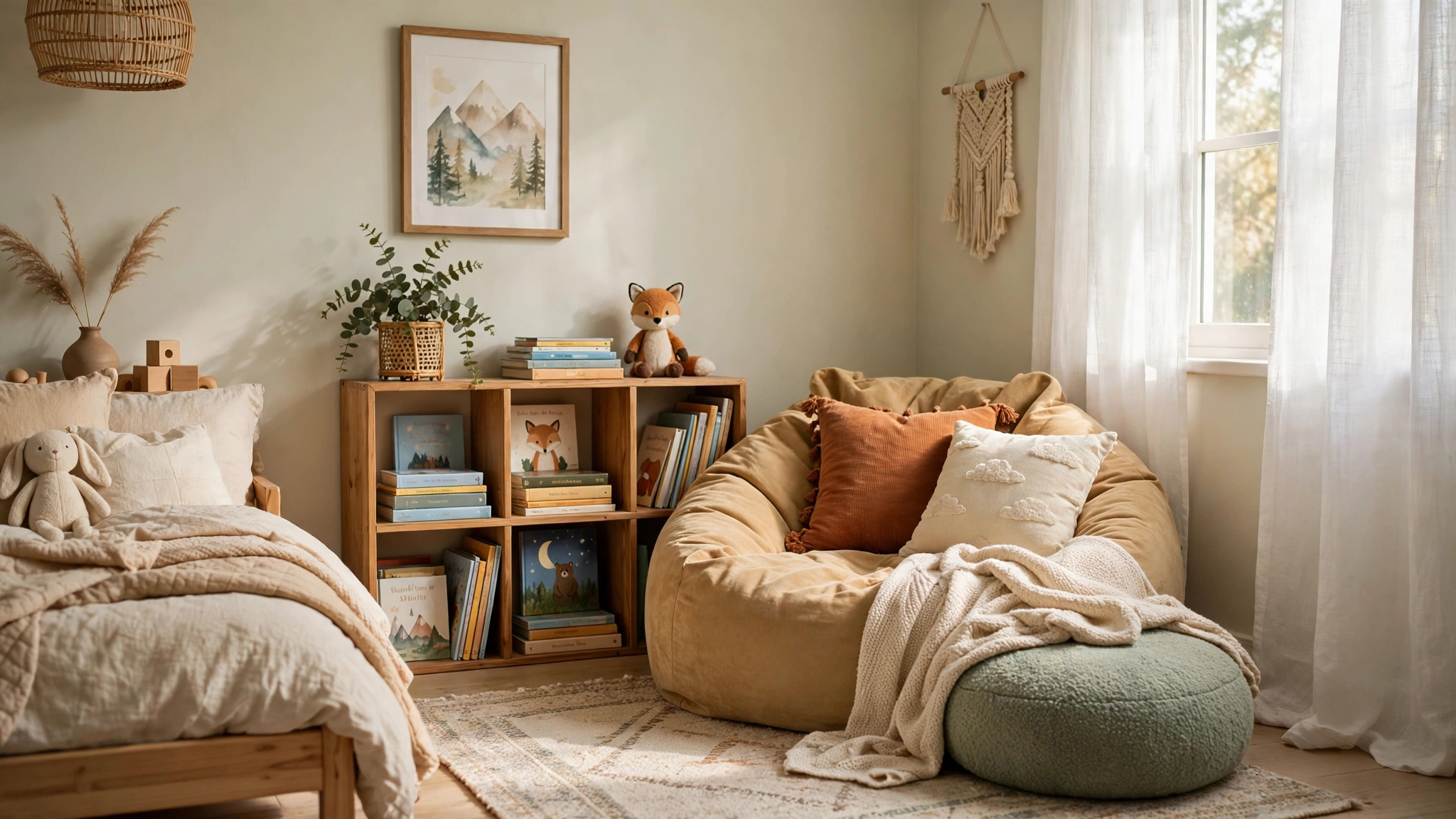
1. A Reading Nook They Will Actually Use
Every kids' room needs a cozy corner that belongs entirely to them, and a reading nook is the easiest win. Tuck a small bookshelf or cube shelf into an unused corner, add a floor cushion or a chunky beanbag chair, and finish with a soft throw blanket and one plush pillow. A small clip-on book light or a battery-operated lantern on the shelf makes the spot feel special after dark. Keep the books at kid height — front-facing picture-book ledges work beautifully for little ones who choose books by their covers. For the backdrop, hang two or three floating shelves above the nook to display favorite books and a tiny plant. Layer a small washable rug under the seat so the nook feels defined even in a shared bedroom. The best part? This setup costs little, takes an afternoon to build, and gives your child a quiet retreat that naturally encourages reading time without any nagging.
2. A Loft Bed With a Play Zone Underneath
If floor space is tight, go vertical. A loft bed instantly frees up the footprint below the mattress for a whole second room within the room. Style the under-loft area based on your child's age: for younger kids, lay down a play mat and turn it into a stuffed-animal headquarters or a dollhouse corner. For school-age kids, slide in a small desk and chair to create a homework station that feels tucked away and focused. String warm fairy lights along the underside of the loft frame so the space glows softly in the evening, and add a clip-on fan or reading light to the bed rail above for bedtime reading. Keep the ladder side clear and add a sturdy rail for safety. Choose a loft bed in natural wood or crisp white so it works with any bedding you swap in later. This single piece of furniture solves the two biggest kids' room problems — space and fun — in one move.
3. Removable Wall Decals Instead of Murals
Kids' tastes change like the weather, so skip the permanent painted mural and reach for large-format removable wall decals instead. Today's market is full of gorgeous options: arch shapes in muted terracotta, scatterings of stars, woodland animals, rainbow arcs, or simple polka dots in a single color family. Apply one statement arrangement behind the bed or above the dresser, keeping the other walls plain so the look stays airy rather than busy. Decals peel off cleanly when your child outgrows them, which makes this the rare kids' room upgrade that is both renter-friendly and commitment-free. For extra dimension, pair the decals with a painted half-wall or a soft color-blocked shape in a coordinating tone. If your child is artistic, leave one wall or a door panel covered in chalkboard or whiteboard paint so the art can change weekly without touching the decals.
4. Color-Blocked Walls for Instant Personality
A full room of bright paint can feel overwhelming, but a single color-blocked accent wall delivers personality without the chaos. Paint one wall in a confident but kid-friendly shade — think sage green, dusty blue, warm mustard, or soft coral — and keep the remaining walls warm white. For a playful twist, paint the bottom third of the wall in the accent color with a crisp straight line, or try a large painted arch behind the bed that frames it like a headboard. This technique is cheap, weekend-friendly, and easy to repaint when tastes change. Let your child pick between two or three parent-approved colors so they feel ownership of the room. Ground the look with bedding that pulls in the wall color in a smaller dose — a pillowcase or throw in the same tone — so the whole room feels pulled together instead of matchy-matchy.
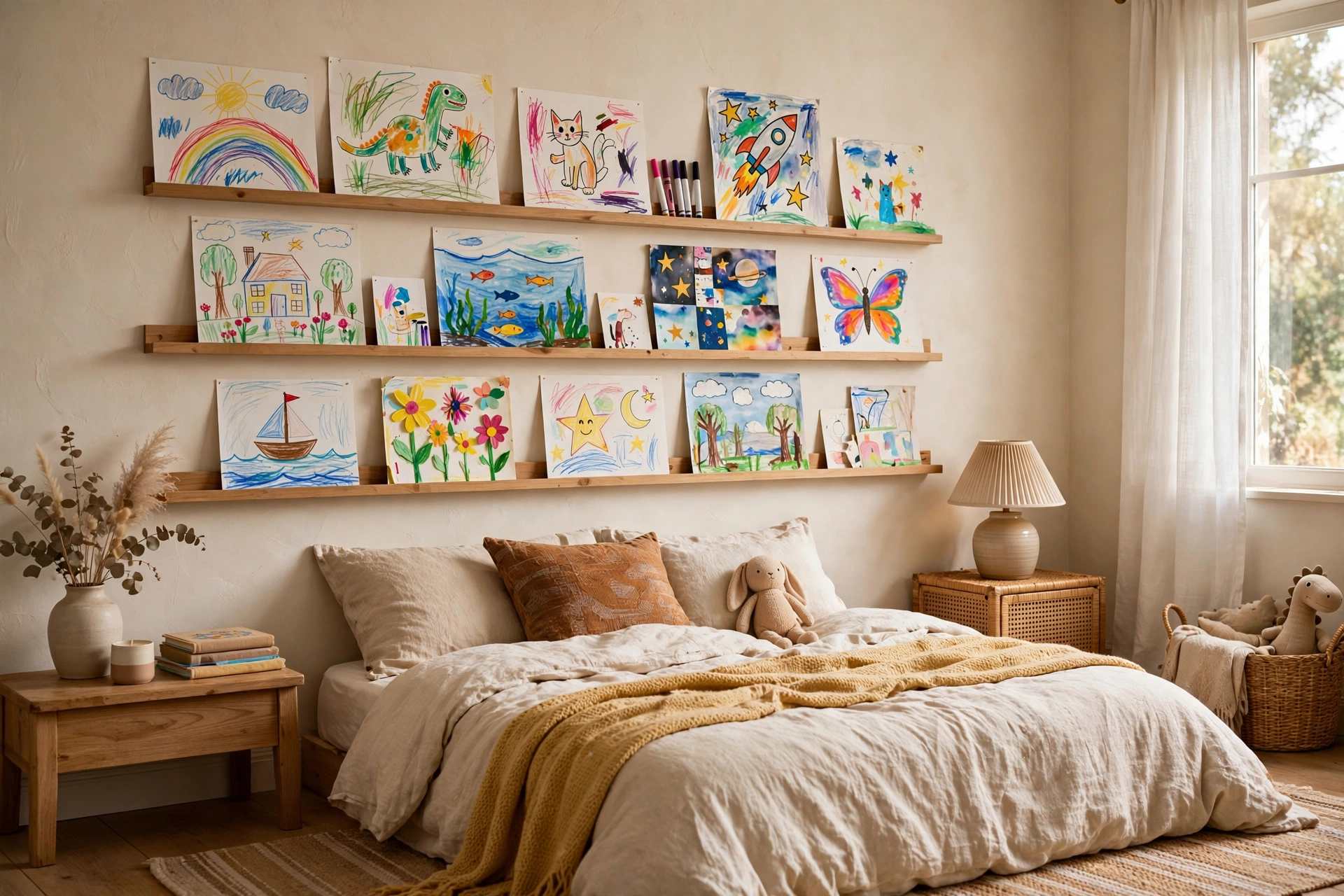
5. A Gallery Wall of Their Own Art
Turn your child's creativity into the room's best decoration with a dedicated gallery wall. Mount a row of slim picture ledges at your child's eye level and rotate their drawings, paintings, and school art projects through inexpensive frames. Uniform frames in white or natural wood keep the display looking intentional even when the art itself is wonderfully chaotic. For three-dimensional pieces — LEGO builds, clay sculptures, pinecone creatures — add one or two small cube shelves to the arrangement. Swapping the art every month or so keeps the wall fresh and makes your child feel celebrated. If you want a cleaner look, choose a tight grid of same-size frames; for a playful feel, mix sizes and let it grow organically. Either way, this is decor that costs almost nothing, means everything to your kid, and updates itself.
6. Built-In-Style Storage That Invites Tidying
The eternal kids' room battle is clutter, and the winning strategy is storage that is easier to use than the floor. Low cubby shelves with fabric bins let small kids toss toys away without folding or stacking anything — label each bin with a picture label (blocks, cars, dolls) so even pre-readers know where things go. A toy chest at the foot of the bed doubles as a bench for reading. Use the closet wisely: a hanging organizer on the door holds shoes and accessories, while a second low rod installed beneath the main one puts clothes within kid reach and teaches independence. Under-bed rolling drawers are gold for out-of-season clothes or bulky LEGO sets. Keep the storage furniture in the same finish — white, natural wood, or a soft color — so a wall of practical pieces still looks calm and coordinated.
7. A Cozy Canopy or Bed Tent
A simple fabric canopy transforms an ordinary bed into a hideout, a castle, or a reading cave depending on the day. Hang a lightweight gauzy canopy from a ceiling hook over the head of the bed and let it drape softly down the sides. Inside, add a string of warm fairy lights and a couple of plush cushions so the space feels like a secret clubhouse. Canopies work beautifully over toddler beds, twin beds, and even loft beds — just keep fabric away from sleep faces for very young children and follow safe-sleep guidance. Choose breathable cotton or mesh in white, blush, or soft gray so it stays airy and matches any bedding. When the canopy phase passes, the whole thing comes down in minutes with no patching or repainting required. It is one of the cheapest ways to add serious magic to a kids' room.
8. A Homework Station That Feels Grown-Up
Even young kids focus better at a real desk rather than the kitchen table. Carve out a homework zone with a simple desk, a comfortable chair with back support, and good lighting — a small desk lamp with warm light reduces eye strain during evening reading. Mount a corkboard or a magnetic board above the desk for schedules, spelling words, and proud accomplishments, and keep supplies in a desktop organizer or a rolling cart so the surface stays clear. A small rug under the chair defines the zone and protects floors from scooting. For shared rooms, position two desks back-to-back or along the same wall with a divider shelf between them so each child has their own territory. Keep the styling calm — neutral desk, one accent color in the chair or lamp — so the space signals "focus time" rather than "playtime."

9. Layered Rugs for Soft Landings
Kids spend most of their playtime on the floor, so the rug situation matters more here than in any other room. Start with a large, low-pile washable rug that covers the main play area — it anchors the room and survives spills, craft projects, and snack time. Then layer a smaller, plusher rug on top in the reading nook or beside the bed for bare-feet comfort in the morning. Round rugs work wonderfully in kids' rooms because they soften all the rectangular furniture and create a natural gathering spot for play. Choose patterns that hide a multitude of sins: subtle geometrics, rainbow arcs, or a world map print that doubles as decor and learning tool. Stick to machine-washable options or indoor-outdoor flatweaves for the main rug, and keep a spare small rug in storage so you can rotate during wash day without a bare floor.
10. Glow-in-the-Dark Ceiling Stars
Few things beat the bedtime magic of a ceiling full of stars. Glow-in-the-dark star decals are inexpensive, take an hour to arrange, and turn lights-out into something your child looks forward to instead of dreads. Arrange them in loose constellations rather than a rigid grid — a scattered, natural-looking sky feels more magical. Charge them with the room light for a few minutes before bed for the brightest glow. For an even dreamier effect, pair the stars with a small star-projector night light that casts slow-moving constellations across the ceiling and walls. Keep the rest of the bedtime setup calm: soft bedding, a familiar stuffed friend, and a dim warm nightlight near the door so the room never feels too dark. When your child outgrows the stars, they peel off with no damage — pure temporary wonder.
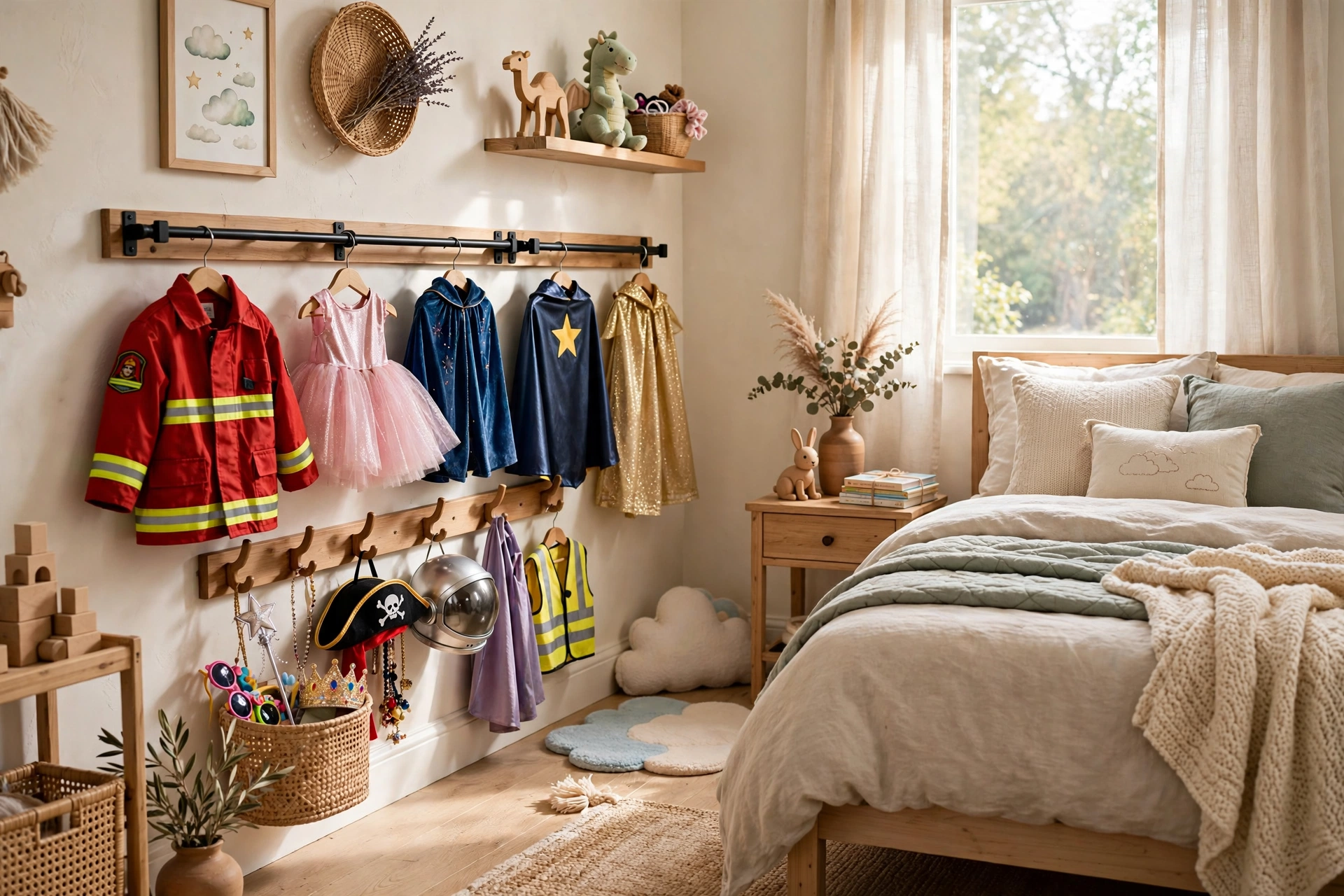
11. A Dress-Up and Costume Corner
If your child loves pretend play, give costumes a proper home instead of a tangled heap on the floor. Mount a low clothing rail or a row of sturdy hooks at kid height along one wall, and hang capes, tutus, firefighter jackets, and princess dresses where they can be seen and grabbed. A small full-length mirror — securely anchored to the wall — makes trying things on twice as fun. Store accessories like crowns, hats, and wands in a labeled basket or a hanging shoe organizer on the back of the door. A small trunk or lidded ottoman at the base of the rail holds overflow and doubles as seating. Keep this corner near the play area rather than the bed so costume chaos stays contained. This setup turns dress-up from a five-minute mess into an all-afternoon adventure, and cleanup is as simple as re-hanging.
12. Bunk Beds Styled for Siblings
Shared sibling rooms work best when each child gets a clearly defined personal zone, and bunk beds are the classic solution. Give each bunk its own identity: matching bedding in different accent colors, a clip-on reading light and a small wall-mounted shelf for each sleeper, and a privacy curtain on the lower bunk for kids who crave their own cave. Label drawers or cubbies with each child's name so belongings stay separate and arguments stay low. If the room allows, position a small rug and beanbag on each side of the room to create two mini hangout spots. Keep shared elements neutral — white or wood bed frame, simple curtains — and let each child's bedding, art, and shelf styling express their personality. A bunk setup done this way gives siblings togetherness without the constant territory wars.
13. A Chalkboard or Whiteboard Wall
Some kids think best with a marker in hand, so dedicate one surface to erasable creativity. A section of wall painted with chalkboard paint — or a large framed whiteboard hung at kid height — becomes the spot for spelling practice, tic-tac-toe tournaments, doodle sessions, and countdown chains to birthdays. Frame the painted area with simple trim so it looks like an intentional design feature rather than a random black rectangle. Stock a small ledge or cup with chalk, markers, and an eraser, and keep a damp cloth nearby for easy resets. For renters, a giant roll of chalkboard-adhesive paper or a portable standing easel gives the same fun with zero paint. Rotate a "question of the week" or a drawing challenge on the board to keep it fresh. It is part art studio, part learning tool, and entirely wipeable.
14. Nature-Inspired Calm Corner
Not every corner of a kids' room has to be high-energy — a calm-down spot teaches kids to recognize when they need a breather. Style it with nature-inspired touches: bedding or cushions in soft greens and warm beiges, a small potted plant they can help water, and artwork featuring trees, animals, or mountains. Add a cozy floor cushion or a small rocking chair, a basket with a few calm-down tools (a favorite book, a fidget toy, a soft stuffed animal), and a warm-toned lamp instead of overhead lighting. Keep this corner slightly separate — behind a curtain, in a nook, or simply facing away from the toy area — so it genuinely feels like a retreat. The natural palette has a bonus: greens and warm neutrals age gracefully, so this corner still looks right when your child is a teenager.
15. A "Grows With Me" Neutral Base
The smartest long-term strategy is also the simplest: build the room on a neutral, timeless base and let the fun live in the swappable layers. Choose walls in warm white or soft greige, a classic wood bed frame, simple white dresser, and plain curtains. Then pour the personality into bedding, rugs, art, and accessories — the things you can change in an afternoon for the cost of a pizza night. A dinosaur-obsessed six-year-old gets dino bedding and wall decals; at ten, the same room becomes a sports theme or a minimalist teen setup with zero furniture changes. Invest your budget in the pieces that last — a solid bed, a good mattress, sturdy storage — and save on the trendy layers. This approach keeps the room feeling fresh through every phase without a full redecorate each time your child's interests pivot.
Styling Tips
Start with the bed placement. Put the bed against the longest solid wall, ideally where your child can see the door — kids sleep better when the room feels secure. Keep at least two feet of clearance on one side for making the bed and midnight bathroom trips.
Light in layers. Overhead lighting alone feels harsh. Combine a ceiling light with a bedside lamp for reading, a nightlight near the door for nervous sleepers, and string lights or a lantern for cozy evening ambiance. Put the main light on a dimmer if you can.
Choose washable everything. Slipcovered or machine-washable bedding, washable rugs, and wipeable paint finishes (eggshell or satin) will save your sanity. Kids' rooms take more abuse than any other room in the house — plan for it instead of fighting it.
Keep floors clear for play. Resist the urge to fill every square foot with furniture. Open floor space is the most valuable real estate in a kids' room — it becomes the racetrack, the dance floor, and the LEGO construction site.
Let them choose within boundaries. Offer two or three parent-approved options for big decisions like wall color or bedding. Your child gets real ownership of the room, and you avoid the neon-green-everything scenario.
Rotate toys, not just decor. Store half the toys out of sight and swap them monthly. The room stays tidier, and old toys feel brand new again — it is the cheapest refresh there is.
Think in zones. Even a small room benefits from visual zones: sleep, play, and study. Rugs, lighting, and furniture arrangement can define each zone without walls or dividers.
FAQ
What colors work best for a kids' room?
Soft, warm neutrals for the big surfaces (walls, large furniture) plus one or two cheerful accent colors in bedding and accessories. Sage green, dusty blue, warm mustard, soft coral, and gentle lavender all feel playful without overwhelming the space. Let your child pick the accents so the room feels like theirs.
How do I design a small kids' room?
Go vertical: loft or bunk beds free up floor space for play or a desk. Use under-bed drawers, wall-mounted shelves instead of bookcases, and a fold-down or compact desk. Keep the palette light and the rug large — both tricks make small rooms feel bigger. One statement piece (a canopy, a bold rug) beats lots of small clutter.
What is the best flooring for a kids' room?
Whatever is already there, plus a large washable rug. Low-pile rugs are easiest to clean and safest for rolling toys; layer a plusher small rug in the reading nook. Avoid long-pile shag in the main play area — it traps crumbs and tiny toy pieces.
How can I make a kids' room work for two siblings sharing?
Give each child a defined personal zone: separate bedding colors, individual reading lights and shelves on bunk beds, and labeled storage for each child's belongings. A small rug or curtain can mark territory without dividing the room. Keep shared furniture neutral and let personal items carry each child's style.
How do I decorate a kids' room on a budget?
Spend on what lasts (bed, mattress, storage) and save on what shows (bedding, decals, art). Removable wall decals, thrifted frames for their artwork, and a fresh coat of paint on one accent wall deliver huge impact for little money. Rotating existing toys and art keeps the room feeling new at zero cost.
When should I redesign as my child gets older?
Plan for mini-refreshes every 2–3 years rather than full redesigns. If you built on a neutral base with swappable layers (idea 15), each refresh is just new bedding, art, and accessories — an afternoon project, not a renovation. Watch for the signs: they stop playing with the themed decor, ask for a desk, or want friends over more than solo play.
Conclusion
A great kids' room is not about a perfect Pinterest photo — it is about a space where your child feels safe, inspired, and free to be exactly who they are right now. The fifteen ideas above all share the same philosophy: flexible foundations, playful layers, and storage that makes real life easier. Start with one or two changes — a reading nook, a fresh accent wall, better toy storage — and let the room grow alongside your child. Years from now, they will not remember whether the bedding matched the curtains. They will remember the canopy fort, the ceiling stars, and the little corner that was entirely theirs.


