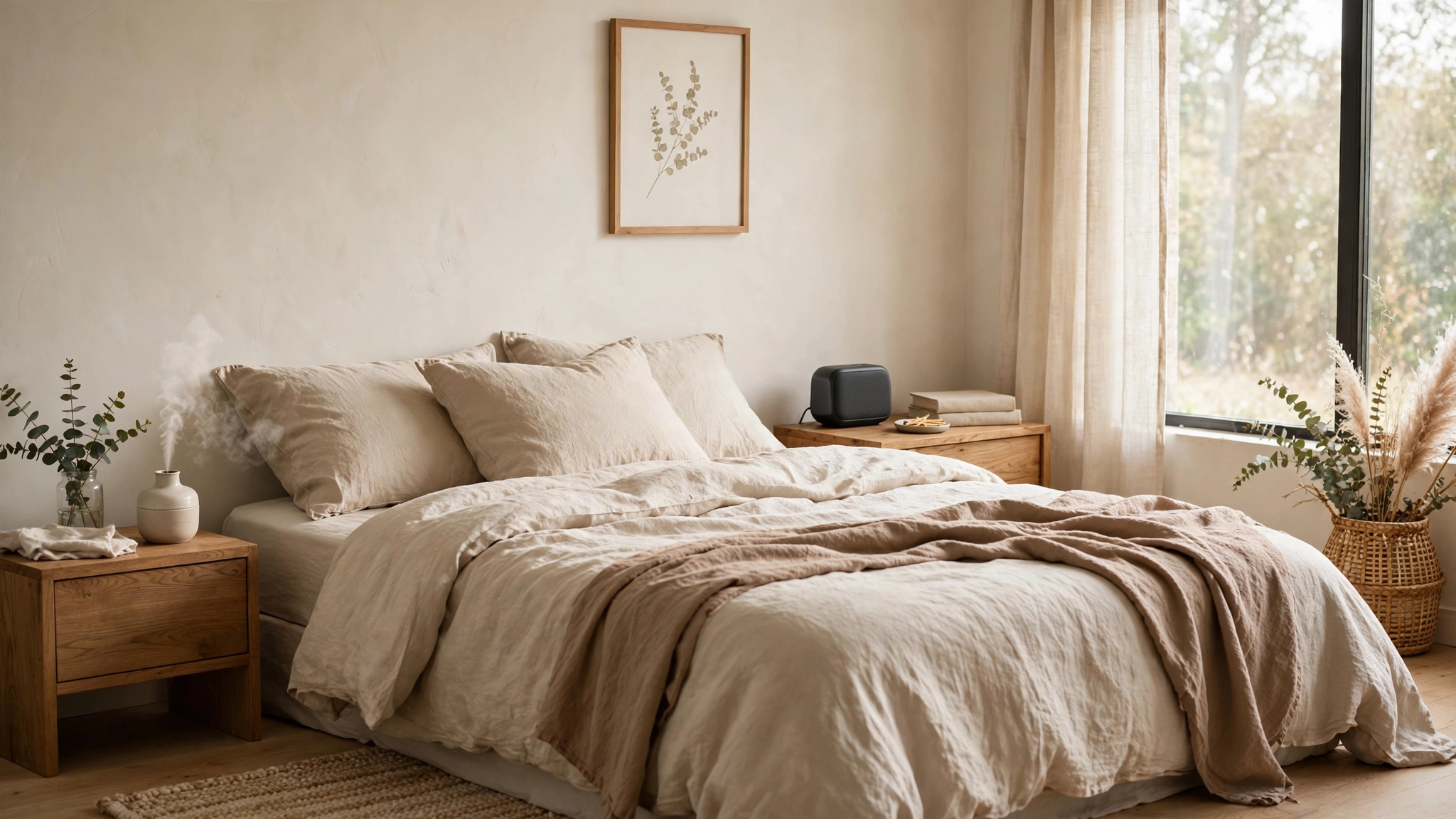

15 Minimalist Bedroom Ideas for Better Sleep
There's something magical about a bedroom that asks nothing of you. No buzzing visual noise, no piles of half-read magazines, no "I'll organize that drawer someday" guilt. Just a calm, quiet room where your shoulders drop the second you walk in. That's the heart of a minimalist bedroom — and it's one of the best gifts you can give your sleep.
Minimalism in the bedroom isn't about owning nothing or living in a cold white box. It's about keeping only what helps you rest: a bed you love sinking into, soft light, calm colors, and clear surfaces that let your mind power down. When your eyes have less to process, your brain gets the message that it's safe to slow down — and that translates into falling asleep faster and waking up feeling genuinely refreshed.
The ideas below aren't strict rules. Think of them as invitations to simplify one corner at a time. Maybe you start with your nightstand, then your bedding, then the walls. Small edits add up fast, and every one of them brings you closer to a bedroom that feels like a deep breath. Let's begin.
1. Choose a Low Platform Bed in Natural Wood
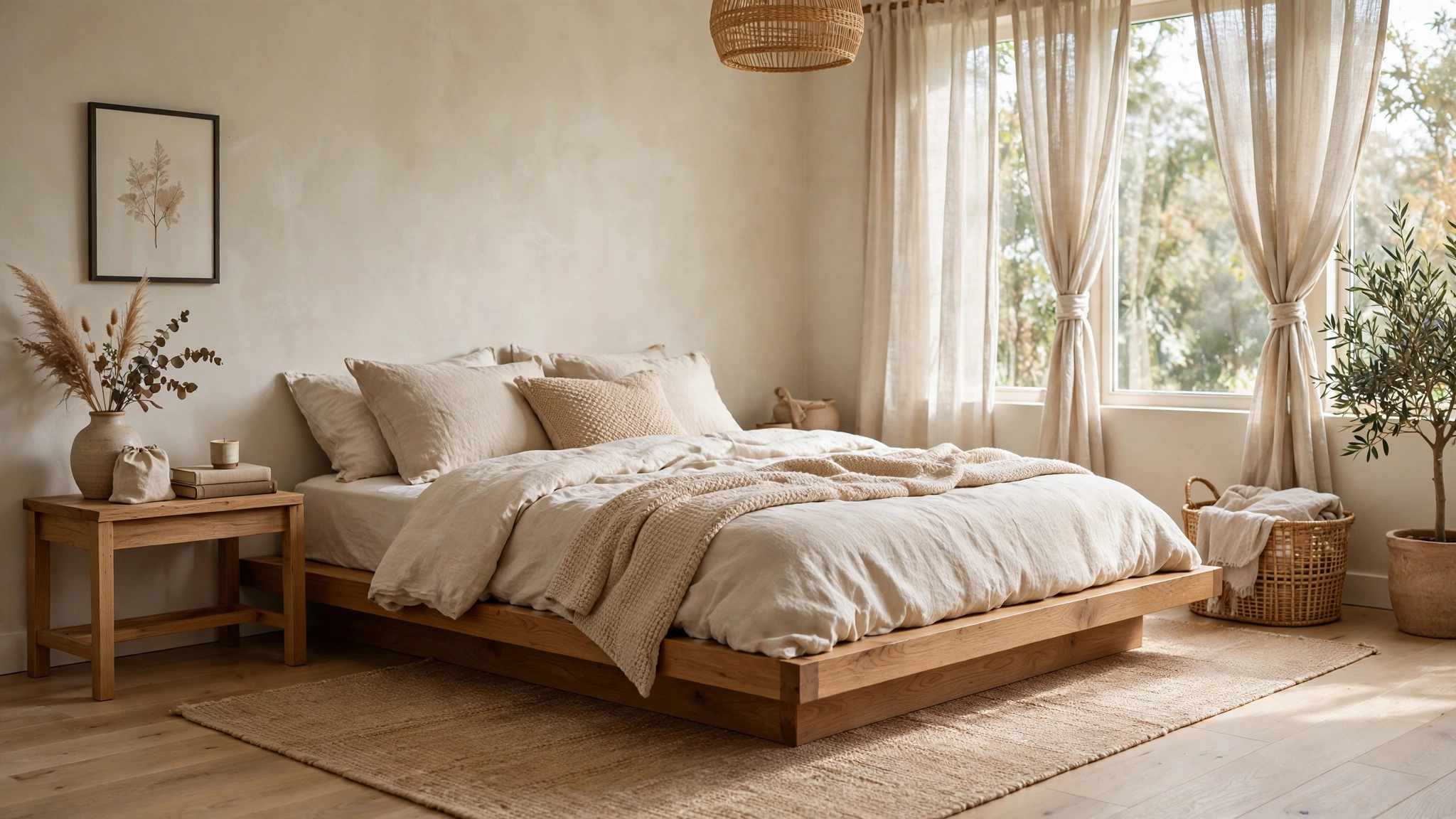
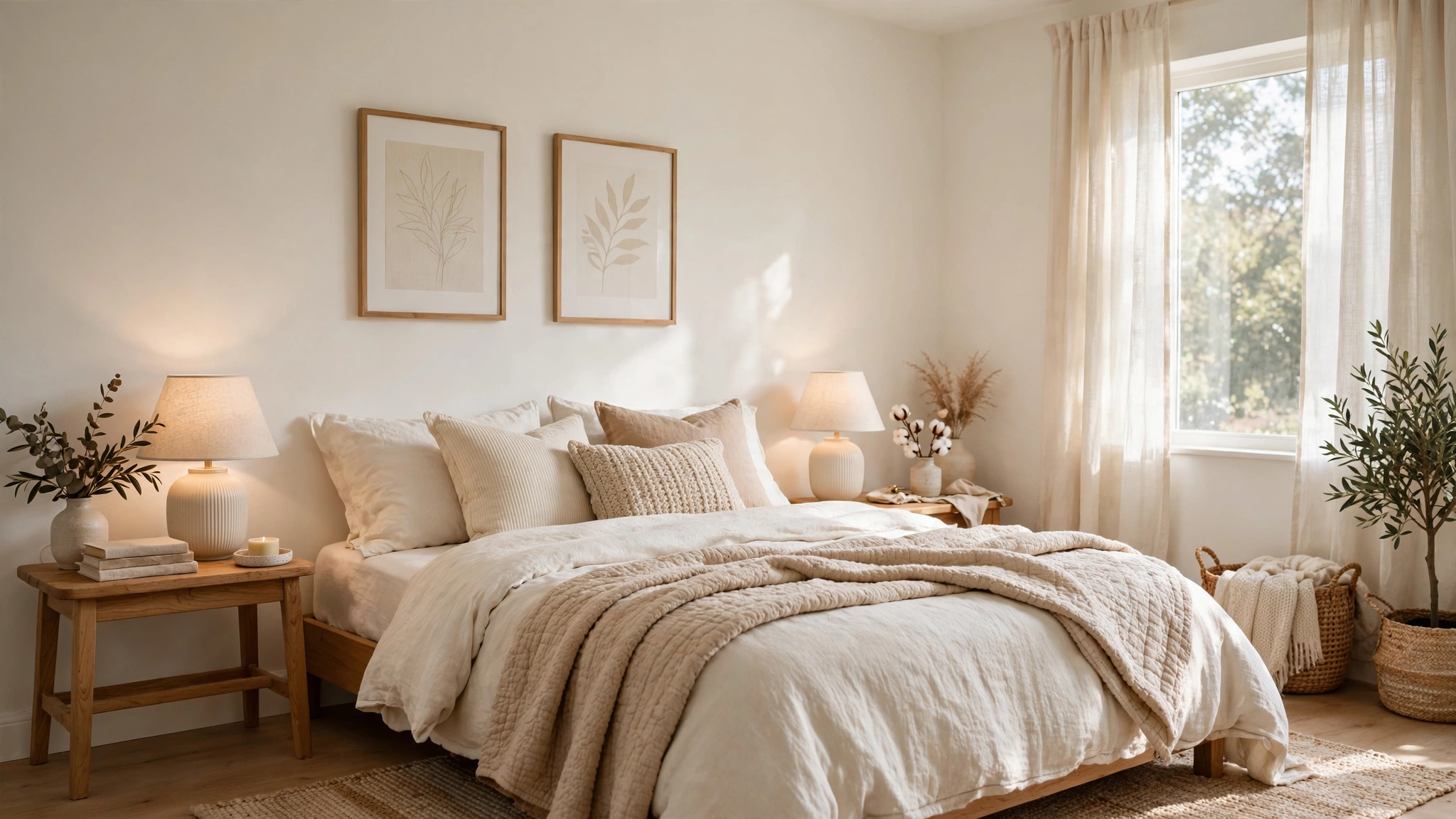
A low platform bed is the anchor of a minimalist bedroom, and a natural wood finish makes it feel warm instead of stark. Look for a simple frame in oak, ash, or walnut with clean straight lines and no ornate headboard — a tall, flat panel or even a slatted headboard keeps the silhouette simple. Because the bed sits low to the ground, the ceiling feels higher and the whole room feels airier, which matters most in smaller bedrooms.
Dress it with crisp cotton or linen bedding in white, ivory, or soft oat, and let the wood grain be the only "pattern" in sight. Skip the mountain of decorative pillows; two sleeping pillows plus one or two slightly smaller ones in the same color family is plenty. Finish the look with a flat-weave rug in a natural fiber underneath the bed so your feet land on something soft and textured every morning.
2. Commit to a Calming Three-Color Palette
Minimalist bedrooms sleep best in a tight color story, and three colors is the sweet spot. Pick one warm neutral for the walls — think soft white, warm greige, or pale clay — one slightly deeper tone for bedding or furniture, like taupe, sage, or dusty blue, and one whisper of contrast, such as charcoal on a picture frame or the leg of a bench. Keeping everything inside this family makes the room feel instantly coordinated, even on days the bed isn't perfectly made.
The trick is repetition. Echo your wall color in your curtains, your bedding tone in a throw or a cushion, and your accent shade in two or three small moments around the room. When colors repeat, the eye moves smoothly instead of jumping from one loud thing to another, and that visual calm is exactly what your brain needs before sleep. If you ever feel bored, change the texture — swap smooth cotton for nubby linen — rather than adding a new color.
3. Keep the Nightstand Surface Nearly Empty
Your nightstand is the last thing you see before closing your eyes and the first thing you see in the morning, so treat it like a tiny altar to rest. Give yourself exactly three items: a small lamp, one book, and one small personal object like a candle, a bud vase with a single stem, or a tiny dish for jewelry. Everything else — chargers, remotes, glasses of water from three nights ago — lives in the drawer or leaves the room entirely.
If your nightstand doesn't have a drawer, a lidded box or a small tray with sides gives clutter a home while keeping the surface serene. Choose a nightstand with legs rather than a bulky box shape so you can see a little floor underneath; that sliver of visible floor makes the furniture feel lighter and the room feel bigger. Wipe the surface once a week and you'll be amazed how satisfying a clear nightstand feels.
4. Layer Soft, Washable Bedding in One Tone
Great sleep starts with bedding that feels like a hug, and minimalism loves bedding that's beautiful in its simplicity. Build your layers in one tone — all white, all ivory, all pale sage — mixing textures instead of colors: a smooth percale fitted sheet, a softly crinkled linen duvet, and a waffle-weave throw folded at the foot of the bed. Same color, three textures, zero visual noise.
Washability matters more than most people admit. Bedding you can toss in the machine without worrying about special care gets washed more often, which means it feels fresher and sleeps cooler. Add a single extra blanket for cold nights rather than a decorative bedspread you'll shove aside. When every layer is in the same calm shade, an unmade bed still looks peaceful — and that's a kindness on rushed mornings.
5. Hang One Piece of Oversized Art Above the Bed
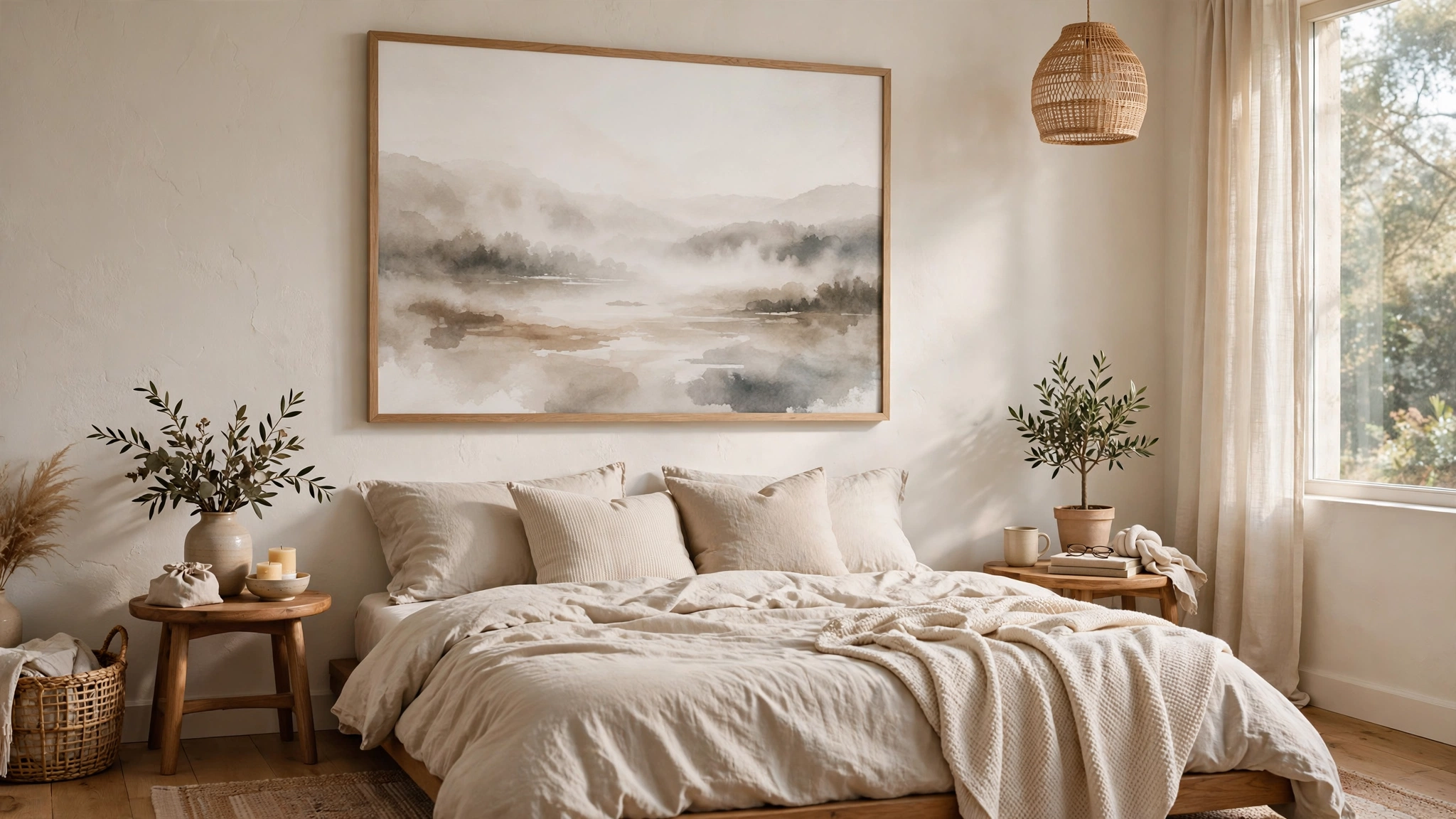
Instead of a busy gallery wall, give the wall above your bed a single moment of focus: one oversized piece of art. A large abstract print in soft neutrals, a misty landscape, or a simple line drawing draws the eye up and makes the whole room feel more spacious. The scale matters — aim for art that's roughly two-thirds the width of the bed so it feels intentional, not lost.
Keep the frame simple: thin black, natural wood, or no frame at all with a canvas. Hang it low enough that it relates to the bed — about six to eight inches above the headboard — rather than floating near the ceiling. Abstract or nature-inspired pieces work best because they don't tell a story your brain wants to finish; they just wash over you. One calm image, quietly doing its job, is the minimalist alternative to a wall full of frames.
6. Use Warm, Layered Lighting Instead of One Bright Overhead
Overhead lights are the enemy of evening calm. A minimalist bedroom sleeps better with two or three small, warm light sources placed at different heights: a table lamp on the nightstand, a floor lamp in a reading corner, and maybe a small plug-in sconce by the bed. Choose bulbs labeled warm white (around 2700K) and keep them dimmer than you'd use in a living room.
Dimmable lamps are worth their weight in gold here — turn them down an hour before bed and your body gets a genuine signal that nighttime is coming. Hide any harsh sources: a paper or linen shade softens light beautifully, and a shade that points light up toward the ceiling bounces it gently around the room. If your ceiling fixture is unavoidable, fit it with the dimmest warm bulb you own and leave it off in the evenings.
7. Hide Clutter Behind Closed Doors and Lidded Baskets
Minimalism isn't about having fewer things; it's about having fewer visible things. Give every category of bedroom clutter a closed home: a dresser with drawers instead of an open shelf, a lidded basket for extra throws, a lidded hamper for laundry, and a closed box on the closet shelf for the odds and ends that used to live on the dresser top. When surfaces are clear, the room reads as calm no matter what's tucked inside.
Baskets in natural materials — seagrass, rattan, or cotton rope — add texture while doing the hiding. Keep the count low: two or three large baskets beat six small ones, which start to look cluttered themselves. Once a season, open each closed container and honestly ask whether what's inside still earns its place. Editing the inside keeps the outside serene.
8. Float Sheer Curtains for Soft, Diffused Morning Light
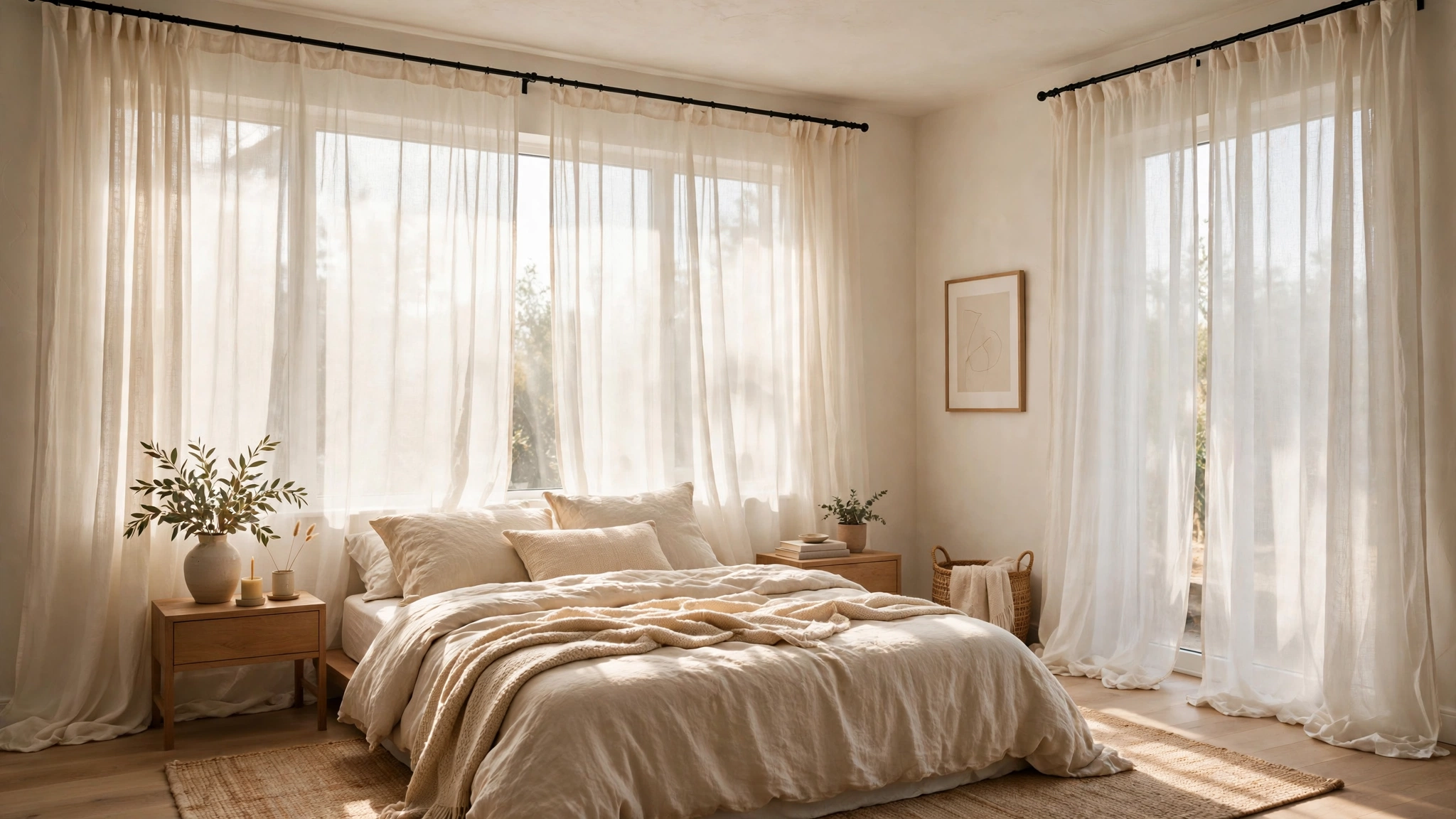
Heavy blackout curtains can make a bedroom feel like a cave; sheers strike the perfect minimalist balance. Hang lightweight white or ivory linen curtains from a rod mounted high and wide — near the ceiling and extending past the window frame — so the window looks grander and the room feels taller. During the day, sheers filter sunlight into a soft glow that flatters everything in the room.
If you're sensitive to morning light, layer a simple roller shade behind the sheers rather than adding heavy drapes. You get darkness when you need it and airiness the rest of the day. Skip fussy valances, tiebacks, and finials; a simple matte rod in black, brass, or wood keeps the look clean. Curtains that just barely kiss the floor feel tailored and calm, while puddling fabric collects dust and visual weight.
9. Create a Tiny Reading Nook with One Chair
A minimalist bedroom doesn't have to be bed-only. If you have even a small corner, one comfortable chair plus a small side table and a floor lamp creates a wind-down ritual spot that isn't your bed. Keeping sleep and reading in slightly different places trains your brain to associate the bed with sleep only, which genuinely improves rest.
Choose a chair with a simple profile — an upholstered armchair in a solid neutral or a bentwood rocker — and keep the nook to exactly those three pieces. Drape a soft throw over the arm and stack two or three books on the side table, no more. This little corner becomes your evening landing pad: tea, ten pages, lights low. When you finally slide into bed, your mind is already halfway to sleep.
10. Go Barefoot-Friendly with a Low-Pile Natural Rug
A rug does three things for a minimalist bedroom: it softens sound, warms bare feet, and anchors the bed visually. Choose a low-pile rug in a natural fiber like wool, cotton, or jute in a solid neutral or a very subtle tone-on-tone pattern. Low pile is key — it's easier to vacuum, doesn't trap dust the way shag does, and keeps the room's lines crisp.
Size it generously: the rug should extend at least two feet beyond the bed on both sides and at the foot, so you step onto softness no matter which way you get up. If a full under-bed rug feels like too much commitment, two long runners along each side of the bed give the same cozy-foot feeling with less fabric. Stick to one rug per room — layering rugs on rugs belongs in a different style.
11. Paint the Walls a Soft, Warm White
Wall color sets the emotional temperature of the whole room, and for better sleep, warm white wins. Cool, blue-toned whites can feel clinical under artificial light, while warm whites — with the faintest hint of cream, peach, or sand — glow softly in lamplight and feel like a gentle hug. Test swatches on the wall and check them at night under your actual lamps before committing.
Paint the ceiling the same color to erase the harsh line where wall meets ceiling; the room will feel taller and more cocoon-like. If white-on-white feels too plain, add depth with a single accent wall behind the bed in a muted tone like warm greige, clay, or sage — never a loud color. A matte or eggshell finish keeps light soft; glossy paint bounces light around in ways that feel busy rather than calm.
12. Add One Living Plant for Quiet Freshness
A single plant is the minimalist's perfect accessory: alive, quietly beautiful, and it asks for nothing except a little water. Choose something sculptural and low-maintenance — a snake plant, a ZZ plant, or a small olive tree in a simple ceramic pot. One plant makes a statement; five plants make a jungle, which is a different room entirely.
Place it where you'll actually see it — beside a window, on a dresser corner, or on the floor next to the reading nook — and keep the pot simple: matte white, terracotta, or natural clay. The green of leaves is nature's neutral, and studies consistently link a touch of greenery to lower stress, which is exactly the state you want before sleep. Wipe the leaves occasionally; a dusty plant sends the opposite message.
13. Choose Furniture with Visible Legs and Breathing Room
Bulky furniture that sits flat on the floor makes a bedroom feel heavy and cramped. Minimalist pieces lift themselves up: a bed frame on tapered legs, a dresser on short wooden feet, a nightstand with slender legs. That small gap of visible floor underneath tricks the eye into reading the room as larger and lighter, and it makes cleaning underneath effortless.
Just as important is breathing room between pieces. Resist the urge to fill every wall; leave at least a few inches of empty space around each furniture piece and keep one stretch of wall completely bare. Empty space isn't wasted space in a minimalist bedroom — it's the visual equivalent of silence, and silence is what lets your nervous system stand down at the end of the day.
14. Keep Technology Out of Sight (and Ideally Out of the Room)
Nothing shatters bedroom calm like a glowing screen or a tangle of chargers. The minimalist sleep upgrade here is simple: charge your phone outside the bedroom, or at minimum inside a closed drawer across the room from the bed. A small analog alarm clock on the nightstand replaces the phone's job without the temptation of one more scroll.
If a TV lives in the bedroom, mount it on an articulated arm you can fold flat against the wall, or hide it inside a cabinet with doors that close. Run cables through a cord cover or behind furniture so no black snakes trail across the floor. The goal isn't tech-shaming — it's making the bedroom a place where your brain stops expecting notifications. Most people who try a phone-free bedroom for a week report falling asleep noticeably faster.
15. Finish with Scent, Sound, and a Made Bed
The final layer of a minimalist bedroom is invisible: scent, sound, and order. A made bed — even a quick, imperfect one — signals to your brain that the day has a clean ending, and studies link it to better sleep quality. Keep the making ritual simple: straighten the sheet, pull up the duvet, fluff the pillows. Thirty seconds is enough.
Layer in one calming scent, like lavender or cedarwood, through a candle, a reed diffuser, or a linen spray on your pillows — never three fragrances competing. For sound, a small white-noise machine or a fan masks the little creaks and traffic hums that wake light sleepers. These invisible finishing touches cost almost nothing, take up zero visual space, and do more for your sleep than any decorative object ever could.
Styling Tips
Start with the surfaces. Before buying anything, clear every surface in your bedroom completely, then put back only what you love or use daily. You'll be shocked how much calmer the room feels with subtraction alone — and you might realize you don't need to shop at all.
Edit in daylight. Clutter hides in evening lamplight. Do your decluttering passes on a bright weekend morning when every pile is visible and your judgment is sharpest. Bag donations immediately and get them out of the house the same day.
Buy the best bedding you can afford. In a minimalist bedroom, the bed is the whole show. One set of high-quality sheets beats three scratchy ones, and you'll touch them every single night. Prioritize natural fibers like cotton or linen over thread-count bragging rights.
Follow the "one in, one out" rule. A minimalist bedroom stays minimalist only if new things replace old ones instead of joining them. New throw pillow? An old one leaves. New book on the nightstand? The finished one moves to the shelf. This tiny habit prevents slow re-cluttering.
Keep the floor 80% clear. Shoes, bags, and laundry migrate to bedroom floors by default. Give each a real home — a shoe tray in the closet, a hook for tomorrow's bag, a lidded hamper — and do a 60-second floor sweep before bed. Clear floors make even a small room feel spacious.
Photograph your room. Your eyes go blind to your own clutter. Take a phone photo of your bedroom and look at it like a stranger would — the photo reveals the crowded corner and the dusty shelf you've been walking past for months. Retake monthly to track your progress.
Change with the seasons, lightly. Minimalism doesn't mean frozen in time. Swap the throw for a heavier knit in winter, trade the art print for a moodier one, switch the candle scent. Two or three small seasonal swaps keep the room feeling fresh without adding permanent stuff.
FAQ
Does a minimalist bedroom have to be all white?
Not at all. White is popular because it's calming and easy, but minimalism is about simplicity, not a specific color. Warm neutrals like beige, greige, oat, and soft clay work beautifully, and muted tones like sage green, dusty blue, or warm terracotta make wonderful accent colors. The rule is a limited palette — three or so colors that all get along — not a ban on color itself.
How do I make a minimalist bedroom feel cozy instead of cold?
Texture is the answer. Layer nubby linen, soft wool, smooth cotton, and natural wood within your neutral palette, and the room will feel warm and inviting. Warm lighting (2700K bulbs, dimmed in the evening), a soft rug underfoot, and one living plant also add instant coziness. Cold minimalism comes from hard surfaces, cool light, and empty expanses — warmth comes from touchable materials.
Can a minimalist bedroom work in a small room?
Small rooms are where minimalism shines brightest. A low platform bed, furniture with visible legs, a tight color palette, and clear surfaces all make a small bedroom feel bigger than it is. In a truly tiny room, choose multi-functional pieces — a nightstand with a drawer, a bed with under-bed storage drawers — so everything has a hidden home and the visible space stays serene.
What should I do with sentimental items I can't throw away?
Keep them — minimalism is not about discarding memories. The minimalist move is curation, not purging: choose a small number of sentimental pieces to display (one framed photo, one keepsake on the dresser) and store the rest together in a single labeled box in the closet. Rotating one or two sentimental items seasonally lets you enjoy them all over time without visual overload.
How long does it take to transform a bedroom into a minimalist one?
A surface-level reset takes one focused weekend: declutter, rearrange, and refresh bedding and lighting. The deeper version — repainting, swapping furniture, refining over time — unfolds over a few weeks or months, and that's fine. Minimalism is a direction, not a deadline. Most people find the first big clear-out delivers 80% of the calm, and the rest is gentle fine-tuning.
Will a minimalist bedroom actually help me sleep better?
There's good reason to think so. Sleep researchers consistently find that cluttered, visually busy bedrooms are linked to poorer sleep quality, likely because visual chaos keeps the brain in a low-level alert state. A calm, uncluttered room with dim warm light, comfortable bedding, and no glowing screens removes those obstacles, making it easier to fall asleep and stay asleep. It's not magic — it's just one less thing working against your rest.
A minimalist bedroom isn't a finish line you cross — it's a quieter way of living with your space. You don't need to buy a whole new room or throw everything away this weekend. Pick the one idea that made you exhale a little while reading, and start there: clear the nightstand, soften the lighting, or pull the bedding into one calm color. Each small edit lowers the volume of the room, and a quieter room makes for deeper rest. Sleep well — your calmest bedroom is closer than you think.