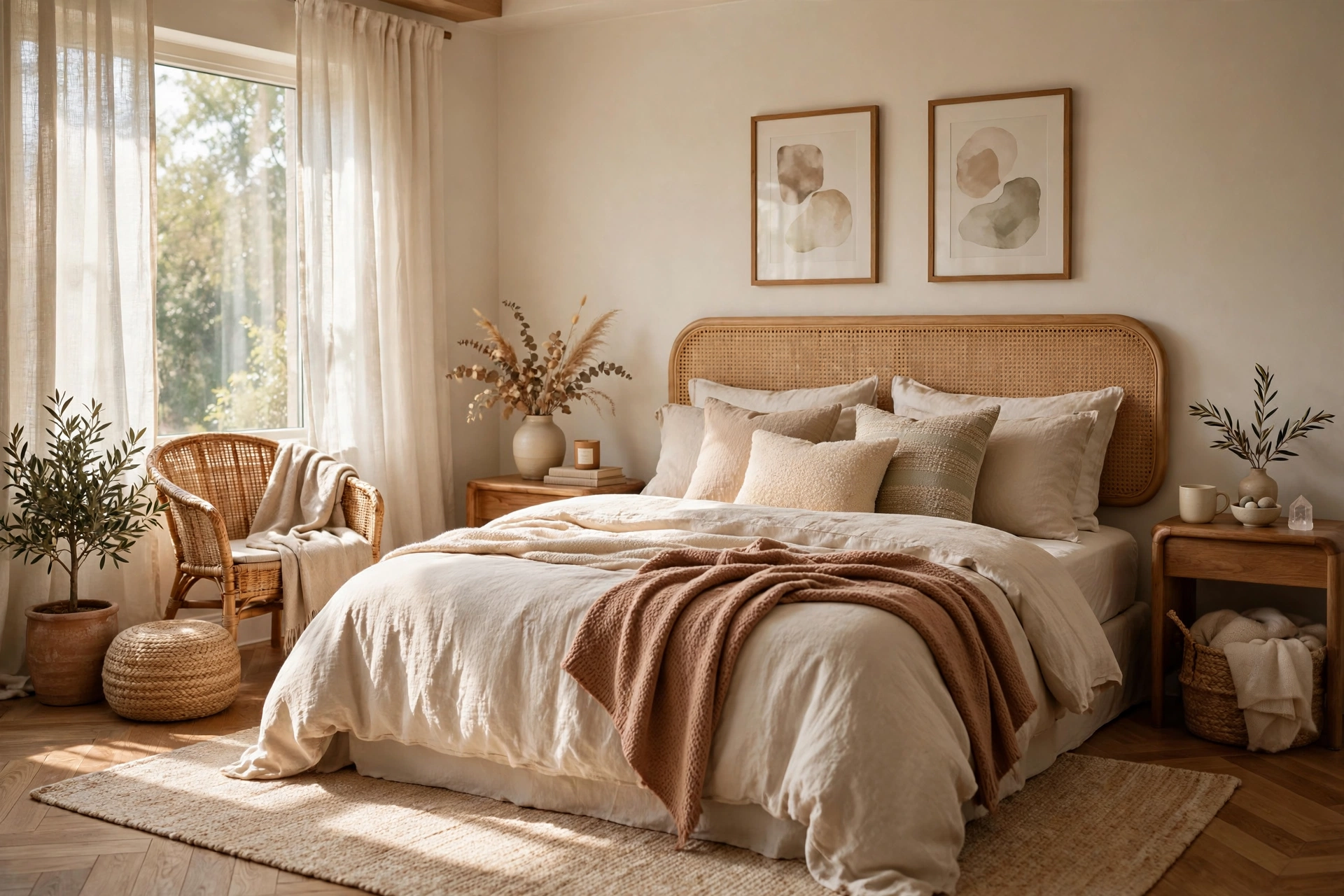

12 Feng Shui Bedroom Ideas for Restful Sleep
There's a reason some bedrooms instantly make you want to climb under the covers while others leave you staring at the ceiling. It's not always about the furniture or the price tag — it's about the energy of the room. Feng shui, the ancient Chinese art of arranging space, is built on a simple idea: when your surroundings feel balanced and calm, your mind and body settle too. And there's no room where that matters more than the bedroom.
You don't need to be an expert in feng shui or believe in any particular philosophy to feel the difference. Small, thoughtful choices — where the bed sits, what colors surround you, how much clutter is within sight — can turn a restless room into a genuine retreat. The best part is that most feng shui bedroom tweaks cost little or nothing. They're about placement, intention, and letting go of what doesn't serve you.
In this guide, you'll find 12 practical feng shui bedroom ideas to help you sleep more deeply and wake up more refreshed. Each one focuses on one specific change you can make, with real styling details you can actually use. Whether you start with one idea or work through all twelve, your bedroom will thank you.

1. Place Your Bed in the Command Position
The single most important feng shui rule for the bedroom is also the simplest: position your bed so you can see the door while you're lying in it, without being directly in line with it. This is called the command position. It gives you a subconscious sense of safety — you can see who enters the room — which allows your nervous system to fully relax. When you're in bed, you should feel like you're in charge of the space, not vulnerable in it.
In practice, this usually means the bed sits against the wall opposite the door, but off to one side so the doorway isn't aligned with the middle of the mattress. Avoid placing the bed so the foot points straight at the door, which is traditionally considered an draining alignment, and avoid tucking the bed directly beside the door where every movement in the hallway pulls your attention.
For finishing touches, use a solid headboard — wood or upholstered — firmly attached to the bed or wall. A strong headboard represents stability and support in life. If your room's layout makes the command position impossible, hang a small mirror where you can catch a glimpse of the doorway from bed; it restores that feeling of security without moving any furniture.
2. Keep the Space Under Your Bed Clear
Energy — or chi — needs to flow around your body while you sleep, and that includes flowing underneath the bed. A cramped, stuffy space under the mattress is thought to block that circulation, leaving you feeling sluggish or anxious in the morning. Take a look under your bed right now: forgotten luggage, old shoeboxes, seasonal clothes stuffed out of sight, and dust all fall into the "stagnant energy" category.
Clear it all out, give the floor a good sweep or vacuum, and let the area breathe. Ideally, keep the space underneath completely empty. If you truly need the storage, choose only soft, gentle items — spare linens or bedding stored in breathable fabric containers — and never sharp objects, exercise equipment, or anything that carries stressful associations like bills or paperwork.
Styling-wise, consider a bed with slightly taller legs so you can see the floor beneath it; that visual openness makes the whole room feel lighter and calmer. The finishing touch is simple: once a month, wipe under the bed as part of your cleaning routine, keeping the energy as fresh as the sheets you sleep on.
3. Choose Calming Yin Colors
In feng shui, the bedroom is a yin space — a place of rest, softness, and quiet — so the palette should reflect that. Reach for soothing, muted tones: warm creams, soft beiges, gentle sage greens, pale peach, dusty rose, and tender sky blues. These colors wrap the room in calm and signal to your brain that it's time to wind down. Earth tones are especially grounding and work beautifully for anyone who tosses and turns.
Avoid highly stimulating colors like bright red, electric orange, or neon anything on large surfaces; they carry too much yang energy and can leave you wired instead of drowsy. That's not to say you can never use bold color — a single crimson throw pillow or a piece of warm art adds a welcome spark — but keep it to small accents rather than walls or bedding.
For a finished look, layer your chosen palette across three textures: crisp cotton or linen bedding, a soft wool or cotton throw at the foot of the bed, and a plush area rug in a complementary tone. The tonal layering creates depth without chaos, and the room feels restful the moment you walk in.
4. Balance the Room in Pairs
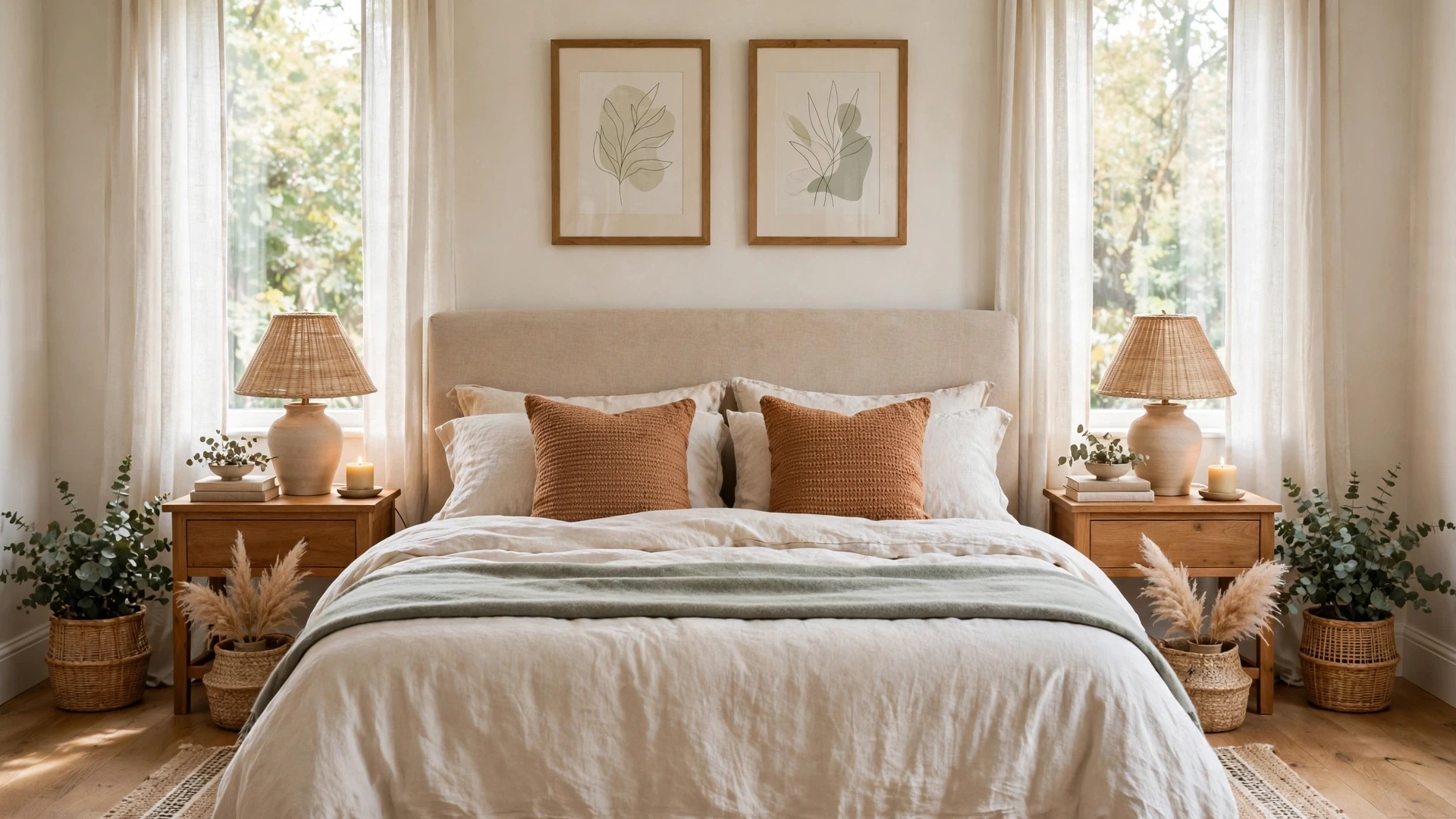
Feng shui places strong value on symmetry and pairs, especially in a space meant to nurture rest and relationships. A lopsided bedroom — one nightstand but not the other, a single lamp on one side — can create a subtle feeling of imbalance that you sense without quite noticing. The fix is beautifully simple: style the bed with matching elements on both sides.
Place two identical (or nearly identical) nightstands, two matching lamps, two small pieces of art flanking the bed — even two candles. The symmetry feels orderly and complete, and your eye rests easier when both sides mirror each other. They don't have to be expensive or perfectly matched; two similar wooden stools with two simple lamps work just as well as a pricey bedroom set.
What to avoid: don't let one side of the bed get pressed against the wall. Leaving both sides accessible maintains equal "space" for both partners — or for yourself, symbolically — and makes the room feel open rather than cramped. As a finishing touch, choose rounded lamp bases and soft-edged nightstand shapes; curved lines keep energy gentle compared to sharp corners.
5. Soften Lighting With Warm Layers
Harsh overhead lighting is the enemy of restful sleep. In feng shui, light should feel like dusk, not noon — soft, warm, and layered so the room eases you from evening into night. Start by swapping any cool white bulbs for warm-toned ones, around 2700K, which mimic candlelight and help your body produce melatonin naturally.
Then build layers: a pair of bedside lamps for reading, perhaps a soft floor lamp in a corner, and candles or flameless candles for atmosphere. Use dimmers wherever possible so you can lower the light gradually as bedtime approaches. Keep the main ceiling light off in the evenings entirely — most bedrooms look and feel instantly calmer when the overhead fixture stays dark.
Avoid leaving televisions or bright chargers glowing in the room; that small blue light disrupts both energy and actual sleep quality. For finishing touches, choose fabric lampshades in natural linen or warm paper tones, which diffuse light gently instead of glaring. The goal is a bedroom that feels like a glowing ember at night — warm, low, and deeply relaxing.
6. Bring in Living Plants Sparingly
Plants breathe fresh, living energy into a bedroom, and feng shui welcomes them — in moderation. One or two healthy, soft-leafed plants can lift a room's atmosphere without overwhelming it. Good choices include a peace lily on the dresser, a small pothos trailing from a shelf, or a snake plant in a quiet corner. Their rounded or upward-reaching leaves feel nurturing rather than aggressive.
Keep it to one or two plants only, and place them away from the bed itself — too much living yang energy right next to your pillow can feel restless. And there's one hard rule: never keep a dying or dried-out plant in the bedroom. Wilted plants represent declining energy and should be revived or composted immediately.
Avoid spiky plants like cacti in the sleeping space; their sharp points are considered "poison arrows" that disturb calm. Finish the look with a simple ceramic pot in an earthy tone — terracotta, soft white, or sage — which adds the grounding earth element naturally. Water your plant on a regular day each week so the ritual itself becomes part of your room's peaceful rhythm.

7. Use Mirrors Thoughtfully, Never Facing the Bed
Mirrors are powerful in feng shui because they bounce energy around a room — which is exactly why they need care in a space meant for stillness. The key rule: never place a mirror where it directly reflects the bed. A mirror facing your sleeping body is believed to disturb rest by bouncing energy back at you all night, and many people report lighter, more restless sleep when one is positioned that way.
This includes mirrored closet doors and large leaning mirrors angled toward the bed. If your mirror currently faces the bed, simply rotate it, move it to a side wall, or cover it at night with a beautiful fabric throw — a surprisingly elegant solution.
Where mirrors do work well is on walls that reflect something pleasant: a window view, a piece of calming art, or soft lamplight. A round or oval mirror is preferable to a sharply rectangular one, since curved shapes keep energy flowing gently. As a finishing touch, frame the mirror in wood or a soft metallic tone rather than leaving it stark, so it feels like decor rather than a clinical surface.
8. Declutter Nightstands and Surfaces
In feng shui, clutter is stuck energy — and nothing collects clutter faster than a nightstand. Stacks of unread books, tangled chargers, half-empty water glasses, old receipts, and random gadgets all sit within arm's reach of your sleeping head, quietly pulling your attention even in the dark. A clear surface, on the other hand, lets your mind go quiet.
Start with a ruthless pass: remove everything from both nightstands and the dresser top, then return only what earns its place — a lamp, one book you're currently reading, a small glass of water, perhaps a candle or a tiny plant. Use a small tray or a pretty box to corral the practical bits like lip balm or reading glasses so they don't scatter.
What to avoid: never let the nightstand become a charging station with a tangle of cords glowing all night. Keep phones on airplane mode or, better yet, charge them in another room. For a finishing touch, place a small calming object where you'll see it first thing in the morning — a smooth stone, a fresh flower, or a meaningful photo. Waking to one intentional item instead of a pile of stuff sets the tone for the whole day.
9. Close the Bedroom Door and Cover Screens
Doors and screens are energy gateways, and in the bedroom you want that energy to stay settled and contained while you sleep. Make it a habit to close the bedroom door at night. An open door allows energy — and the noise, light, and activity of the rest of the house — to flow straight in, which keeps your senses on alert. A closed door tells your subconscious the world can wait until morning.
The same applies to screens. Televisions, computers, and tablets bring active, stimulating energy into a yin space. If a TV lives in your bedroom, cover it at night with a decorative cloth or keep it inside a cabinet with doors that close. Hide the laptop in a drawer, and keep tablets face-down or out of sight.
Avoid working from bed if at all possible — answering emails among the pillows trains your brain to associate the bed with alertness instead of rest. For a finishing touch, invest in a beautiful door hook or soft fabric panel to cover screens; when the cloth goes on at night, it becomes a small ritual that marks the transition from day to sleep.
10. Add the Five Elements in Gentle Doses
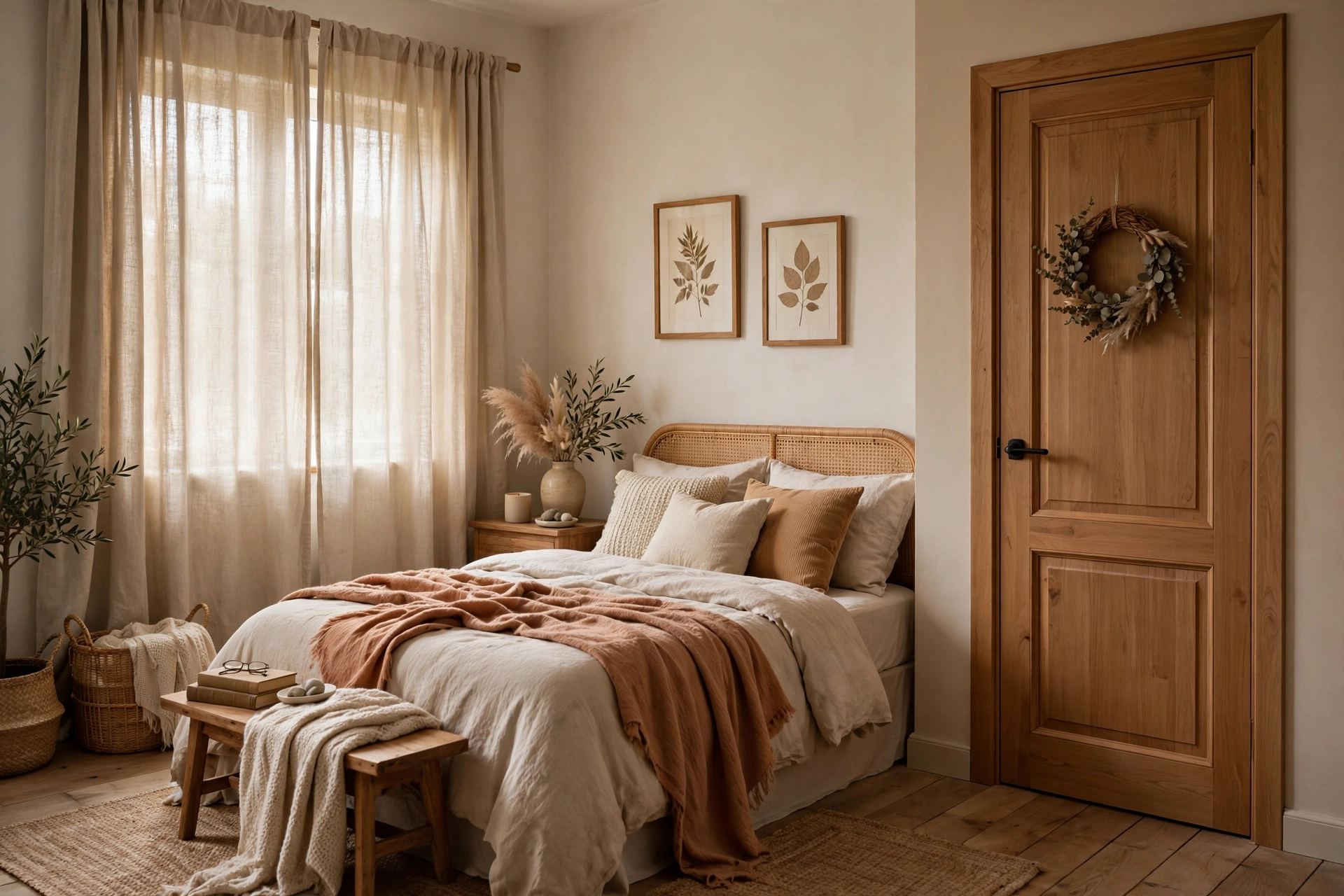
A truly balanced feng shui bedroom includes all five elements — wood, fire, earth, metal, and water — each in small, harmonious doses. You don't need literal representations; textures and colors do the work. Wood arrives through a wooden headboard, a rattan basket, or green plants. Fire comes from candles, warm lighting, or a touch of warm red or pink in a throw pillow. Earth shows up in ceramic vases, stone objects, or sandy beige tones. Metal appears in round brass frames, a silver lamp base, or gray textiles. Water flows in through deep blue accents, a wavy-patterned fabric, or artwork showing gentle water scenes.
The secret is restraint: each element should whisper, not shout. If one element dominates — say, an all-metal and glass room — the energy feels cold and sharp. Walk your room and ask what's missing; most bedrooms lack water (calming blues) or wood (living, warm texture).
What to avoid: actual water features like fountains in the bedroom — real water is considered too active and too yang for a sleeping space. Stick to the suggestion of water through color and imagery. As a finishing touch, choose one small object that combines two elements, like a ceramic (earth) vase in deep blue (water), and let it anchor a shelf or nightstand.
11. Create a Calming Bedtime Ritual Corner
Feng shui is as much about habits as it is about furniture. Dedicating one small corner of the bedroom to a wind-down ritual tells your body, night after night, that rest is coming. This doesn't need much space — a comfortable chair, a small side table, and a soft lamp are enough. Style it as the coziest spot in the room: a plush throw draped over the arm, a cushion in a soothing tone, maybe a small basket with a journal or a book of poetry.
Keep the ritual simple and screen-free: ten minutes of reading, gentle stretching, writing three lines in a journal, or simply sitting with a cup of herbal tea. The consistency matters more than the activity; repetition trains your nervous system to start powering down.
Avoid placing this corner where it faces a mirror or a window with street glare, and don't let it become a dumping ground for laundry or bags — its calm depends on staying clear. For a finishing touch, add one sensory detail: a lavender sachet, a softly scented candle, or a small bowl of smooth stones to hold in your hands. That single sensory cue will, over time, become a powerful trigger for sleep.
12. Keep Work and Exercise Out of the Sleeping Space
Few things disturb bedroom energy more than a desk piled with work or a treadmill looming in the corner. In feng shui, the bedroom should hold one purpose: rest and rejuvenation. When work equipment and exercise gear share the room, your brain never fully switches off — it keeps scanning for tasks, deadlines, and effort even under the covers.
If space allows, move the desk, laptop, and files to another room entirely, and relocate workout equipment to a living area or garage. When that's genuinely impossible — as in many small apartments — use visual separation. A folding screen, a tall bookshelf, or even a curtain can divide the sleeping zone from the working zone, and closing that divider at night symbolically "puts work to bed" too.
Avoid keeping bills, planners, or to-do lists visible from the bed; tuck them in a closed drawer or a lidded box at minimum. For a finishing touch, make the bed itself a pure sleep zone: no laptops, no paperwork, no phone scrolling among the pillows. When the mattress means only rest, your body learns to fall asleep the moment your head hits it — and that is the heart of feng shui in the bedroom.
Styling Tips
– Start with the bed position. If you change nothing else, moving the bed into the command position delivers the biggest calm-for-effort payoff of any tip on this list.
– Choose one palette and commit. Pick three to four soothing tones and repeat them across bedding, curtains, rugs, and art. A limited palette reads as calm; a rainbow of colors reads as noise.
– Layer soft textures. Combine linen, cotton, wool, and a touch of velvet. Texture adds richness without adding visual clutter, keeping the room interesting but restful.
– Dim the lights an hour before bed. Switch off overheads and rely on lamps and candles. This single habit supports both feng shui flow and your body's natural sleep chemistry.
– Corral cords and clutter. Use a small lidded box on each nightstand for glasses, chargers, and odds and ends. Clear surfaces equal a clear mind.
– Refresh seasonally. Each season, do a 20-minute reset: clear under the bed, wipe surfaces, rotate one textile (like swapping a throw), and check plants. Small seasonal resets keep energy from going stale.
– Favor curves over corners. Round mirrors, oval trays, curved lamp bases, and soft-edged furniture keep energy moving gently instead of bouncing off sharp points.
– Make your bed every morning. It takes two minutes and instantly restores order. A made bed is the simplest daily feng shui practice there is.
FAQ
Do I need to follow every feng shui rule for it to work?
Not at all. Feng shui is a set of guidelines, not a pass-or-fail test. Start with the changes that feel most doable — usually bed placement and decluttering — and notice how the room feels. Many people find that just two or three adjustments make a noticeable difference in how restful the space feels.
What is the worst bed position in feng shui?
The most commonly cited problem is the "coffin position," where the foot of the bed points directly at the bedroom door. It's considered draining because energy is believed to flow straight out through the doorway. If your layout forces this, place a bench, a trunk, or a low ottoman at the foot of the bed to soften the alignment.
Are mirrors really bad in the bedroom?
Mirrors aren't bad — they're powerful, which is why placement matters. A mirror that reflects the bed is the main concern, since it can disturb restful energy. Mirrors on side walls that reflect light, art, or a pleasant view are perfectly fine and can even make a small bedroom feel more spacious.
What colors should I avoid in a feng shui bedroom?
Steer clear of large areas of bright red, hot orange, neon shades, and very dark, heavy colors like stark black on walls. These carry intense, active energy that fights against rest. If you love bold color, use it in small accents — a pillow, a piece of art — against a calm, neutral base.
Can I have a TV in a feng shui bedroom?
Ideally, no — screens bring stimulating, active energy into a space meant for stillness. But if a TV is non-negotiable, keep it inside a cabinet with doors that close, or cover it with a decorative cloth at night. Out of sight truly means out of mind when it comes to sleep.
How quickly will I notice a difference?
Many people feel a shift immediately after decluttering and repositioning the bed — the room simply feels calmer the moment you walk in. Deeper changes, like sleeping more soundly, usually follow within a week or two as your body adjusts to the calmer environment and any new bedtime rituals take hold.
A restful bedroom isn't about perfection or expensive makeovers — it's about intention. Every idea in this guide comes down to the same quiet principle: make the room feel safe, soft, and uncluttered, and your body will do the rest. You don't have to transform everything overnight. Move the bed, clear one nightstand, dim the lights, and pay attention to how you sleep. Then try the next idea. Bit by bit, your bedroom becomes what it was always meant to be: the calmest room in the house, a place where the day gently ends and real rest begins. Sleep well.