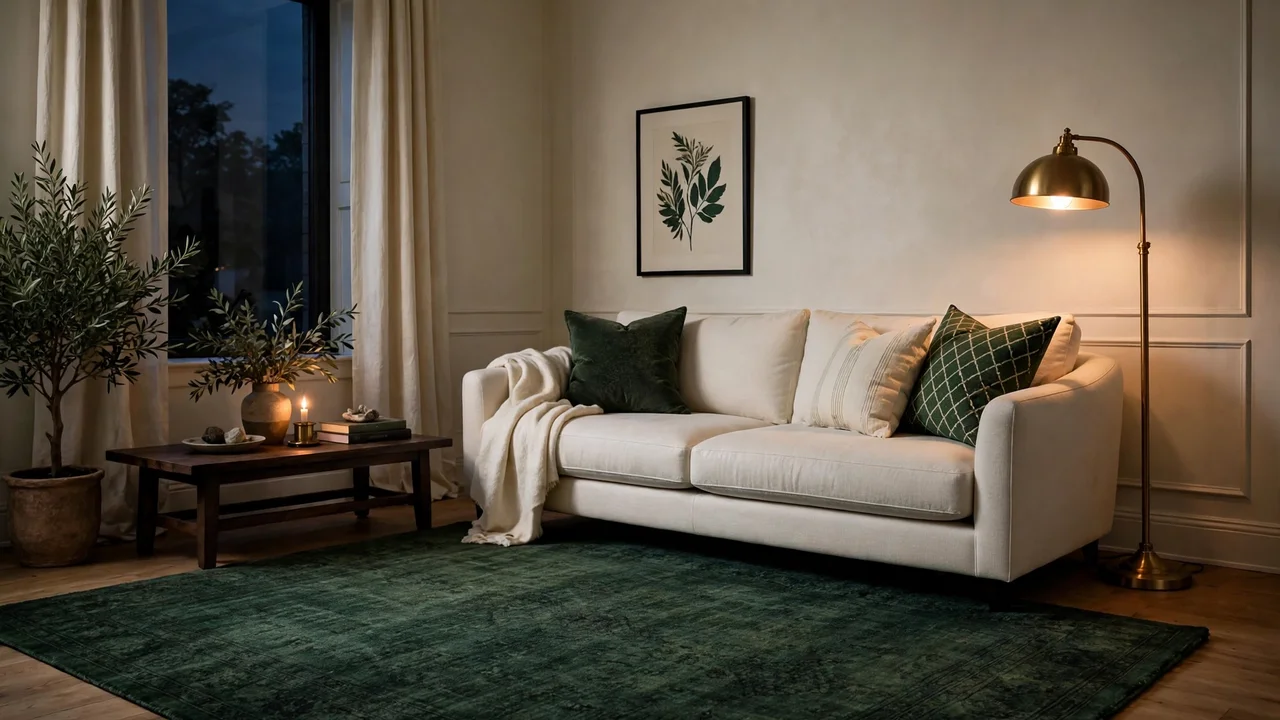

15 Living Room Rug Ideas + Size Guide
Nothing transforms a living room Rug Ideas quite like the right rug. It’s the piece that anchors your furniture, softens hard floors, and ties every color in the room together — all in one go. Yet it’s also the piece people second-guess the most: Is this the right size? Will this pattern fight with my sofa? Should I go plush or flatweave?
Here’s the good news — choosing a rug is much easier than it feels. Once you know a few simple size rules and see how different styles work in real rooms, everything clicks into place. This guide walks you through 15 beautiful rug ideas for every style and budget, with practical sizing tips woven in so you can shop with total confidence.
Whether you’re starting from a blank slate or refreshing a room that’s almost there, you’ll find a rug here that feels like it was made for your living room. Let’s dive in.
1. The Classic 8×10 Centerpiece
For a standard living room — roughly 12×16 feet or similar — an 8×10 rug is the sweet spot, and it’s where most designers start. It lets you follow the golden rule of rug placement: the front legs of your sofa and chairs sit on the rug while the back legs rest on the floor. This anchors the seating area into one cozy conversation zone and makes even a spacious room feel connected.
A timeless neutral like warm ivory, greige, or a soft beige works beautifully as the foundation. If your floors are dark wood, a lighter rug creates lovely contrast; on light floors, go a shade deeper for definition. Layer this over any style — modern, farmhouse, or traditional — and it simply works. Measure your seating area first: you want at least six inches of rug extending beyond each side of your sofa.
2. Cozy Layered Rugs for a Collected Look
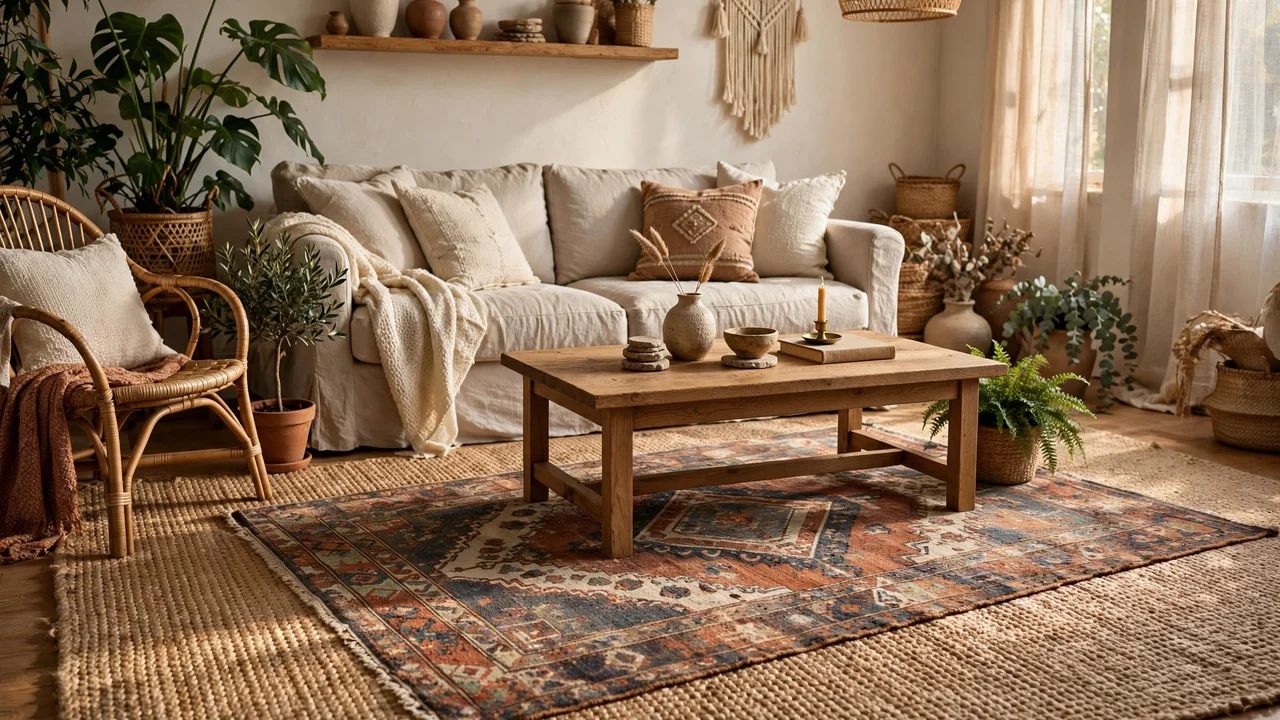
Layering is the designer’s secret for instant warmth, and it’s wonderfully forgiving. Start with a large, affordable flatweave or natural jute rug as your base — 8×10 or even 9×12 for bigger rooms. Then layer a smaller, plusher rug (5×7 or 6×9) on top at a slight angle, centered under your coffee table.
This works especially well if you love texture but want to keep costs down: the base rug covers the square footage cheaply while the smaller top rug delivers the softness where your feet actually land. Try a natural jute base with a vintage-style patterned rug on top, or a simple cotton flatweave under a shaggy wool piece. Keep the palette in the same family so the layers feel intentional, not accidental, and let the edges of the base rug peek out by a foot or more all around.
3. A Plush Shag for Pure Comfort
If your living room is where movie nights happen, a high-pile shag rug is pure bliss. There’s something irresistible about sinking your toes into deep, soft fibers after a long day. Shag rugs shine in casual, family-friendly spaces where comfort matters more than formality.
Choose a solid color in a medium tone — warm gray, camel, or dusty rose — since shag texture is the star and pattern gets lost in the pile. Size-wise, a 5×7 works for a snug seating area, while 8×10 suits a full sofa-and-chairs arrangement. One practical note: high-pile rugs can catch on vacuum cleaners, so use the hose attachment or a vacuum with adjustable height. Also skip shag under dining areas or entry doors, where doors need clearance to swing over the pile.
4. Natural Jute for Earthy, Relaxed Style
Jute and sisal rugs bring an organic, coastal-meets-boho warmth that few materials can match. Their golden, nubby texture adds depth to minimal rooms without adding color — perfect when your furniture already carries the palette and you just need something grounding.
A 6×9 jute rug suits apartment-sized living rooms, while 8×10 fits standard spaces. Because natural fibers are flat and sturdy, they’re excellent under coffee tables and in high-traffic spots. One thing to know: jute doesn’t love moisture, so keep it away from exterior doors where rain drips in. Pair it with linen slipcovers, rattan accents, and leafy plants for an effortlessly breezy room. And if the texture feels rough underfoot, that’s exactly what layering (see idea #2) is for — soften it with a smaller rug on top.
5. A Vintage-Style Persian for Timeless Character
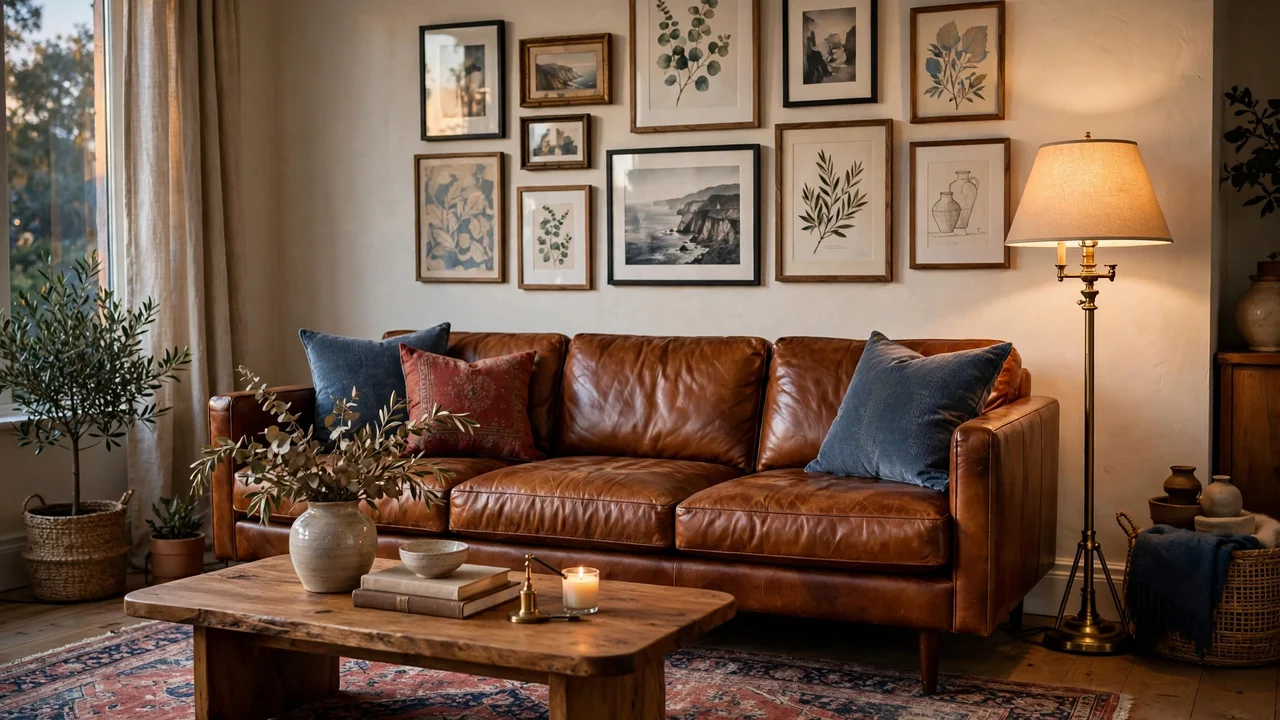
Vintage-inspired Persian and Oriental rugs are the chameleons of home decor — they look at home in traditional rooms, modern lofts, farmhouse cottages, and everything in between. Their rich, faded patterns hide everyday wear beautifully, which makes them a smart pick for busy households with kids or pets.
An 8×10 Persian-style rug anchors a full seating arrangement, while a 5×7 runner-style placement works if your sofa sits against the wall. Look for warm reds, navy blues, or muted terracotta tones that pull colors from your existing pillows and art. The front-legs-on rule still applies — let the sofa’s front legs rest on the rug’s edge. These rugs pair gorgeously with leather sofas, brass lamps, and gallery walls, and the pattern is forgiving enough that a little clutter won’t show.
6. Bold Geometric Patterns for Modern Energy
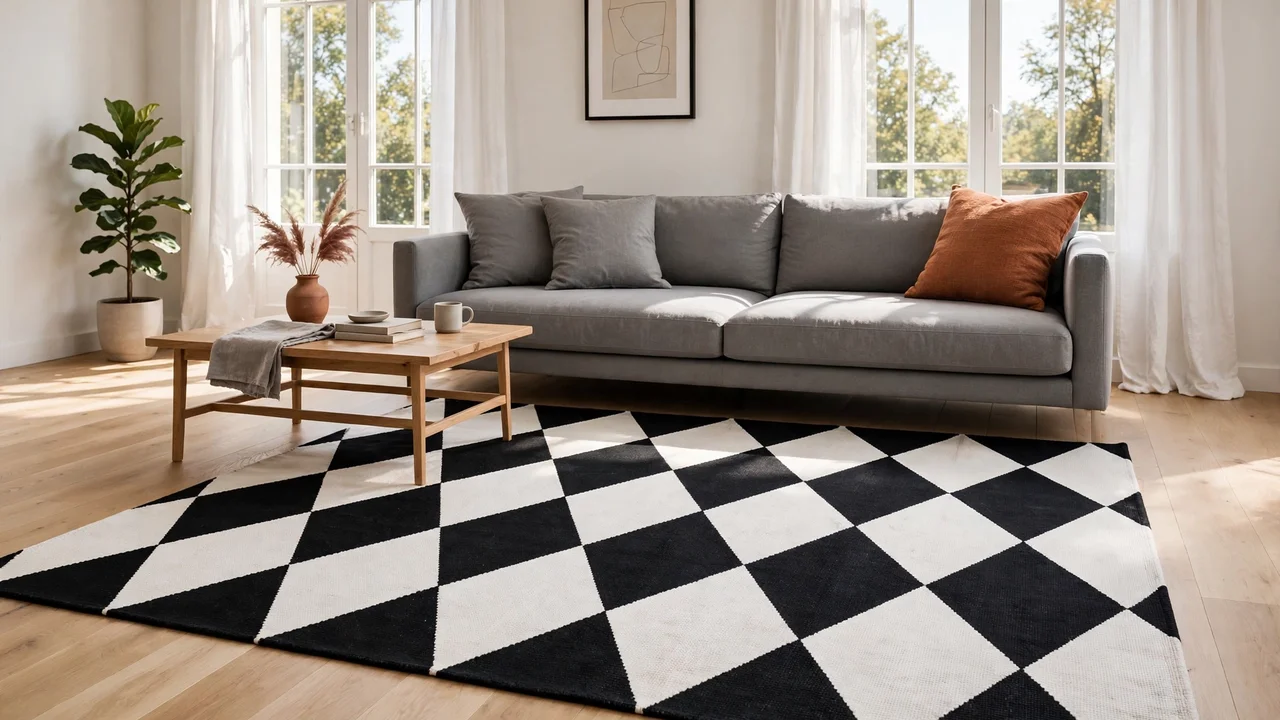
If your living room feels a little flat, a bold geometric rug can wake it right up. Think oversized diamonds, chevrons, trellis lines, or abstract shapes in high-contrast color combos like black and white, navy and cream, or terracotta and charcoal. Geometric patterns bring crisp, modern energy and give the eye a clear focal point.
Keep the rest of the room calm — solid sofa, simple curtains — and let the rug do the talking. For sizing, an 8×10 lets a large-scale pattern breathe; in smaller rooms, a 5×7 with a medium-scale print avoids overwhelming the space. A handy trick: echo one color from the rug in your throw pillows or a piece of wall art to make the whole room feel deliberately coordinated. Flatweave or low-pile constructions show geometric lines most crisply.
7. Soft Neutral Wool for Quiet Luxury
There’s a reason designers reach for wool again and again: it’s naturally stain-resistant, incredibly durable, and feels substantial underfoot. A solid or subtly textured wool rug in ivory, oatmeal, or warm taupe creates that quiet-luxury look — calm, expensive-feeling, and endlessly versatile.
This is the perfect choice when you want your art, pillows, or a beautiful sofa to be the star. An 8×10 wool rug with the front legs of all seating on it gives a polished, pulled-together base. Wool does shed a little at first — that’s normal and settles within a few weeks of regular vacuuming. For households with allergies, look for low-pile wool rather than shag. Pair with boucle chairs, a marble coffee table, and soft linen drapes for a serene, high-end living room that never feels cold.
8. Round Rugs for Awkward Layouts
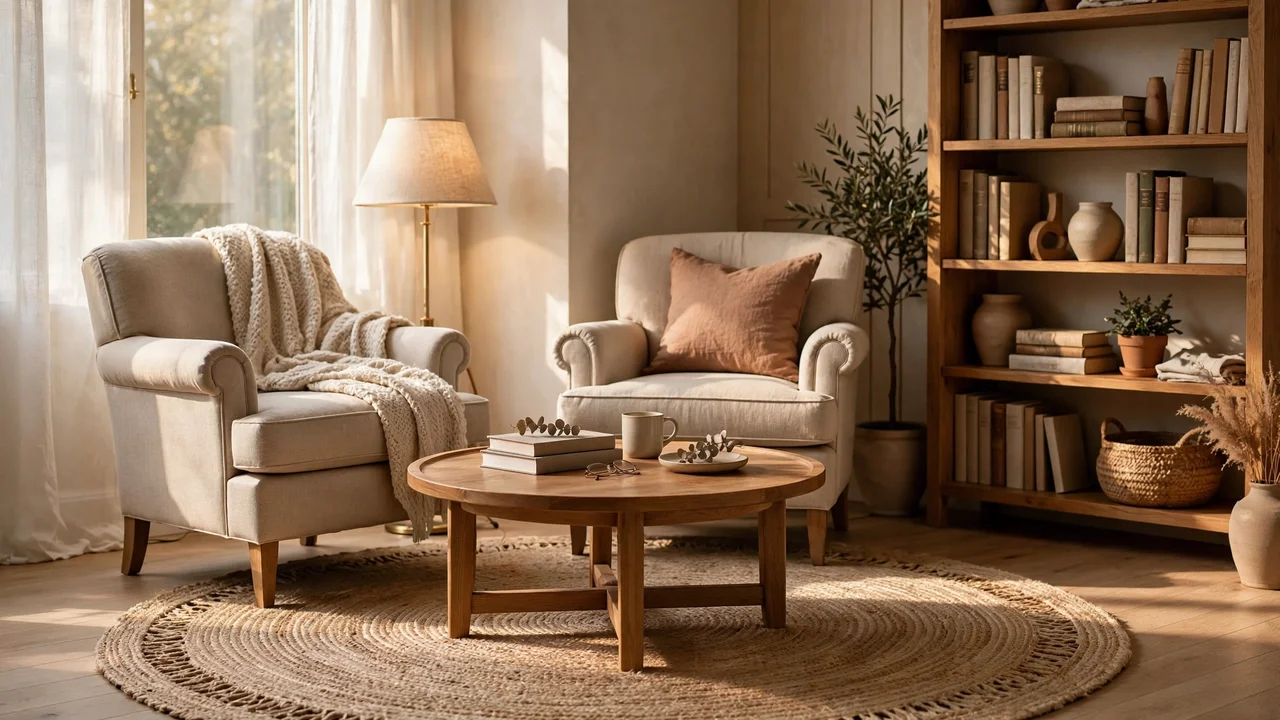
Square rooms, bay windows, and floating furniture arrangements can make rectangular rugs feel forced — that’s where round rugs shine. A round rug softens sharp corners and creates a natural gathering spot, especially under a round coffee table or in a reading nook carved out of a larger room.
Size matters differently here: a 6-foot round rug fits a small seating cluster or a pair of accent chairs, while an 8-foot round anchors a full sofa arrangement. Center the rug under your coffee table and let at least the front legs of surrounding chairs rest on it. Round rugs also work beautifully in open-plan spaces to define the living zone without hard edges. Try a round jute rug for boho warmth, or a patterned round rug to add playfulness to a kids-friendly family room.
9. A Runner Rug to Define a Walkway
Living rooms with long, open layouts — especially open-plan spaces — often have a natural walkway that feels undefined. A runner rug (typically 2.5×8 or 3×10 feet) laid along that path adds pattern and purpose, guiding the eye through the space.
This works brilliantly behind a floating sofa, along a wall of windows, or connecting the living area to an entryway. Choose a durable low-pile or vintage-style runner that can handle foot traffic, and make sure it’s long enough to feel intentional — a too-short runner looks like an afterthought. If your living room opens to a hallway, matching the runner’s style to the hallway rug creates a lovely sense of flow. Leave a few inches of floor visible on each side so the runner reads as a deliberate design choice.
10. Dark Moody Rugs for Drama and Coziness
Deep charcoal, inky navy, forest green, or rich burgundy rugs bring instant drama and a cocoon-like coziness that light rugs simply can’t. Dark rugs are surprisingly practical too — they hide crumbs, pet hair, and everyday marks far better than pale ones, making them a favorite for real-life family rooms.
An 8×10 dark rug grounds a large room and makes light-colored furniture pop beautifully; in smaller rooms, a 5×7 in a deep tone can actually make the space feel intimate rather than cramped. Balance the moodiness with lighter walls, warm lighting, and metallic accents like brass or gold to keep the room from feeling heavy. One caution: very dark rugs show light-colored lint and dust, so a quick weekly vacuum keeps them looking rich instead of dusty.
11. Light and Airy Rugs for Small Living Rooms
In a small living room, the right rug can make the space feel bigger — and the wrong one can chop it up. The trick is going light and as large as the room allows. A pale 8×10 (or the biggest size your floor plan fits) in ivory, soft gray, or blush extends the visual floor space and reflects light around the room.
Avoid tiny rugs that float in the middle of the floor; they make furniture look scattered. Instead, get all furniture legs — or at minimum the front legs — onto the rug to unify the arrangement. Low-contrast patterns like tone-on-tone stripes or subtle Moroccan trellis add interest without visual clutter. Leave 12 to 18 inches of bare floor between the rug’s edge and the walls so the room still breathes. The result: a small living room that feels open, calm, and thoughtfully put together.
12. Outdoor-Indoor Rugs for High-Traffic Homes
Got kids, dogs, or a living room that doubles as the main entrance path? Indoor-outdoor rugs are your best friend. Made from durable polypropylene, they’re stain-resistant, hose-cleanable, and far tougher than traditional rugs — yet today’s designs look nothing like the scratchy patio mats of the past.
You’ll find convincing Persian patterns, modern geometrics, and natural jute looks in 5×7, 8×10, and runner sizes. An 8×10 under the main seating area handles spills, muddy paws, and juice boxes with grace — just blot, spot-clean, or even rinse it off. They’re also a smart budget move: you get the look of an expensive rug at a fraction of the cost. Style them exactly like regular rugs — the front-legs-on rule applies — and no one will guess how practical your beautiful rug really is.
13. A Statement Rug as the Room’s Artwork
Sometimes the rug isn’t the supporting act — it’s the star. A statement rug with an oversized floral, an artistic abstract, or a vivid hand-knotted pattern can carry an entire room, letting you keep everything else simple and save money on decor.
When the rug is the artwork, build the room around it: pull two or three colors from the pattern for your pillows, throws, and art, and keep large furniture in solid neutrals. An 8×10 gives a bold pattern room to shine in a standard living room; make sure the coffee table doesn’t cover the most beautiful section — float it slightly off-center if needed. This approach works wonderfully if you fall in love with a rug first and decorate second, which honestly is how many of the best rooms come together.
14. Striped Rugs for a Casual, Elongated Look
Stripes are the hardest-working pattern in rug design: they add visual interest without competing with other prints, and horizontal stripes can make a narrow living room feel wider. A striped rug in classic combos — navy and white, beige and cream, black and natural — suits coastal, farmhouse, preppy, and Scandinavian styles alike.
A 5×7 striped rug is perfect for a compact seating area, while 8×10 suits a full arrangement. Run the stripes parallel to the longest wall to stretch the room visually. Because stripes are simple, they’re easy to mix with floral pillows, plaid throws, or patterned curtains — just vary the scale so patterns don’t clash. Cotton and wool flatweaves show stripes most crisply, and they’re easy to clean, making striped rugs a practical pick for entry-adjacent living rooms.
15. The Oversized 9×12 for Grand, Open Spaces
For great rooms, open-plan living areas, or living rooms with sectionals, standard sizes can look dinky — step up to a 9×12. This generous size lets you place all furniture legs fully on the rug, creating a true room-within-a-room that defines the living zone in an open floor plan.
With a sectional, center the 9×12 so the rug extends at least a foot beyond each side; the coffee table sits comfortably in the middle with space to spare. In open plans, the rug’s edges become the boundary between living and dining areas — no walls needed. Choose a pattern with a large-scale motif or an allover texture, since small prints can look busy at this scale. Yes, 9×12 rugs cost more, but one great oversized rug beats two small ones every time for a polished, intentional look.
Styling Tips
Measure before you shop. Tape out the rug size on your floor with painter’s tape and live with it for a day. Walk around it, check door clearances, and make sure furniture placement feels natural. This five-minute trick prevents the most common rug regret: buying too small.
Follow the front-legs rule. In almost every living room, the rug should be large enough that the front legs of your sofa and chairs rest on it. All-legs-on is even better for large rugs in spacious rooms. The one exception is a tiny accent rug layered decoratively — never a main rug floating alone in the middle of the floor.
Leave breathing room. Aim for 12 to 18 inches of bare floor between the rug’s edge and the walls in an average room (a bit more in large rooms, a bit less in small ones). This frame of visible flooring makes the rug look intentional rather than wall-to-wall.
Mind the pile height. Low-pile and flatweave rugs work best under coffee tables with storage, in high-traffic paths, and where doors swing open. Save plush high-pile rugs for low-traffic comfort zones where bare feet will enjoy them most.
Use a rug pad. A quality pad keeps the rug from slipping, adds cushioning, protects your floors, and extends the rug’s life. It’s the least glamorous rug purchase and one of the smartest — especially on hardwood or tile.
Coordinate, don’t match. Your rug doesn’t need to match your sofa or curtains exactly. Instead, pick up one or two colors from the rug in your pillows, throws, or artwork. This echo technique makes the whole room feel designed without looking like a showroom set.
Consider your lifestyle. Pets, kids, and frequent entertaining call for darker tones, forgiving patterns, or washable and outdoor-indoor constructions. A beautiful rug you have to tiptoe around isn’t beautiful for long — choose one that fits your real life.
Frequently Asked Questions
What size rug is best for a living room?
For a standard living room, an 8×10 rug is the most versatile choice — it fits under the front legs of a typical sofa and chairs. Use a 5×7 for small rooms or apartments, and a 9×12 for large rooms or sectionals. When in doubt, size up: a slightly-too-big rug looks intentional, while a too-small rug makes furniture look scattered.
Should all furniture legs be on the rug?
Not necessarily. The most common designer approach is the front-legs-on rule: the front legs of your sofa and chairs sit on the rug while back legs rest on the floor. This anchors the seating area beautifully. In large rooms with oversized rugs, placing all legs on the rug creates an even more luxurious, defined zone.
Can I put a rug on carpet?
Yes, layering a rug over carpet is a great way to add color, pattern, and definition — especially in rentals with bland wall-to-wall carpet. Use a low-pile area rug (not a thick one, which can buckle) and add a rug pad designed for carpet-to-carpet use to prevent slipping and wrinkling.
How do I keep my living room rug clean?
Vacuum weekly (without a beater bar on delicate or shag rugs), rotate the rug every six months for even wear, and blot spills immediately — never rub. For deep cleaning, most synthetic and wool rugs handle professional cleaning well. Indoor-outdoor rugs can simply be hosed off and air-dried.
What color rug goes with a gray sofa?
Gray sofas are wonderfully versatile. Warm it up with beige, cream, terracotta, or mustard tones; keep it cool and modern with navy, charcoal, or soft blue; or add contrast with a vintage-style Persian in rich reds and blues. If your walls are also gray, choose a rug with pattern or texture so the room doesn’t feel flat.
Are washable rugs worth it?
For busy households — kids, pets, frequent guests — absolutely. Modern washable rugs come in beautiful designs, and being able to toss the rug (or its cover) in the washing machine removes the anxiety of everyday spills. Just check the care instructions: some require large-capacity machines, and repeated washing can soften colors over time.
Conclusion
The perfect living room rug does three quiet jobs at once: it anchors your furniture, softens your space, and pulls your whole color story together. Start with size — tape it out, follow the front-legs rule, and don’t be afraid to go bigger than you think. Then choose the style that fits your life, whether that’s a forgiving vintage pattern, a plush shag for movie nights, or a practical indoor-outdoor rug that handles real life beautifully. Trust your eye, and enjoy the transformation — few changes make a room feel this finished, this fast.