

Hosta Garden Layout Ideas (Transform Shady Spaces into Stunning Garden Retreats)
Many homeowners struggle to landscape shady areas where traditional flowers fail to thrive. Fortunately, hostas are among the best shade-loving plants available. With the right hosta garden layout, you can create a lush, low-maintenance outdoor space filled with texture, color, and visual interest.
Whether you’re designing a hosta shade garden, updating a corner garden bed, or planning a complete backyard transformation, these hosta garden ideas will inspire your next landscaping project.
Why Choose Hostas for Your Garden?
Hostas are one of the most popular shade perennials because they offer:
- Beautiful foliage
- Low maintenance care
- Long lifespan
- Various sizes and colors
- Excellent ground coverage
A well-designed hosta garden can provide year-round structure even when flowers are not blooming.
Create a Layered Hosta Garden Layout
One of the best hosta garden layout techniques is layering plants by height.
Design Formula
- Large hostas in the back
- Medium hostas in the middle
- Miniature hostas in the front
This approach creates depth and makes garden beds appear larger.
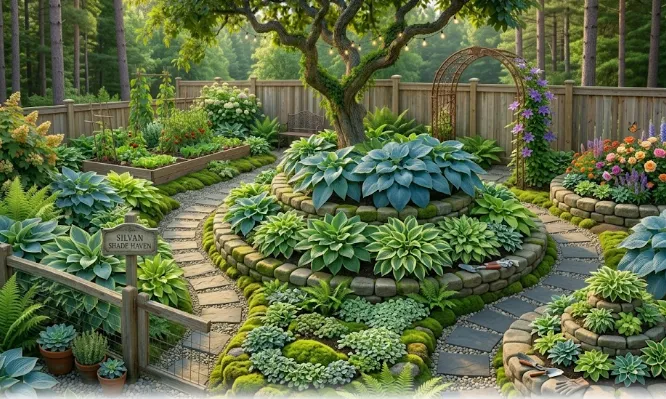
Design a Hosta Shade Garden Around Trees
Mature trees often create difficult landscaping areas due to heavy shade.
Hostas thrive beneath trees and can be combined with:
- Ferns
- Heuchera
- Astilbe
- Japanese Forest Grass
These combinations create a natural woodland appearance.
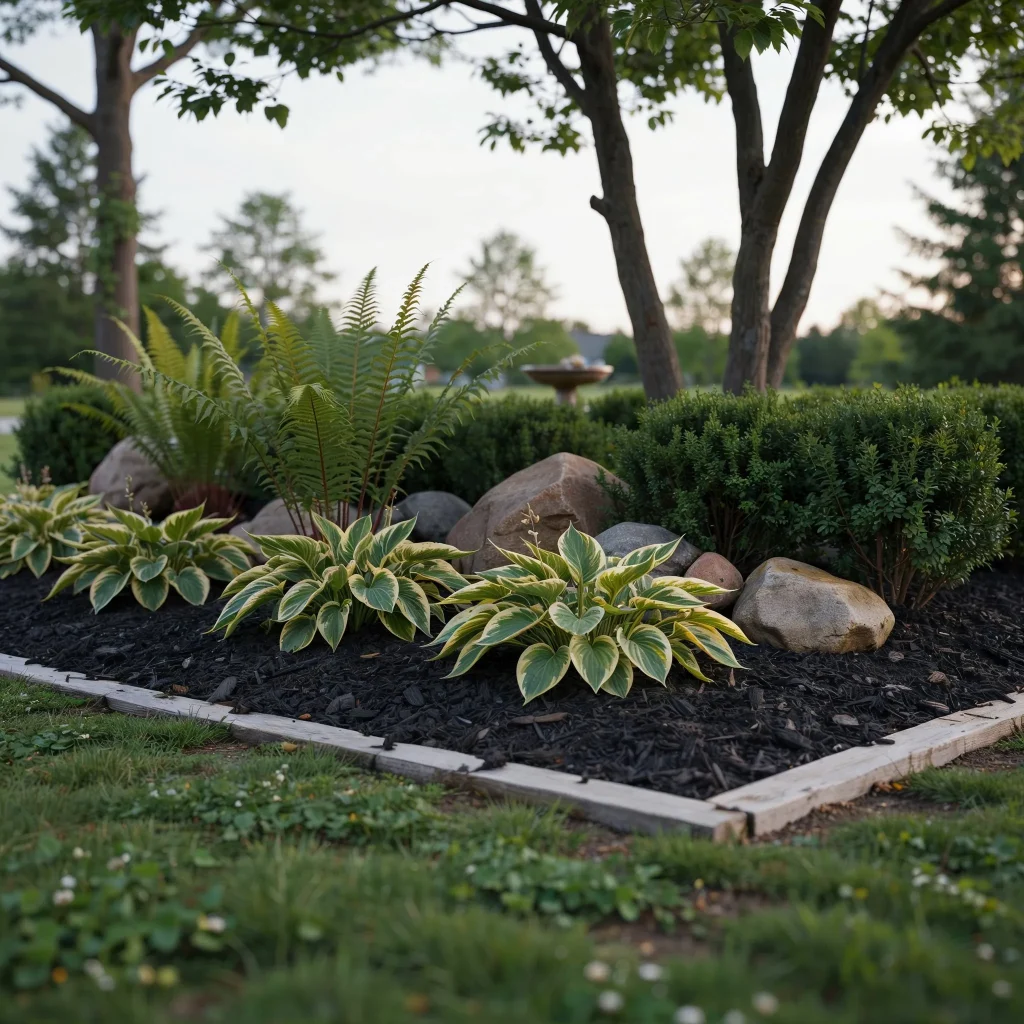
se Hostas in Corner Garden Bed Ideas
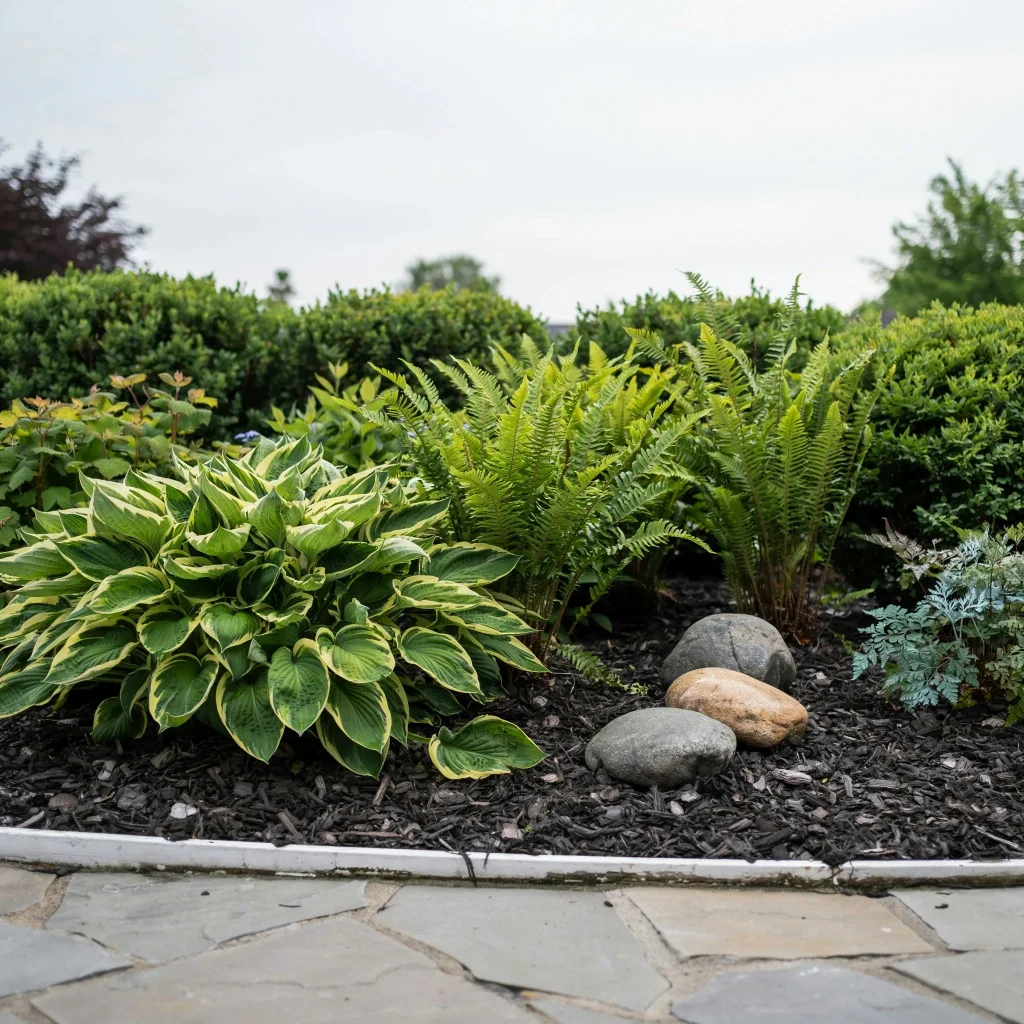
A corner garden bed can become a focal point when planted with hostas.
Tips for Corner Beds
- Place large hostas at the back corner.
- Add colorful companion plants.
- Include decorative rocks.
- Use mulch for contrast.
This simple strategy helps maximize unused yard space.
Combine Hostas with Black Mulch
Black mulch in a garden creates dramatic contrast against hosta foliage.
Benefits
- Enhances leaf color
- Suppresses weeds
- Retains moisture
- Provides a modern appearance
Blue-green hostas look especially striking against dark mulch.
Add Curved Garden Borders
Curved garden beds feel more natural than straight lines.
Benefits include:
- Softer landscape appearance
- Better flow through the garden
- Enhanced visual appeal
- More planting space
Curved borders work particularly well in large hosta gardens.
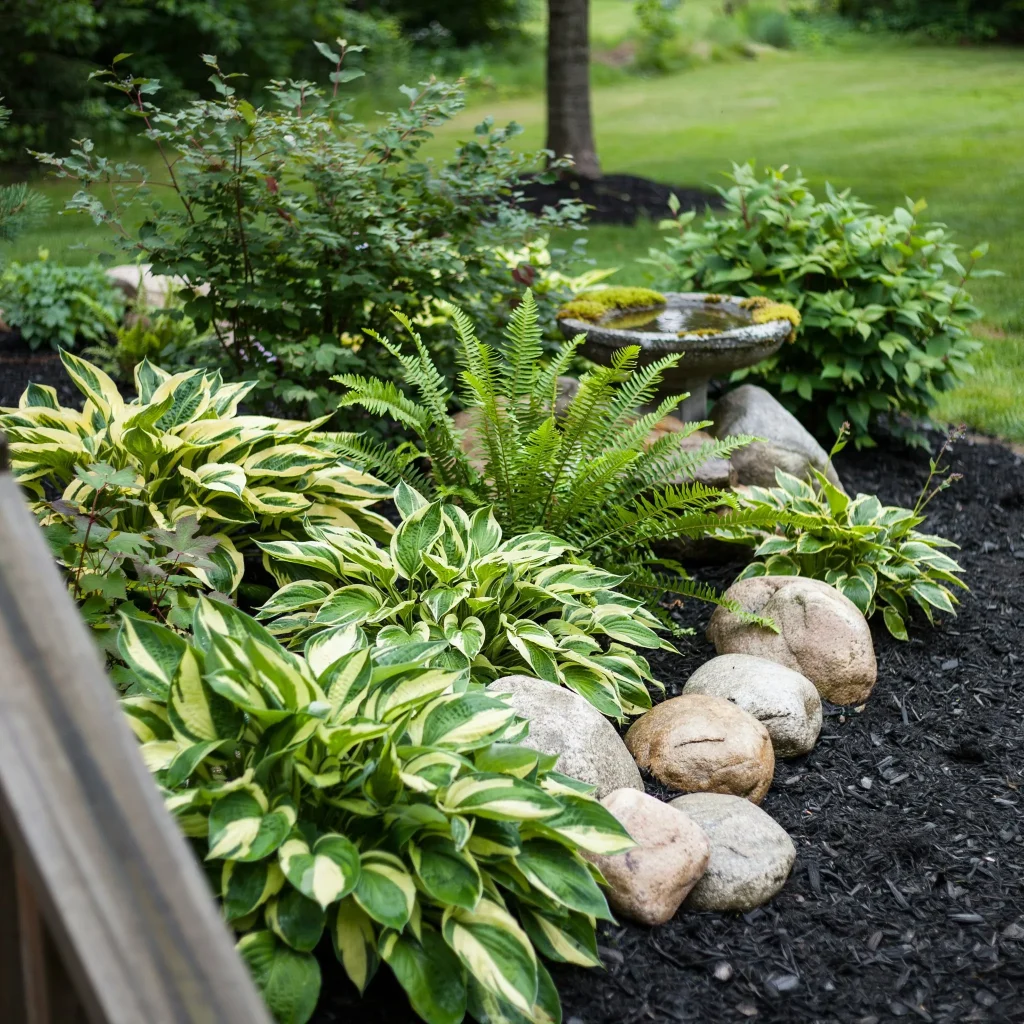
Create a Woodland-Inspired Garden
Hostas naturally fit woodland landscapes. Gardeners who appreciate Cottage Garden Shed Ideas often pair charming sheds with woodland-inspired planting schemes, using hostas and other shade-loving plants to create a cohesive and inviting garden atmosphere.
Popular companion plants include:
- Hydrangeas
- Ferns
- Bleeding Hearts
- Coral Bells
Together these plants create a layered and natural look.
Build a Path Through Your Hosta Garden
Garden pathways improve both accessibility and visual appeal.
Materials to consider:
- Natural stone
- Gravel
- Mulch paths
- Stepping stones
Pathways encourage visitors to explore your garden.
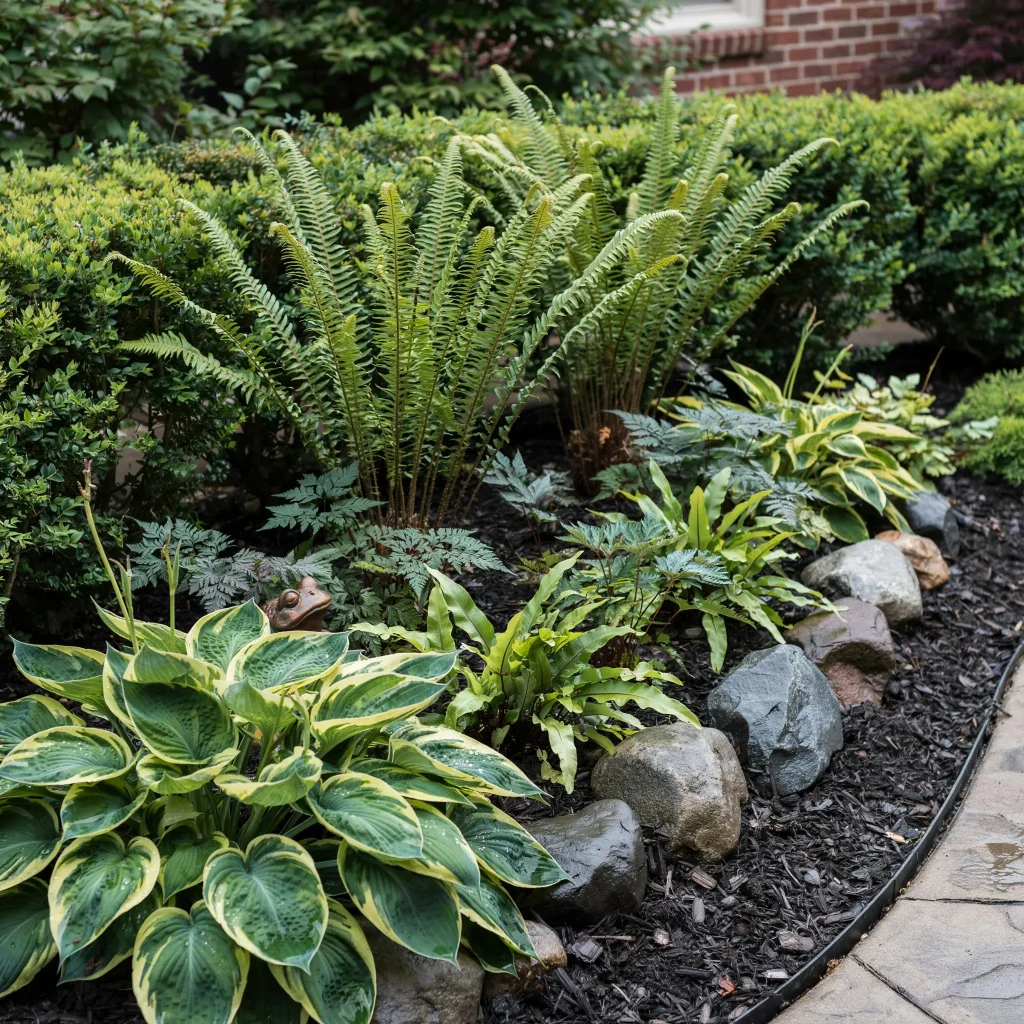
Small Hosta Garden Ideas
Even small yards can benefit from hosta gardens. Just as Home Decor Ideas help maximize style and functionality indoors, thoughtful plant selection and layout can make even the smallest garden spaces feel beautifully designed.
Small Space Tips
- Choose miniature hostas
- Use containers
- Focus on texture
- Incorporate vertical elements
Small hosta gardens provide big impact with minimal maintenance.
Hosta Garden Maintenance Tips
To keep hostas healthy:
- Water during dry periods
- Apply mulch annually
- Remove damaged leaves
- Divide mature plants every few years
These simple tasks help maintain a thriving garden.
Final Thoughts
A thoughtfully planned hosta garden layout can transform even the shadiest corner of your yard into a stunning landscape feature. Whether you’re designing a hosta shade garden beneath mature trees, creating a corner garden bed, or pairing hostas with black mulch and woodland plants, these versatile perennials offer endless possibilities.
With their beautiful foliage, low-maintenance nature, and ability to thrive in shade, hostas remain one of the best choices for creating elegant garden designs that look beautiful throughout the growing season.