

Black Mulch Ideas: 25 Stunning Landscaping Designs to Transform Your Yard
If you’re looking for an easy way to upgrade your landscaping, black mulch ideas offer one of the most dramatic and affordable solutions. Black mulch creates striking contrast, highlights colorful flowers, and gives gardens a clean, professionally landscaped appearance. Whether you’re designing black mulch flower beds, refreshing the black mulch in front of house, or searching for the best black mulch for landscaping, this guide will help you create a beautiful outdoor space.
Many homeowners choose black mulch because it complements nearly every home style, from modern farmhouses to traditional brick homes. It enhances curb appeal while providing practical benefits like moisture retention, weed suppression, and temperature regulation for plants.
In this guide, you’ll learn what is black mulch, the benefits of black mulch, the pros and cons of black mulch, different black mulch types, and creative landscaping ideas to inspire your next outdoor makeover.
What Is Black Mulch?
Before exploring design ideas, it’s helpful to understand what is black mulch.
Black mulch is a type of wood mulch that has been dyed using carbon-based or iron oxide colorants to create a rich black finish. It is typically made from shredded hardwood, recycled wood products, or bark.
Unlike natural brown mulch, black mulch creates bold visual contrast that makes plants, flowers, and shrubs stand out.
What Is Black Mulch Used For?
Many homeowners ask, what is black mulch used for?
Black mulch is commonly used to:
- Suppress weeds
- Retain soil moisture
- Improve curb appeal
- Protect plant roots
- Reduce soil erosion
- Moderate soil temperature
- Define landscape beds
- Enhance modern landscape designs
Because of its versatility, black mulch remains one of the most popular landscaping materials.
Black Mulch Benefits at a Glance
| Benefit | Why It Matters |
| Moisture Retention | Reduces watering needs |
| Weed Control | Blocks sunlight from weeds |
| Attractive Appearance | Creates strong color contrast |
| Temperature Regulation | Protects plant roots |
| Soil Improvement | Organic mulch breaks down over time |
| Low Maintenance | Helps keep flower beds tidy |

Benefits of Black Mulch
The benefits of black mulch go far beyond appearance.
Moisture Retention
Mulch acts as a protective blanket over soil.
Benefits include:
- Less evaporation
- Healthier plants
- Reduced watering
- Better drought resistance
Weed Suppression
A thick layer of black mulch prevents sunlight from reaching weed seeds.
As a result:
- Fewer weeds grow
- Less maintenance
- Cleaner flower beds
Improved Curb Appeal
Fresh mulch immediately refreshes landscaping.
Whether used around trees, shrubs, or flower bed with black mulch, the dark color creates an elegant contrast that makes greenery and blooms stand out.
Pro Tip
Apply black mulch at a depth of 2–3 inches. This provides effective weed control while allowing water and air to reach plant roots.
Black Mulch Flower Beds That Stand Out
One of the most popular black mulch ideas is creating eye-catching flower beds.
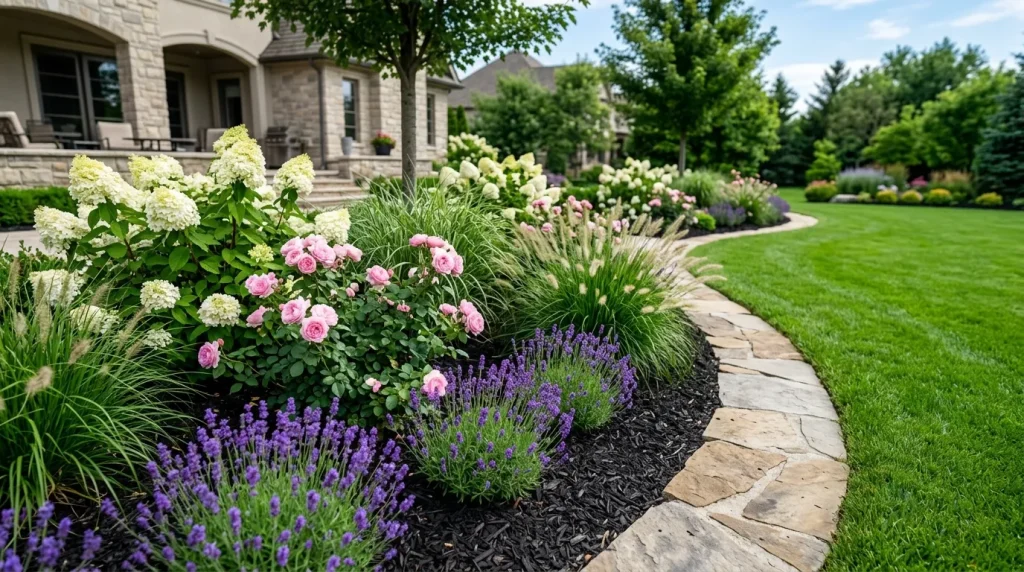
Dark mulch works especially well with brightly colored flowers because it creates visual contrast.
Best Flowers for Black Mulch
Consider planting:
- White Hydrangeas
- Pink Roses
- Purple Salvia
- Yellow Daylilies
- Red Begonias
- Lavender
- White Petunias
- Coneflowers
These flowers appear more vibrant against a black background.
Modern Minimalist Flower Beds
Minimalist landscaping focuses on clean lines and simplicity.
Features include:
- Black mulch
- White gravel edging
- Boxwood shrubs
- Ornamental grasses
- Neutral-colored flowers
This style pairs beautifully with contemporary homes.
Cottage Garden Style
For a softer look, combine black mulch with:
- Cottage roses
- Lavender
- Foxgloves
- Shasta daisies
- Climbing vines
The contrast between colorful blooms and dark mulch creates a charming, welcoming garden.
Important Note
Refresh dyed black mulch every 12–18 months to maintain its rich color. While the mulch continues to benefit your soil, sunlight and weather gradually fade the dye.
H2: Best Black Mulch for Landscaping
Choosing the best black mulch for landscaping depends on your garden’s needs and overall design.
Hardwood Black Mulch
Advantages:
- Long-lasting
- Excellent weed suppression
- Rich black color
- Great for landscape beds
Bark Mulch
Pros:
- Natural appearance
- Slower decomposition
- Excellent moisture retention
Triple-Shredded Mulch
Benefits:
- Uniform texture
- Stays in place during rain
- Professional appearance
Black Mulch Types
| Type | Best For |
| Hardwood Mulch | Flower beds |
| Bark Mulch | Around trees |
| Triple-Shredded Mulch | Front yard landscaping |
| Dyed Wood Mulch | Decorative beds |
| Cedar Mulch | Insect resistance |
Each of these black mulch types offers different advantages depending on your landscape goals.
Houses with Black Mulch
Many homeowners love the elegant appearance of houses with black mulch because the dark landscape creates dramatic contrast with exterior colors.
Black mulch looks especially beautiful with:
- White houses
- Gray homes
- Brick houses
- Beige siding
- Stone exteriors
- Modern farmhouses
It also complements black shutters, dark window frames, and natural wood accents.
Landscaping Color Combinations
Popular pairings include:
- Black mulch + White flowers
- Black mulch + Green shrubs
- Black mulch + River rock
- Black mulch + Boxwoods
- Black mulch + Ornamental grasses
- Black mulch + Red roses
These combinations create timeless curb appeal while keeping your landscape easy to maintain.
Black Mulch Planning Checklist
Before installing black mulch, make sure you have:
✔ Landscape fabric (optional)
✔ Garden edging
✔ Wheelbarrow
✔ Garden rake
✔ Gloves
✔ Shovel
✔ Weed barrier
✔ Healthy plants
✔ Quality black mulch
Proper preparation ensures your landscaping project looks polished and lasts longer.
Black Mulch in Front of House Design Ideas
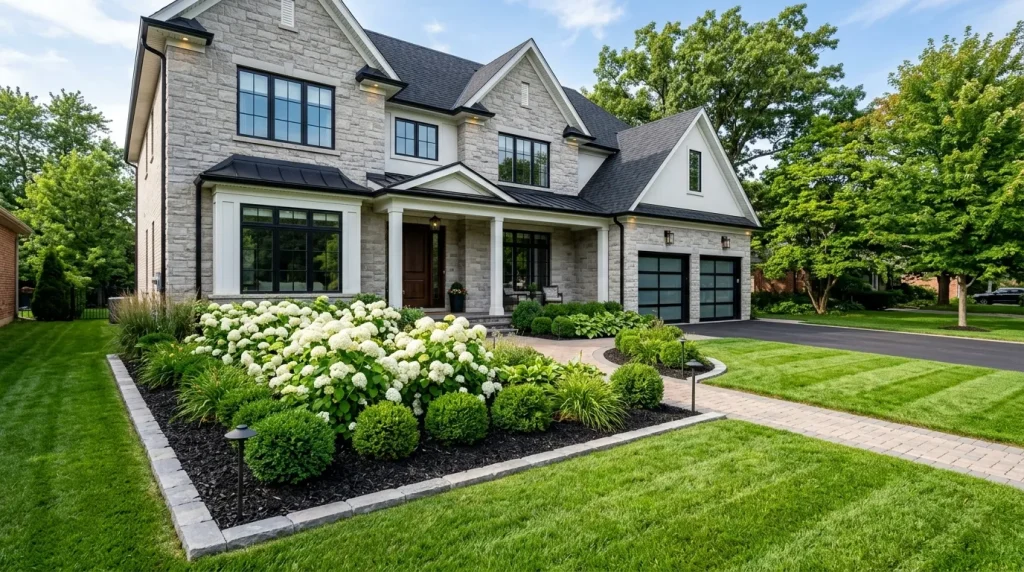
The black mulch in front of house trend continues to grow because it creates a clean, high-end landscape with minimal effort.
Modern Foundation Beds
Use black mulch around:
- Boxwood hedges
- Hydrangeas
- Hostas
- Decorative grasses
- Evergreen shrubs
The dark mulch creates a crisp border that makes foundation plantings stand out beautifully.
Tree Rings
A circular bed of black mulch around mature trees instantly creates a polished appearance.
Add:
- Decorative edging
- Seasonal flowers
- Landscape lighting
to make the area even more attractive.
Walkway Borders
Line walkways with black mulch and colorful perennials to create an inviting entrance to your home.
Black Mulch Around Mailboxes
Upgrade your curb appeal by surrounding your mailbox with:
- Black mulch
- River rocks
- Low-growing flowers
- Ornamental grasses
This small landscaping project makes a big visual impact.
Backyard Garden Beds
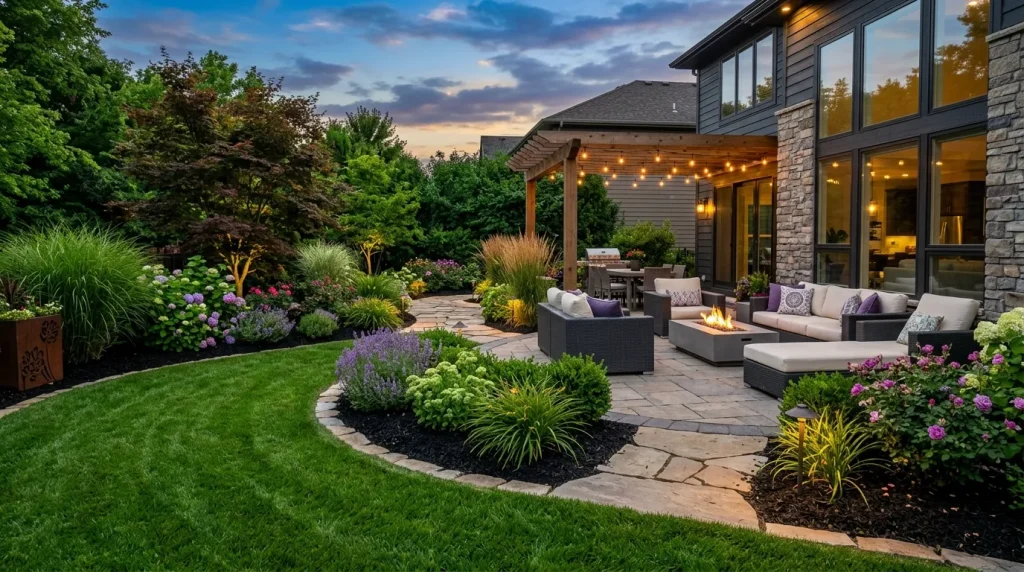
Black mulch also works beautifully in backyard landscapes.
Popular ideas include:
- Vegetable gardens
- Raised beds
- Pollinator gardens
- Cottage gardens
- Shade gardens
The rich color creates a neat, finished appearance throughout the growing season.
Warning
Avoid piling black mulch directly against tree trunks or plant stems. This “mulch volcano” effect can trap moisture, encourage rot, and damage plants. Leave a small gap around trunks and stems for proper airflow.
H2: How Do They Make Black Mulch?
Many homeowners wonder, how do they make black mulch?
Black mulch is generally made by shredding hardwood, recycled wood, or bark into small pieces. The mulch is then colored using environmentally safe dyes—typically carbon-based pigments or iron oxide—that bond to the wood fibers.
Manufacturing Process
- Wood is collected and sorted.
- It is shredded into uniform pieces.
- The mulch is screened for consistency.
- Natural colorants are mixed with water.
- The dye is sprayed onto the mulch while it tumbles.
- The mulch dries before packaging or delivery.
The color is designed to last through a season, although sunlight and weather gradually fade it over time.
Pros and Cons of Black Mulch
Like any landscaping material, there are advantages and disadvantages.
| Pros | Cons |
| Beautiful modern appearance | Color fades over time |
| Excellent weed suppression | Needs refreshing every 1–2 years |
| Helps retain soil moisture | Can absorb more heat in full sun |
| Defines landscape beds | Premium products may cost more |
| Improves curb appeal | Dyed mulch quality varies by manufacturer |
Overall, the pros and cons of black mulch make it an excellent choice for most residential landscapes when installed correctly.
Common Black Mulch Mistakes to Avoid
Avoid these common landscaping mistakes to keep your yard healthy and attractive.
Applying Too Much Mulch
A thick layer can:
- Prevent water penetration
- Reduce airflow
- Encourage root problems
Stick to a depth of about 2–3 inches.
Forgetting to Edge Beds
Clean edging gives mulch beds a professional appearance and helps keep mulch in place.
Mixing Too Many Materials
Choose one primary mulch and limit decorative stone accents to maintain a cohesive design.
Ignoring Annual Maintenance
Top off faded mulch every year to maintain a fresh, vibrant look.
Seasonal Black Mulch Maintenance Checklist
✔ Remove weeds before adding mulch
✔ Trim shrubs and trees
✔ Define landscape edges
✔ Spread mulch evenly
✔ Keep mulch away from trunks
✔ Water plants after installation
✔ Refresh faded mulch annually
✔ Inspect drainage after heavy rain
Frequently Asked Questions
What is black mulch used for?
Black mulch is used to suppress weeds, conserve soil moisture, regulate soil temperature, improve curb appeal, and define flower beds and landscape borders.
Is black mulch safe for plants?
Yes. Quality black mulch made with approved carbon or iron oxide dyes is safe for most landscape plants when applied correctly.
How often should black mulch be replaced?
The mulch itself can remain in place as it decomposes, but most homeowners refresh the top layer every 12–18 months to restore its rich black color.
What flowers look best with black mulch?
White hydrangeas, pink roses, lavender, salvia, coneflowers, petunias, and ornamental grasses all contrast beautifully with black mulch.
Does black mulch attract insects?
Black mulch does not inherently attract insects, but like any organic mulch, it can provide habitat for beneficial organisms as it decomposes.
Conclusion
These black mulch ideas show how a simple landscaping upgrade can dramatically improve your home’s curb appeal. Whether you’re creating elegant black mulch flower beds, refreshing the black mulch in front of house, or choosing the best black mulch for landscaping, the dark color provides striking contrast while delivering practical benefits such as weed suppression, moisture retention, and healthier soil.
Understanding what is black mulch, the benefits of black mulch, the available black mulch types, and the pros and cons of black mulch helps you make informed landscaping decisions that will keep your yard looking beautiful year after year. With thoughtful design, proper installation, and regular maintenance, black mulch can transform ordinary garden beds into standout landscape features.


