
15 Sage Green Kitchen Ideas
There's something about sage green that just makes a kitchen feel like home. It's not loud or trendy in the flashy sense — it's the quiet, leafy green of an herb garden, the color of morning light through eucalyptus leaves. It sits perfectly between gray and green, which means it plays beautifully with almost every style, from farmhouse cottages to sleek modern spaces. If you've been scrolling Pinterest lately, you've probably noticed sage green kitchens everywhere — and for good reason. This muted, earthy tone brings calm to the busiest room in the house while still adding personality that plain white cabinets never could. Whether you're planning a full renovation or just dreaming about a weekend refresh, these fifteen sage green kitchen ideas will show you exactly how to bring this timeless color into your space — from full cabinet makeovers to small, renter-friendly touches — in ways that feel fresh, warm, and completely livable for years to come.

1. Classic Sage Green Shaker Cabinets
Shaker cabinets and sage green are a match made in kitchen heaven. The simple, clean lines of Shaker doors let the color do all the talking — no fussy details competing for attention. Paint every cabinet the same soft sage tone for a calm, cohesive look, then add warm brass cup pulls and knobs to keep things from feeling flat. For the countertops, a warm white quartz or butcher block keeps the palette grounded and timeless. This combination works especially well in traditional and transitional homes, but it feels just as right in a new build that needs a little soul. Keep the walls a soft warm white so the green really pops, and let natural light do the rest. It's a look that never goes out of style, which makes it a safe bet if you're investing in a full kitchen remodel.
2. Two-Tone Magic: Sage Lowers, White Uppers
Can't commit to wall-to-wall green? Try sage green on just the lower cabinets and keep the uppers crisp white. This two-tone trick is one of the smartest ways to use color in a kitchen — the green grounds the room and hides everyday wear on the hardworking lower cabinets, while the white uppers keep everything feeling light and open. It's a designer favorite for smaller kitchens because the eye travels upward to the brightness. Tie the two tones together with a backsplash that has both: think a handmade-look subway tile in soft white with sage undertones, or a simple marble with gray-green veining. Finish with matte black or brushed brass hardware — both work — and a light wood floor to add warmth. You'll get all the character of sage without any of the commitment fear.
3. A Show-Stopping Sage Green Island
If a full sage kitchen feels like too much, make the island the star instead. Paint your kitchen island a rich sage green while keeping the perimeter cabinets white, cream, or light wood, and suddenly you have a natural gathering spot with serious personality. An island in sage becomes the visual anchor of the room — the thing guests gravitate toward. Dress it up with a waterfall countertop in honed marble or a chunky butcher block top, and add three woven or upholstered counter stools to soften the look. Pendant lights in aged brass or matte black hanging above pull the whole vignette together. This is also a fantastic weekend project: one island, one can of paint, and your kitchen looks brand new.
4. Sage Green Walls, White Cabinets
Flip the script — instead of green cabinets, bring sage in through the walls. Painting the walls sage while keeping cabinets white (or cream) is perfect for renters and commitment-phobes, since walls are easy to repaint. The green wraps the room in a cozy, garden-fresh feeling while the white cabinetry keeps the workspace bright and clean. This works beautifully in kitchens with lots of trim or beadboard, because the green settles into all those lovely details. Add open wood shelving against the sage walls for a warm, layered look, and style the shelves with white dishes, glass jars, and a trailing pothos plant. A patterned runner in green and cream on the floor ties it all together without any heavy lifting.
5. Sage Cabinets Paired with Butcher Block
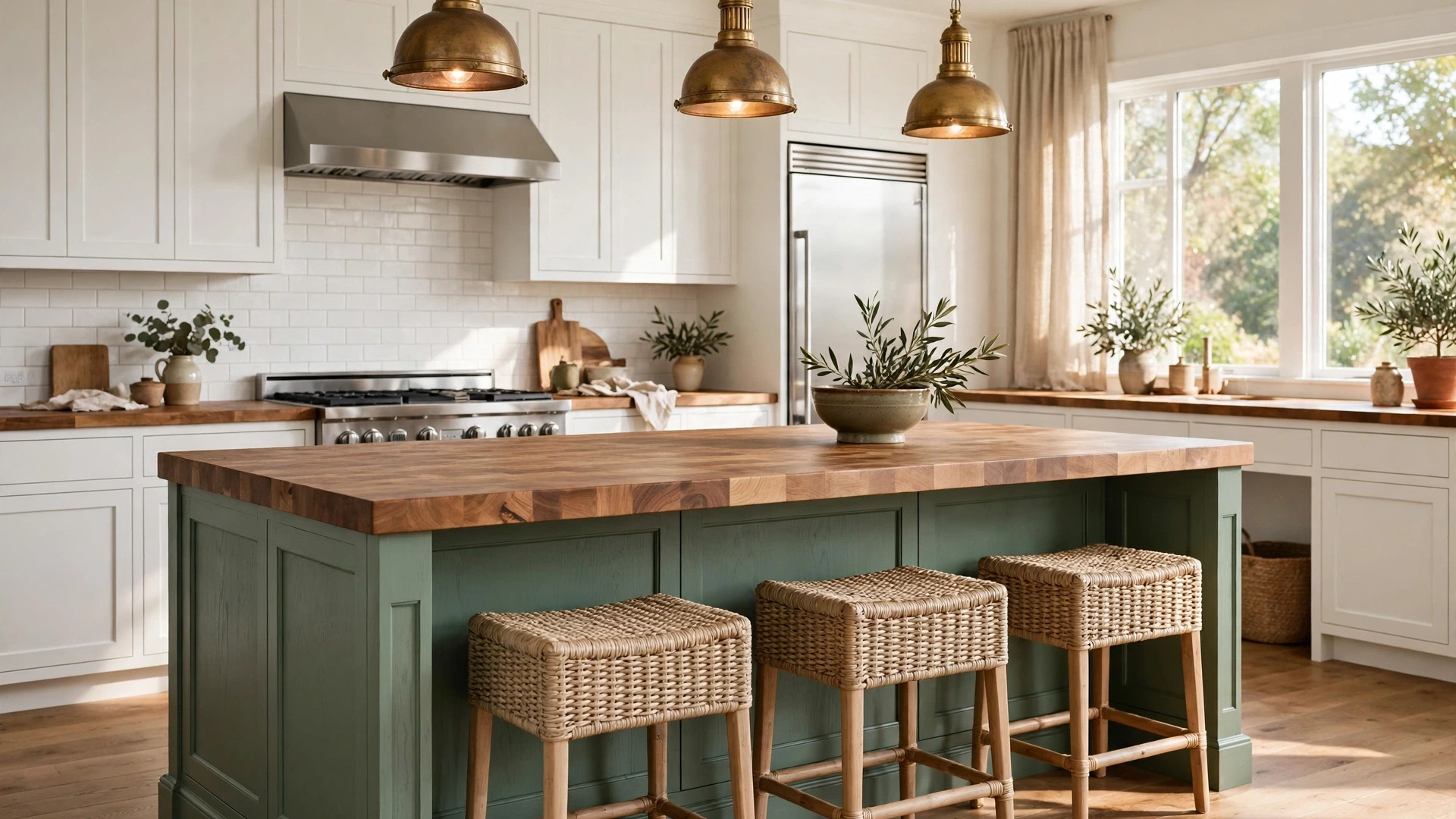
There's a reason this pairing shows up on every inspiration board: sage green and warm wood are simply meant to be together. The green cools things down while the butcher block warms them up, creating a balance that feels like a countryside kitchen that actually gets used. Choose a medium-toned butcher block — maple or oak — rather than something too dark, so the contrast with the sage stays soft. Let the wood show up on the island or all the counters for maximum coziness, and echo it with a wood cutting board leaning against the backsplash and wooden utensils in a crock. Keep hardware simple: oil-rubbed bronze or matte black adds a rustic touch. A farmhouse sink in white fireclay completes the look. It's homey without being kitschy, and it ages gracefully.
6. Cottage Charm with Open Shelving
For a cottage-style kitchen, pair sage green lower cabinets with open wooden shelves instead of upper cabinets. Removing the uppers opens up the wall, making the kitchen feel bigger and airier, while the shelves give you a chance to show off pretty dishes, vintage glassware, and little potted herbs. Paint the shelves a warm natural wood or crisp white to contrast with the sage below. Style them with intention: stack white bowls, line up clear canisters of flour and pasta, tuck in a small trailing plant, and leave some breathing room — cluttered shelves defeat the purpose. A beadboard backsplash painted the same sage as the cabinets makes the whole wall feel like one custom piece. Add a gingham or striped curtain on a small window, and you've got pure storybook charm.
7. A Sage Green Range Hood Statement
Want a focal point that stops people mid-scroll? Paint your range hood sage green. Whether it's a simple shaker-style hood cover or a curved plaster beauty, coating it in sage turns a purely functional element into the room's artwork. This works best when the surrounding cabinets are white or light wood, so the hood really stands out. Keep the rest of the palette quiet — a simple white subway backsplash, light counters, minimal hardware — and let the hood carry the color story. If your hood is metal and can't be painted, you can get the same effect with a sage tile inset on the wall behind the range. Either way, it's an unexpected move that feels custom and high-end without a high-end budget.
8. Elegant Sage and Marble
Sage green and marble are a quietly luxurious pairing. The cool gray veining in marble picks up the gray undertones in sage, so the two materials feel like they were always meant to be together. Use honed Carrara-look marble (or the real thing, if the budget allows) on the countertops and carry it up the wall as a full-height backsplash for a seamless, elegant look. Pair it with sage cabinets in a slightly deeper tone — think dried sage rather than pale — so there's enough contrast. Polished nickel or chrome hardware keeps things classic, while a crystal or glass pendant adds a touch of sparkle. This combination shines in traditional and transitional kitchens, and it photographs beautifully if you're the type to share your space online.

9. Small Kitchen, Big Sage Energy
Worried sage will overwhelm a small kitchen? Go lighter. A pale, airy sage on the cabinets can actually make a compact kitchen feel larger, because it blurs the hard edges between cabinets and walls in the most flattering way. Keep the uppers and lowers the same pale sage for a seamless wash of color, then bounce light around with glossy or satin finishes, a light countertop, and under-cabinet lighting. Skip heavy window treatments — a simple linen shade or bare window keeps the light flowing. A large mirror or glass-front cabinet door reflects even more light. The trick is keeping everything else pale and reflective so the sage reads as a soft glow rather than a heavy blanket. Small kitchens deserve beautiful color too.
10. A Sage Green Pantry Door Moment
Here's a low-commitment idea with high impact: paint just the pantry door sage green. It's a small surface, so you can go a shade deeper and moodier than you might dare on full cabinets — and it turns an overlooked element into a charming focal point. A Dutch door painted sage is peak cottagecore, and it lets you close off the kitchen mess while keeping the airflow. Style the area around it with a small rug, a wall-mounted herb planter, or a vintage-style sign. If you don't have a pantry door, apply the same idea to a kitchen nook, a built-in hutch, or the back panel of open shelving. One concentrated hit of sage in an otherwise neutral kitchen adds personality without any renovation at all.
11. Rustic Sage with Exposed Wood Beams
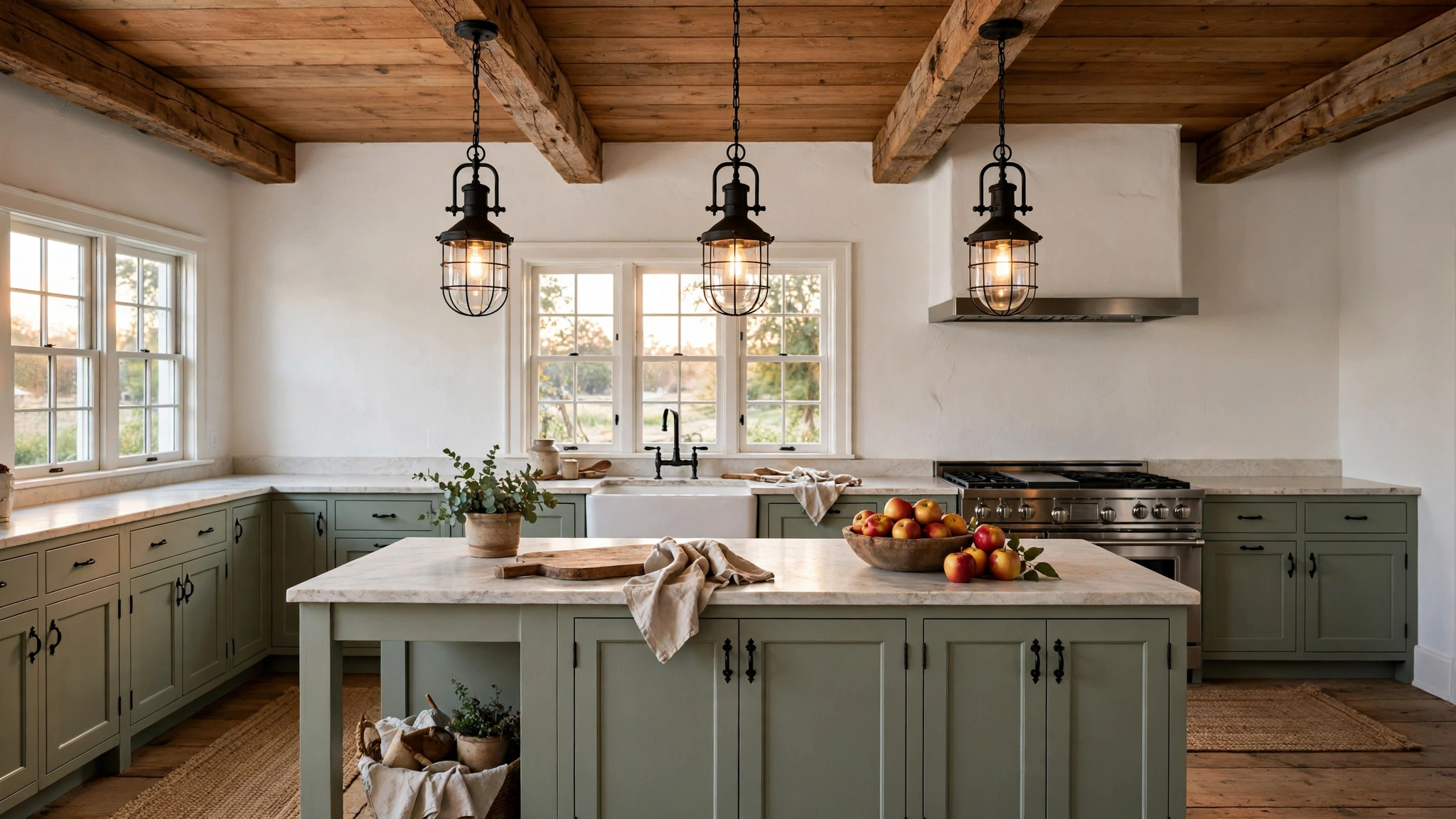
For a rustic or modern farmhouse kitchen, sage green cabinets look incredible under exposed wood beams. The beams add architectural warmth and history, while the sage keeps the room from feeling like a dark cabin. If you don't have real beams, faux wood beams are a surprisingly convincing weekend project. Keep the cabinets a mid-tone sage — not too pale, or they'll wash out next to the wood — and choose a warm white for the walls and ceiling so the beams stand out. A black or bronze faucet, iron pendant lights, and a deep farmhouse sink lean into the rustic story. Finish with natural textures: a jute runner, linen curtains, and a bowl of fresh apples on the island. It's the kind of kitchen that makes people want to stay for dinner.

12. A Sage Green Tile Backsplash
Not ready to paint cabinets? A sage green backsplash delivers the color in a contained, changeable way. Zellige tiles in sage are the current darling — their handmade variation and glossy finish catch the light beautifully and add artisanal texture. For a cleaner look, try a classic subway tile in soft sage with matching grout for a seamless feel, or a fish-scale mosaic for something more playful. Pair a sage backsplash with white or light wood cabinets so the tile is the star, and keep counters simple. This is also a great renter-friendly move if you use peel-and-stick tiles in a sage pattern. However you do it, a green backsplash adds depth and interest to the hardest-working wall in the kitchen.
13. Modern Edge: Sage with Black Accents
Sage green isn't just for cottages — it can go sleek and modern too. The secret is pairing it with black accents: matte black hardware, a black faucet, black-framed windows or open shelves, and slim black pendant lights. The black sharpens the softness of the sage and gives the kitchen a crisp, contemporary edge. Keep the cabinet style flat-panel or simple Shaker for a modern silhouette, and choose a mid-to-deep sage so it holds its own against the black. White or light gray counters keep the contrast clean, and a simple large-format tile backsplash avoids visual clutter. A few warm touches — a wood cutting board, a green plant — keep the modern look from feeling cold. It's proof that sage can be just as at home in a city loft as a country cottage.
14. Sage Window Trim and a Breakfast Nook
Here's a detail most people overlook: paint the window trim — and the whole breakfast nook, if you have one — sage green. Deep green trim around a bright window frames the view like artwork and adds instant character, especially in an older home where the trim has beautiful profiles worth showing off. Extend the sage to a built-in banquette or a beadboard wainscot in the eating area for a cozy, enveloping nook that begs for slow weekend breakfasts. Add a round wood table, cushions in cream and sage ticking stripe, and a simple pendant overhead. Because it's just trim and a nook, the project is small — but the charm payoff is enormous. It's the kind of thoughtful detail that makes a kitchen feel designed rather than decorated.
15. Style Sage as a Year-Round Neutral
Think of sage green as a neutral, not a color — because it honestly behaves like one. It sits beautifully with creams, whites, warm woods, blacks, brasses, and even soft blush or terracotta, which means you can redecorate around it seasonally without ever repainting. In spring, style your sage kitchen with fresh tulips, light linens, and glass canisters of lemons. In fall, swap in amber glass, dried wheat, mini pumpkins, and a cozy plaid runner. At Christmas, sage is a natural with eucalyptus garlands, pinecones, and warm candlelight. The cabinets stay the same; only the styling changes. That's the real magic of sage green — it's a backdrop that makes every season look good, which is exactly what you want from the hardest-working room in your home.
Styling Tips
Now that you've picked your favorite ideas, here are the practical styling rules that make sage green kitchens look intentional instead of accidental.
Test your shade in your light. Sage can swing gray, green, or even slightly blue depending on your light. Paint large swatches on poster board, move them around the kitchen at different times of day, and live with them for at least 48 hours before committing. North-facing kitchens pull out the gray; warm southern light brings out the green.
Balance green with warmth. Sage's cool undertones need warm partners — brass or gold hardware, wood tones, woven textures, and warm white walls (not stark blue-white). Without warmth, sage can feel chilly, especially in low light.
Repeat the color three times. Designers use the rule of three: if sage is on your cabinets, echo it twice more — a sage runner, green glassware on open shelves, a potted herb on the sill. Repetition makes the color feel deliberate.
Choose hardware last. Live with the painted cabinets for a few days before choosing knobs and pulls. Brass warms sage up; matte black modernizes it; brushed nickel keeps it classic. The right metal depends on the exact shade you landed on.
Mind the undertones in your pairings. Sage has gray in it, so pair it with other muted, grayed tones rather than clean brights — think warm greige walls instead of stark white, soft cream instead of bright yellow. Muted-with-muted always looks richer.
Don't forget the fifth wall. A soft white or warm cream ceiling keeps a sage kitchen feeling open. In a small kitchen, painting the ceiling the same pale sage as the walls can actually blur boundaries and make the room feel larger.
Layer your lighting. Sage looks different under warm and cool bulbs — always choose warm white bulbs (around 2700K–3000K) so the green reads cozy, not clinical. Add under-cabinet lighting to keep the counters bright and the color glowing after dark.
Frequently Asked Questions
What colors go well with sage green kitchen cabinets?
Sage green is wonderfully easy to pair. Warm whites and creams keep it fresh, natural wood tones (oak, maple, walnut) add warmth, and brass or gold hardware brings a touch of elegance. For contrast, matte black accents give it a modern edge, while soft blush, terracotta, or muted navy work as accent colors in textiles and decor. Avoid pairing sage with clean, bright primaries — muted, earthy companions always look more harmonious.
Is sage green a good color for a small kitchen?
Yes — as long as you go light. A pale, airy sage on cabinets can make a small kitchen feel bigger by softening the contrast between surfaces. Keep countertops light, maximize natural light, add under-cabinet lighting, and avoid heavy dark accents. The key is choosing a sage with good lightness rather than a deep, moody tone, which can close in a compact space.
Does sage green go out of style?
Sage green has been used in kitchens for decades — it surged in farmhouse design years ago and keeps coming back because it's essentially a neutral. Unlike bolder trend colors, muted sage doesn't scream a particular era, so it ages gracefully. If you're worried about longevity, use it on easily changeable elements (walls, island, backsplash) rather than a full cabinet commitment.
What backsplash looks best with sage green cabinets?
It depends on the look you want. White handmade-look subway tile is the safest classic; marble or marble-look tile adds elegance; sage zellige tile creates a tone-on-tone artisanal feel; and warm beige or greige stone keeps things earthy. Keep the grout close to the tile color for a calm look, or use a slightly contrasting grout if you want the pattern to pop.
Should kitchen walls be lighter or darker than sage cabinets?
Generally lighter. Crisp or warm white walls let sage cabinets be the star and keep the kitchen feeling bright. If you want more drama, you can paint the walls a deeper tone and keep cabinets pale sage — but avoid putting two mid-tone sages together, as they can clash or look muddy. One surface should clearly lead.
What hardware finish works best with sage green?
Brass and gold are the most popular pairing — the warmth complements sage's cool undertones beautifully. Matte black gives a modern, high-contrast look; brushed nickel or polished chrome feels classic and timeless; oil-rubbed bronze leans rustic. The best choice depends on your cabinet shade and overall style, so test hardware against a painted sample before deciding.
Conclusion
Sage green might just be the perfect kitchen color — calm but full of character, trendy but timeless, bold enough to notice and soft enough to live with. Whether you go all-in on sage cabinets, dip a toe in with a painted island or backsplash, or simply style around the shade seasonally, these fifteen ideas prove there's a version of this look for every home and every budget. So grab a paint swatch, tape it to your cabinet, and start imagining. Your dreamiest, coziest kitchen might be one shade of green away.