
12 Sweet Toddler Bedroom Ideas
There's something extra-special about decorating for the toddler years. This magical stretch between babyhood and big-kid independence is full of wonder — first "big kid" beds, first favorite storybooks, first masterpieces taped proudly to the wall. The bedroom you create now becomes the backdrop for all of it, a little world that feels safe, cozy, and just a bit enchanting.
The best toddler bedrooms strike a gentle balance. They need to be calm enough for sleep yet playful enough for daytime adventures. They should feel personal to your little one while still looking lovely to you (because let's be honest, you'll spend plenty of time in there too). And above all, they must be safe — every design choice filtered through the eyes of a curious explorer who climbs, mouths, and tumbles.
Whether you're converting a nursery for the crib-to-bed transition or starting fresh in a new room, these twelve sweet ideas will help you create a space your toddler adores — one that grows with them through the preschool years and beyond. Let's dive in.
1. Create a Crib-to-Bed Transition Corner
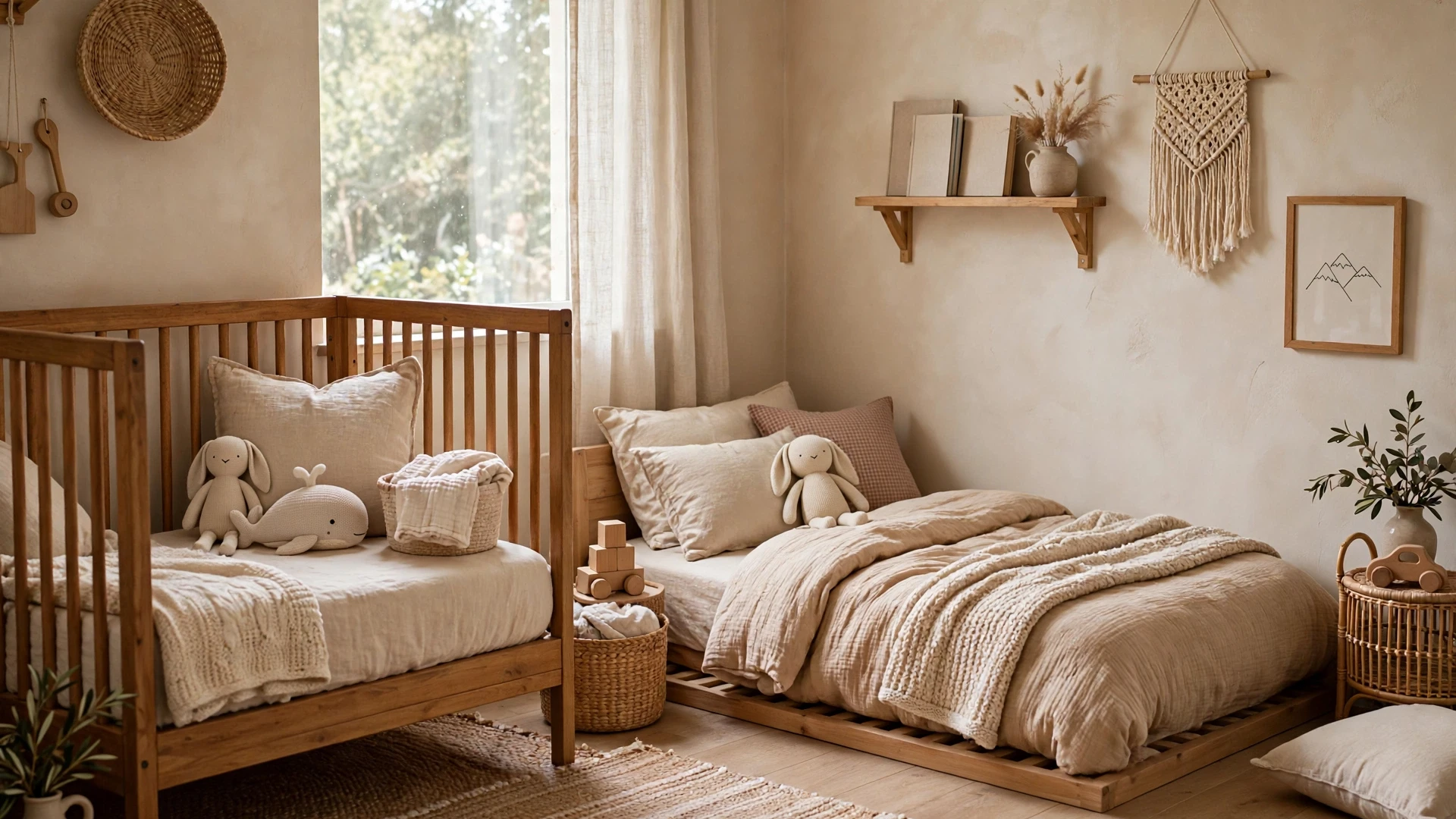
The move from crib to bed is a milestone worth celebrating, and the corner you design around it sets the tone. Start with a low toddler bed or even a mattress placed directly on a pretty floor frame — the closer to the ground, the less scary (and less bruising) any midnight roll will be. Add a simple guard rail on the open side for the first few months. Let your little one help choose the bedding: a duvet in soft stripes, tiny stars, or cheerful dots makes the new bed feel like theirs, not something imposed on them. Place a plush rug right beside the bed so little feet land on something soft each morning. A small nightstand or low stool holds a sippy cup of water and one beloved stuffed friend. Keep the crib out of sight for the first week — out of sight really does help. This dedicated corner turns a potentially anxious change into an exciting promotion to big-kid status.
2. Choose a Soft, Sleep-Friendly Color Palette
Toddler rooms shine in gentle, sleepy colors. Think warm cream, pale sage, powdery blush, buttery yellow, or dusty blue — hues that feel like a deep breath. These soft tones naturally calm busy little minds at bedtime, unlike bright reds or neon accents that can feel overstimulating when the lights go low. You don't need to paint all four walls: try a two-tone effect with a soft color on the bottom half and crisp white above, or paint a simple arch or oversized circle behind the bed as a sweet focal point. If you're renting or commitment-shy, keep the walls neutral and bring the color in through textiles — curtains, bedding, a painted dresser, or a colorful rug. Whatever palette you pick, repeat it in at least three spots around the room so the whole space feels tied together and intentionally cozy.
3. Build a Cozy Reading Nook They'll Actually Use
Toddlers are natural book lovers, and a dedicated reading spot turns that love into a daily ritual. Tuck a small armchair, a plump floor cushion, or a bean bag into a quiet corner, then add a basket or a low forward-facing bookshelf so the covers — not just the spines — catch their eye. Little ones choose books by their pictures, so displaying covers face-out genuinely increases how often they "read." Layer in a soft throw blanket and one squishy pillow, and hang a simple piece of art or a garland above the nook to mark it as special. A small rug underneath defines the zone and keeps knees comfy. This corner quickly becomes the go-to spot for wind-down time before naps and bedtime, and there's nothing sweeter than peeking in to find your toddler "reading" aloud to their stuffed animals.
4. Add Whimsical Peel-and-Stick Wall Decals
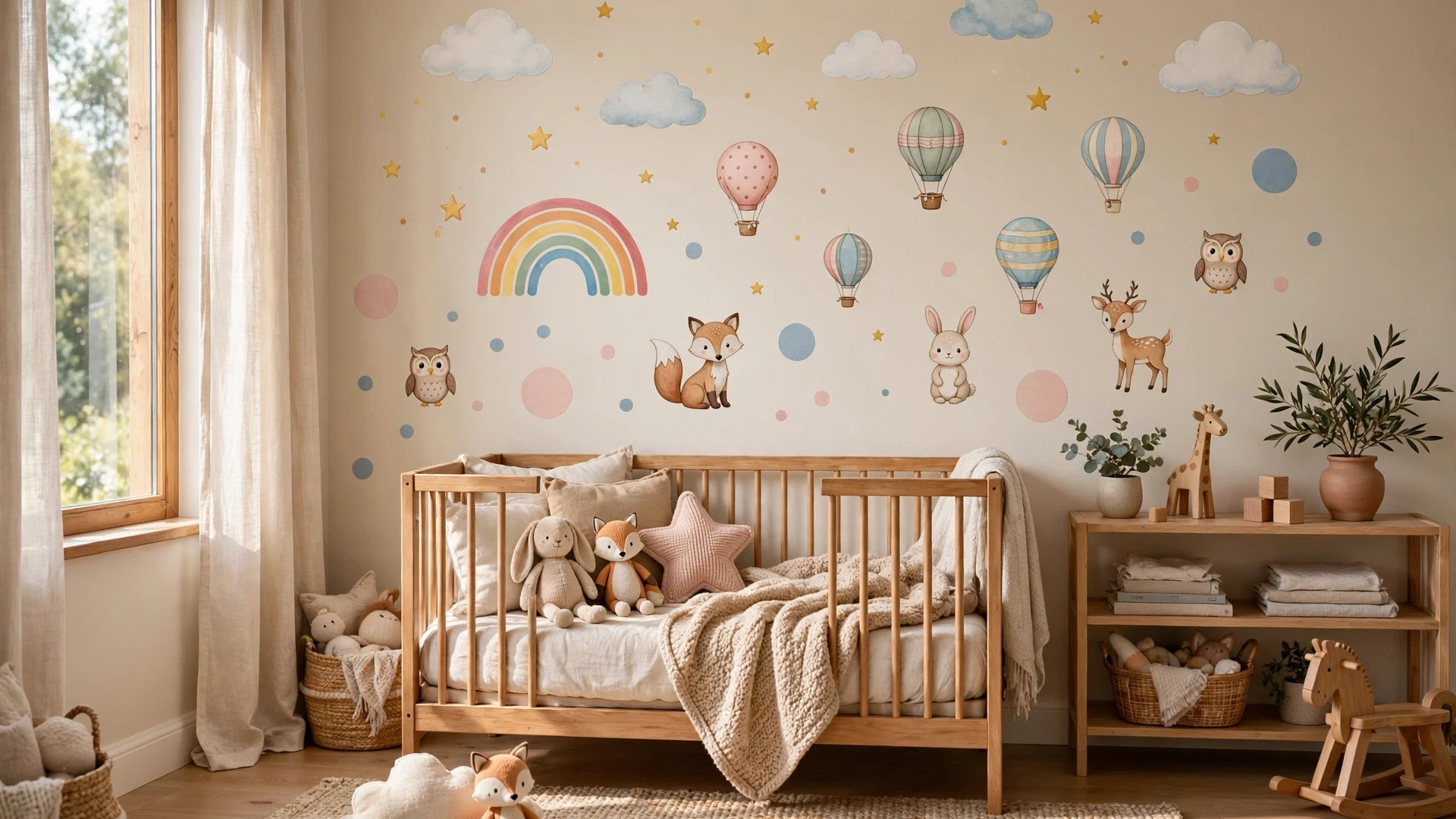
If paint feels like too much commitment, peel-and-stick wall decals are a toddler-room dream. Stars, clouds, hot-air balloons, rainbows, woodland animals, or polka dots go up in an afternoon and come down without a trace when tastes change (and they will). The trick is placement: stick them at your toddler's eye level rather than adult height, so the room feels designed for them. Cluster decals above the bed like a little scene, or scatter stars across one wall so they can count them during bedtime stories. Choose matte-finish decals in soft colors that blend with your palette rather than loud glossy ones that fight it. Because they're removable, you can even let your toddler help choose and place a few — instant buy-in, and a fun rainy-day activity. It's the lowest-effort, highest-smile update a toddler room can get.
5. Make the Ceiling Magical with Glow-in-the-Dark Stars
Bedtime goes so much more smoothly when there's something wonderful to look at in the dark. Glow-in-the-dark stars and moons stuck to the ceiling turn lights-out into a tiny nightly adventure. Charge them up with the room light before bed, then let your toddler spot constellations as they drift off. For an even dreamier effect, a star projector that casts slow-moving shapes across the ceiling and walls can soothe a child who's nervous about the dark — look for one with warm tones and an auto-off timer so it doesn't glow all night. Keep the rest of the room dim and let the ceiling be the show. Many parents find that a ceiling worth staring at cuts down on stall tactics and "one more story" negotiations, because lying still suddenly feels like part of the fun.
6. Use Toy Storage at Their Height
A tidy toddler room isn't about perfection — it's about making cleanup possible for tiny hands. Swap tall, deep toy boxes (where everything vanishes into a jumbled pit) for low open cubbies with shallow bins your toddler can actually reach and see into. Label each bin with a picture label — a photo or simple drawing of blocks, cars, dolls, crayons — so even pre-readers know where things live. Keep the current favorites in the cubbies and rotate the rest into a closet stash, swapping every week or two; old toys feel brand new again after a short break. Leave one bin empty on purpose as the "treasure basket" for whatever they're currently obsessed with. When everything has a visible, reachable home, cleanup becomes a game instead of a battle, and your toddler builds real independence one bin at a time.

7. Drape a Dreamy Canopy Over the Bed
Few things make a toddler feel as special as a canopy over their bed. A simple sheer fabric canopy hung from the ceiling turns an ordinary toddler bed into a secret hideaway, a castle, a reading cave — whatever their imagination needs that day. Choose lightweight, breathable fabric in white or a soft tone from your palette, and hang it high enough that it drapes around the bed rather than lying on your child's face. For extra magic, weave a string of warm battery-operated fairy lights through the top of the canopy (keep the battery pack and any cords well out of reach). During the day, tie the fabric back with a ribbon so the bed feels open; at night, let it fall loosely for a cocooned, snug feeling. It's a small addition that delivers an enormous sense of wonder.
8. Let Them Pick Their Own Bedding
Here's a secret from parents who've survived the toddler years: letting your little one choose their bedding is one of the easiest wins in the whole room. Offer two or three parent-approved options — maybe tiny rainbows, sleepy moons, friendly dinosaurs, or simple gingham — and let them make the final call. A child who picked their own duvet is dramatically more excited to climb into bed at night. Look for soft, breathable cotton in prints that make them grin, and layer it with a lightweight quilt or knit blanket for texture and extra coziness. Keep a spare fitted sheet and a second duvet cover on hand, because toddler bedding and laundry day are constant companions. When the bedding reflects their personality, the whole room feels more like theirs — and bedtime resistance melts just a little.
9. Anchor the Room with a Plush Play Rug
Toddlers live on the floor, so the rug is arguably the hardest-working piece in the room. A generously sized, plush rug in the center of the room defines the play zone, cushions tumbles, and keeps little knees and elbows happy during block towers and puzzle sessions. Round rugs work beautifully in toddler rooms — no sharp corners, and they create a natural gathering spot that feels like a hug. Choose a low-pile or flatweave style in a forgiving pattern (small prints hide crumbs and crayon mishaps far better than solid light colors), and make sure it's easy to clean — machine-washable rugs are a gift to parents of toddlers. Layer a smaller, extra-soft rug beside the bed for bare morning feet. The right rug pulls the whole room together visually while quietly handling the chaos of daily play.

10. Layer Gentle Night Lighting
Harsh overhead lights and toddler bedtimes do not mix. Instead, layer soft, warm lighting that eases your little one from playtime energy into sleepiness. A dimmable lamp on the dresser gives you enough glow for bedtime stories, while a small plug-in night light casts a reassuring pool of warmth once the room goes dark — choose one with a warm amber tone rather than cool blue-white, which can interfere with sleepy feelings. String lights draped high along a shelf or around a window frame add a sprinkle of magic (keep all cords completely out of reach and unplugged or battery-run). Avoid anything with small detachable parts or accessible bulbs. When the lighting shifts from bright to soft each evening, it becomes a powerful sleep cue: glowing lamp means stories, night light means sleep. Their little bodies learn the rhythm fast.
11. Hang an Art Gallery at Their Eye Level
Your toddler's artwork deserves better than the refrigerator door — and displaying it in their room tells them their creations truly matter. Hang a row of simple frames low on the wall, at your child's eye level rather than yours, and rotate their latest masterpieces through them. For an ever-changing display, mount a few clipboards or a wire strung with small clothespins so new art can go up the moment it's finished. Mix in one or two sweet store-bought prints — an alphabet chart, a whimsical animal illustration, a map of the world — to round out the gallery. Add a tiny easel or a roll of paper on a low table nearby so inspiration can strike at any time. Seeing their own work framed and celebrated builds quiet confidence, and the gallery evolves naturally as their skills (and interests) grow.
12. Set Up a Little Table for Big Imaginations
Every toddler room benefits from a dedicated spot for making things. A small table with two sturdy chairs, tucked near a window for good daylight, becomes mission control for coloring, stickers, puzzles, playdough, and very serious tea parties. Keep the setup simple: a caddy or small tray holding crayons, paper, and a few favorite activity books, with the rest stored nearby in the cubbies. A wipeable tabletop saves your sanity, and chairs that are easy for little legs to push in and out encourage independence. This zone also gives the bed a break — when the table is for play and the bed is for sleep, bedtime boundaries get a little clearer. It's a small footprint with an outsized payoff: a place where big imaginations get to work every single day.
Styling Tips
Put safety before style, every time. Anchor every dresser, bookshelf, and cubby unit to the wall — toddlers climb, and tip-overs are preventable. Cover outlets, choose cordless window coverings or tuck cords completely out of reach, and keep small objects, coins, and anything detachable out of the room. A beautiful room means nothing if it isn't a safe one.
Design at their scale. Hang art low, keep books and toys within reach, and choose furniture they can use independently. When a toddler can climb into bed, reach their books, and put toys away without help, the room works for them — and life gets easier for you.
Choose washable everything. Between spilled milk, mystery stains, and artistic experiments, toddler rooms take a beating. Machine-washable rugs, washable paint finishes, and bedding you can toss in the wash without a second thought will keep the room looking sweet with minimal stress.
Pick one theme and repeat it in threes. Rather than ten competing ideas, choose a gentle direction — woodland animals, stars and moons, soft rainbows — and echo it in three places: bedding, wall art, and one accessory. Restraint keeps the room feeling calm and pulled-together.
Keep the base neutral and swap the accents. Paint walls and choose big furniture in timeless neutrals, then express your toddler's current obsession through easily changed items like bedding, decals, and throw pillows. When dinosaurs give way to outer space, you'll swap accents, not furniture.
Leave breathing room. Resist the urge to fill every corner. Open floor space is a gift to a toddler — room to build, dance, sprawl with books, and just be little. A slightly emptier room feels calmer and stays tidier, too.
FAQ
When should I move my toddler from a crib to a bed?
Most toddlers make the switch sometime between 18 months and 3 years. The clearest signs they're ready: climbing out of the crib, asking for a big-kid bed, or simply outgrowing the crib. There's no rush if everyone is sleeping well — many families wait until closer to age 3. When you do transition, toddler-proof the whole room first, since your little one can now roam freely at night.
What colors work best for a toddler bedroom?
Soft, warm, and slightly muted colors are ideal — think creamy whites, pale sage, blush pink, buttery yellow, or dusty blue. These tones feel calming at bedtime while still cheerful in daylight. Save bold, saturated colors for small accents like throw pillows or artwork, so the room can shift easily from playful days to sleepy nights.
How do I keep the room safe once my toddler can get out of bed?
Think like a tiny explorer: anchor all furniture to the walls, cover every outlet, remove or secure blind cords, and keep choking hazards, medications, and heavy objects out of the room entirely. Many parents add a safety gate at the bedroom door or a childproof handle cover so nighttime wandering stays contained. Do a hands-and-knees check of the room at toddler height — you'll spot risks you'd never see standing up.
Should I go all-in on a theme my toddler loves right now?
A light touch works better than a full commitment. Toddler passions change fast — today's dinosaur devotee is tomorrow's astronaut. Keep walls, furniture, and rugs neutral, and let the theme live in easy-to-swap pieces: bedding, wall decals, a lamp shade, or a few toys on display. You'll refresh the room in an afternoon when interests evolve.
Can these ideas work if my toddler shares a room with a sibling?
Absolutely. Give each child their own defined zone — even just their own bed, bedding pattern, and a small personal shelf or wall space. Matching bed frames with different bedding keeps things cohesive yet personal. Stagger bedtimes by 15–20 minutes if the younger one is easily woken, and a white noise machine works wonders for shared-room sleep. The key is that each child feels the room belongs to them too.
Decorating a toddler bedroom is one of the sweetest projects you'll take on — a chance to build a little world that's equal parts safe haven and launching pad for big imaginations. Start with the crib-to-bed transition corner, layer in soft colors and gentle lighting, and let your toddler's personality shine through in the bedding, books, and artwork they love most. Keep the foundation simple and safe, and the room will grow right alongside them. Before you know it, you'll be peeking through the doorway at a cozy, happy space — and a little one who can't wait to show it off.


