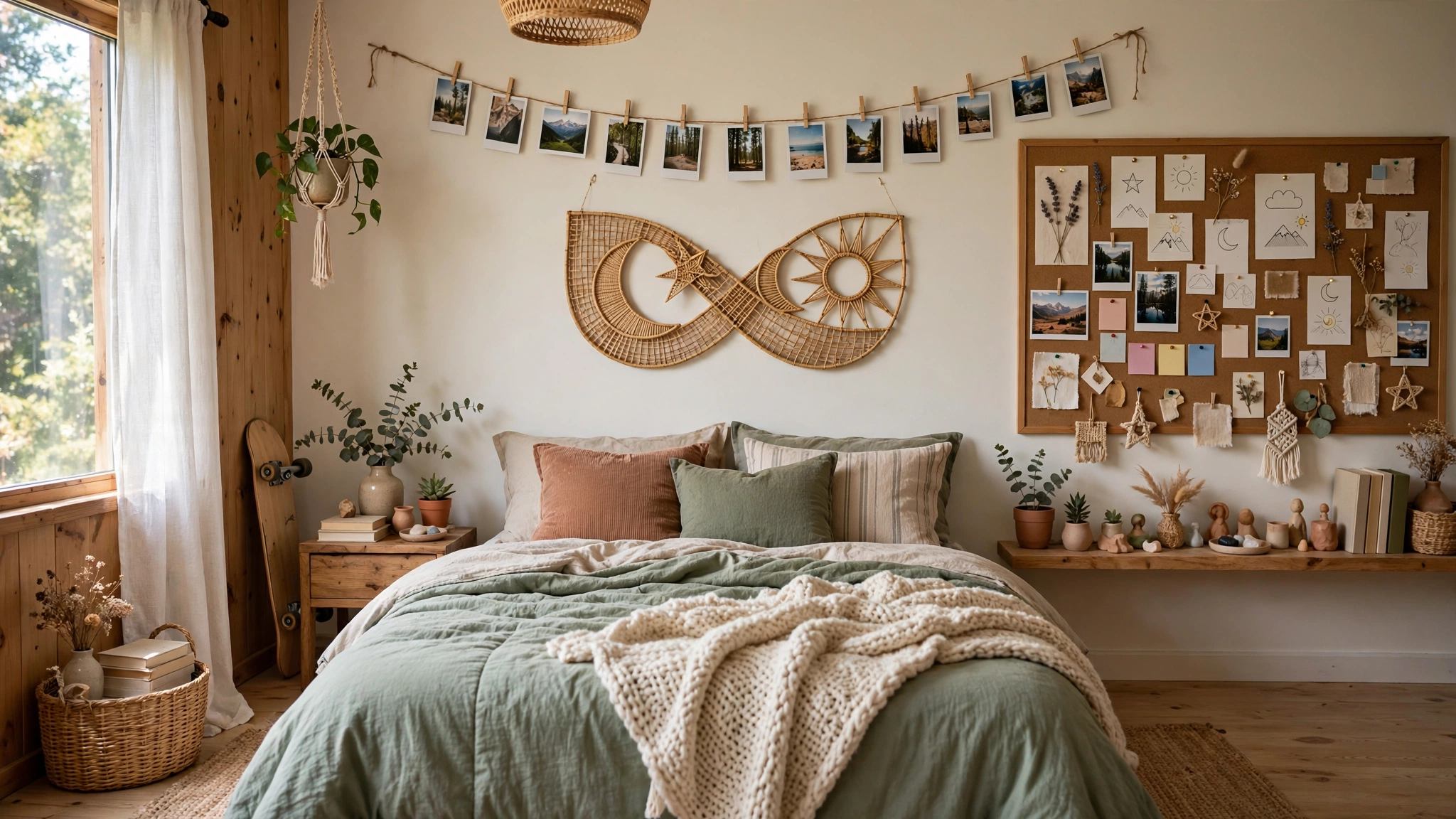

15 Cool Teen Bedroom Ideas
There is a sweet spot between a kid's bedroom and a grown-up one, and that is exactly where the teen bedroom lives. This is the room where homework gets done (eventually), where best friends crash on Friday nights, where playlists are made and moods are decorated. A teen bedroom is part study zone, part social lounge, part personal museum — and it deserves more thought than just picking a duvet color.
The best teen rooms share a few things in common: a bed that is genuinely cozy, lighting that can shift from study-bright to hangout-soft, a spot for friends to sit that is not the bed itself, and walls that tell a story. Teens outgrow things fast, so the smartest designs build on a flexible base — neutral walls and sturdy furniture — and let personality come through in the layers that are easy to change: bedding, art, lamps, rugs, and small details.
Whether you are designing the room for your teen, decorating it yourself with a parent's blessing, or hunting for ideas for your own space, these fifteen ideas cover every corner of the room. Mix, match, and steal freely — that is what inspiration is for.
1. The Lounge Bed Setup
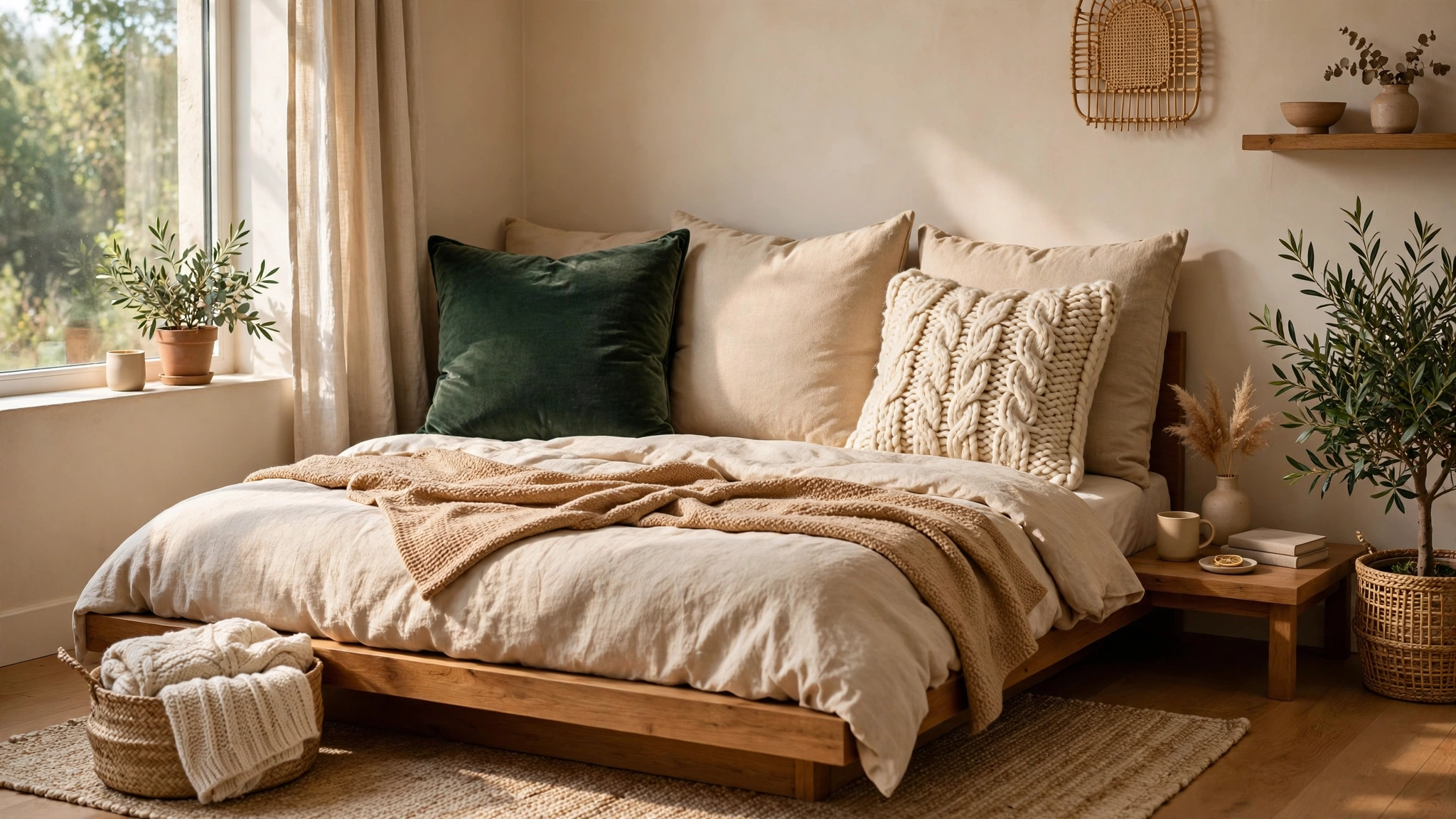
Swap the traditional bed-against-the-wall arrangement for a lounge-style setup that works as a sofa by day. Push the bed's headboard against one wall and layer two or three large backrest pillows — velvet, canvas, or knit, in a mix of the room's main colors — along the wall so it reads like a daybed. A throw blanket folded across the foot keeps it looking intentional, not sloppy.
This works especially well in smaller rooms because it eliminates the need for a separate couch. Choose a bed with a solid headboard or add a wall-mounted cushion panel so leaning back is actually comfortable. Add a low rolling cart beside the bed for snacks, chargers, and remotes so the lounge spot is fully self-sufficient. Finish with a small rug angled under the bed's front edge to anchor the whole zone. Teens love this because the room instantly feels less like a bedroom and more like a personal lounge — and parents love it because homework somehow gets done on it too.
2. Color-Blocked Accent Wall
Painting one wall in a bold shape is the fastest way to give a teen room real personality. Instead of a flat accent wall, try color blocking: paint a large arch, a circle, or a half-wall stripe behind the bed in a confident shade like terracotta, sage green, mustard, or dusty rose. The rest of the room stays light — white or warm off-white — so the color moment feels fresh, not heavy.
Use painter's tape and a level for crisp edges; a circle is easiest with a string compass trick (pencil, string, and a pin). Keep the bedding mostly neutral with one pillow pulled from the wall color, and the room will look designed rather than random. This is one of the most budget-friendly ideas here — a single sample pot of paint can cover a circle or arch. It also grows well with teens: when tastes change, one wall repaints in an afternoon, and the neutral surroundings still work.
3. Study Nook That Doesn't Feel Like School
A desk crammed in a dark corner is where homework goes to die. Give the study zone real design attention: place the desk near a window for daylight, choose a chair that is actually comfortable to sit in for an hour (an upholstered desk chair or a chair with a seat cushion, not a hard dining chair), and add a desk lamp with warm white light.
Wall-mounted shelves above the desk keep supplies off the work surface — use two narrow floating shelves for notebooks, a small plant, and a pencil cup. A pinboard or magnetic board above holds reminders, photos, and tickets without cluttering the desk. A soft rug under the chair legs reduces noise and makes the zone feel separate from the rest of the room. Finish with a small detail that makes sitting down appealing: a favorite candle (unlit near papers, of course), a framed print, or a fun desk mat. When the study nook looks inviting, it stops feeling like a chore corner and starts feeling like a creative headquarters.
4. The Gallery Wall of Their Life
Teens collect things — concert tickets, photos, art prints, postcards, friendship bracelets flattened into frames. A gallery wall turns all of it into decor. Start with a base of three or four larger prints or photos in simple frames, then fill in the gaps with smaller pieces: polaroids, mini canvases, a woven hoop, a letter board.
The trick to making it look styled instead of chaotic is consistency in one element: either all frames in the same finish (black, natural wood, or white), or a consistent mat color, or a defined boundary shape like a large square or rectangle. Lay everything out on the floor first and photograph it before hammering a single nail. For renters or commitment-phobes, lean into clip rails, washi tape borders, or string-and-clothespin lines — all removable and refreshingly casual. A gallery wall is the single most personal thing in a teen's room, and it changes as they do, which is exactly the point.
5. Layered Lighting for Every Mood
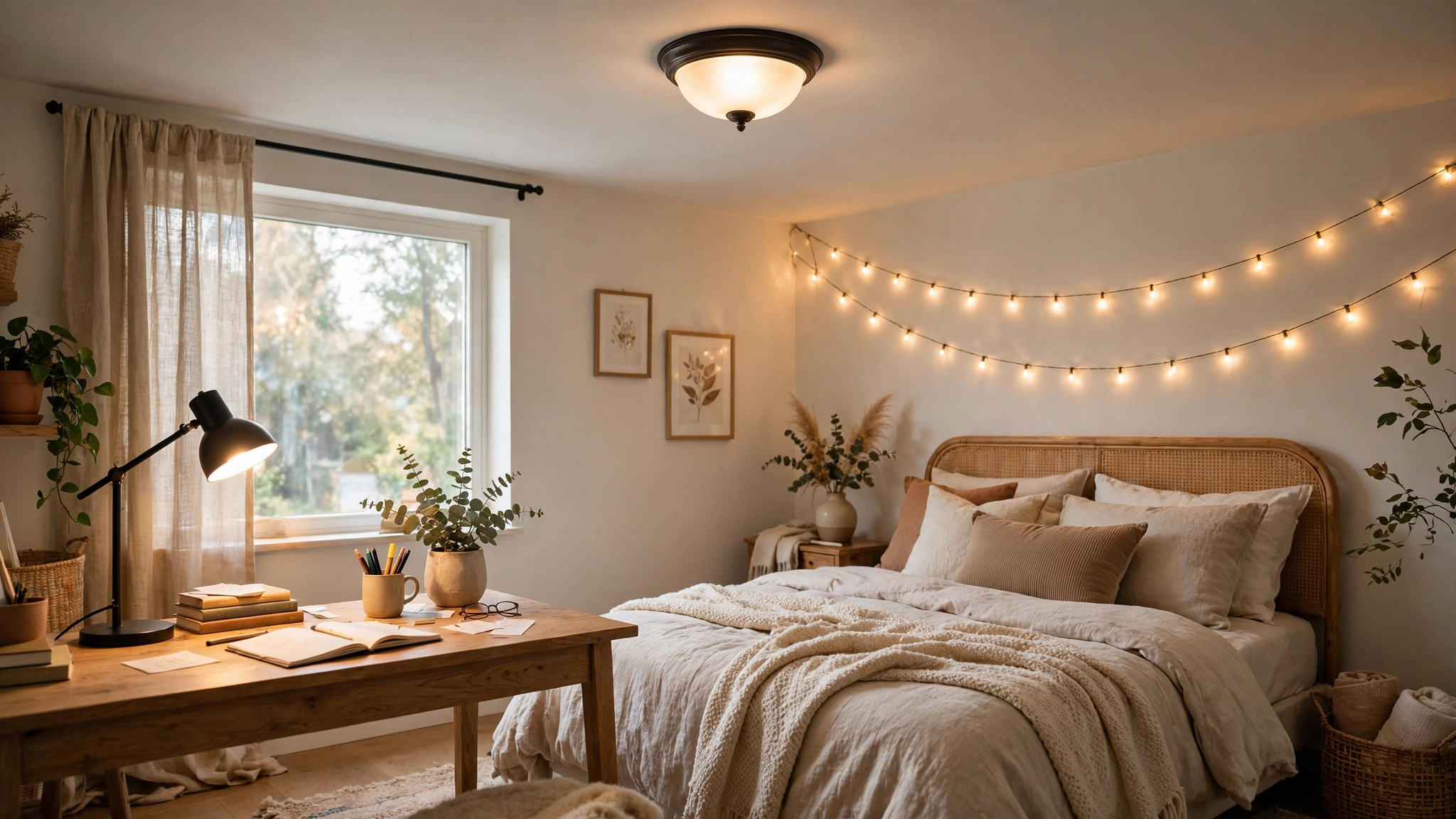
Overhead lights are the enemy of cozy. Build the room's lighting in layers so it can shift from homework mode to movie-night mode. Start with the existing ceiling light, then add: a desk lamp for studying, string lights or fairy lights along a shelf or headboard for warmth, and one soft-glowing lamp on the dresser or nightstand for evenings.
Colored or color-changing options are catnip for teens — LED strip lights behind the bed or along ceiling edges let them set the vibe, from calm blue for winding down to bright white for studying. Warm-toned fairy lights in a glass jar or draped over a mirror add a softer, dreamier option. Keep one simple rule: no single bulb should be blindingly bright; shades, diffusers, and indirect placement (light bouncing off walls) make everything feel calmer. Good layered lighting is what makes a room feel expensive, and most of these pieces are among the cheapest upgrades on this list.
6. The Reading Corner Refuge
Every teen needs a spot to disappear into a book, a podcast, or just their thoughts. Tuck a reading corner into an underused corner: a comfortable accent chair or a big floor cushion, a small side table for a drink and a book stack, a throw blanket, and a floor lamp or clip-on reading light.
A round braided or shaggy rug defines the corner and makes it feel like its own little room. A pouf or small ottoman doubles as extra seating when friends come over. Keep a small basket nearby for current reads so the corner stays tidy without effort. If space is tight, a window seat works beautifully — add a thick cushion pad, a couple of pillows, and suddenly the windowsill is the best seat in the house. This corner tends to become the most-used spot in the room, so make it genuinely comfortable rather than just photogenic.
7. Hanging Chair or Hammock Swing
Nothing says teen bedroom quite like a hanging chair. Whether it is a rattan egg chair, a macrame swing, or a simple fabric hammock chair, suspended seating adds instant wow factor and a favorite hangout spot. Most models hang from a single sturdy ceiling joist with a heavy-duty mount — check what is above the ceiling first — or from a freestanding stand if drilling is off the table.
Place it in a corner with a soft rug underneath and a small side table within reach. Add a throw pillow and a blanket so it is cozy, not just decorative. Teens use these constantly — for scrolling, chatting, reading — so choose one with a real weight rating and comfortable depth, not a flimsy novelty. The gentle motion is genuinely relaxing, and visually the chair breaks up the boxy lines of beds and dressers, giving the whole room a more playful shape.
8. Open Shelving Styled Like a Boutique
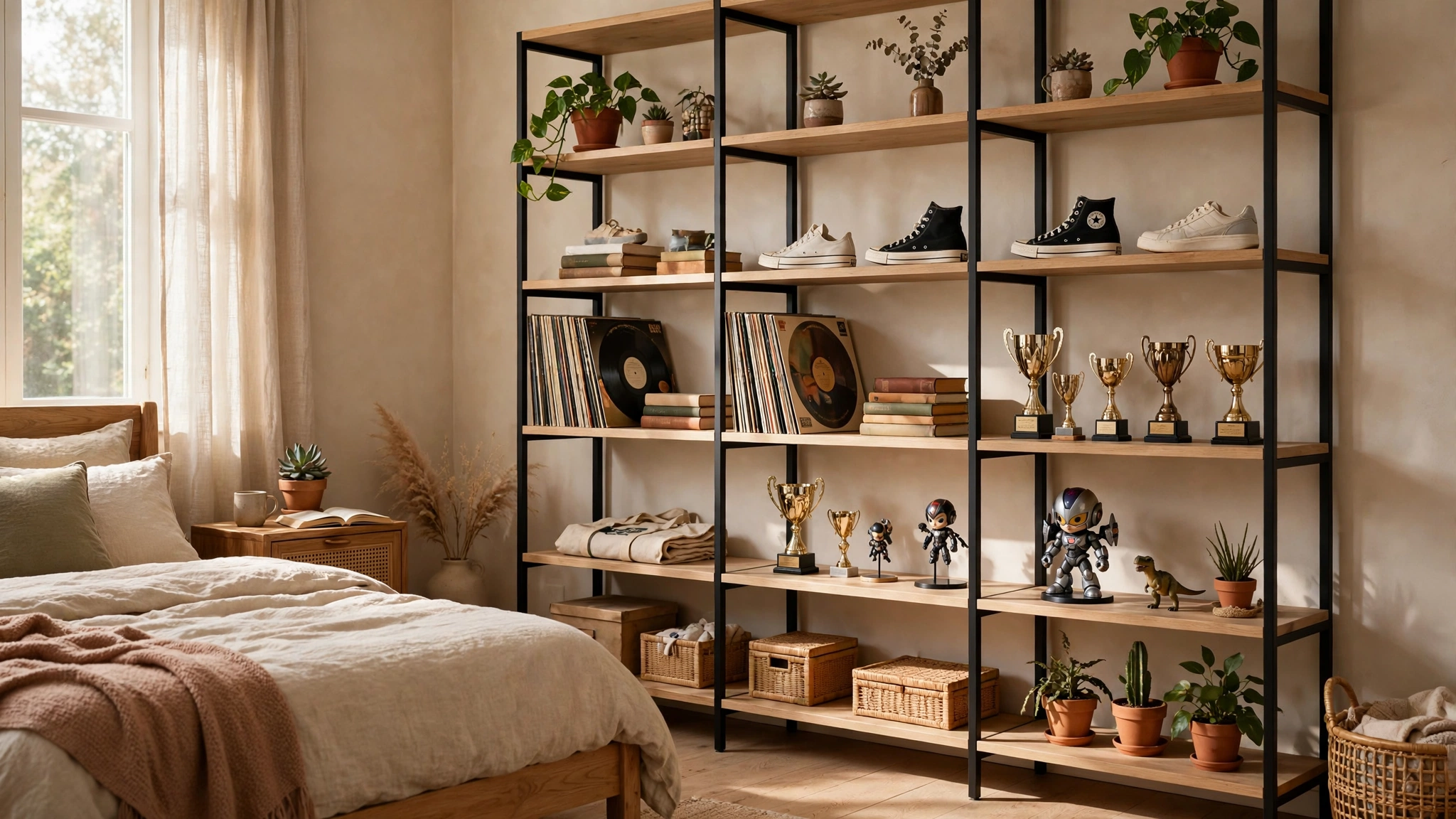
Teens own display-worthy stuff: sneakers, vinyl records, books, trophies, figures, plants. Open shelving lets them show it off instead of stuffing it in a closet. A set of wall-mounted floating shelves or a tall open bookcase becomes a styling project — group items in odd numbers, mix heights, leave some breathing room, and weave in a few decorative pieces like a small framed print or a candle.
The key is editing: display the best pieces and store the rest, rotating items seasonally so the shelves stay interesting. Baskets or small boxes on the lowest shelves corral the less pretty essentials. Style the shelves together with your teen — this is their collection, and the pride of arranging it is part of the fun. A well-styled shelf wall adds so much character that the rest of the room can stay simple, which is great for smaller spaces and tighter budgets.
9. Desk Vanity Combo
For teens who share a room or have limited square footage, a desk that doubles as a vanity is a brilliant two-in-one. Choose a simple table-style desk with a clean top, then mount a round mirror above it on the wall. A pretty tray or organizer corrals makeup, skincare, or jewelry on one side while the other side stays clear for schoolwork.
A stool or chair that tucks fully under the desk keeps the floor space open. Good lighting matters here — a mirror with built-in lights or a small lamp with daylight-toned bulbs works for both studying and getting ready. Keep the styling cohesive: matching storage boxes, a small vase, a framed photo. This setup respects that a teen's desk has to serve two lives — academic and personal — and it does it without either one feeling like an afterthought.
10. Bold Bedding as the Statement
If painting walls is not an option, let the bedding do the talking. The bed is the largest surface in the room, so a bold duvet cover changes everything: oversized florals, graphic stripes, checkerboard, abstract prints, or a rich solid like forest green or burnt orange. Layer it up — a textured quilt or coverlet at the foot, two sleeping pillows plus two or three decorative ones in coordinating solids and patterns.
Mixing patterns works when they share a color palette: a floral plus a stripe plus a solid in the same three colors looks intentional and designer-y. Finish with a throw blanket in a contrasting texture — chunky knit, faux fur, or waffle weave. Bedding is also the easiest thing to swap when tastes change, which they will. Investing the decor budget here instead of in paint or furniture gives the biggest visual return for the least commitment.
11. The Music and Media Corner
Music is the soundtrack of teen life, so give it a dedicated spot. A small record player or speaker station on a low console or crate, with vinyl or playlists on display, becomes a natural gathering point. Hang a couple of framed concert posters or album art above it — framed properly, not just taped up — and it looks like a curated mini gallery.
Add a floor cushion or two so friends can actually sit and listen. A small LED sign or neon-style light with a word or shape adds personality after dark. Keep cables tidy with clips or a cord cover so the tech zone looks sleek. This corner works for gamers too — the same console-and-seating logic applies, just swap the turntable for the setup. Giving hobbies a visible home in the room tells a teen their interests belong there, which is a quieter but deeper kind of decor win.

12. Pegboard Command Center
A pegboard is the Swiss Army knife of teen room decor: part organizer, part display, part art. Mount a large pegboard above the desk or near the door and load it with hooks, small shelves, and cups. Use it for the practical — headphones, keys, school supplies, jewelry — and the personal: photos, dried flowers, small art prints, ticket stubs.
Paint the pegboard to match the room (white for clean, black for edgy, a color for playful) and choose hooks and accessories in a consistent finish like brass or matte black. The beauty is flexibility: everything lifts off and rearranges in minutes, so the board evolves with schedules, seasons, and obsessions. It keeps clutter off surfaces while looking deliberately styled — the rare organizer that is actually fun to look at. For visual calm, group similar items together and leave some empty pegs so it breathes.
13. Textile Layering for Instant Coziness
Teen rooms can feel stark with just a bed and a desk, and the fix is textiles. Layer them generously: a soft area rug underfoot (even over carpet — layering rugs adds warmth and pattern), curtains that actually reach the floor instead of skimpy sill-length ones, throw blankets in different textures, and plenty of pillows.
Mix materials for richness: cotton bedding with a chunky knit throw, a velvet cushion next to a linen one, a jute rug under a smaller patterned one. Stick to a loose palette of three to four colors so the layers feel collected, not chaotic. Textiles are also the fastest way to warm up a room that feels cold or echoey, and they make the space feel finished even when the furniture is basic. Encourage your teen to choose the textures they love touching — coziness is a feeling first, a look second.
14. A Proper Hangout Spot for Friends
Teens socialize in their rooms, so plan for it: somewhere for two or three friends to sit that is not the bed. Options depend on space — a small loveseat or futon, a pair of bean bags, floor cushions around a low table, or a window seat with extra pillows. The key is that it feels like a destination, not an afterthought.
Place the hangout zone away from the study desk so the room has distinct work and play areas. A small side table holds drinks and snacks; a throw blanket basket keeps things tidy. String lights or a floor lamp nearby give the zone its own evening glow. If the room is tiny, stackable floor cushions that live in a corner and pull out when friends arrive work perfectly. Designing for friendship makes the room genuinely more fun — and it is the detail teens appreciate most, even if they never say so.
15. Personalized Details That Make It Theirs
The difference between a nice room and a teen's room is the personal layer: the details no one else would choose. A DIY photo garland, a custom name sign over the bed, a bulletin board of goals and dreams, a shelf of handmade things, stickers on a laptop corner (not the furniture), a favorite quote in frame-worthy lettering.
Involve your teen in choosing or making these — the ownership matters more than the object. A weekend craft session to paint a canvas, frame concert tickets, or build a memory jar costs almost nothing and creates the pieces they will actually treasure. Keep these details concentrated in one or two spots (above the desk, the nightstand) rather than scattered everywhere, so the room still feels calm. Years from now, they will not remember the duvet pattern — they will remember the wall of photos and the sign they made themselves. That is the real goal of a teen bedroom: a room that feels unmistakably, proudly theirs.
Styling Tips
Start with a flexible base. Paint walls a warm neutral — white, cream, or light greige — and choose simple furniture in wood or white. Teens' tastes change fast; a neutral base lets bedding, art, and accessories do the evolving without repainting the whole room every year.
Give everything a zone. Even in a small room, mentally divide it: sleep, study, hangout, display. A rug, a light, or a furniture arrangement can mark each zone. Zones make small rooms feel bigger and help teens switch between homework mode and relax mode.
Light in layers, not just overhead. Aim for at least three light sources: task lighting for the desk, ambient lighting like string or fairy lights, and one cozy lamp. Dimmable or warm-toned bulbs make the biggest difference to evening coziness.
Involve your teen in every decision. A room they helped design is a room they will actually keep tidy and love. Let them choose the bold elements — bedding, wall art, colors — while you guide the practical ones like furniture quality and layout.
Plan for friends. Seating for two or three beyond the bed — floor cushions, a small chair, a window seat — is the most-used feature of any teen room. Design it in from the start rather than squeezing it in later.
Edit, don't just add. Teens accumulate stuff. Build in closed storage (under-bed boxes, a dresser, closet organizers) and do a seasonal clear-out together. A styled shelf beats a cluttered one every time.
Keep the refresh cheap and easy. Choose decor that swaps without tools: bedding, pillow covers, art prints, string lights, rugs. When the next obsession arrives, the room can keep up for the cost of a few new accessories instead of a full redo.
FAQ
How can I decorate a teen bedroom on a budget?
Start with what changes the look most for the least money: bedding, paint on one wall, and lighting. A bold duvet cover, a color-blocked accent wall, and a set of string lights can transform a room for very little. Thrift stores and secondhand marketplaces are goldmines for mirrors, lamps, frames, and small furniture — a coat of paint unifies mismatched finds. Focus spending on the pieces touched daily (mattress, desk chair, bedding) and save on pure decor.
What colors work best for a teen bedroom?
Neutrals on the walls (white, cream, light gray) with color in the layers is the safest long-term bet, since teen tastes evolve. That said, confident teens love real color: sage green, dusty rose, terracotta, navy, and mustard all work beautifully as accent walls or bedding. Let your teen pick the accent color — it is their room — but keep the big surfaces flexible so a new favorite color next year only means new pillows, not new paint.
How do I fit a study area and hangout space in a small teen room?
Zone the room ruthlessly. A lounge-style bed setup (idea 1) doubles as friend seating. A desk-vanity combo (idea 9) merges two functions into one footprint. Use vertical space: wall shelves, pegboards, and over-door organizers free up floor area. Stackable floor cushions provide hangout seating that disappears when not needed. Keep the color palette light and the lighting layered so the small space feels open, not cramped.
Should I let my teen choose everything themselves?
Collaboration beats both total control and total freedom. Teens have strong opinions worth honoring — this is their personal space — but they also benefit from guidance on layout, lighting, storage, and quality. A good split: they choose colors, bedding, art, and accessories; you guide furniture choices, layout, and budget. The rooms teens love most are the ones they had a real hand in creating.
How often should a teen bedroom be updated?
Plan for a light refresh once a year — new bedding, swapped art, reorganized shelves — and a bigger rethink every two to three years as interests and needs change. Designing with a neutral base and swappable layers (idea 10 and the styling tips above) makes each refresh quick and affordable instead of a full overhaul.
What is the biggest mistake people make with teen bedrooms?
Decorating it like a younger kid's room or like a guest room. Teens need a space that respects who they are now: a real study setup, seating for friends, and walls that reflect their actual interests — not cartoon themes they have outgrown and not bland neutrals chosen to please adults. The second biggest mistake is skipping storage; teens have a lot of stuff, and without a place for it, even the prettiest room becomes chaos.
Conclusion
A great teen bedroom is not about following trends — it is about building a space that flexes between study hall, hangout spot, and quiet refuge. Start with a calm, flexible base, layer in lighting and textiles for warmth, carve out zones for sleep, study, and friends, then hand the personal touches over to your teen.
Steal the lounge bed, skip the pegboard, combine the gallery wall with the music corner — the right room is the one that feels unmistakably like the person who lives in it. And when their tastes change next year (they will), a well-designed room changes right along with them.