
15 Backsplash Ideas Beyond Subway Tile
There's nothing wrong with subway tile — it's a classic for a reason. But if you've scrolled one too many identical white-brick kitchen walls on Pinterest and you're craving something with a little more personality, you're in the right place. The backsplash is the perfect spot to take a design risk: it's a relatively small surface, it doesn't require a full renovation, and it's one of the first things people notice when they walk into your kitchen. Whether you're drawn to the handmade wobble of zellige, the farmhouse warmth of beadboard, or the bold drama of a full marble slab, there's an option here that will make your kitchen feel like yours. We've gathered 15 gorgeous backsplash ideas that go beyond the subway tile default — each one practical, beautiful, and full of real styling details so you can picture it in your own space.

1. Handmade Zellige Tile
Zellige tile is the handmade Moroccan tile that has taken Pinterest by storm — and one look tells you why. Each tile is cut from glazed terracotta by hand, so no two are exactly alike. The glaze pools and varies across the surface, catching light in a way that makes the whole wall feel alive. For a kitchen backsplash, try a 4×4 square zellige in a soft color like pale sage, warm ivory, or dusty clay. Keep your cabinets simple — shaker fronts in white or light wood let the tile be the star. Because zellige is rustic by nature, pair it with unlacquered brass hardware and a simple open shelf so the texture shines. One practical note: zellige has irregular edges, so ask your installer to use grout lines of about 1/16 inch and choose a grout color close to the tile to keep things calm.
2. Herringbone Marble
Herringbone layout gives classic marble an entirely new energy. The same creamy Carrara or Calacatta marble you'd see in a traditional kitchen feels fresh and tailored when the tiles zigzag up the wall in that broken-V pattern. A 2×8 inch marble tile in herringbone looks especially elegant behind a range or cooktop. Style it with brushed nickel or polished chrome fixtures so the cool tones of the stone feel intentional, and consider soft gray or blue-gray cabinetry to pick up the veining. Herringbone does create more grout lines than large-format tile, so seal your marble well — especially behind the stove where splatters happen — and choose a light gray grout that won't show cooking stains as quickly as bright white will.
3. Full-Slab Marble Backsplash
If you want maximum drama with minimum grout lines, run your countertop stone straight up the wall. A full-slab marble backsplash turns the entire cooking zone into one continuous canvas of veining — it's the kind of look that makes guests stop and stare. This works beautifully with dramatic stones like Calacatta Viola or Arabescato, where the bold veining becomes the kitchen's artwork. Keep everything else quiet: flat-panel cabinets in a soft neutral, minimal hardware, and a simple pendant or two. The seamless surface is also a dream to wipe clean — no grout to scrub behind the stove. Budget-wise, book-matched slabs cost more because of the fabrication, so get quotes for both the counter and backsplash together and ask your fabricator to show you the slab before cutting.
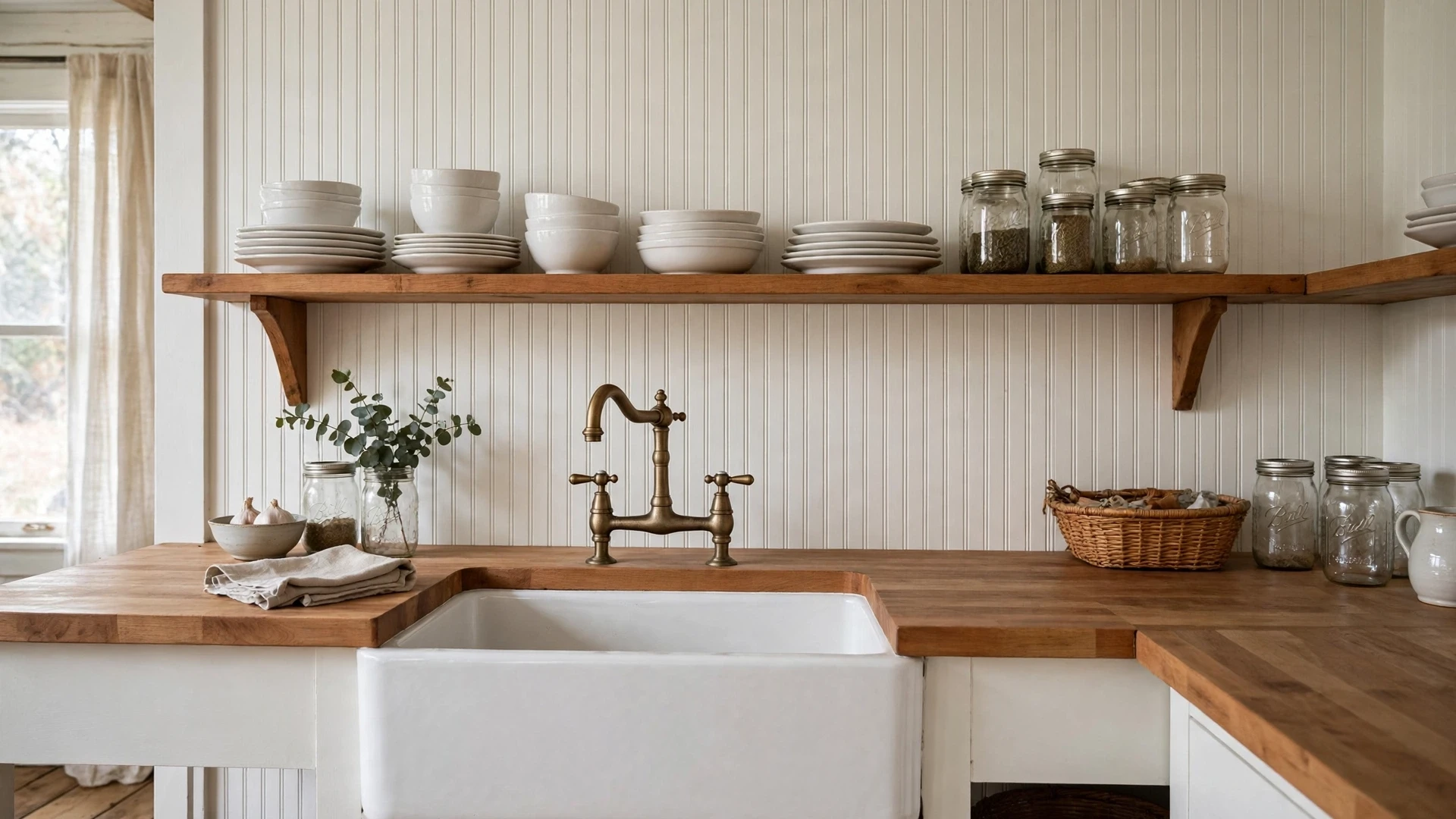
4. Beadboard Backsplash
Beadboard brings instant farmhouse charm to a kitchen backsplash, and it's one of the most budget-friendly options on this list. Those narrow vertical grooves add subtle texture that reads cozy without feeling busy. Paint it a crisp white or soft cream for a cottage feel, or go bold with deep navy or forest green for a moody, modern farmhouse twist. Beadboard pairs perfectly with open shelving, vintage-style faucets, and warm wood countertops like butcher block. The main practical concern is moisture: use a moisture-resistant beadboard panel or solid wood, and finish it with several coats of a durable semi-gloss or satin paint made for kitchens so it wipes down easily. Add a thin trim piece where the beadboard meets the counter for a clean, finished edge.
5. Penny Round Mosaics
Penny rounds are tiny, round mosaic tiles that add playful texture to a kitchen wall. They come mounted on sheets, which makes installation easier than you'd expect, and their small scale is forgiving on slightly uneven walls. Classic white penny rounds with dark grout give a vintage, almost bistro feel, while honed marble penny rounds in a soft gray read more upscale and serene. They look especially charming in galley kitchens or breakfast nooks where the texture adds interest without overwhelming. Because there are so many grout lines, choose an epoxy or high-quality grout and seal it — penny rounds behind the sink see a lot of water. Pair them with simple brass fixtures and a single floating shelf styled with a small plant to keep the look fresh rather than retro.
6. Chevron Pattern
Chevron takes the energy of herringbone and sharpens it into clean, continuous Vs that point up the wall like little arrows. The effect is more modern and graphic, which makes it a great pick if your kitchen leans contemporary. Try chevron in a glossy elongated tile — cream, soft gray, or even a smoky blue — run in neat rows from counter to upper cabinets. The strong diagonal pattern draws the eye, so keep the rest of the wall quiet: skip busy countertop patterns and choose solid quartz or a subtle soapstone. Chevron reads beautifully behind a floating range hood or as a full accent wall in an open kitchen. Installation takes precision since every miter cut must line up, so hire a tile setter with chevron experience and buy about 15 percent extra tile for cuts and waste.
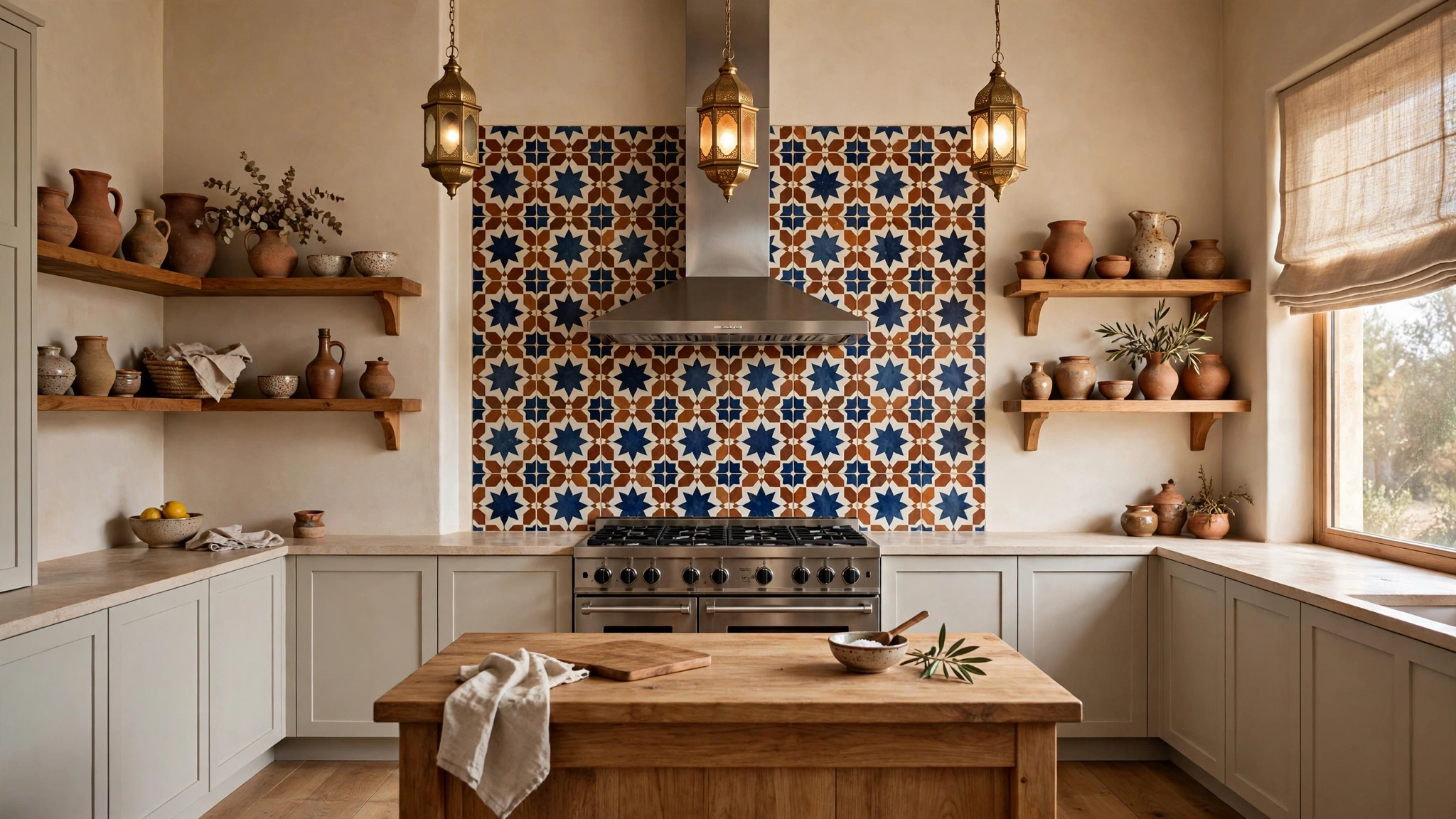
7. Moroccan-Style Encaustic Cement Tile
Patterned cement tile brings old-world soul to a kitchen — think deep blues, terracotta, and cream arranged in star and cross motifs that feel like a Moroccan riad. Because the pattern is bold, use it as a focused feature: behind the range, in a small galley, or as a framed panel above the sink, with plain plaster or a quiet solid tile everywhere else. These tiles are typically 8×8 inches and quite thick, so your installer will need to account for the depth where they meet the counter. Cement tile is porous, so seal it with a penetrating sealer before grouting and reseal once a year. Style the rest of the kitchen warmly — wood open shelves, clay pottery, brass lantern-style pendants — so the tile feels collected, not costume-y. A matching runner rug in a faded vintage pattern ties the whole look together.
8. Vertical Stack Skinny Tiles
Flipping the layout vertically is one of the easiest ways to make ordinary tile feel custom. Take slim rectangular tiles — a 2×12 or 3×12 — and stack them in straight vertical columns instead of the usual horizontal running bond. The vertical lines draw the eye upward and can make a kitchen with low ceilings feel taller, which is a lovely trick in compact spaces. A glossy handmade-look tile in ivory or sea glass green works beautifully here; the vertical channels catch light as you move through the room. Keep cabinets and countertops simple so the rhythm of the tile stays the star. This pattern uses more cuts around outlets, so budget a little extra tile and choose an outlet cover color that blends — matte white or brushed brass depending on your fixtures.
9. Shiplap Wood Backsplash
Shiplap isn't just for farmhouse accent walls anymore — run horizontally behind your counters and it brings a relaxed, collected warmth that tile can't quite match. White-painted shiplap keeps things bright and airy in a cottage or coastal kitchen, while a natural or whitewashed wood tone feels wonderfully organic next to stone counters. The key to making wood work as a backsplash is protection: use a high-quality satin or semi-gloss enamel paint rated for kitchens, caulk the seam where it meets the countertop, and consider a clear glass panel or a stone riser directly behind the range where grease splatters are heaviest. Style it with iron or black hardware, open shelves with simple white dishes, and a woven pendant light for that effortless farmhouse glow.
10. Tumbled Travertine
Tumbled travertine has an old-world, timeworn character that polished stones can't imitate — soft pitted texture, warm honeyed tones, and edges that look gently aged. In a kitchen, it brings instant Mediterranean warmth, especially paired with walnut or warm oak cabinetry and oil-rubbed bronze fixtures. A 4×4 or 3×6 tumbled travertine tile in a light walnut or ivory shade keeps the look light enough for smaller kitchens. Because the surface is textured and porous, sealing is non-negotiable — use a quality penetrating sealer and reapply every couple of years, particularly behind the cooktop. Keep the grout color in the same family as the stone (a warm sand or taupe) so the tiles read as one continuous, aged surface rather than a grid of individual pieces.
11. Arabesque Lantern Tile
Arabesque — also called lantern or Moroccan fish-scale tile — is pure romance on a wall. Its curved, lantern-like shape softens the hard lines of a kitchen and gives the backsplash an almost fabric-like drape. Glossy white arabesque tile is a timeless choice that plays beautifully with both modern and traditional kitchens; for more drama, try a deep emerald, sapphire, or smoky black glaze. Because the shape is decorative on its own, keep the color palette restrained — one tile color, quiet counters, and simple hardware. The curved cuts mean more waste than square tile, so order 20 percent extra. Arabesque looks stunning paired with a curved or arched detail elsewhere in the kitchen, like an arched range hood or rounded pendant shades, which echoes the tile's shape.
12. Brushed Stainless Steel Sheet
A single sheet of brushed stainless steel behind the range is the ultimate modern-industrial move — and professional chefs love it because it's virtually indestructible. With no grout lines at all, cleanup is as simple as a wipe with a damp cloth, and it shrugs off heat, grease, and splatter like nothing else. A brushed or satin finish hides fingerprints far better than mirror-polished steel, and you can have it fabricated to fit your exact space, including cutouts for outlets. To keep it from feeling cold, warm up the rest of the kitchen: wood countertops or open shelving, warm-toned lighting, and maybe a vintage runner. Stainless pairs naturally with professional-style ranges and simple bar pulls, making the whole cooking zone feel like a chef's workspace.
13. Chalkboard Paint Backsplash
For a kitchen that feels personal and a little playful, chalkboard paint turns your backsplash into an ever-changing canvas — grocery lists, recipes, doodles from the kids, or a hand-lettered quote for the season. Use a high-quality chalkboard paint over a smooth primed surface, and frame the area with simple wood trim so it reads as an intentional design feature rather than an afterthought. It works best in a defined zone — behind a coffee station, beside the fridge, or in a breakfast nook — rather than the whole cooking wall, since it's not as wipeable as tile behind a greasy stove. Season the chalkboard by rubbing chalk over the whole surface first so your first writing erases cleanly. Pair it with warm woods, vintage accessories, and a little potted herb for a cozy, lived-in feel.
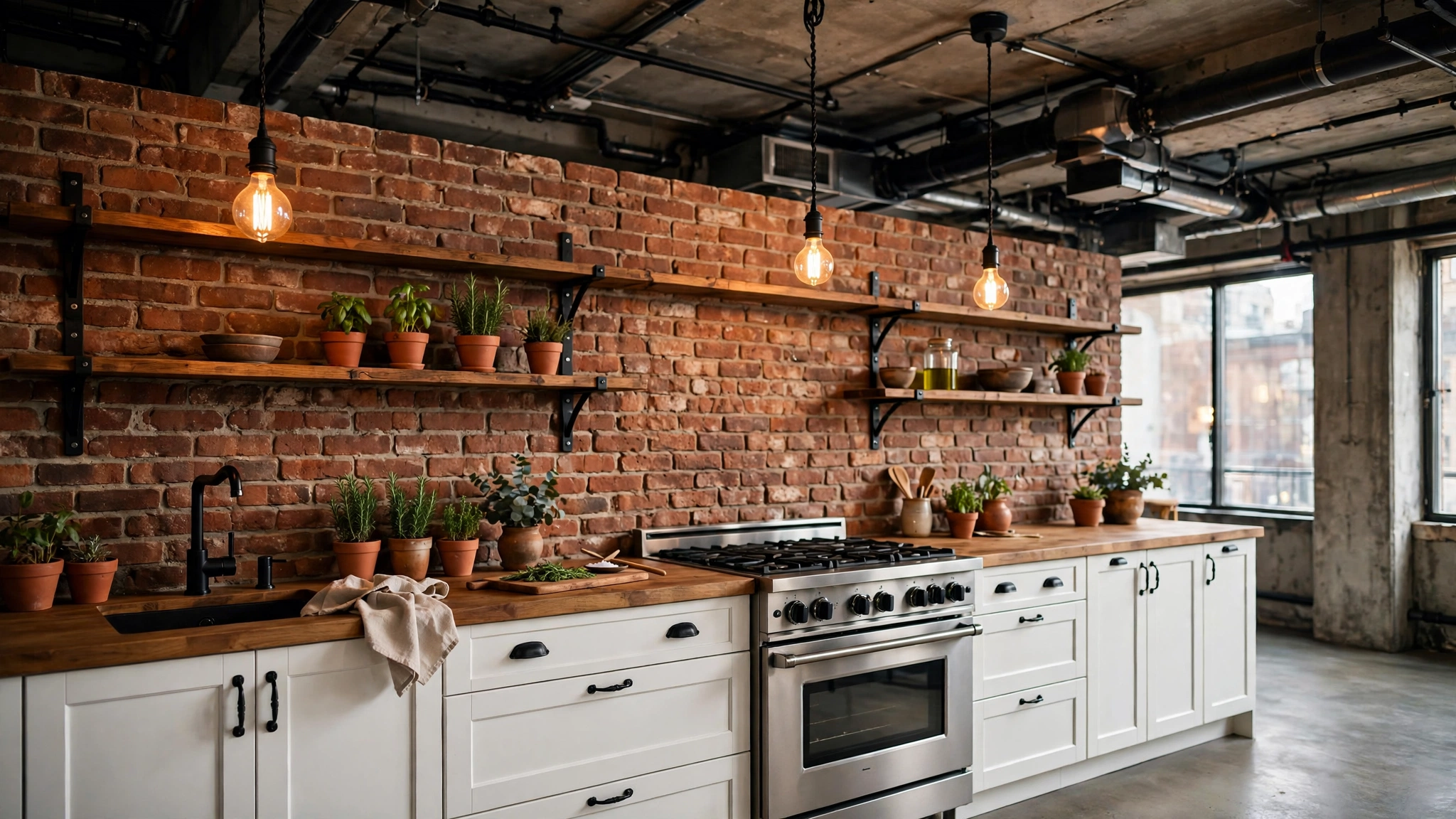
14. Exposed Brick Backsplash
Nothing adds character like real exposed brick. Its rough texture, warm red-brown tones, and slightly irregular surface bring instant history and warmth to a kitchen — even a new build can feel like a converted loft. If your home has original brick, carefully uncovering it is a gift; otherwise, thin brick veneer achieves the same look and is made for interior walls. Brick is porous, so protect the cooking zone with a penetrating masonry sealer, and consider a glass splash guard directly behind the range. Style it with black or iron fixtures, wood open shelving, and warm Edison-bulb lighting to lean into the industrial-loft vibe — or soften it with white cabinets and brass hardware for a charming modern-farmhouse mix. A little greenery in terracotta pots looks right at home against brick.
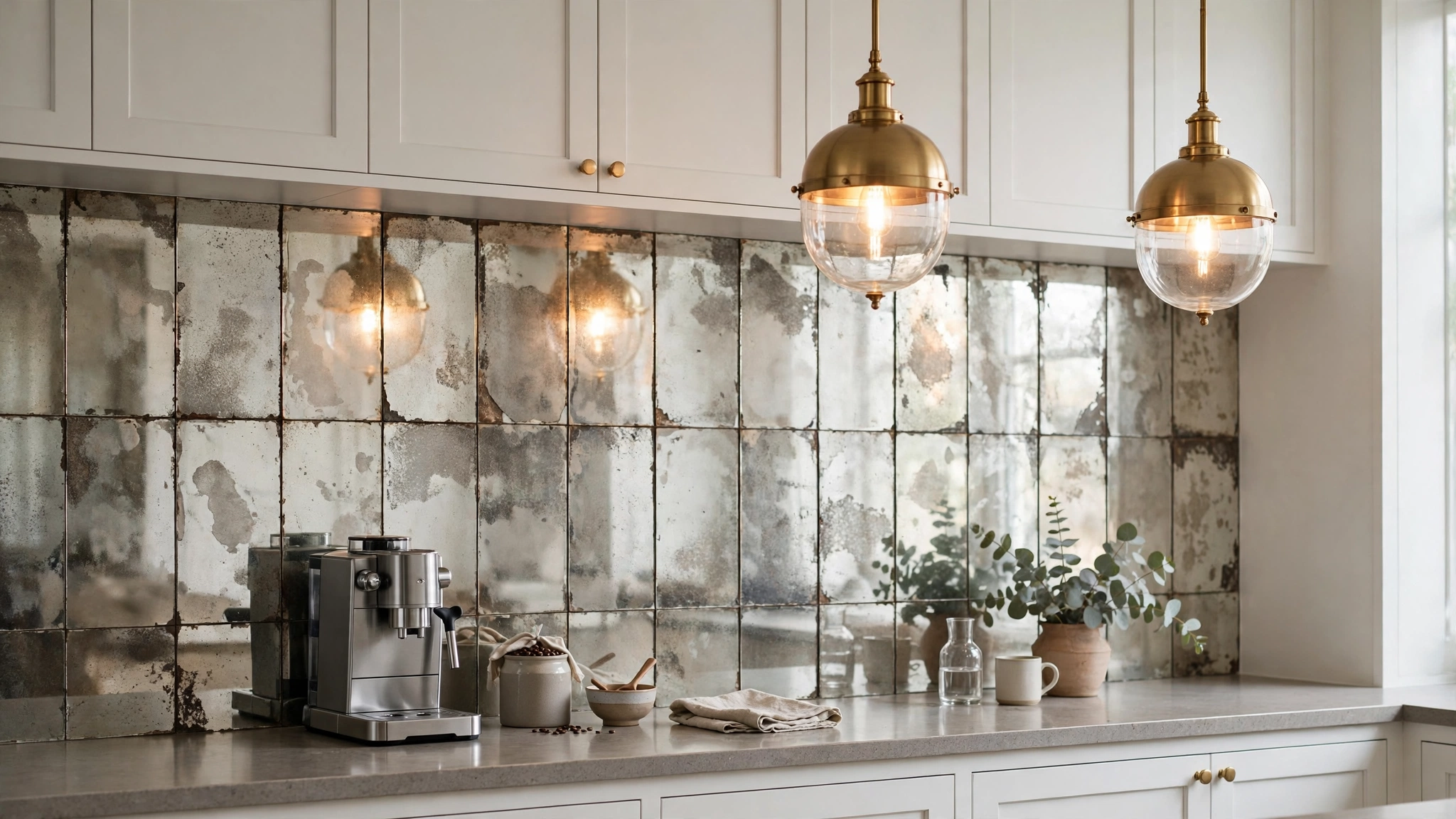
15. Antique Mirror Tile
Antique mirror tile is the glamorous wildcard of this list. With its softly foxed, aged finish — subtle cloudy patches and delicate veining in the silvering — it reflects light without the harsh glare of a regular mirror, making small or dark kitchens feel brighter and bigger. Use it in a defined area, like behind a bar cart zone, a coffee station, or the full wall behind open shelves, where it can catch candlelight and pendant glow. Keep the surrounding palette calm — soft whites, warm grays, or deep charcoal — so the mirror reads as jewelry, not noise. Antique mirror is a real mirror product, so order it cut to size and sealed for kitchen use; wipe it with a soft cloth and glass cleaner rather than abrasives. A little goes a long way, so let it be the sparkle in an otherwise serene kitchen.
Styling Tips
Choosing a backsplash you love is only half the fun — styling the space around it is what makes the whole kitchen sing. Here are some practical tips to pull your look together.
Let one element lead. Your backsplash, countertop, and cabinets are all competing for attention, so pick one star. If your tile is bold and patterned, keep counters and cabinets quiet and solid. If your backsplash is a calm texture like beadboard or shiplap, you can afford a busier countertop or colorful cabinets.
Sample in your own light. Tile looks completely different under your kitchen's lighting than it does in a showroom. Bring home full-size samples and tape them to the wall for a few days. Check them in morning light, evening light, and with your under-cabinet lights on — glaze colors can shift dramatically.
Mind the grout. Grout color changes the whole feel of tile. Matching grout makes the wall read as one calm surface; contrasting grout emphasizes the pattern. Behind the stove and sink, choose a grout shade that won't show stains quickly, and consider an epoxy or stain-resistant grout for high-splatter zones.
Plan your focal point. In most kitchens, the wall behind the range is the natural showcase. You can run one tile everywhere and add a decorative medallion or a different pattern just behind the range — it's a classic designer trick that adds richness without overwhelming the room.
Finish the edges. A clean edge detail — a slim metal trim, a pencil liner, or a simple caulked joint where tile meets the wall — is the difference between a DIY look and a designer finish. Ask your installer about edge options before the work starts.
Layer with open shelving. Floating shelves over a beautiful backsplash create that collected, Pinterest-perfect look. Style them simply: a few white dishes, a small plant, and one or two wooden pieces. Keep shelves at least 18 inches above the counter so they don't crowd your workspace.
Don't forget the lighting. Under-cabinet lighting makes textured tile glow — zellige, travertine, and handmade-look glazes come alive with a warm light washing down the wall. If you're redoing the backsplash anyway, it's the perfect time to add or upgrade puck or strip lighting.
FAQ
What is the most durable backsplash material besides subway tile?
Full-slab stone and stainless steel are the toughest options — no grout lines to stain or scrub, and both handle heat and moisture beautifully. Porcelain tiles that mimic zellige, marble, or cement patterns are also extremely durable and low-maintenance, making them a great practical alternative to the natural materials they imitate.
Which backsplash is easiest to clean?
Smooth, large-format surfaces win here: full-slab marble or quartz, a single sheet of stainless steel, or large glossy tiles with minimal grout lines. The fewer the grout lines, the less scrubbing. If you love textured tile like penny rounds or tumbled travertine, use a stain-resistant grout and seal the surface well.
Can I install a backsplash myself, or should I hire a pro?
Simple options like peel-and-stick tile, beadboard panels, shiplap, and chalkboard paint are very DIY-friendly. But handmade tiles (zellige), intricate patterns (herringbone, chevron, arabesque), natural stone, and full slabs really benefit from a professional installer — the cutting, leveling, and layout precision make a visible difference in the finished result.
What backsplash works best in a small kitchen?
Light-reflecting surfaces help small kitchens feel bigger: glossy tiles, antique mirror, or a light-colored vertical stack pattern that draws the eye upward. Keep the pattern scale modest — very large patterns can overwhelm a compact wall — and consider running the backsplash all the way to the ceiling for a sense of height.
How do I choose a backsplash color?
Start with your fixed elements: cabinets, countertops, and flooring. Pull one undertone from them — warm or cool — and choose a backsplash in the same family. If everything else is neutral, the backsplash is your chance to add color. If your counters or cabinets are already colorful, keep the backsplash quiet and textural. When in doubt, bring home samples and live with them for a few days.
Is beadboard or shiplap okay behind a stove?
Wood backsplashes need extra care near heat and grease. Use a durable, heat-tolerant enamel paint and consider adding a tempered glass panel or a stone or metal riser directly behind the range as a splatter guard. Always check your local building codes for clearance requirements around cooktops.
Your backsplash is one of the few places in your home where a little boldness pays off big. It's a small surface with an outsized impact — the jewelry of the kitchen, the backdrop of every morning coffee and every family dinner. So go ahead and fall for the handmade wobble of zellige, the old-soul warmth of brick, or the quiet drama of a marble slab. Pick the one that makes your heart skip a little, style it with love, and enjoy a kitchen that finally feels like yours. Happy decorating!