
15 Kitchen Backsplash Ideas You’ll Love
The kitchen backsplash is one of those design details that punches way above its weight. It's a relatively small strip of wall between your countertops and cabinets, yet it sets the entire mood of your kitchen — warm and rustic, sleek and modern, classic and timeless. Whether you're doing a full renovation or just dreaming about one, the right backsplash can make your kitchen feel brand new without touching the cabinets or counters.
From classic subway tile to dramatic stone slabs, from glossy zellige to moody dark tile, there's a backsplash for every style and every budget. We've rounded up 15 kitchen backsplash ideas you'll genuinely love — each one packed with practical styling tips so you can picture it in your own home. Grab a cup of coffee and start pinning your favorites!
1. Classic White Subway Tile
White subway tile is the little black dress of kitchen backsplashes — it goes with everything and never goes out of style. The crisp, clean lines of a 3×6 subway tile brighten up the space and make even small kitchens feel bigger. For a timeless look, lay them in a classic running-bond pattern with light gray or white grout so the tile itself does the talking. Pair your white subway backsplash with shaker cabinets, butcher block or quartz countertops, and warm brass or matte black hardware to keep it from feeling flat. Want a twist on the classic? Try a handmade-look subway tile with slightly uneven edges and a soft glaze — the subtle variation catches the light beautifully and adds instant character without breaking the budget.
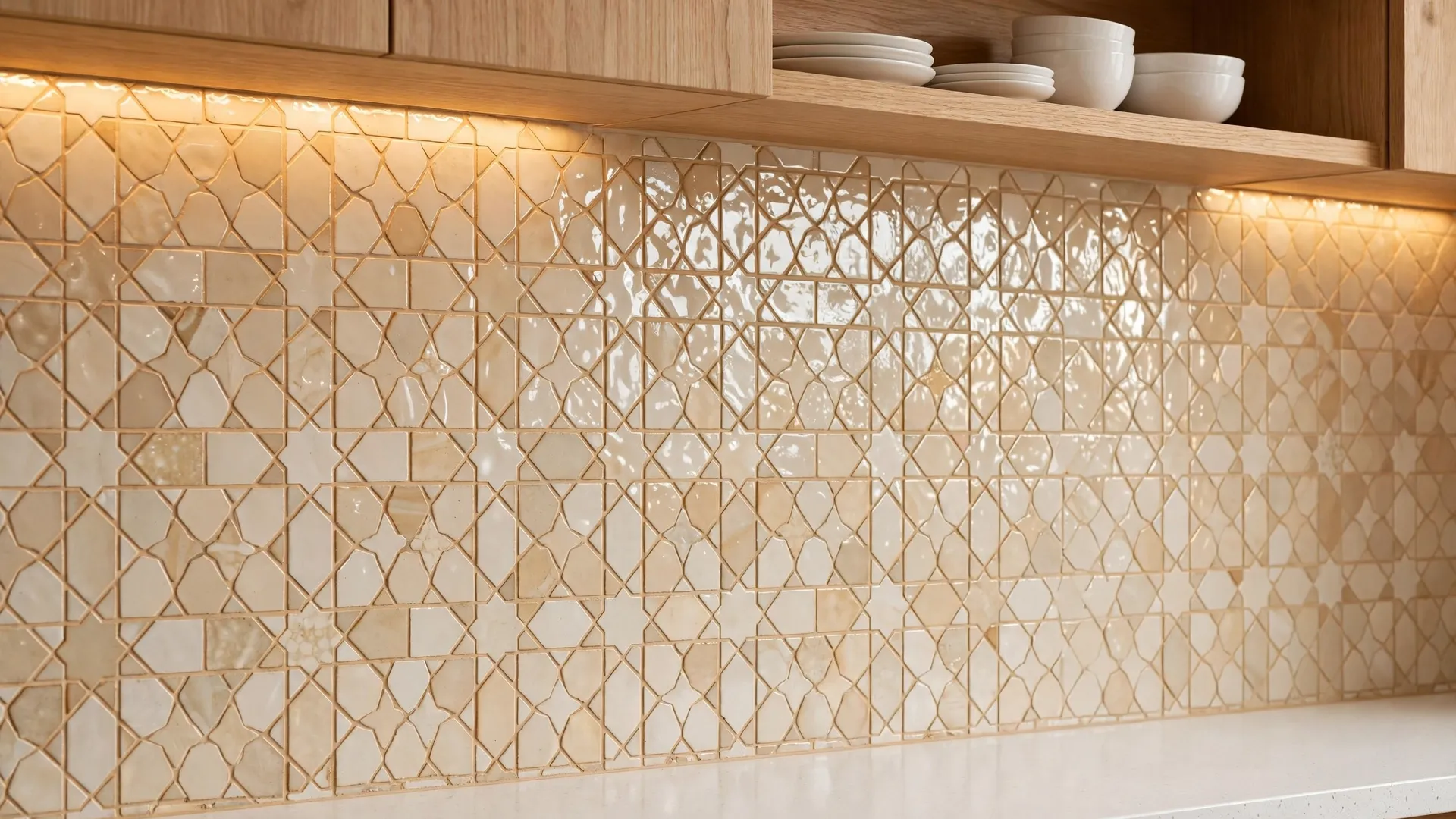
2. Glossy Zellige Tile
Zellige tile — the handmade Moroccan tile with its rippled, glassy surface — is one of the most-loved kitchen backsplash trends right now, and it's easy to see why. Each tile is slightly different in tone and texture, so the finished wall shimmers and shifts as light moves across it. A soft white or warm cream zellige backsplash brings gorgeous depth to simple kitchens, especially against plain shaker cabinets and neutral counters. To let the tile shine, keep the rest of the palette calm: light oak or white cabinets, a simple quartz countertop, and minimal open clutter. Use a matching light grout so the tiles read as one flowing surface, and consider running the tile all the way to the ceiling behind the range hood for a real statement moment.
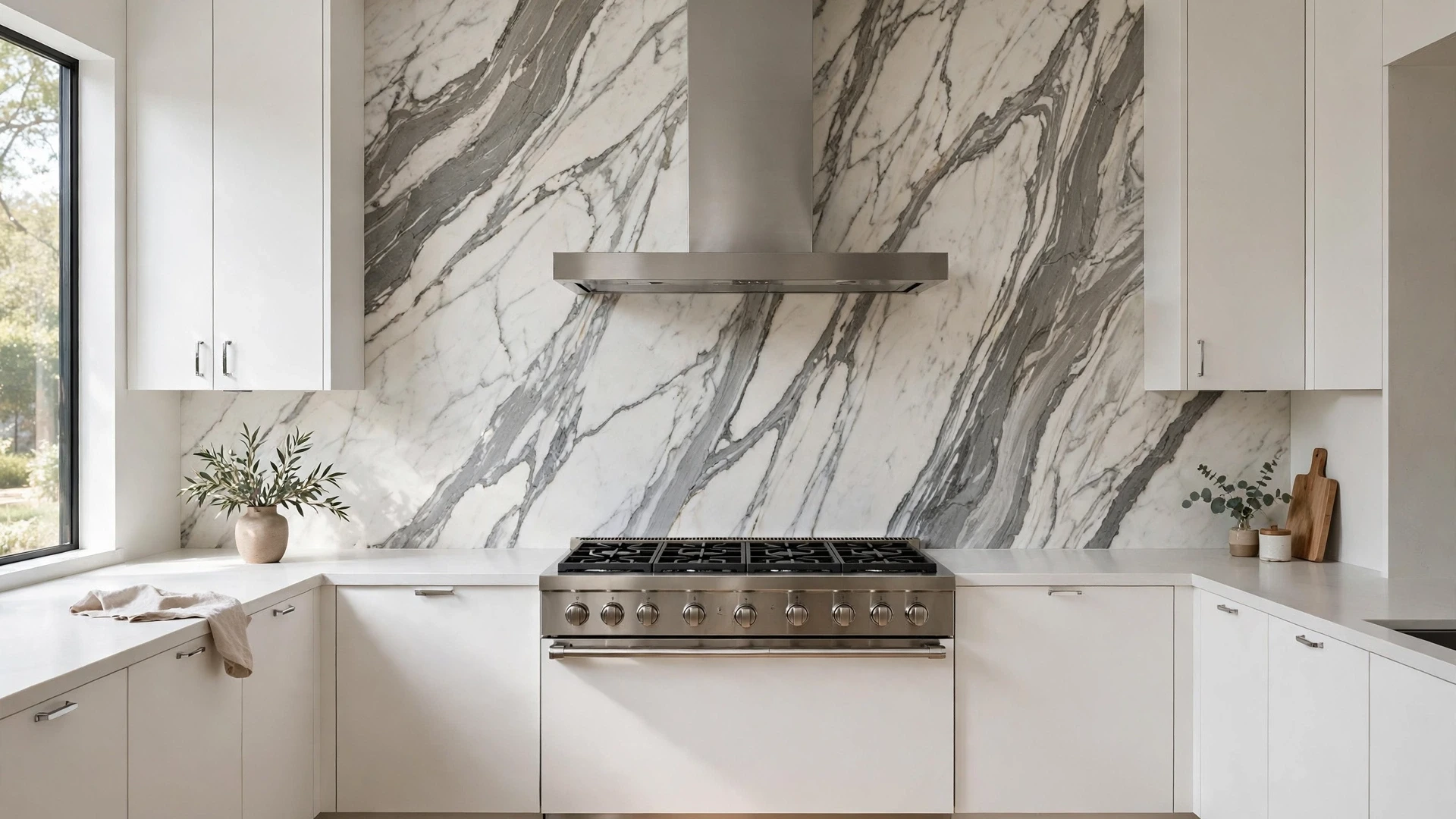
3. Marble Slab Backsplash
If you want pure luxury, skip the individual tiles and run a single slab of marble from countertop to upper cabinets. A full-height marble slab backsplash — especially one with dramatic veining like Calacatta — turns the wall into a piece of art. The trick to making it work is letting the stone be the star: choose simple, flat-front cabinets in white or a soft warm gray, keep hardware minimal, and avoid busy patterns anywhere else in the room. Book-matching (mirroring two slab halves at the seam) creates a stunning butterfly-vein effect behind the range. Because real marble is porous, be ready to seal it regularly, or choose a quartz slab that mimics marble veining for the same look with far less upkeep.
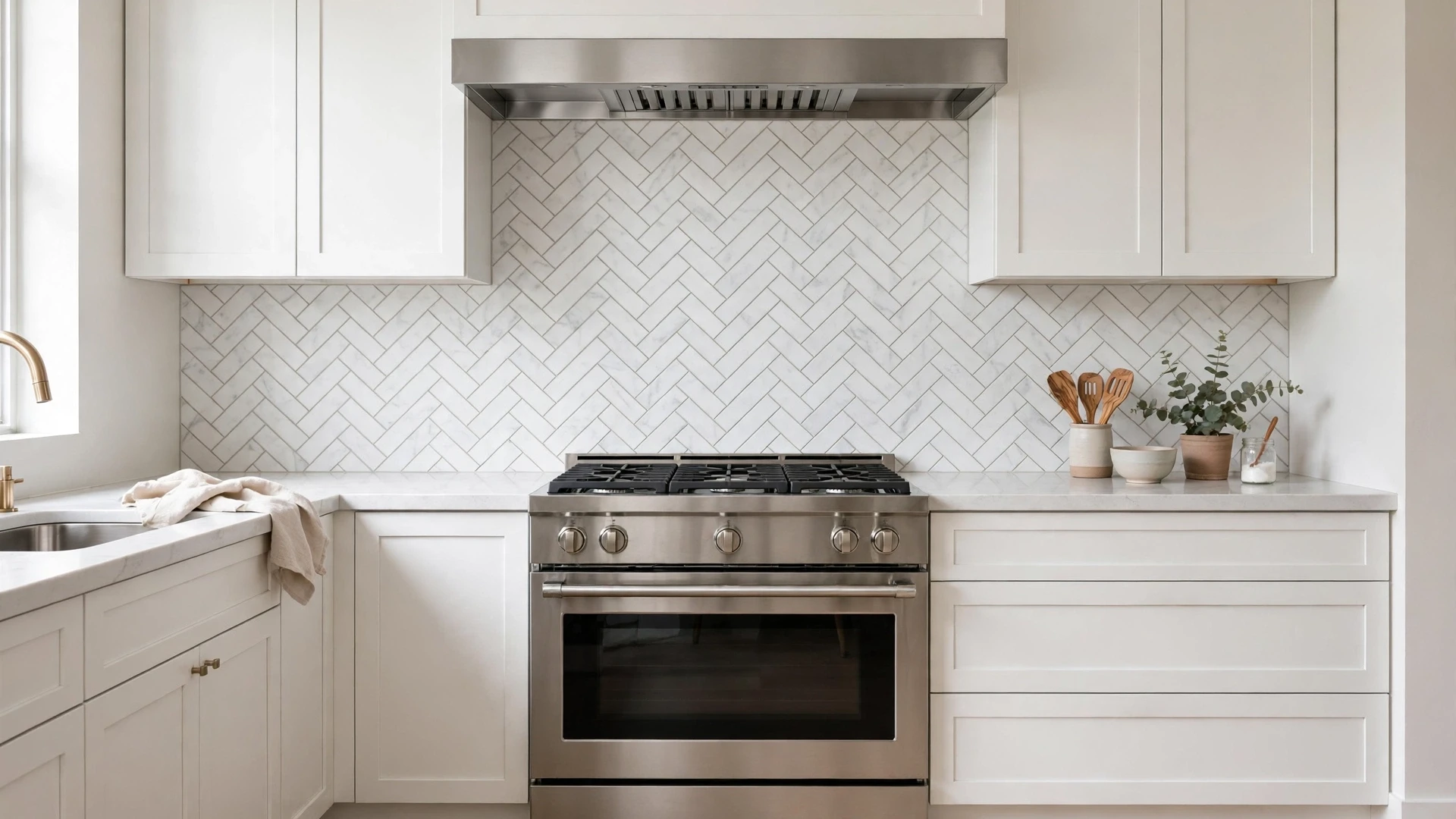
4. Herringbone Pattern Tile
Take a simple rectangular tile and lay it in a herringbone pattern, and suddenly you have a backsplash with movement, energy, and serious style. Herringbone works beautifully with subway tiles, but it looks especially striking in longer, slim tiles or marble-look porcelain planks. A white or cream herringbone backsplash adds texture without adding color, making it perfect for kitchens that need visual interest but want to stay neutral. Keep the grout close to the tile color for a soft, seamless look, or go slightly darker to emphasize the zigzag geometry. Because the pattern is busy on its own, balance it with simple cabinets and uncluttered counters — one bold element is enough.
5. Dark and Moody Tile
A dark backsplash — deep navy, charcoal, forest green, or even matte black — adds instant drama and sophistication to a kitchen. Dark tile looks incredible against white or light wood cabinets, creating a bold contrast that feels modern and intentional rather than gloomy. To keep the kitchen feeling balanced, pair a moody backsplash with plenty of light: under-cabinet lighting is a must, since it bounces off the tile and shows off its texture. Glossy finishes work better than matte in dark colors because they reflect light and keep the space from feeling flat. Finish the look with warm metals like brass or copper, which pop beautifully against dark tile and keep the whole kitchen feeling rich and inviting.
6. Natural Stone and Slate
For an earthy, organic kitchen, a natural stone backsplash — slate, travertine, or stacked stone — brings texture and warmth that manufactured tile can't quite match. The rough, tactile surface of stone pairs beautifully with wood cabinets, apron-front sinks, and matte black or oil-rubbed bronze fixtures for a rustic or farmhouse-inspired feel. Stacked stone ledger panels (thin strips of stone layered like a dry-stone wall) are especially popular because they add depth without needing grout lines everywhere. Seal natural stone well to protect it from cooking splatters, and choose honed or tumbled finishes that hide everyday wear. Keep counters simple — butcher block or a quiet granite — so the stone wall stays the focal point.
7. Glass Tile Backsplash
Glass tile is the unsung hero of small or dark kitchens. Its reflective surface bounces light around the room, making the whole space feel brighter and more open. Glass mosaic tiles come in every color imaginable, but soft sea glass greens, aqua blues, and iridescent whites are Pinterest favorites for a reason — they add gentle color without overwhelming the room. For a modern look, choose large-format glass tiles in a single color with minimal grout lines; for something more playful, try a shimmering mosaic blend. Pair glass tile with sleek, handleless cabinets and simple quartz counters to lean into a clean contemporary vibe, and keep cleaning supplies handy — glass shows fingerprints, but it wipes down in seconds.
8. Penny Round Mosaic
Penny round tiles — those charming little circles that look like vintage coins — add instant personality to a kitchen backsplash. They're playful without being childish, and they work in both retro-inspired kitchens and modern spaces that need a soft, textural touch. Classic white or black penny rounds with contrasting grout are timeless, but don't overlook soft gray, sage green, or blush for a fresh twist. The small scale of penny tile means lots of grout lines, so choose a stain-resistant grout and consider a slightly darker shade that won't show every splash. Penny rounds look especially cute paired with vintage-style appliances, open wood shelving, and simple white shaker cabinets.

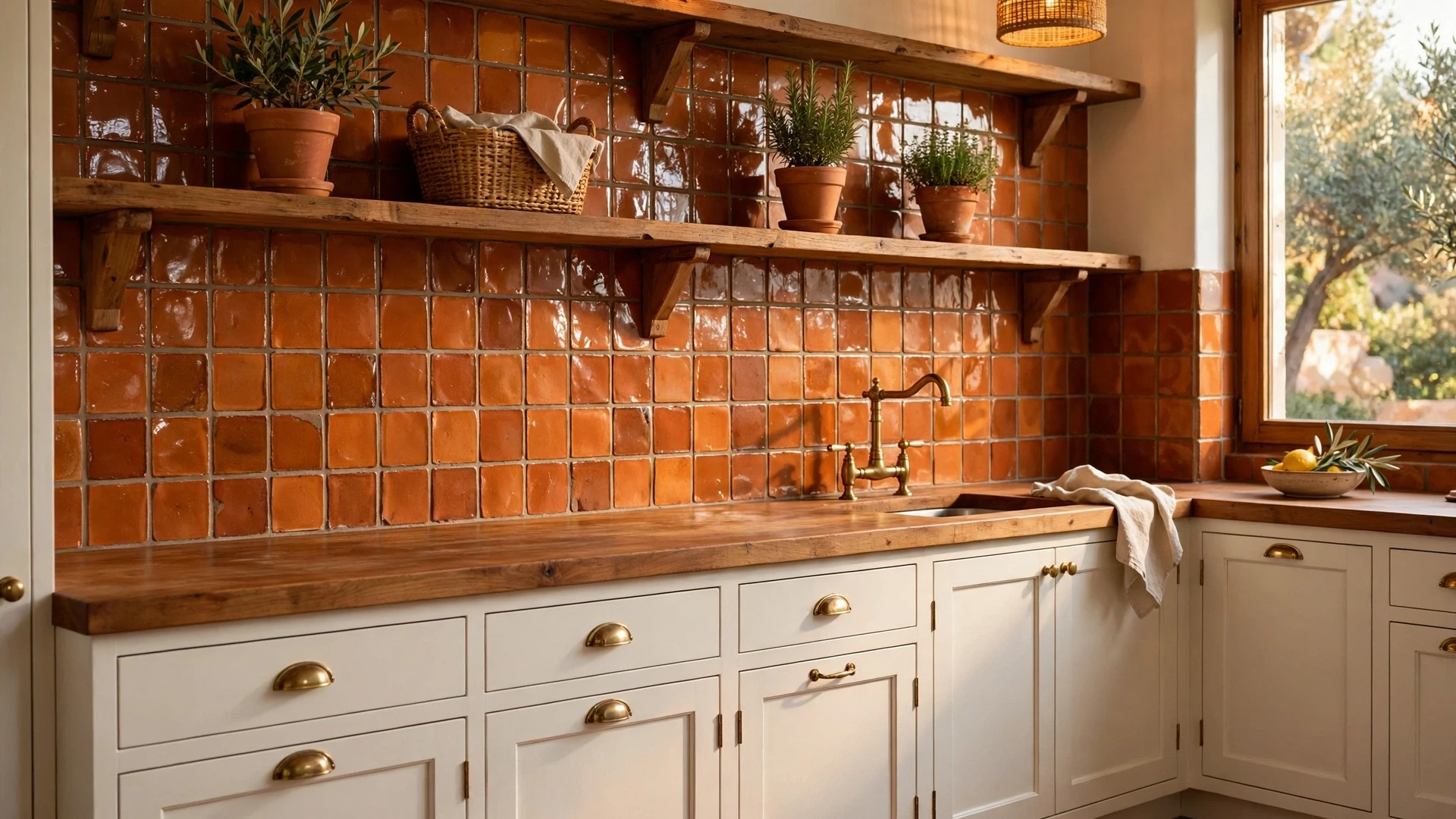
9. Terracotta Tile
Warm, sun-baked terracotta tile brings a cozy Mediterranean or Spanish feel straight into your kitchen. Its rich orange-brown tones glow under warm lighting and pair beautifully with creamy white cabinets, dark wood accents, and wrought-iron or brass details. Terracotta works in several forms: classic square tiles, handmade-look rectangles, or even terracotta-look porcelain for easier maintenance. Because real terracotta is porous, it needs sealing — or choose a glazed terracotta for color with wipeable practicality. Keep the surrounding palette warm and simple: cream walls, butcher block counters, and a few terracotta pots or woven baskets on the shelves to tie the whole look together.
10. Geometric Patterned Tile
If your kitchen feels a little too safe, a geometric patterned tile backsplash is the fastest way to inject personality. Encaustic-look cement tiles with star, quatrefoil, or Moroccan-inspired patterns turn the backsplash into a piece of art — no other decor needed. The key to pulling off a bold pattern is restraint everywhere else: choose solid-color cabinets (white, soft gray, or navy all work), a simple countertop, and minimal counter clutter. Let the tile pattern be the one statement in the room. Black-and-white geometric patterns are the easiest to live with long-term, while blue-and-white patterns lean classic Mediterranean. Patterned tile looks especially stunning run floor-to-ceiling behind an open range or as a full accent wall.
11. Stainless Steel Backsplash
Borrowed from professional restaurant kitchens, a stainless steel backsplash is sleek, modern, and practically indestructible. It reflects light beautifully, wipes clean with a single swipe, and pairs perfectly with stainless appliances for a cohesive, chef-inspired look. To keep it from feeling cold or industrial, warm up the rest of the kitchen: wood open shelving, warm-toned cabinets, pendant lights with warm bulbs, and a few natural textures like a woven runner or wooden cutting boards. Brushed stainless hides fingerprints better than polished, and you can choose large seamless panels or stainless-look tiles depending on your budget. It's an especially smart pick for serious home cooks who want beauty that can handle real messes.
12. Beadboard Backsplash
For cottage, farmhouse, or coastal kitchens, a beadboard backsplash is pure charm. The vertical grooves add gentle texture and a handcrafted feel that tile can't replicate, and it's one of the most budget-friendly backsplash options out there. Paint it crisp white for a classic cottage look, soft sage or pale blue for coastal vibes, or a deep moody color for a modern farmhouse twist. Use a moisture-resistant beadboard panel and finish it with a scrubbable semi-gloss or satin paint so it stands up to cooking splatters. Beadboard pairs beautifully with apron-front sinks, vintage-style faucets, and open shelving styled with white dishes and mason jars.
13. Vertical Stack Tile
Lay your tile vertically instead of horizontally and watch a familiar material feel completely new. Vertical stack — tiles set in straight vertical columns — draws the eye upward, making ceilings feel taller and kitchens feel more spacious. It works with subway tiles, slim picket tiles, or handmade-look rectangles in any color. A glossy white vertical stack is clean and modern; a handmade green or blue tile in vertical stack feels artisanal and rich. Use a grout color close to the tile for a calm, continuous look, and consider carrying the tile up to the ceiling on the range wall for extra drama. This is one of the easiest ways to make a standard tile feel custom and designer-level.
14. Brick Veneer Backsplash
Exposed brick brings instant warmth, texture, and old-soul character to a kitchen. If you don't have original brick walls, thin brick veneer gives you the same look without major construction. Whitewashed brick keeps things light and works in farmhouse and coastal kitchens, while natural red-brown brick leans industrial, rustic, or loft-style. Seal the brick with a matte masonry sealer to protect it from grease and moisture while keeping its authentic texture. Brick pairs beautifully with dark wood beams, black metal accents, and simple shaker or flat-front cabinets — let the brick be the texture and keep everything else clean-lined. Add warm under-cabinet lighting to make the brick's texture glow in the evening.
15. Full-Height Quartz Backsplash
For the ultimate seamless, low-maintenance look, run your countertop material straight up the wall as a full-height backsplash. Quartz is the most popular choice: it's non-porous, never needs sealing, and wipes clean effortlessly. A full-height quartz backsplash — especially in a marble-look pattern — creates a calm, continuous surface with no grout lines to scrub, which busy families love. It works in virtually any kitchen style, from ultra-modern to transitional. To keep it from feeling stark, add warmth elsewhere: wood bar stools, a warm-toned faucet finish like brushed brass, textured pendant lights, and a few styled open shelves. The result is a kitchen that looks high-end and stays effortlessly clean.
Styling Tips
Choosing the backsplash is only half the job — styling around it makes it shine. Start with lighting: under-cabinet LED strips are the single best upgrade for any backsplash, because they wash the wall with light and show off texture, glaze, and pattern after dark. Next, edit your countertops ruthlessly — a beautiful backsplash disappears behind clutter, so corral everyday items on a tray and leave breathing room.
Coordinate, don't match: your backsplash, counters, and cabinets should share an undertone (warm with warm, cool with cool) without being identical. If your backsplash is the star, keep counters quiet; if your counters have bold veining, choose a simpler backsplash. Sample in your own light before committing — tile that looks perfect in the showroom can shift dramatically under your kitchen's bulbs, so tape samples to the wall and check them morning, noon, and night.
Finally, think about grout as a design choice, not an afterthought. Matching grout creates a calm, seamless surface; contrasting grout emphasizes the tile shape and pattern. And whatever you choose, seal porous materials like natural stone and real terracotta, and pick a stain-resistant grout — your future self will thank you every time you wipe down after dinner.
FAQ
How do I choose a backsplash color for my kitchen?
Start with your fixed elements — cabinets, countertops, and flooring — since those are hardest to change. Pull one undertone from them (warm creamy whites, cool grays, or rich wood tones) and choose a backsplash that shares it. If your kitchen is mostly neutral, the backsplash is your chance to add color or pattern; if your counters are already busy, keep the backsplash simple and quiet.
What is the most timeless kitchen backsplash?
Classic white subway tile in a running-bond pattern is the safest long-term bet — it has looked good for over a century and works with nearly every kitchen style. Other timeless options include honed marble-look tile, simple handmade-look white tile, and full-height quartz in a soft neutral. Trendy patterns and bold colors are fun, but neutrals age the most gracefully.
Should the backsplash be lighter or darker than the countertop?
There's no hard rule, but contrast usually looks best. A light backsplash over a darker countertop brightens the space and is the most popular combination. A darker backsplash over light counters creates drama and works well in larger kitchens with plenty of light. Just make sure the two share a complementary undertone so they feel intentional together.
How high should a kitchen backsplash go?
The standard backsplash fills the 18-inch gap between countertops and upper cabinets. For more impact, run it full-height to the ceiling behind the range or on a wall with no upper cabinets — this is especially stunning with slab stone or handmade tile. Full-height backsplashes cost more in material but need no extra trim or finishing at the top edge.
Is a busy patterned backsplash hard to live with?
It depends on the rest of your kitchen. A bold pattern works beautifully when everything around it is calm — solid cabinets, simple counters, minimal clutter. If you love pattern but worry about commitment, try it in a smaller area first, like behind the range only, with a quieter tile elsewhere. And always live with a large sample for a few days before deciding.
Can I install a backsplash over existing tile?
In many cases, yes — peel-and-stick tile and beadboard panels can go directly over smooth existing tile, and some thin tile can be installed over old tile with proper surface prep. However, adding a layer changes the depth at outlets and edges, so you'll need outlet extenders and new trim. For a long-lasting result, removing the old backsplash first is usually worth the extra effort.
Your kitchen backsplash might be a small surface, but it carries big design power. Whether you fell for the shimmer of handmade zellige, the drama of a marble slab, or the cozy charm of brick or beadboard, the best backsplash is the one that makes you smile every time you walk into the kitchen. Pick the idea that fits your style and your real life — then enjoy a kitchen that finally feels finished.