

15 Bright White Living Room Ideas
There is something irresistible about a white living room. It feels like a deep breath — calm, bright, and endlessly adaptable. White walls and soft neutral furniture bounce light around the space, making even modest rooms feel airy and open, while giving you a blank canvas that welcomes every style from farmhouse to modern coastal. And contrary to the old worry, a white living room does not have to feel cold, sterile, or impossibly precious. The secret is all in the layering: mixing textures like nubby wool, washed linen, weathered wood, and smooth stone so the room feels warm and lived-in instead of stark. Whether you are starting from scratch with white walls or softening a darker space with creamy furnishings, these fifteen ideas will help you build a white living room that glows with personality, comfort, and light — and stays beautiful in real, everyday life. Ready to fall in love with white all over again? Let's dive in.

1. Layer Warm White Paint Shades
Start with the walls, because the exact white you choose sets the mood for everything else. Cool, bright whites can feel crisp but clinical under certain lighting, while warm whites with creamy or buttery undertones feel cozy and inviting. Try sampling warm whites on a large poster board and moving it around the room at different times of day — morning sun, afternoon glow, and evening lamplight all change how a white reads. Pair a soft warm white on the walls with a slightly brighter white on the ceiling and trim for gentle definition without harsh contrast. Keep window trim, baseboards, and crown molding in a satin finish in the same warm family so the room feels wrapped in one continuous, glowing envelope. This one decision transforms the whole space from "painted white" to "bathed in light."
2. Mix Creamy Textures in Upholstery
A white living room comes alive when the seating mixes several soft textures instead of matching perfectly. Combine a linen slipcovered sofa with velvet or boucle accent chairs, a nubby wool ottoman, and a smooth cotton throw draped over one arm. The shades can all sit in the same warm white family — ivory, oatmeal, milk — but the different weaves catch light differently, creating depth that keeps the room from feeling flat. Slipcovers are especially brilliant here because they can be removed and washed, which answers the biggest white-sofa fear. Arrange the pieces in a loose, conversational grouping rather than rigid symmetry, and the texture play reads as effortlessly collected rather than staged. Toss in one patterned pillow — a soft ticking stripe or faded botanical — to keep the mix from feeling too precious, and rotate throws with the seasons for an instant refresh.
3. Add a Natural Jute or Sisal Rug
A jute or sisal rug grounds a white living room with organic warmth and protects lighter floors from daily wear. The honey-toned weave contrasts softly against white upholstery and pale floors, adding a casual, beachy texture that keeps the room relaxed. Choose a flat-weave natural fiber rug large enough that the front legs of the sofa and chairs all rest on it — undersized rugs make white rooms feel scattered. Layer a smaller cream wool or cotton rug on top of the jute for extra softness underfoot and a plush, collected look. The natural fiber's subtle color variation hides crumbs and pet hair far better than a solid white rug, making this one of the most practical style choices you can make.
4. Bring In Weathered Wood Accents
Weathered wood is the antidote to a white room that feels too polished. A reclaimed-wood coffee table, driftwood side table, or whitewashed oak media console introduces grain, knots, and tonal variation that warm the palette instantly. Pair a chunky oak or pine coffee table with a white linen sofa, then echo the wood tone in floating shelves or a mantel. Lighter washed finishes keep the look airy, while deeper walnut or espresso tones add dramatic contrast and anchor the brightness. Even small wooden touches — a carved bowl, a tray on the ottoman, turned table legs — break up the all-white expanse and remind the eye that this is a home, not a gallery. A whitewashed finish on pine or oak keeps things light, while leaving a few raw edges visible celebrates the wood's honest, natural character.

5. Style a Bright White Fireplace
If your living room has a fireplace, make it the glowing heart of the space. Paint a brick surround in warm white to soften its weight while preserving the texture of the brick underneath, or clad it in white shiplap for a crisp coastal-farmhouse feel. Style the mantel with layered art leaning against the wall, a pair of cream candles, and a trailing green plant for life. Place a woven basket of logs beside the hearth — even if the fireplace is gas or decorative — for instant coziness. Inside the firebox, a cluster of pillar candles in glass hurricanes casts the warmest possible light on white surfaces, turning the fireplace into a mood-setter long before the first fire of the season.
6. Dress Windows With Sheer Linen Curtains
Heavy window treatments can dim a white living room's greatest asset: its light. Instead, hang sheer or semi-sheer linen curtains that filter sunlight into a soft, diffused glow while preserving privacy. Mount the rod high and wide — nearly at the ceiling and several inches beyond the window frame — so the room feels taller and the window looks grander. Choose curtains in ivory or undyed flax rather than stark optic white; they blend with warm white walls instead of clashing with them. Layer the sheers over simple roller shades or woven wood blinds so you can control evening privacy and glare without sacrificing the daytime radiance. The gentle movement of linen in a breeze adds a sensory softness no solid drapery can match.
7. Layer Throw Pillows in Ivory Tones
Throw pillows are the fastest, cheapest way to add dimension to white seating. Build a layered arrangement in graduated ivory tones: start with larger solid pillows in the back in an oatmeal or flax shade, add medium pillows in cream with subtle texture like cable knit or waffle weave, and finish with one or two small lumbar pillows in a soft pattern — thin stripes, a delicate botanical print, or tone-on-tone embroidery. Stick to a palette of ivory, cream, and warm white with perhaps one muted accent like sage or soft taupe, and the whole collection will feel curated rather than random. Odd numbers work best — three pillows per sofa corner reads full without fuss — and mixing sizes keeps the look effortless.
8. Display Warm Metallic Finishes
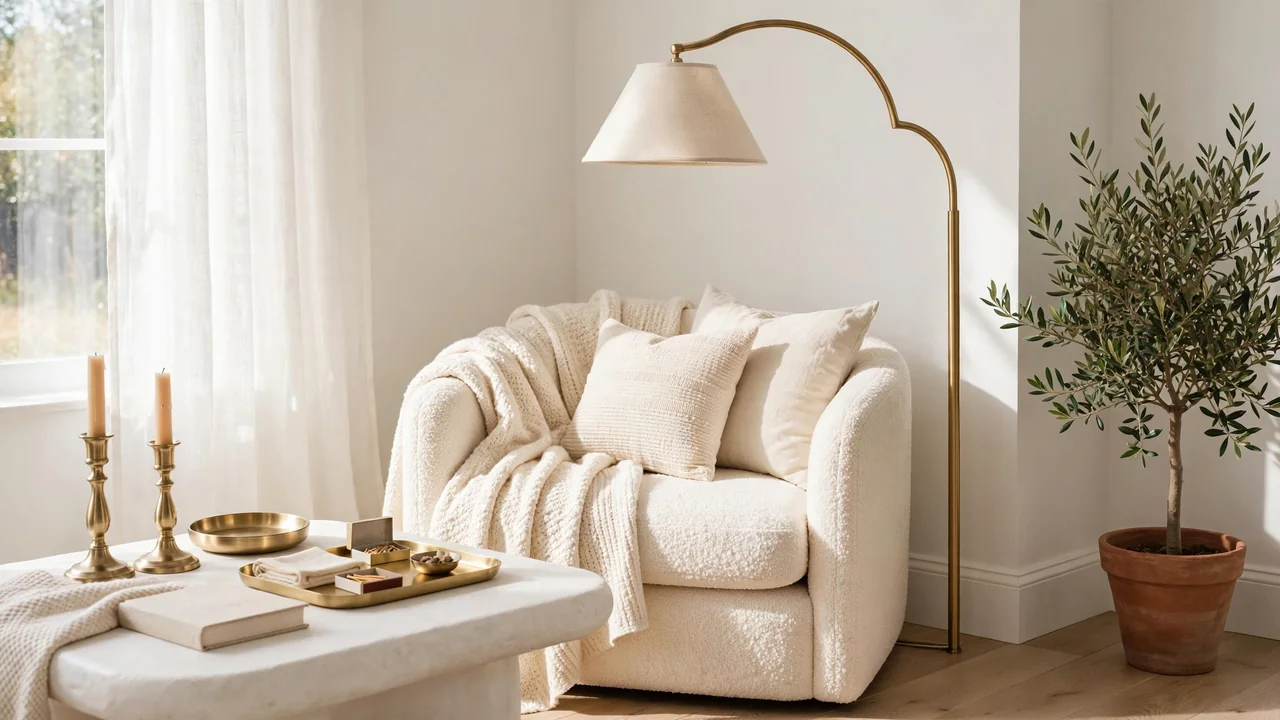
Metallics add sparkle and warmth that white rooms crave. Brushed brass, champagne gold, and warm bronze reflect light beautifully and introduce a jewelry-like richness against all that softness. Try a brass arc floor lamp curving over a reading chair, a set of gold-framed mirrors above the sofa, or small brass candlesticks and a tray on the coffee table. Keep the finish consistent — mixing polished chrome, brass, and copper can look scattered — and repeat the metal at least three times around the room so it feels intentional. Because metallics are reflective, they double the effect of your lighting; a single brass pendant can scatter warm highlights across white walls like sunlight. Small doses go far, so even swapping cabinet hardware or lamp bases can shift the whole mood.
9. Create a Gallery Wall With White Frames
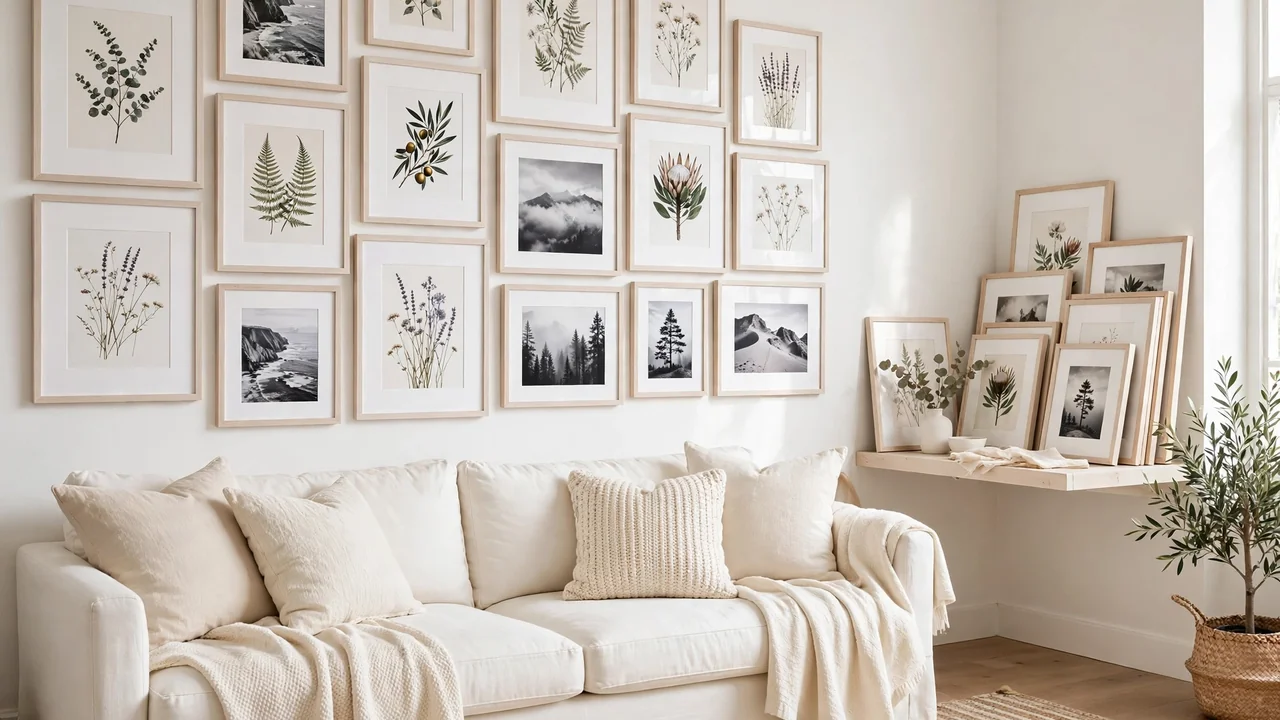
A gallery wall adds personality without breaking the serene white palette. Collect art, prints, and family photos in frames of the same warm white or light wood tone, and hang them in a loose salon-style arrangement above the sofa or along a hallway wall. Keeping the frames unified lets the images themselves — sketches, botanical prints, black-and-white photography, children's art — provide the interest. Leave generous white mat borders around each piece so the wall reads as one calm composition rather than visual clutter. Map the layout on the floor with painter's tape on the wall first, spacing pieces two to three inches apart. A gallery wall also solves the "blank white wall" problem beautifully, giving the eye somewhere personal and meaningful to rest.
10. Add Greenery for Living Contrast
Nothing enlivens a white living room like plants. A tall fiddle-leaf fig or olive tree in a woven basket brings sculptural height to an empty corner, while trailing pothos or a philodendron softens the top of a bookshelf. The green against white is a classic contrast that feels fresh and organic, and plants literally add life to the palette. Choose pots in cream ceramic, natural terracotta, or woven seagrass to stay in the warm neutral family. Group plants in odd numbers at different heights — floor, side table, shelf — for a lush, collected feel. If you lack a green thumb, a few sprigs of eucalyptus in a vase or a bowl of lemons on the coffee table deliver the same lively pop with almost no maintenance.
11. Choose a Whitewashed or Light Wood Floor
Flooring sets the base tone of a white living room, and pale floors keep the brightness flowing from wall to wall. Whitewashed oak, light maple, or pale engineered planks give the room a Scandinavian airiness while their natural grain prevents the space from feeling cold. If replacing floors is not in the cards, a large light-toned area rug can fake the effect over darker wood. Keep floor stains matte rather than glossy — a soft matte finish absorbs light gently and feels more modern and relaxed. Pair pale floors with the jute or ivory rugs from earlier ideas, and the layered neutrals create a seamless, cloudlike foundation that makes furniture appear to float. Wide-plank boards in a matte finish look especially current and make smaller living rooms feel noticeably more spacious.
12. Illuminate With Warm Layered Lighting
Lighting makes or breaks a white living room, because white surfaces amplify whatever light you give them. Build three layers: ambient light from a ceiling fixture or recessed cans, task light from reading lamps and a desk lamp, and accent light from candles, picture lights, or a small table lamp glowing in a corner. Crucially, choose warm-white bulbs around 2700K — cool daylight bulbs will make your warm whites look gray and dingy. A linen drum pendant or a woven rattan chandelier doubles as sculpture while washing the ceiling in warmth. Place a small lamp on a bookshelf or console so the far corners of the room glow too, eliminating the shadows that can make white rooms feel flat at night. Dimmer switches everywhere let you dial the mood from bright morning to candlelit evening.
13. Mix Old and New Furniture Pieces
A room full of brand-new white furniture can feel like a showroom; mixing in vintage pieces gives it soul. Pair a modern white linen sofa with a weathered antique side table, a vintage brass floor lamp, or a flea-market wooden stool used as a plant stand. The patina, worn edges, and slight imperfections of older pieces add character and history that new furniture cannot fake. Hunt for pieces with good bones and warm undertones — an oak dresser that works as a media console, a carved mirror with a gilded frame, a pair of vintage cream armchairs. The contrast between crisp new upholstery and timeworn wood or metal is exactly what keeps an all-white room from feeling one-note. Let the vintage piece keep its scratches and wear — those imperfections are the patina that makes the room feel storied and real.
14. Style Open Shelving in White Tones
Open shelving on a white wall is a styling playground. Arrange books with cream and beige spines facing out, interspersed with white ceramics, woven baskets, small framed prints, and a trailing plant. The trick is editing: group items in threes, vary heights, and leave plenty of empty space so the shelves breathe rather than bulge. Turn books with clashing covers around so their pages face out for an instant neutral look. Woven baskets on the lower shelves hide remotes, chargers, and clutter while adding texture. Because the shelving backdrop is white, every object casts a soft shadow that adds dimension — the display becomes living art that you can refresh seasonally with almost no effort. Swap in pine sprigs in winter or fresh wildflowers in spring to keep the shelves feeling alive all year.
15. Keep It Lived-In With Soft Throws
The finishing touch of a white living room is the casual throw — draped, not folded into a perfect rectangle. Toss a chunky cream knit throw over the sofa arm, lay a lightweight waffle-weave blanket across the foot of an accent chair, and keep a basket of extra throws beside the sofa for chilly evenings. These soft layers invite people to curl up, which is the whole point: a white living room should feel like the most comfortable seat in the house, not a museum. Choose machine-washable fabrics in ivory, oatmeal, and soft gray so real life — pets, kids, red wine — is never a crisis. When throws are this touchable, guests stop worrying about the white and start sinking in.
Styling Tips
Keeping a white living room beautiful in real life is easier than its reputation suggests. First, washability is everything: choose slipcovered sofas, machine-washable throw pillow covers, and rugs you can spot-clean, and the white stops being precious. Second, embrace the "rule of three" for textures — every seating area should combine at least three different weaves, like linen, wool, and cotton, so the eye reads depth instead of blankness. Third, anchor the brightness with at least one darker element: a walnut coffee table, a black-framed mirror, or deep green plants give the eye a resting place and make the whites look brighter by contrast. Fourth, edit seasonally — swap a chunky knit throw for breezy linen in summer, trade eucalyptus for pine sprigs in winter — and the room always feels fresh. Finally, light it warm: 2700K bulbs, dimmers, and candles keep white walls glowing instead of glaring, day and night.
Frequently Asked Questions
Are white living rooms hard to keep clean?
Not if you plan for it. Choose washable slipcovers, stain-resistant performance fabrics, and rugs with patterns or natural fibers that camouflage daily mess. Keep a fabric-safe stain remover and washable throw blankets on hand for high-traffic spots, and treat the white as a livable choice rather than a fragile one — most marks come out with prompt, simple cleaning.
What wall color goes best with a white living room?
Warm whites with creamy undertones are the most forgiving, since they glow under both daylight and lamplight. If you want contrast on one wall, soft greige, pale sage, or warm putty keep the airy feel while adding depth. Avoid stark cool whites unless your room gets abundant warm sunlight, as they can read as clinical in north-facing or dim spaces.
How do I keep a white living room from feeling cold?
Layer textures and warm materials: nubby wool, washed linen, jute, weathered wood, and brushed brass all add warmth. Use 2700K warm-white bulbs, add plenty of plants, and include at least one rich accent — a walnut table, caramel leather chair, or deep-toned art — to ground the brightness. Warm white paint, rather than cool white, makes the single biggest difference.
What furniture colors work with white walls?
Almost anything works, which is the joy of white walls. Ivory and cream upholstery keep the serene monochrome look; natural wood tones add warmth; soft gray, sage, or dusty blue introduce gentle color; and a single bold piece — a cognac leather chair or a navy ottoman — creates a focal point. Keep large pieces neutral and let smaller accents carry the color.
Can a white living room work with kids and pets?
Absolutely. Performance fabrics designed for heavy use resist stains and can be cleaned with just water, and slipcovers can go straight in the wash. Choose a patterned or natural-fiber rug that hides fur and footprints, keep washable throws on the most-used seats, and pick rounded, sturdy furniture. Many families find a planned-for white room easier to maintain than a dark one that shows every speck of dust.
Conclusion
A white living room is not about perfection — it is about light, calm, and a backdrop that lets your life shine. By layering warm whites, mixing rich textures, grounding the space with natural wood and fiber, and lighting it all with a warm glow, you create a room that feels both serene and deeply inviting. Start with one or two of these ideas, live with them, and let the room evolve. Your bright, beautiful white living room is closer than you think.


