

21 Attic Bedroom Ideas to Turn Sloped Ceilings into a Cozy Retreat
There’s something undeniably magical about an attic bedroom. Tucked away at the very top of the house, with sloped ceilings overhead and sky views through skylights, an attic bedroom feels like a secret hideaway — part cozy cocoon, part treetop retreat. Yet for all their charm, attics can also feel like the trickiest room in the house to design. Low eaves, awkward angles, limited natural light, and walls that seem to lean inward all conspire to make decorating feel like solving a puzzle.
The good news is that every one of those “problems” can become a feature. Sloped ceilings create natural zones and intimate sleeping nooks. Low eaves are perfect for built-in storage. Dormers and skylights bring in light in ways flat walls never could. With the right layout, color, and storage ideas, an attic can easily become the favorite bedroom in the house.
This guide brings together 21 practical attic bedroom ideas covering everything from layout planning and bed placement to lighting, storage, styling, and comfort essentials. Whether your attic is a spacious converted loft or a snug nook under the eaves, you’ll find ideas here to help you make the most of every angled inch.
Why an Attic Bedroom Is Worth the Effort
Before diving into layouts and paint colors, it helps to understand what makes attic bedrooms special — and what to watch out for. Knowing the strengths and quirks of the space up front saves you from costly mistakes later.
The Irresistible Charm of Sloped Ceilings
Sloped ceilings give attic bedrooms an architectural character that standard box-shaped rooms simply don’t have. The angles create a sense of enclosure that feels protective and cocoon-like, which is exactly what most people want from a bedroom. A bed tucked under a sloping ceiling feels like a nest, and exposed beams or wood paneling add warmth and texture that flat drywall can’t match.
Attics also offer privacy. Being separated from the rest of the house — often up a flight of stairs and behind a door — makes the attic a natural sanctuary. It’s an ideal spot for a primary suite away from household noise, a quiet guest room, or a teen’s bedroom where a little independence is welcome. The separation is a feature, not a flaw.
And then there’s the light. Skylights and dormer windows frame the sky in a way that feels cinematic — watching rain drift across a skylight or waking up to clouds overhead is an experience no ordinary window provides.
Honest Challenges to Plan For
Attics do come with real constraints, and it’s better to design around them than fight them:
- Low ceiling areas: The space near the eaves is often too low to stand in. This is dead space for walking but ideal for storage, built-ins, or low furniture.
- Temperature swings: Attics sit directly under the roof, so they can get hot in summer and chilly in winter without proper insulation and ventilation.
- Limited wall space: Sloped walls reduce the area available for hanging art, mounting TVs, or placing tall furniture.
- Awkward access: Steep or narrow stairs can make moving furniture in a challenge — measure everything before you buy.
None of these are deal-breakers. Each one has a practical solution, and most of the ideas below are built around turning these exact constraints into design opportunities.
Planning Your Attic Bedroom Layout
Layout is everything in an attic. Because the ceiling height varies across the room, where you place each piece of furniture matters more here than in any other bedroom. A little planning goes a long way.
Let the Roofline Guide the Room
Start by mapping your ceiling heights. Walk the room and note where you can stand comfortably, where you can sit, and where the ceiling is too low for either. The tallest area — usually the center ridge or a dormer — becomes your circulation zone: the path you walk, the spot for a dresser, or the place to stand while getting dressed. Reserve the low zones along the eaves for things that don’t need headroom: storage, a low bench, or the head of a bed.
If your attic has dormers, treat each dormer as a gift of full-height space. A dormer can hold a reading chair, a small desk, a vanity, or a cozy window seat — all activities that feel wonderful with natural light and a view.
Practical tip: Sketch a simple floor plan on paper and mark the ceiling heights. Even a rough sketch helps you see the room’s logic before you move a single piece of furniture.
Smart Bed Placement Under the Eaves
The bed is the biggest decision in any attic bedroom, and the slope dictates the options:
- Headboard under the slope: Pushing the head of the bed into the low eave zone is the classic attic move. You need headroom only for sleeping, not for standing, so the lowest part of the room works perfectly here. Just make sure there’s enough clearance to sit up comfortably.
- Bed centered under the ridge: In a larger attic, floating the bed in the middle of the room under the highest point creates a dramatic, hotel-like feel and leaves both sides accessible.
- Bed under a skylight: If you have a skylight positioned over the bed, lean into it — falling asleep and waking up under the sky is one of the great pleasures of attic living. Consider a skylight with a blackout blind for mornings when you want to sleep in.
- Low platform beds: Platform beds, floor-level mattresses, and Japanese-style low frames suit attics beautifully. They keep the sleeping area visually open and make low ceilings feel intentional rather than cramped.
Zoning a Long Attic Into Living Areas
Many attics are long, narrow spaces — a shape that can feel like a tunnel if you don’t break it up. Create zones using rugs, furniture placement, and lighting rather than walls, which would chop up precious light and air.
A common and effective arrangement: sleeping zone at one end (bed under the slope or ridge), a dressing/storage zone in the middle (dresser or fitted wardrobes along the eaves), and a sitting or reading zone at the other end (armchair and floor lamp near a dormer or gable window). Each zone gets its own rug and its own light source, which makes the long room feel like a series of connected spaces instead of one corridor.
Practical tip: In a very long attic, a low open bookcase placed perpendicular to the room works as a subtle divider that defines zones without blocking light.
Light, Color, and Air: Making Attics Feel Bigger
Attics can feel dark and enclosed if the light isn’t handled well. The goal is to maximize every bit of natural light and then support it with thoughtful artificial lighting.
Skylights, Dormers, and Gable Windows
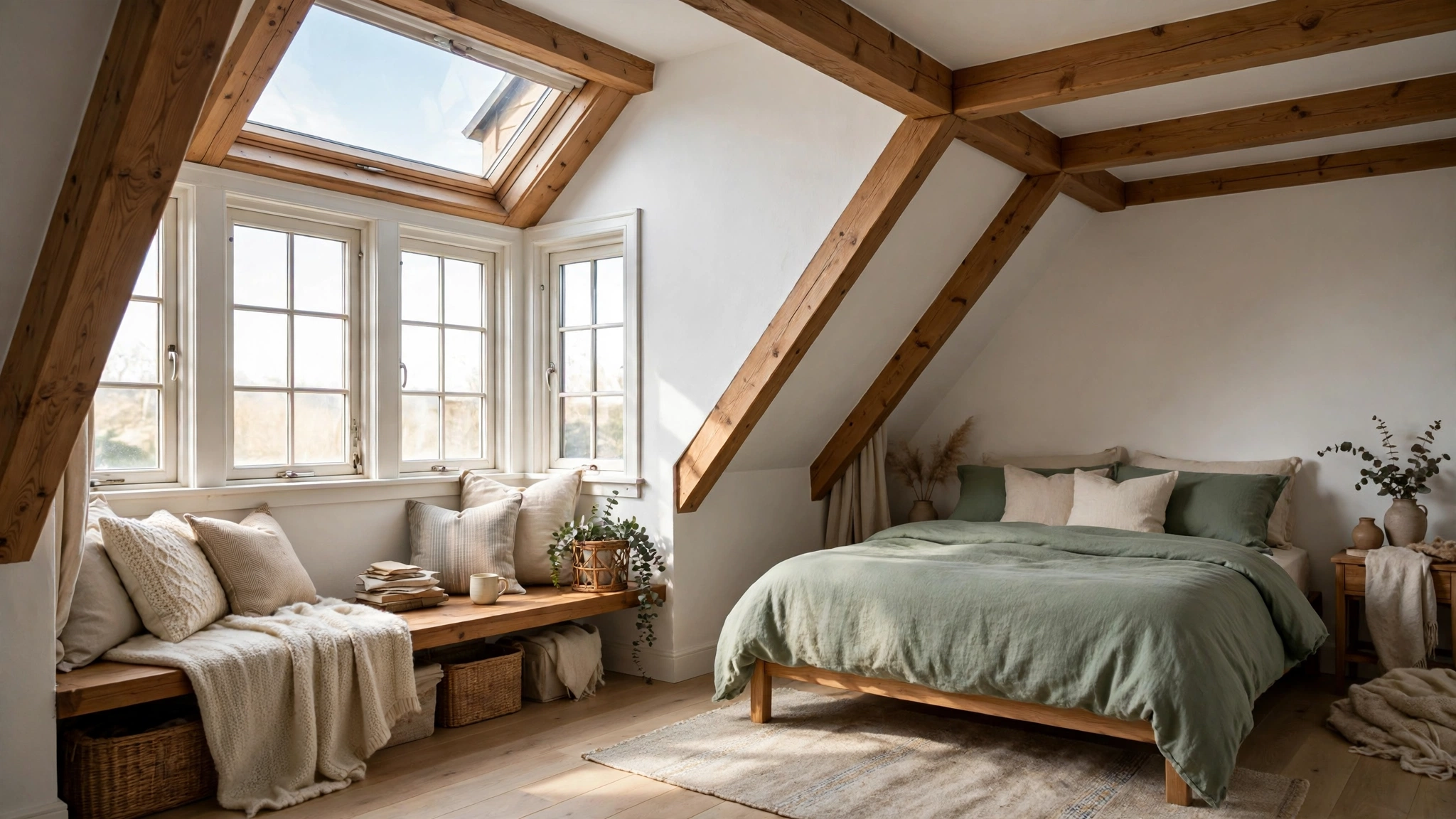
Skylights are the attic’s best friend. They bring in far more light than a vertical window of the same size because they face the sky directly. If your attic already has skylights, keep the glass clean and the surrounding reveals painted white to bounce light deeper into the room. If you’re renovating, adding even one skylight can transform a gloomy attic.
Dormers do double duty: they add headroom and bring in vertical windows with real views. A dormer window seat is one of the most beloved attic bedroom ideas for good reason — it’s a sunny perch for reading, a spot for morning coffee, and extra storage if you build drawers underneath.
Don’t overlook gable-end windows (the windows on the triangular end walls). They provide views and cross-ventilation, and dressing them with simple curtains or shades softens the room’s tallest wall.
Practical tip: Choose skylight blinds you can operate easily — a remote-controlled or pole-operated blackout blind makes the difference between a skylight you love and one that wakes you at dawn every summer morning.
Color Palettes That Open Up the Slope
Color has an outsized effect in attics because the ceiling — usually the largest surface — is right in your line of sight. Light, warm whites and soft neutrals are the safest choice: they reflect light, make slopes recede visually, and create a calm backdrop for bedding and decor.
That said, you don’t have to go all white. These palettes work beautifully in attic bedrooms:
- Warm white + natural wood: White walls with exposed beams or wood floors feel airy yet warm — the timeless attic combination.
- Soft sage or muted blue: Gentle, desaturated colors on the slopes feel serene and pair well with cream bedding.
- Warm greige: A cozy neutral that keeps the room feeling snug without going dark.
- One dark accent: A single dark wall — often the gable end or the wall behind the bed — adds drama and depth without shrinking the room, as long as the slopes stay light.
Practical tip: Paint the sloped ceiling and walls the same light color to blur the line where wall meets ceiling. This trick makes the room feel taller and more unified.
Layered Lighting for Low Ceilings
Overhead lighting is tricky under a sloped ceiling — a standard pendant can hang too low, and recessed lights may not fit the roof structure. Instead, layer your lighting:
- Wall sconces: Mounted on dormer cheeks, gable walls, or knee walls, sconces provide ambient light without eating headroom.
- Bedside lighting: Table lamps on nightstands, or wall-mounted reading lights beside the bed, are essential in an attic where reaching a ceiling fixture isn’t practical.
- Floor lamps: An arc or slim floor lamp in a reading corner adds height and drama where the ceiling allows it.
- String or fairy lights: Draped along a beam or headboard, they add a soft, magical glow that suits the attic’s cozy character perfectly.
Use warm-toned bulbs throughout. Cool white light can make an attic feel stark; warm light enhances the cocoon effect.
Smart Storage Ideas for Sloped Spaces
Storage is the number-one practical concern in attic bedrooms. Standard wardrobes and dressers often don’t fit under the slope, and the eave areas can feel like wasted space. The secret is to treat the low zones as built-in storage opportunities.
Built-In Drawers Along the Eaves
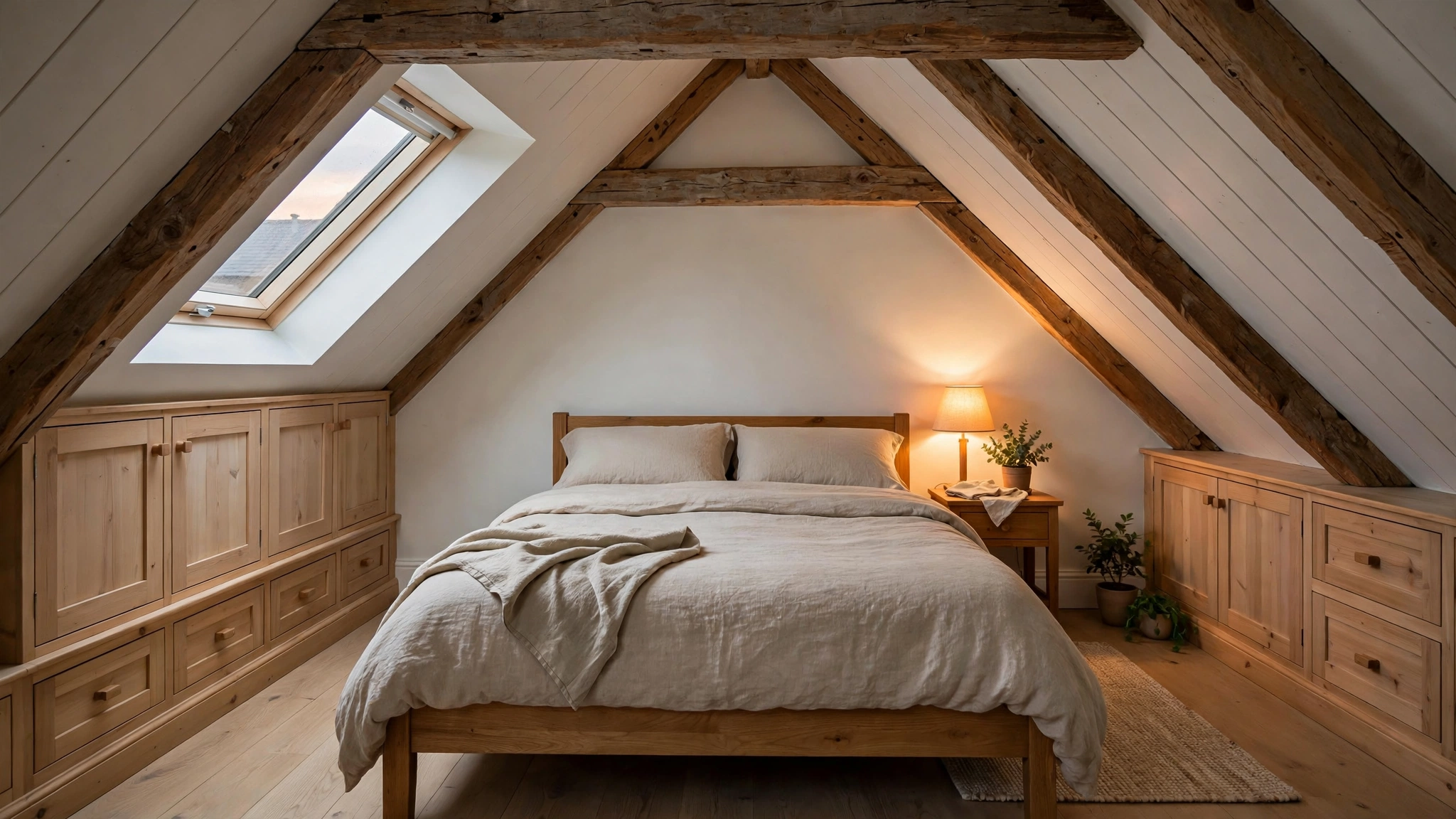
The knee wall area — the short vertical wall where the slope meets the floor — is prime real estate for built-in drawers and cupboards. Custom or semi-custom drawer units fitted along the eaves turn dead space into deep, generous storage for clothes, bedding, and seasonal items. Because the drawers follow the room’s shape, they look intentional and tidy rather than improvised.
If full custom joinery isn’t in the budget, low modular drawer units, cube storage, or rolling under-eave carts achieve a similar effect. The key is keeping the fronts aligned and the tops clear so the run of storage reads as one clean line.
Practical tip: Add small labels or use open-front bins for the deepest eave storage — things stored far back under the slope are easy to forget.
Fitted Wardrobes That Follow the Roof
A standard wardrobe wastes the triangular space under a slope; a fitted wardrobe uses it. Angled wardrobes built to match your exact roof pitch give you full-height hanging space where the ceiling allows it and shelving or drawers where it doesn’t. The result looks seamless — like the room was designed around the storage, not the other way around.
For a simpler approach, use a low, wide dresser or a pair of chests under the slope, and reserve hanging clothes for a compact wardrobe placed in the tallest part of the room. Sliding doors are worth considering anywhere space is tight, since they don’t need clearance to swing open.
Multi-Functional Furniture
In an attic, every piece should earn its place. Look for furniture that does double duty:
- Storage beds: A bed with built-in drawers or a lift-up ottoman base adds a huge amount of hidden storage exactly where you need it.
- Window seats with storage: A dormer window seat with a lift-up lid or drawers beneath combines seating and storage in one footprint.
- Nesting or folding pieces: A small folding desk, nesting side tables, or a bench that tucks under a console keep the room flexible.
- Under-bed boxes: Even with a storage bed, slim boxes on the non-eave side catch shoes, spare linens, and off-season clothes.
Attic Bedroom Styling Ideas by Look
Once the layout and storage are sorted, styling is where the attic’s personality comes alive. The architecture does half the work — your job is to choose a look that complements it. Here are four directions that suit sloped ceilings especially well.
Cozy Cottage Attic
Think whitewashed shiplap or beadboard on the slopes, a wrought-iron or wooden bed frame, floral or gingham bedding, and a braided or woven rug. Cottage style leans into the attic’s storybook quality — it feels like the bedroom in a beloved novel. Keep the palette soft (creams, dusty pinks, pale blues) and add texture with quilts, ruffled shams, and a chunky knit throw at the foot of the bed.
Clean Modern Attic
For a crisp, contemporary feel, keep the slopes bright white, choose a low-profile platform bed with streamlined bedding in solid neutrals, and let a few sculptural pieces do the talking — an arc floor lamp, a single oversized piece of art on the gable wall, a bench with clean lines. Modern styling works best when clutter is minimal, so make sure your eave storage is doing its job behind the scenes.
Boho Layers and Texture
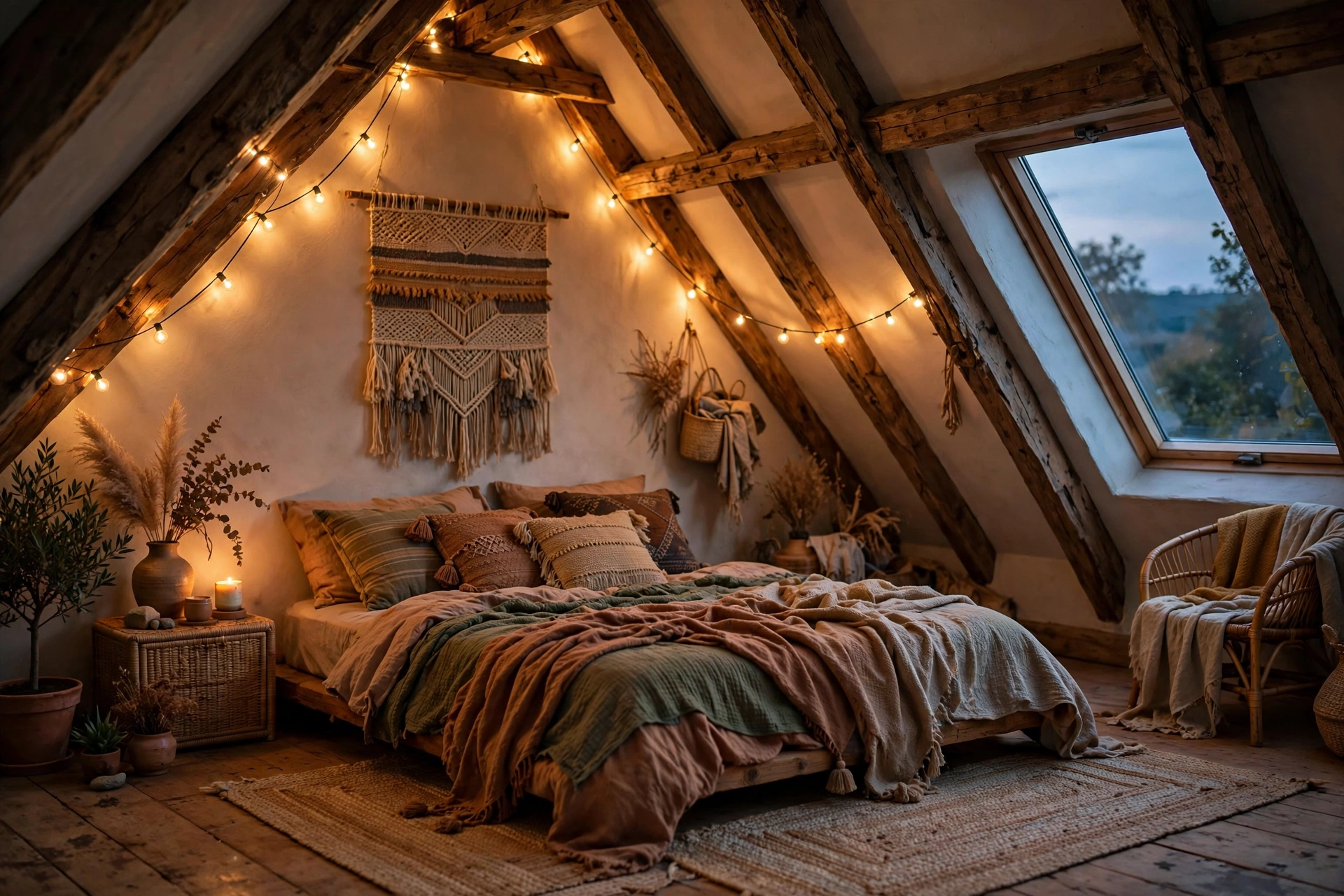
Attics and boho style are a natural match: both celebrate coziness, texture, and collected character. Layer patterned rugs, drape a canopy or gauzy curtains from a beam, pile on cushions in earthy tones and global prints, and hang woven wall art or macrame on the gable wall. String lights along the slope add the finishing glow. The key to keeping boho from tipping into clutter is a consistent color story — pick two or three warm tones and repeat them throughout.
A Guest-Ready Attic Retreat
An attic makes a wonderful guest bedroom because its separateness feels like a private suite. Style it like a boutique hotel room: crisp white bedding with a textured throw, a carafe of water and glasses on the nightstand, a small basket with spare toiletries, a luggage rack or bench at the foot of the bed, and a readable lamp on each side. Add a mirror, a few hangers’ worth of empty closet space, and a note with the Wi-Fi details, and your guests will never want to leave.
Practical tip: Whichever style you choose, repeat one material — wood, rattan, linen, or brass — at least three times in the room. Repetition is what makes a styled room feel cohesive rather than random.
Comfort Essentials: Temperature, Sound, and Floors
A beautiful attic bedroom still needs to be comfortable to sleep in. Because attics sit directly under the roof, a few building-level details matter more here than in other rooms.
Staying Warm in Winter and Cool in Summer
Proper insulation is the single most important comfort factor in an attic bedroom. Without it, the room will overheat in summer and lose heat rapidly in winter. If your attic conversion was done properly, insulation sits between the roof rafters; if you’re dealing with an older or DIY conversion, it’s worth having the insulation checked and upgraded.
Ventilation matters just as much. Attics need airflow to prevent heat buildup and moisture problems. Skylights that open, gable windows on opposite ends for cross-breezes, and a quiet ceiling or portable fan all help. In warm climates, a skylight with an external heat-reflective blind can dramatically reduce solar heat gain.
For heating, radiators or underfloor heating work well; avoid relying on a single portable heater as the primary source in a room you’ll sleep in every night. And whatever you do, make sure there’s a working smoke detector and carbon monoxide detector in the attic — non-negotiable for any bedroom.
Flooring and Soundproofing
Wood floorboards, engineered wood, or wood-look flooring suits attics beautifully and is easy to keep clean. Add a large rug under and around the bed — it warms up the room visually, feels good underfoot on cold mornings, and dampens sound traveling to the rooms below.
Sound travels both ways through attic floors. If footsteps or voices carry, a thick rug with a quality underlay is the simplest fix. For a more thorough solution during renovation, acoustic insulation between the floor joists makes a noticeable difference.
Safety and Practical Checks
Before settling into your attic bedroom, run through these essentials:
- Egress: Make sure there’s a safe, practical escape route in an emergency — typically a proper staircase plus an openable window of adequate size.
- Electrical capacity: Attics often have limited outlets. Have an electrician confirm the wiring can handle your lighting, heating, and devices safely.
- Headroom on stairs: Steep attic stairs are common; add a sturdy handrail and good lighting on the stairwell if they’re not already there.
- Moisture: Check for any signs of roof leaks or condensation, especially around skylights and dormers, before decorating.
Small Attic Bedroom Ideas
Not every attic is a sprawling loft. If yours is compact, the same principles apply — they just matter more. Small attics reward editing, light colors, and furniture that fits the scale of the room.
Go Low and Cozy
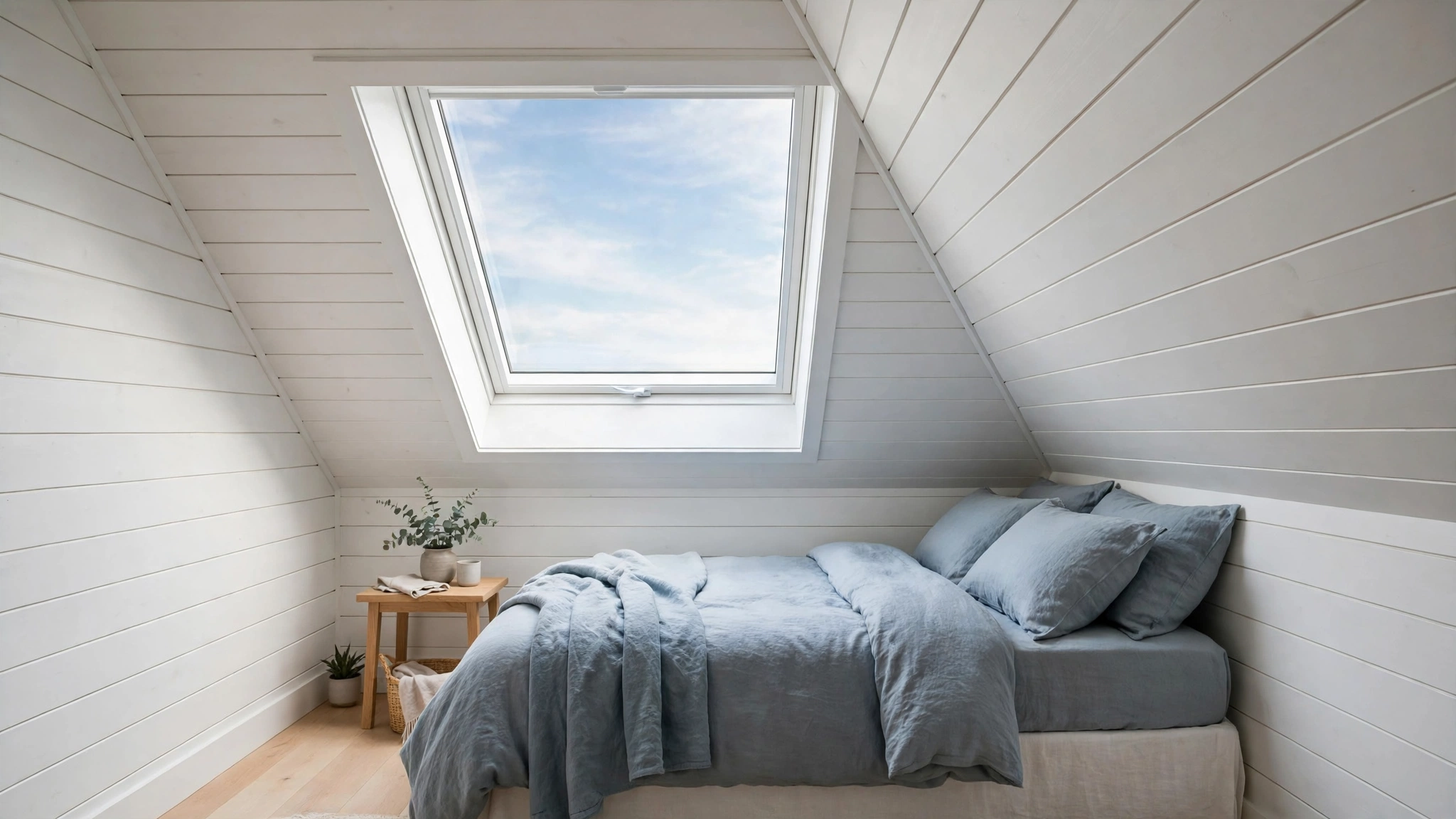
In a small attic, embrace the coziness instead of fighting it. A low platform bed or even a quality mattress on a simple base keeps sightlines open and makes the ceiling feel higher than it is. Skip the tall headboard — an upholstered low headboard or a simple arrangement of cushions against the wall gives you comfort without visual bulk.
Choose a bed size that fits with room to spare. A double bed with generous circulation often feels more luxurious than a king crammed wall-to-wall. Leave at least enough space to walk around two sides of the bed if you can.
Mirror and Light Tricks
Mirrors are a small attic’s best friend. A large mirror on the gable wall or a mirrored wardrobe door bounces light around and doubles the sense of space. Position mirrors to reflect a window or skylight rather than a blank wall for the biggest effect.
Keep window treatments light and simple — sheer curtains or slim roller blinds that disappear when raised. Heavy drapes eat visual space and block the precious light a small attic depends on.
Keep Furniture Slim and Leggy
Choose nightstands, chairs, and dressers with slim profiles and visible legs. Furniture that shows floor beneath it feels lighter and lets the eye travel, which makes the room feel larger. Wall-mounted nightstands or floating shelves beside the bed free up floor space entirely — a perfect trick where every square foot counts.
Practical tip: In a tiny attic, limit yourself to five or six pieces of furniture total: bed, two nightstands (or one shared), a dresser or drawer unit, one chair, and one mirror. Everything else should be storage that disappears into the eaves.
Finishing Touches That Make It Feel Like Home
The final layer is what turns a well-planned attic into a room you love waking up in. These small details soften the angles and add personality.
Textiles That Soften the Angles
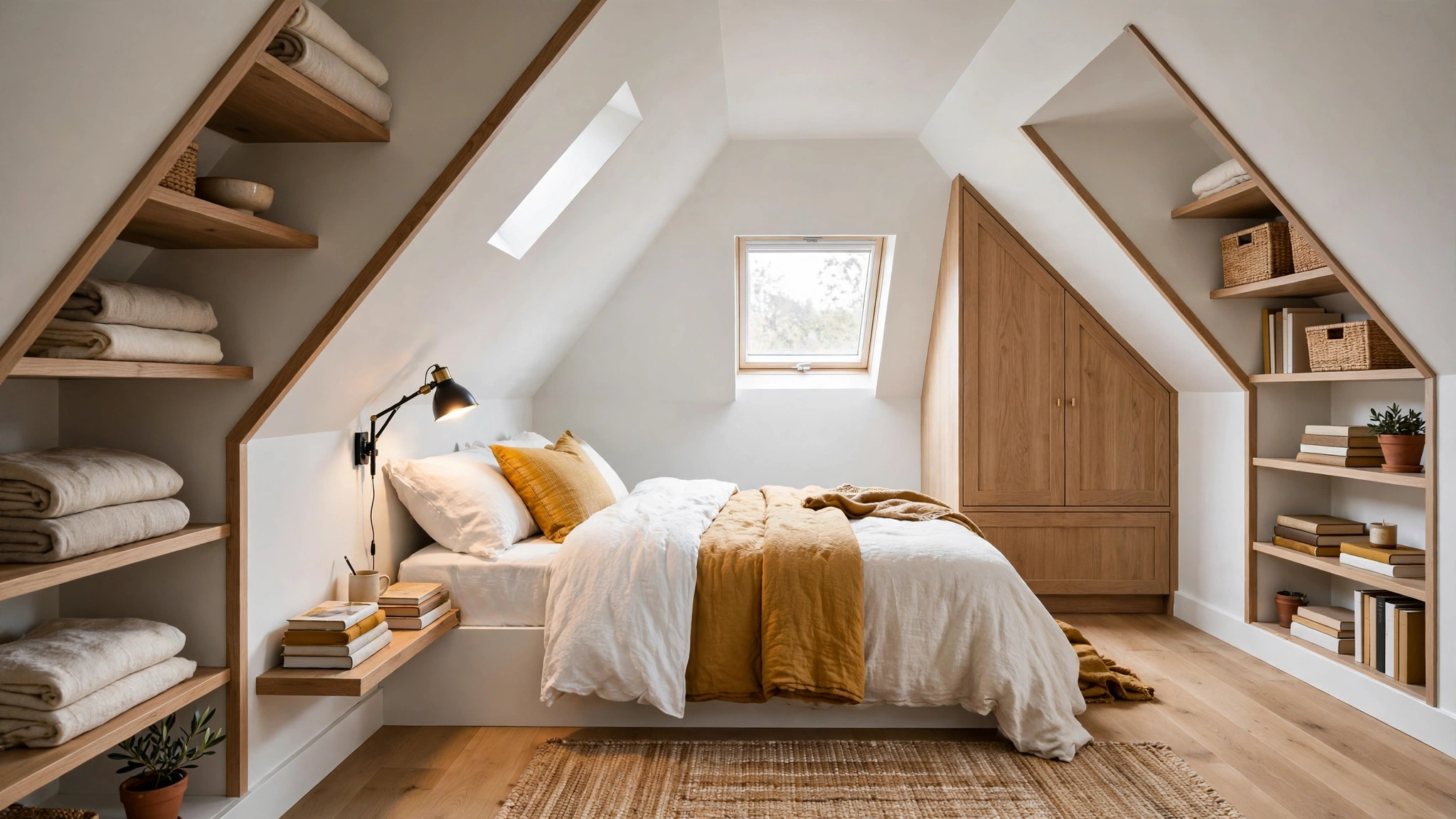
Attics have a lot of hard angles — slopes, beams, dormer corners. Textiles are the antidote. Layer bedding generously: a quilt or coverlet, a folded throw across the foot, and an arrangement of sleeping pillows plus decorative cushions. Add curtains even where you might not strictly need them — fabric on a gable window or a canopy draped from the ridge softens the architecture beautifully. A rug underfoot completes the cocoon.
Wall Decor on Slanted Surfaces
Hanging art on a slope takes a little ingenuity, but it’s very doable. Lightweight frames can hang from the ridge beam with wire or cord. Picture ledges mounted on knee walls display art and photos without any drilling into the slope. And the gable-end walls — the tall triangular walls — are prime gallery space: a single large piece or a small cluster of frames looks stunning against the peak.
Practical tip: Use proper fixings rated for angled surfaces, and keep heavier pieces on vertical walls. Anything hung on a slope should be secure enough that it can’t slide or fall.
Greenery and Personal Details
A few plants bring an attic bedroom to life — trailing plants on a high shelf or beam draw the eye upward and emphasize the height you do have, while a sturdy floor plant fills an awkward corner. Choose varieties that tolerate the light conditions your skylights and dormers provide.
Finally, add the personal touches that make it yours: books on the window seat, a favorite scent in a candle or diffuser, framed photos on the dresser, a cozy throw always within reach. Attics feel most magical when they feel lived in and loved, not staged.
Attic Bedroom FAQs
What is the best bed placement in an attic bedroom?
The most popular and practical choice is placing the head of the bed under the sloped eave, since sleeping requires less headroom than standing. Make sure you can sit up comfortably without hitting the ceiling. In larger attics, centering the bed under the ridge or beneath a skylight also works beautifully.
How do I get more storage in an attic bedroom?
Use the low eave areas for built-in drawers or cupboards, fit wardrobes that follow the roof pitch, and choose multi-functional furniture like storage beds and window seats with hidden compartments. The space under the slope that you can’t stand in is ideal storage space.
What colors work best for attic bedrooms?
Light, warm neutrals — soft whites, creams, warm greys — work best because they reflect light and make sloped ceilings feel higher. Painting the slopes and walls the same light color blurs the wall-ceiling line and makes the room feel larger. You can add one darker accent wall for contrast.
How can I keep an attic bedroom cool in summer?
Good roof insulation and ventilation are the foundation. Skylights that open, cross-ventilation from gable windows, external or reflective blinds on skylights, and a quiet fan all help significantly. Light-colored roofing and blackout blinds also reduce heat buildup.
Can you hang things on sloped attic ceilings?
Yes, with the right approach. Lightweight items can hang from ridge beams with wire or cord, picture ledges work well on knee walls, and the vertical gable-end walls are ideal for art. Always use fixings rated for angled surfaces and keep heavy items on vertical walls.
What lighting works best with low sloped ceilings?
Layer wall sconces, bedside lamps, and floor lamps rather than relying on a single ceiling fixture, which can hang too low. Wall-mounted reading lights beside the bed are especially practical, and string lights along a beam add warm ambient glow without using any headroom.
Is an attic bedroom suitable as a primary bedroom?
Absolutely, provided the basics are in place: proper insulation, adequate heating and ventilation, safe stair access, sufficient electrical outlets, and an openable window for emergency egress. Many people find the privacy and coziness of an attic makes it the best bedroom in the house.


