

Moody Dining Room Ideas: 20 Dark, Dramatic Designs
There is something undeniably magnetic about a dining room that dares to go dark. While the rest of the design world chases bright, airy, all-white interiors, the moody dining room moves in the opposite direction — and it is absolutely winning. Think walls wrapped in deep charcoal, forest green, or midnight navy. Candlelight flickering across a dark wood table. Velvet chairs in jewel tones. A chandelier that throws warm pools of light instead of blasting the room with brightness.
A moody dining room is not just a style choice; it is an atmosphere choice. These are the rooms where dinner parties stretch past midnight, where holiday tables feel cinematic, and where an ordinary Tuesday-night meal can feel like an occasion. In this guide, you will find 20 moody dining room ideas — from paint colors and lighting tricks to textures, tablescapes, and styling for every taste and budget. Whether you want to commit to full drama or just dip a toe into the dark side, there is a look here for you.
Why Moody Dining Rooms Work So Well
Before we get into the ideas, it helps to understand why dark dining rooms feel so good — because once you grasp the “why,” every design decision gets easier.
The Psychology of Dark, Enveloping Color
Dark colors do something remarkable to our senses: they make a room feel like it is holding you. Designers call this the “enveloping” effect, and it is why the world’s best restaurants — the candlelit bistros, the old-school steakhouses, the intimate wine bars — almost always lean dark. Deep wall colors soften edges, hide visual clutter, and let the table become the undisputed star of the room. Conversations feel warmer. Food looks better. People linger longer.
There is also a practical magic to it. A bright white dining room shows every crumb, every scuff, every fingerprint. A moody dining room? It is forgiving by nature. Minor imperfections disappear into the shadows, which makes it an unexpectedly practical choice for homes with kids, pets, and real-life dining.
When a Moody Dining Room Is (and Isn’t) Right for You
Moody dining rooms suit almost any home, but they shine brightest in certain situations:
- You love entertaining. Dark dining rooms turn dinner parties into events. If you host holiday meals, birthday dinners, or casual wine nights, a moody palette is your best friend.
- Your dining room is separate or semi-separate. A dedicated dining room can go dramatically dark without affecting the mood of an open-plan living space.
- You want to hide a dated room. Dark paint is a fantastic disguise for tired trim, uneven walls, or dated paneling that would look harsh in white.
- You have limited natural light anyway. Instead of fighting a north-facing or windowless dining room with cheerful pastels, lean into the darkness and make it a feature.
The one situation to think twice about: a dining area that shares walls with a kitchen or living room in a fully open floor plan. A single dark wall can still work there (we cover that below), but painting an entire open-plan zone charcoal can make the whole space feel closed in. In that case, use moody accents — a dark rug, velvet chairs, dramatic lighting — rather than wall-to-wall darkness.
Moody Dining Room Color Palettes: 20 Ideas
Paint is the fastest, cheapest route to moody. Here are the palettes that deliver the most drama, each with ideas for how to finish the look.
1. Charcoal and Soft Black Walls
Charcoal — not quite black, softer than ink — is the gateway moody color. It reads as sophisticated rather than stark, especially with warm white trim. Pair charcoal walls with a walnut or dark-stained table, brass or black pendant lights, and one piece of moody art in a gold frame to break up the expanse.
Tip: Choose a warm-toned charcoal (one with brown or red undertones) over a blue-toned one if your room gets cool natural light. Blue-leaning charcoals can feel icy instead of cozy.
2. Midnight Navy Blue
Deep navy is the color that converts skeptics. It is dramatic without feeling heavy, and it pairs beautifully with both modern and traditional furniture. Try navy walls with caramel or cognac leather chairs — the warm leather against cool blue is a combination that never misses. Add a brass chandelier and watch the whole room glow.
3. Forest and Hunter Green
Green is having a moment, and the deep end of the spectrum is where dining rooms benefit most. Forest green walls feel historic and grounded, like a library or an old country house. Style them with a reclaimed wood table, linen textiles, dried botanicals in dark ceramics, and wrought-iron candle lighting for a look that is rustic and moody at once.
4. Burgundy, Wine, and Oxblood
Nothing says “dinner party” like deep red. Burgundy and wine-toned walls create instant romance — they are the color of the wine in your glass, and the room feels like it was designed around it. Balance the intensity with dark wood furniture, gold-framed mirrors (which bounce candlelight beautifully), and velvet seating.
5. Plum and Aubergine
Plum sits between purple and brown, and in a dining room it feels luxurious and a little mysterious. It works especially well in small dining spaces and nooks, where the enveloping color makes the room feel like a jewel box. Pair plum with brass lighting, tufted velvet chairs, and dark moody artwork.
6. Warm Espresso and Dark Brown
Brown is the unsung hero of moody palettes. Espresso-toned walls feel rich and edible — like chocolate or coffee — and they create a warm darkness that black sometimes can’t. Layer brown walls with cognac leather, dark walnut wood, and amber glass accents for a room that feels like the inside of a very expensive café.
7. Two-Tone Walls: Dark Below, Darker Above
If one dark color feels like a big leap, try two. Paint the lower walls or wainscoting in one deep tone (say, charcoal) and the upper walls in a related but darker or lighter shade. You can also do dark walls with a contrasting dark ceiling — a black ceiling in a dining room sounds alarming and looks spectacular, especially over a statement chandelier.

8. Moody Wallpaper Instead of Paint
Wallpaper brings pattern into the drama. Look for dark floral prints, moody botanicals, vintage damasks, or textured grasscloths in near-black tones. A single wallpapered accent wall — ideally the one you see when you enter — delivers huge impact without the commitment of painting everything. In dining rooms, wallpapered walls behind a sideboard or buffet look particularly intentional.
Dramatic Lighting: The Heart of the Moody Dining Room
You can paint walls the perfect dark shade and still miss the mood if the lighting is wrong. Moody dining rooms live or die by light — specifically, low, warm, layered light. Here is how to get it right.
9. Choose a Statement Chandelier
The chandelier is the crown jewel of a moody dining room. Because dark walls absorb light, the fixture itself becomes a glowing focal point. Crystal chandeliers scatter candle-like sparkle; wrought-iron and black metal designs add gothic drama; sputnik and globe styles bring modern edge. Hang it low — the bottom of the fixture should sit roughly 30 to 36 inches above the tabletop — so it lights the table, not the ceiling.
10. Light Everything with Candles (Real or Flameless)
No single element creates a moody dining room faster than candlelight. Cluster pillar candles of varying heights down the center of the table, line a sideboard with candlesticks, or hang a candle-style chandelier. If you use flameless candles, choose the warm-white, flicker-effect versions and keep them in holders that hide the base — in dim light, even a discerning guest won’t know the difference.
11. Add Wall Sconces for Layered Glow
Overhead lighting alone creates harsh shadows on faces. Wall sconces fill in the gaps with soft, flattering light at eye level. Flank a mirror, a piece of art, or a sideboard with matching sconces — brass, black, or smoked glass all suit the moody brief. Put them on the same dimmer as the chandelier for one-tap atmosphere.
12. Put Every Light on a Dimmer
This is the single most important technical tip in this entire guide: dimmers everywhere. A moody dining room needs to shift from bright-enough-for-homework to candlelit-dinner-party in seconds. Install dimmer switches on the chandelier and sconces, and use warm-toned bulbs (2700K or lower). Cool white bulbs will destroy a moody room instantly — always go warm.

Rich Textures and Materials That Build the Mood
Dark rooms can feel flat if everything is smooth and matte. The antidote is texture — lots of it, layered generously. In a moody dining room, texture does the work that color contrast does in a bright room.
13. Velvet Seating in Jewel Tones
Velvet is the fabric of moody dining. It absorbs light in a way that makes colors look deeper and richer, and it feels undeniably luxurious. Deep emerald, sapphire, burgundy, and even black velvet dining chairs turn an ordinary table into something special. If full velvet chairs feel like a lot, start with velvet seat cushions or a velvet-upholstered bench on one side of the table.
14. Dark Wood with Visible Grain
Walnut, mahogany, and dark-stained oak are the backbone woods of moody dining rooms. The visible grain catches candlelight and adds organic warmth that keeps dark rooms from feeling cold. Mix wood tones freely — a walnut table with an oak sideboard, for example — as long as the finishes share a similar depth. What to avoid: pale, bleached, or honey-toned woods, which fight the moody palette.
15. Stone, Marble, and Aged Metals
Hard surfaces keep a moody room from feeling too soft. A black marble tabletop, a honed stone sideboard top, or even dark slate serving pieces add weight and permanence. Then warm them up with aged metals: brass candlesticks, bronze picture frames, copper serving bowls. The metal glints catch the light and become tiny points of drama across the room.
Styling the Table: Moody Tablescapes
The table is where the moody dining room earns its reputation. A well-styled dark table looks incredible in person and photographs beautifully — which matters if you love sharing your home.
16. Build a Low, Lush Centerpiece
Keep centerpieces low so guests can see each other — this is the golden rule of tablescaping, and it matters doubly in a dark room where sightlines are already softened. Try a long, low arrangement of dark foliage (eucalyptus, plum branches, or dried flowers), interspersed with pillar candles. Dark ceramics, black vases, and aged metal vessels all suit the palette. Fresh flowers are optional; moody arrangements often look better with dried or dark-toned botanicals.
17. Layer Dark Tableware
Swap bright white dinnerware for stoneware, matte black, or deep-toned plates. Layer a dark charger under a slightly lighter plate for depth. Add linen napkins in charcoal, forest, or rust tones, and tie them with a sprig of dried herbs or a simple leather cord for a finishing touch. Dark tableware makes food pop — colors look more vivid against near-black plates.
18. Use Linens to Soften the Darkness
A table runner or tablecloth in natural linen, washed velvet, or even dark gauze adds softness that hard surfaces can’t. You don’t need to cover the whole table — a runner down the center is often more striking, letting the wood show at the edges. Layer a gauzy, semi-sheer runner over a solid one for depth, and let the ends drape onto the floor for a relaxed, abundant feel.
Moody Dining Room Looks for Every Style
“Moody” is an atmosphere, not a single decorating style. Here is how to translate it into the look you already love.
Modern Moody
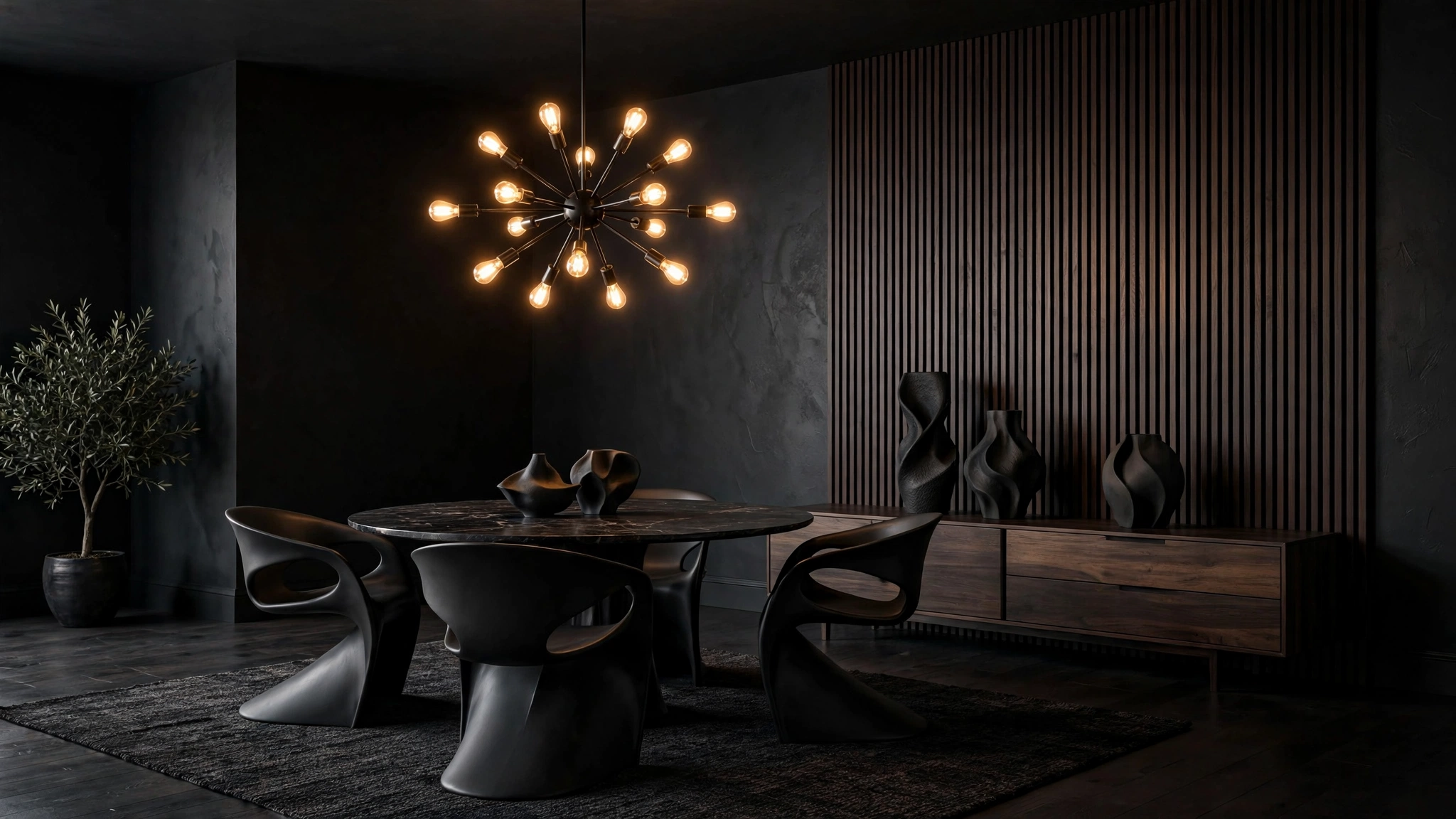
Matte black or charcoal walls, a round black marble or dark stone table, sculptural chairs in black leather or bouclé, and one dramatic modern chandelier — a sputnik, a ring light, or a cluster of smoked-glass pendants. Keep the lines clean and the accessories minimal; the drama comes from contrast between the dark shell and the glowing light fixtures. A dark slat-wood accent wall adds texture without clutter.
Rustic and Farmhouse Moody
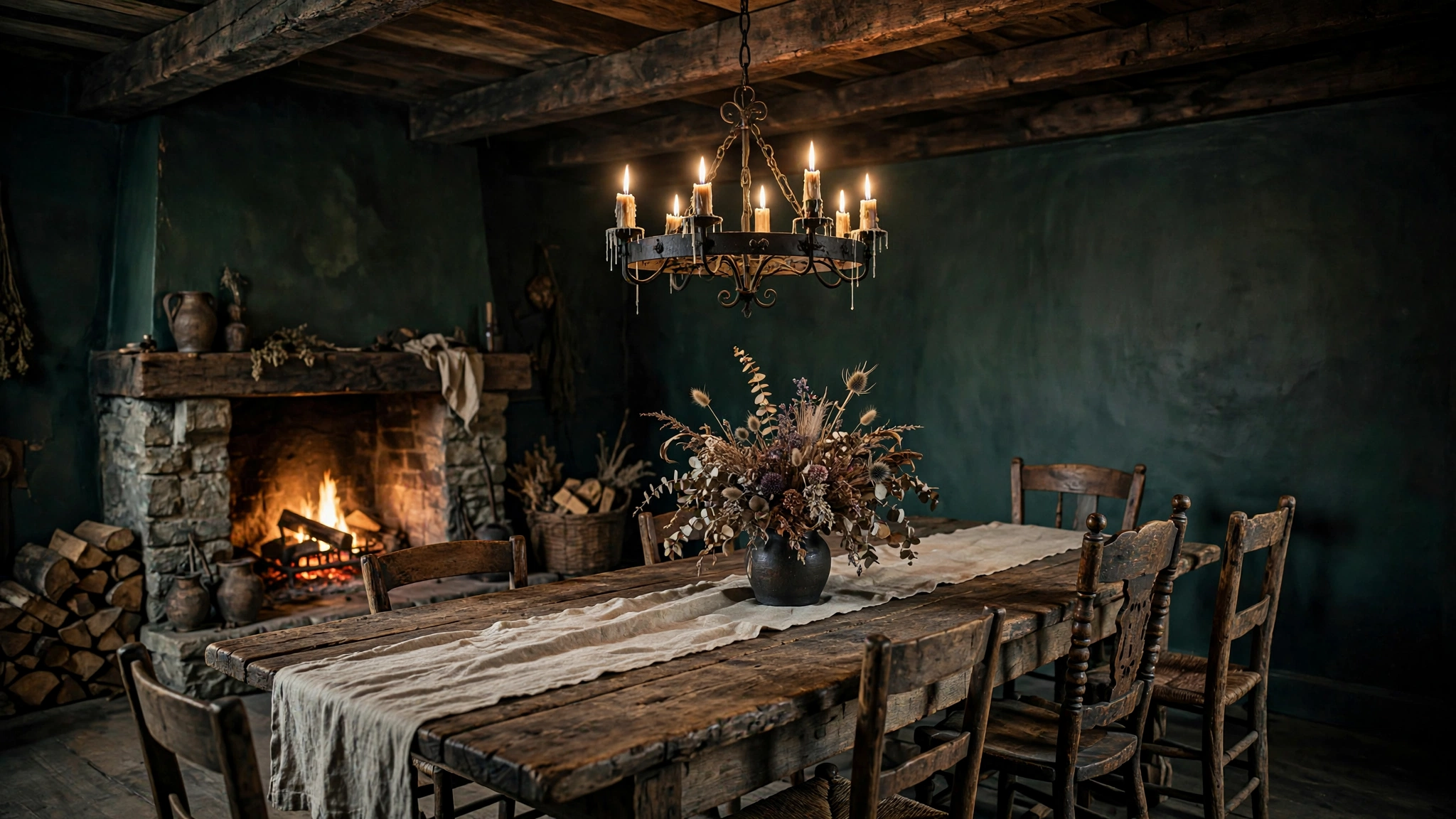
Deep green or warm brown walls, a heavy reclaimed-wood farmhouse table, mismatched antique chairs, and a wrought-iron or candle-style chandelier. Add a stone fireplace if you have one (or a faux mantel styled with candles if you don’t), linen textiles, and dried botanicals. This is the moody dining room that feels like a countryside inn — cozy, historic, and deeply inviting.
Traditional and Classic Moody
Navy, burgundy, or deep green walls with white or cream trim for classic contrast. A formal wood dining table with upholstered host chairs, a crystal or brass chandelier, gold-framed mirrors and oil paintings, and a Persian or Oriental rug underfoot. This is the most timeless version of moody — it would have looked right a century ago and will look right a century from now.
Small-Space and Nook Moody
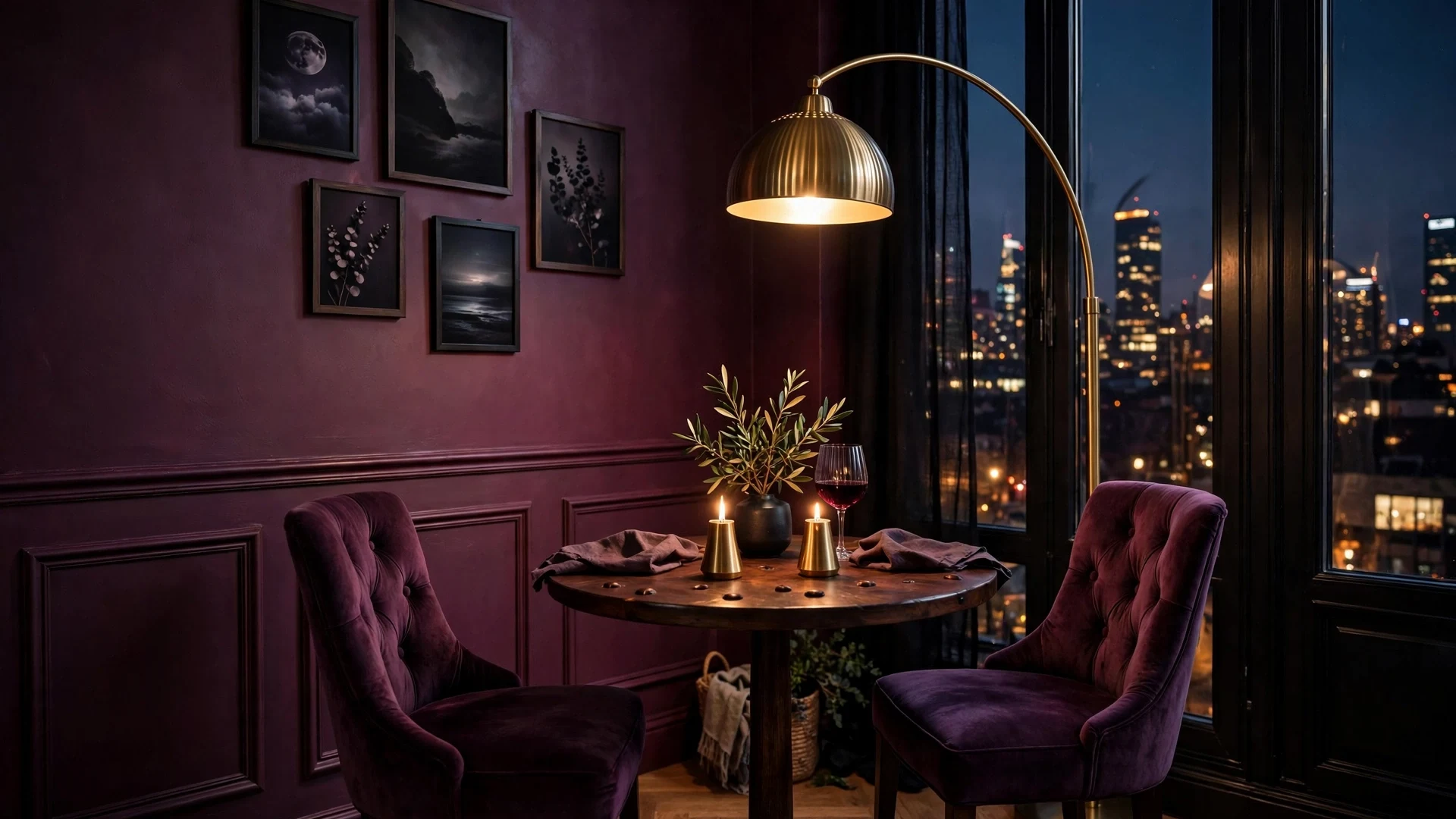
Don’t let a small dining area stop you — dark colors can make a tiny nook feel intentional and jewel-like rather than cramped. Paint a dining corner in deep plum or charcoal, add a small round table with two velvet chairs, one dramatic light source (a brass arc lamp or a small pendant), and a mini gallery wall of dark art. In small spaces, keep the floor visible and the tabletop uncluttered so the room breathes.
Mistakes to Avoid in a Moody Dining Room
Dark rooms are forgiving, but a few missteps can turn “dramatic” into “dreary.” Watch out for these:
- Skipping the dimmers. Without dimmers, a dark dining room has exactly one setting. With them, it has infinite moods. This is non-negotiable.
- Using cool-white bulbs. Anything above 3000K will make dark walls look flat and grey. Stick to 2700K or lower for warmth.
- Forgetting texture. A room where every surface is smooth matte paint will feel like a cave. Layer velvet, wood grain, linen, metal, and stone.
- Only lighting from above. A single overhead light in a dark room casts harsh shadows. Layer chandelier + sconces + candles for a flattering glow.
- Going dark with no contrast. An all-black room with black furniture and black floors can disappear into itself. Add contrast: brass fixtures, a lighter rug, warm wood, or metallic accents.
- Ignoring the ceiling. In a dark room, a bright white ceiling draws the eye up and breaks the spell. Paint it a dark tone — or at least a warm, deep neutral.
- Blocking what little daylight exists. Moody doesn’t mean lightless. Keep windows unobstructed by day with sheer or light-filtering treatments; bring on the heavy drapes for evening.
Your Moody Dining Room Quick-Start Checklist
Ready to start? Work through this list in order — each step builds on the last, and you can stop anywhere and still have a room that feels moody.
- Choose your dark: pick one wall color from the palettes above and paint at least the main wall (or go all-in).
- Swap the bulbs: replace every bulb with warm-white 2700K or lower.
- Install dimmers on the chandelier and any sconces.
- Add one dramatic light source: candles, a new chandelier, or statement sconces.
- Bring in texture: velvet chairs or cushions, a linen runner, a wool or Persian rug.
- Style the table: dark stoneware, linen napkins, and a low candle-and-foliage centerpiece.
- Hang one piece of moody art or a mirror in a dark or metallic frame.
- Finish with scent: a woodsy or amber candle ties the whole atmosphere together.
Frequently Asked Questions About Moody Dining Rooms
Will dark paint make my dining room feel smaller?
It can — but it doesn’t have to. Dark colors blur the boundaries of a room, which can actually make walls feel farther away in low light. The trick is contrast and lighting: keep the ceiling dark or coffered rather than bright white, use a rug to define the floor area, and make sure you have layered warm lighting. In a very small dining room, consider going dark on three walls and keeping one wall (or the wainscoting) slightly lighter to maintain depth.
What is the best dark paint color for a dining room?
There is no single best color, but the most reliably beautiful choices are charcoal with warm undertones, deep navy, forest green, and rich burgundy. If you’re nervous, start with navy — it reads as dramatic but familiar, and it pairs with almost any wood tone. Always test large swatches on the wall and view them at night under your actual lighting before committing, since dark colors shift dramatically between daylight and lamplight.
How do I light a moody dining room without it feeling too dark?
Layer three types of light: a dimmable chandelier over the table, wall sconces or a floor lamp for ambient fill, and candles for sparkle and warmth. Use warm bulbs (2700K or lower) everywhere, and put the main fixtures on dimmers so you can raise the light for everyday meals and lower it for atmosphere. Mirrors opposite windows or candles also multiply the light you have.
Can I do a moody dining room in an open-plan space?
Yes, with a lighter touch. Instead of painting everything dark, try one dark accent wall, a dark rug that zones the dining area, velvet dining chairs, and a dramatic pendant light over the table. These elements create a moody “moment” within the larger space without closing it in. Keep sightlines to the kitchen and living areas bright so the contrast feels intentional.
What kind of table works best in a moody dining room?
Dark wood tables (walnut, mahogany, or dark-stained oak) are the classic choice — their grain catches candlelight beautifully. Black marble or dark stone tables suit modern moody rooms, while reclaimed wood fits rustic looks. Round tables work well in smaller or square rooms since they keep conversation flowing, while long rectangular tables suit formal, dramatic dining rooms. Whatever you choose, keep the finish matte or satin rather than high-gloss, which can look harsh under low light.
Is a moody dining room expensive to create?
Not necessarily. Paint is one of the cheapest transformations in decorating, and a gallon or two of deep, rich color changes a dining room more than almost any furniture purchase. Candles, dimmer switches, and warm bulbs are inexpensive. Velvet-look cushions, a linen runner, and secondhand brass candlesticks can all be found on a budget. The chandelier is the one place worth investing, since it’s the visual anchor — but even there, vintage and secondhand options abound.
How do I keep a dark dining room from feeling gloomy during the day?
Daylight is your ally. Use sheer or light-filtering window treatments during the day so natural light pours in — dark walls look stunning in daylight, with rich undertones that disappear at night. Add a mirror to bounce light around, keep the tabletop styled but uncluttered, and choose at least a few reflective surfaces (brass, glass, polished wood) that catch daytime sun. Save the full candlelit drama for the evening.


