
15 Warm Beige Living Room Ideas
Beige gets a bad reputation. People call it boring, safe, the color of a rental apartment you couldn't be bothered to paint. But walk into a truly warm beige living room — one layered with creamy linen, honeyed wood, a soft golden glow from a table lamp, and sunlight pooling across a natural rug — and you'll feel it instantly. This is a room that hugs you back.
The secret is that beige was never meant to stand alone. It's a canvas color, and when you build on it with texture, warm undertones, and thoughtful layers, it becomes one of the coziest palettes you can choose. No wonder it's a Pinterest favorite year after year, saved to mood boards by the thousands. Whether your style leans modern farmhouse, soft minimalism, or classic traditional, these 15 warm beige living room ideas will show you exactly how to make neutrals feel rich, inviting, and anything but flat.
 living room with honey-toned oak coffee table and cream rug”/>
1. Layer Multiple Shades of Beige
The number one rule of a warm beige living room: never use just one beige. A single flat shade is what makes rooms feel bland. Instead, layer three to five tones — think ivory, oatmeal, camel, taupe, and warm sand — across your big pieces and textiles. Start with the largest surface, your sofa, in a mid-tone like warm greige or oatmeal linen. Then go lighter on the walls (a soft creamy beige) and deeper on accents like a camel leather ottoman or taupe throw pillows. This tonal layering creates depth without introducing a single bold color, and it makes the room feel curated rather than matchy. The key is keeping all the undertones warm — avoid beiges with gray or pink casts, and lean toward golden, honey, or peachy bases.
2. Pair Beige with Honey-Toned Wood
Beige and warm wood are a match made in design heaven. Honey-toned woods like oak, maple, and walnut pull out the golden undertones in beige fabrics and keep the whole room glowing. Try a light oak coffee table centered on a cream area rug, or walnut floating shelves styled against beige walls. If your floors are cool-toned or gray-washed, balance them with warmer wood furniture pieces so the beige doesn't turn chilly. Even small doses work: a wooden tray on the ottoman, acacia side tables flanking the sofa, or a teak picture ledge. The wood adds organic warmth and a subtle color contrast that stops beige from feeling one-note, and it grounds all that softness with something solid and natural.
3. Add a Cream Bouclé Accent Chair
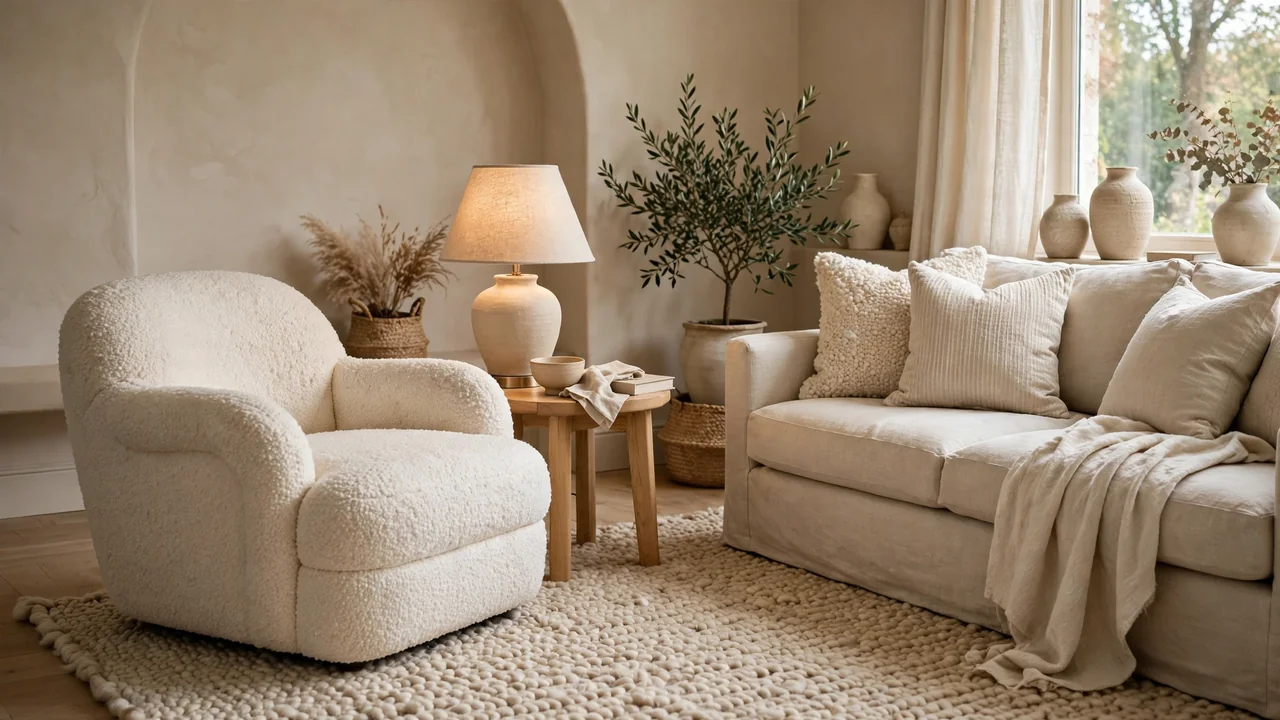
If there's one piece that instantly elevates a beige living room, it's a cream bouclé accent chair. The nubby, cloud-like texture catches light beautifully and adds a sculptural, high-end feel without any color at all. Place one angled toward the sofa with a small side table and a reading lamp to create an inviting conversation corner, or use a pair facing each other across a round coffee table for symmetry. Bouclé works in nearly every style — it reads modern in a curved silhouette, cozy-traditional in a wingback shape. Keep the rest of the chair's styling simple: a single lumbar pillow in a slightly deeper tone like caramel or wheat is all it needs. The texture does all the talking.
4. Warm It Up with Terracotta Accents
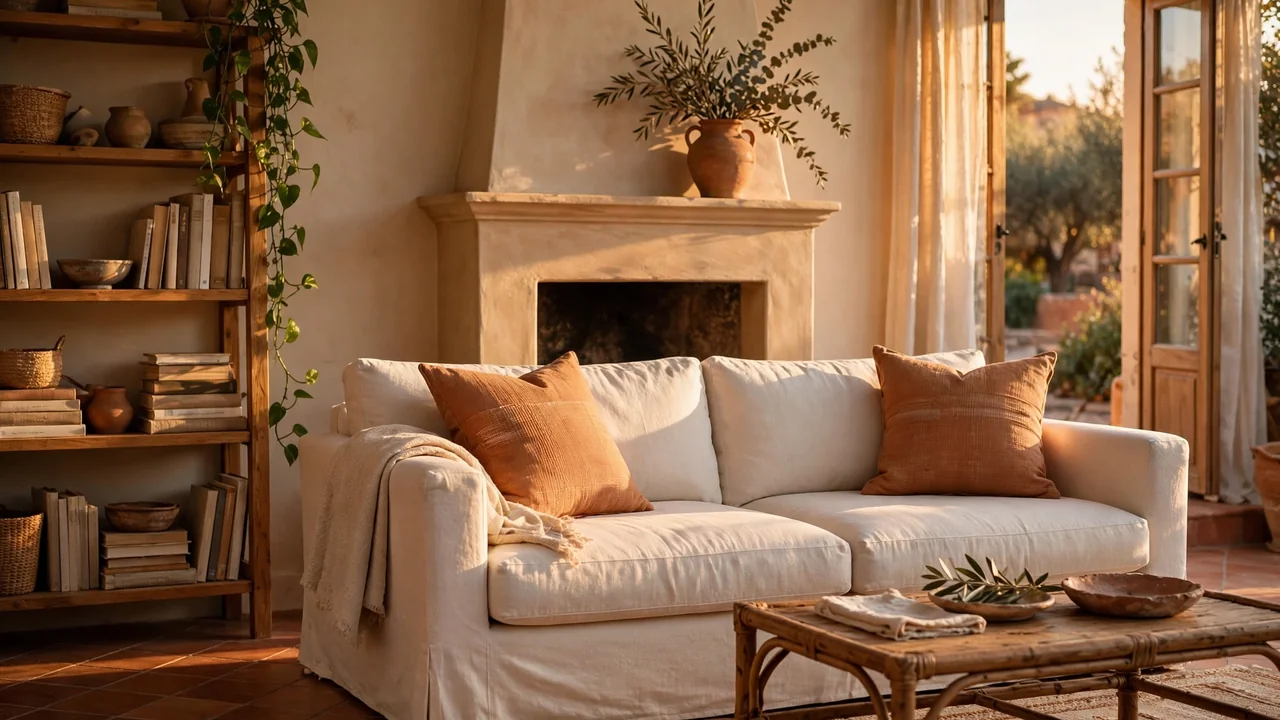
Beige's best friend might be terracotta. That sunbaked, clay-orange tone shares beige's earthy warmth but adds just enough color to make the room feel alive. You don't need much — a pair of terracotta throw pillows on an ivory sofa, a terracotta vase on the mantel, or a small clay planter with a trailing pothos on the bookshelf. For a bigger commitment, try terracotta-toned curtains or a single terracotta armchair as your statement piece. The combination feels Mediterranean and relaxed, like a villa at golden hour. It also photographs beautifully, which is why this pairing dominates Pinterest boards. Stick to muted, dusty terracotta rather than bright orange to keep the palette sophisticated and calm.
5. Use Linen Everything
Linen is the fabric equivalent of beige — natural, relaxed, and quietly luxurious. In a beige living room, lean into it everywhere: linen slipcovered sofas, linen-look curtains, linen throw pillows, even a linen-upholstered ottoman. The slightly slubby, imperfect texture of linen adds visual interest that flat cotton or microfiber simply can't, and it wrinkles in a way that looks effortlessly lived-in rather than messy. Mix weaves for richness — a chunky linen throw over a smooth linen sofa, or sheer linen curtains layered over natural woven shades. Stick to undyed and natural linen tones (flax, oatmeal, ecru) to keep the palette cohesive, and don't be afraid to mix a washed linen with a heavier Belgian-style weave for contrast. The result is a room that feels like a deep breath.
6. Anchor the Room with a Jute Rug
Every beige living room needs a textural anchor, and a natural jute rug is the perfect choice. Jute's golden-tan color sits right inside the beige family while its coarse, braided texture adds the contrast that keeps neutrals interesting. Layer it under your coffee table and front sofa legs — in a standard living room, an 8×10 or 9×12 works best so the furniture feels grounded rather than floating. For extra coziness, layer a smaller soft rug (a cream wool or vintage-style rug in beige tones) on top of the jute; this double-layer look is a designer favorite. Jute is also durable and affordable, making it practical for homes with kids or pets. Just avoid placing it in damp areas, as natural jute doesn't love moisture.
7. Create Glow with Warm Lighting
Beige can look flat and lifeless under cool white bulbs — lighting is what makes it glow. Swap any daylight or cool-white bulbs for warm white (2700K), and layer your light sources: a floor lamp with a linen drum shade in one corner, a pair of table lamps on the console or side tables, and maybe a small accent lamp on the bookshelf. The warm light bouncing off beige walls and fabrics creates that coveted golden-hour feeling all evening. Dimmers are worth their weight in gold here — being able to lower the lights for movie night transforms the mood instantly. Don't forget candles either; a cluster of cream pillar candles on the coffee table adds flickering warmth that no bulb can replicate.
8. Add Depth with Dark Brown Leather
A warm beige room needs at least one deeper tone to keep it from floating away, and rich brown leather is ideal. A cognac or saddle-brown leather armchair, a leather ottoman, or even just leather-wrapped storage baskets introduces depth, a hint of masculinity, and beautiful patina that only gets better with age. The warm undertones of brown leather harmonize perfectly with beige — unlike black, which can feel stark against soft neutrals. If a full leather chair feels like too much, start small: a leather tray on the coffee table, leather handles on a woven basket, or a leather pouf tucked beside the sofa. The mix of soft beige textiles and structured leather is what gives a room that collected, designer look.
9. Style a Beige Gallery Wall
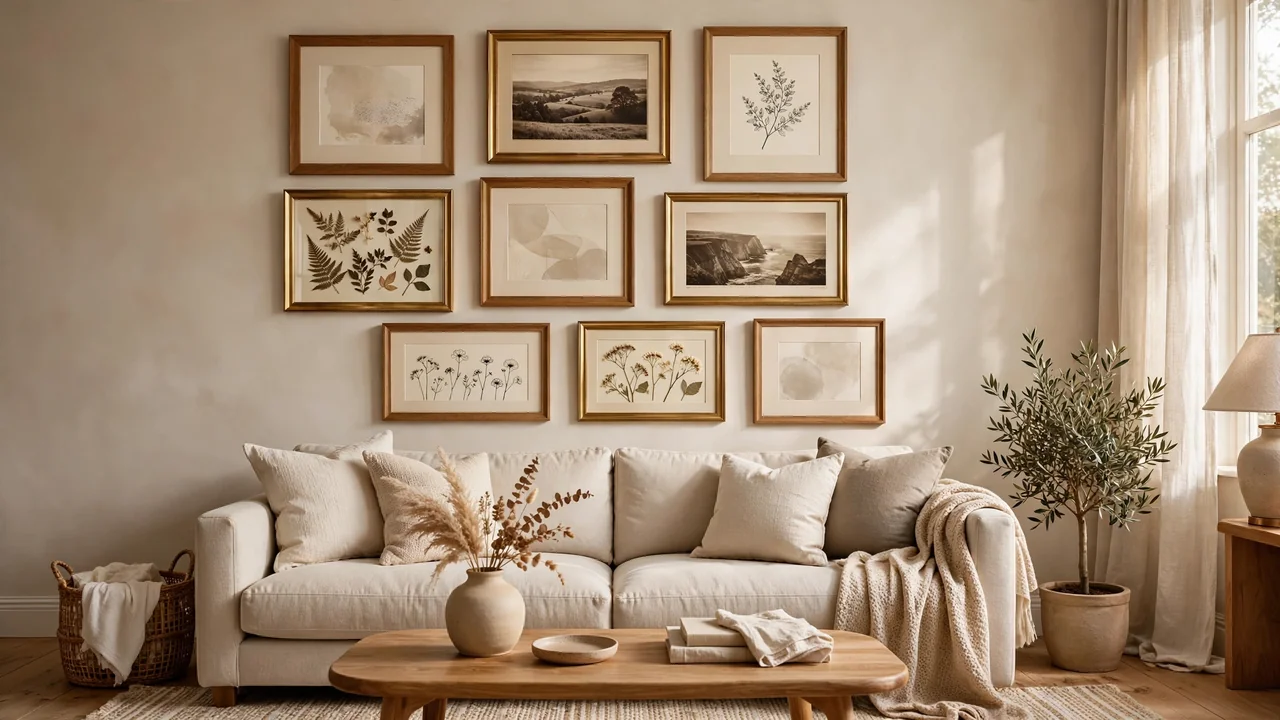
A gallery wall doesn't need bold art to make an impact. In a beige living room, curate a collection of frames in warm woods, brass, and cream mats filled with neutral art — abstract beige brushstrokes, sepia landscape photography, line drawings, pressed botanicals. Keep the frames cohesive (all thin oak, or a mix of oak and black for slight contrast) and use generous cream mats so each piece breathes. Arrange them in a loose grid or an organic cluster above the sofa or console table. The beauty of a neutral gallery wall is that it adds personality and visual interest without breaking the calm palette. Thrifted frames spray-painted in warm metallics keep this project budget-friendly.
10. Bring in Soft Black for Contrast
This might sound counterintuitive, but a touch of black is what makes beige look intentional instead of washed out. You need very little — matte black picture frames, a black metal floor lamp, black curtain rod finials, or the thin black legs of a coffee table. These small dark accents act like eyeliner for the room: they define edges, add crispness, and make all the warm beige tones around them look richer by comparison. The trick is keeping black to about 5 percent of the room — just enough to ground the palette. Too much and the calm beige mood shatters; too little and the room can feel blurry. Think jewelry, not outfit — a few well-placed dark notes are all it takes.
11. Dress the Windows in Warm White Curtains
Window treatments make or break a beige living room. Heavy dark curtains will fight the airy palette, while bare windows can feel stark. The sweet spot is warm white or ivory curtains in a natural fabric — linen, cotton-linen blends, or a soft gauze. Hang them high and wide: mount the rod 4–6 inches above the window frame and extend it 6–10 inches beyond each side so the windows look larger and the curtains frame the view rather than covering it. Floor-length panels that just kiss the floor look tailored; a slight puddle (1–2 inches of extra fabric) feels romantic and relaxed. Sheer ivory panels layered under the main curtains let you filter harsh daylight into a soft golden glow during the day.

12. Mix in Natural Stone and Travertine
Stone brings an earthy, organic quality that keeps beige rooms from feeling too "soft." A travertine coffee table or side table is the star move — its creamy beige tones blend seamlessly while the natural pitting and veining add character no manufactured material can match. Smaller touches work too: a marble tray on the ottoman, stone bookends on the shelf, an alabaster table lamp, or a bowl of smooth river stones as a centerpiece. These materials share beige's warm neutral DNA but introduce cool-to-the-touch contrast and visual weight. Mixing stone with wood and linen hits the trifecta of natural materials — every surface invites touch, which is exactly what makes a room feel cozy rather than just decorated.
13. Style Open Shelves in Warm Neutrals
If your living room has open shelving or a styled bookcase, treat it as a mini canvas for your beige palette. Group objects in warm neutrals: cream ceramic vases, woven seagrass baskets, stacks of books with tan and oatmeal spines turned outward, small wooden boxes, dried pampas grass or wheat stems in a clay vessel. Vary heights and textures — a tall vase next to a low stack of books next to a round basket — and leave some breathing room; crammed shelves feel cluttered no matter the color. Repeat materials you use elsewhere in the room (the same jute, the same oak, the same cream ceramics) so the shelves feel connected to the whole space. Step back and squint: you should see a soft, tonal composition, not individual objects shouting for attention.
14. Add Greenery for Life and Contrast
Every beige room needs something alive. Plants add the one thing beige can't — fresh green contrast — and they make neutrals feel intentional and styled rather than empty. An olive tree in a clay pot in the corner is the classic move, but a tall fiddle-leaf fig, a cluster of snake plants, or trailing pothos on a high shelf all work beautifully. Choose planters in warm materials — terracotta, woven seagrass, cream ceramic — so the pots stay in the palette while the leaves provide the pop. If you don't have a green thumb, high-quality faux stems (olive branches, eucalyptus) in a beautiful vase give you 90 percent of the effect with zero maintenance. Either way, that touch of green keeps beige from feeling like a desert.
15. Finish with Cozy Textile Layers
The final layer — and the one that makes guests want to curl up and stay — is textiles. Drape a chunky knit throw in oatmeal across one sofa arm, fold a lighter waffle-weave throw over the other, and pile on pillows in mixed sizes: 22-inch squares in back, 20-inch in front, one lumbar across the middle. Mix textures deliberately — velvet, linen, knit, faux fur — while keeping colors inside the beige family (cream, camel, taupe, wheat). Don't forget the floor: a soft sheepskin draped over the armchair or layered on the jute rug adds irresistible touchability. This is where beige truly shines, because tonal layering of textures reads as luxury. Fluff, karate-chop your pillows, and step back — your warm beige living room is done.
Styling Tips
Start with undertones, not paint chips. Before buying anything, decide whether your beige leans golden, pinky, or gray. Hold fabric swatches next to each other in natural daylight — undertones reveal themselves instantly. Mixing warm and cool beiges in one room is the fastest way to make it feel "off," so commit to one undertone family and stick with it.
Follow the 60-30-10 rule. Let beige dominate about 60 percent of the room (walls, sofa, rug), add a secondary warm neutral like camel, wood tones, or terracotta for 30 percent, and reserve 10 percent for contrast — black accents, greenery, or a single deeper color. This keeps the palette balanced and intentional.
Texture is your color. In a neutral room, texture does the visual work that bold color does elsewhere. Every time the room feels flat, don't reach for a colorful pillow — reach for a nubblier fabric, a rougher basket, or a glossier ceramic. Aim for at least five different textures in the room.
Test paint in your light. Beige paint shifts dramatically between morning and evening light. Paint large swatches (at least 2×2 feet) on two walls and live with them for two full days before committing. What looks creamy at noon can turn dingy by dusk.
Edit ruthlessly. Beige rooms show clutter more than colorful ones because there's nothing to hide behind. If a surface feels busy, remove one item. Negative space is part of the design — it lets the warm tones breathe.
Keep it clean. Beige fabrics show everything, so choose performance fabrics or washable slipcovers for high-traffic pieces, keep a lint roller handy, and vacuum upholstery monthly. A dingy beige sofa undoes all your styling work.
Frequently Asked Questions
What colors go well with a beige living room?
Beige pairs beautifully with warm whites, camel, terracotta, olive green, soft black, warm wood tones, and muted gold or brass metallics. For a fresh twist, try dusty blue or sage green as a secondary accent — both complement beige's warmth without overwhelming it. Avoid pairing beige with stark white or cool grays, which can make it look muddy or dated.
How do I keep a beige living room from looking boring?
Layer multiple shades of beige instead of one flat tone, and pile on texture — bouclé, linen, jute, knit, leather, and stone all in the same palette. Add contrast with small black accents and greenery, use warm lighting (2700K bulbs), and include at least one deeper tone like cognac leather or dark walnut. Texture and tonal variation are what separate a rich beige room from a bland one.
Is beige still in style for living rooms?
Absolutely. Warm neutrals have been dominating interior design for years, and beige specifically is having a major moment as people move away from cool grays toward cozier, warmer palettes. Designers love beige because it's timeless — unlike trendy colors, it won't feel dated in five years. The current take is warmer and more layered than the flat beiges of the 2000s.
What paint colors create a warm beige living room?
Look for beiges with golden or peachy undertones rather than gray or pink ones. Popular warm beiges include shades described as "accessible beige," "warm sand," "creamy canvas," and "golden straw" tones from major paint brands. Always test a large swatch in your own lighting before committing, since beige shifts noticeably between natural and artificial light.
Should my beige sofa match my beige walls?
Not exactly — but they should harmonize. Choose a sofa one to two shades deeper or lighter than your walls so the pieces don't blur together, and make sure the undertones match (both warm, both golden-based). If the sofa and walls are nearly identical, add contrast with a deeper rug, darker wood furniture, or textured pillows so the seating area feels defined.
How do I decorate a beige living room on a budget?
Focus on textiles and small swaps, which deliver the biggest impact for the least money. Washable beige slipcovers can transform an old sofa, thrifted frames spray-painted gold or matte black refresh a gallery wall, and affordable jute rugs anchor the whole room. Add warmth with candles, a cozy throw, and a houseplant in a terracotta pot — all under budget-friendly prices. Paint is the cheapest transformation of all if your walls need warming up.
Conclusion
A warm beige living room isn't about playing it safe — it's about mastering the art of subtlety. When you layer golden tones, mix rich textures, and light it all with a warm glow, beige becomes the coziest, most welcoming palette you can choose. Start with one or two ideas from this list — maybe the jute rug and the warm lighting — and build from there. Pin your favorites, trust your eye, and enjoy creating a living room that feels like a warm hug every time you walk in.