
15 Beautiful Blue Living Room Ideas
There is something about blue that makes a living room feel instantly calmer, as if the whole space just took a deep breath. From misty pale blues that open up a room to rich navy walls that wrap you in cozy warmth, blue is one of the most forgiving colors you can decorate with. It plays well with neutrals, loves natural wood, and pairs beautifully with brass, linen, and soft white — which means you can layer it in without starting from scratch.
Whether you are dreaming of an all-blue coastal retreat, a moody navy reading corner, or just a few carefully chosen blue accents to freshen up what you already have, this post has you covered. Below are 15 blue living room ideas, each one packed with practical styling detail so you can actually picture it in your own home. Save your favorites to Pinterest, and let us dive into the world of blue.
 white living room with white slipcovered sofa and rattan”/>
1. Paint One Wall a Rich Navy Blue
An accent wall is the simplest way to bring blue into your living room without committing the whole space. Choose a deep, saturated navy like Hale Navy or a moody ink blue and paint the wall behind your sofa or fireplace. Keep the other three walls a warm, creamy white so the room still feels bright and balanced. Style the navy wall with a large piece of artwork in a natural wood or brass frame, since both pop beautifully against dark blue. Add two or three throw pillows in lighter blue tones — chambray, sky, or powder blue — to echo the wall color on the sofa. A brass floor lamp or coffee table with gold-toned legs adds a warm metallic glow that keeps the navy from feeling too heavy. Finish with a cream or jute area rug to ground the seating area and add texture. This look works in almost any room size because the dark wall adds depth without closing the space in, especially when you keep the surrounding palette light and airy.
2. Layer Shades of Blue From Wall to Floor
One of the most designer-looking tricks you can use is layering multiple shades of blue in a single room, from the lightest sky blue to the deepest navy. Start with soft blue-gray walls as your base, then bring in a mid-tone blue area rug — something like a washed indigo or denim-inspired flatweave. On top of that, add pillows in three or four blue tones: pale powder blue, classic cornflower, and deep navy all work together when they share the same undertone. Drape a chunky knit throw in a dusty steel blue over the arm of the sofa for texture and warmth. The secret to making this layered look work is mixing materials: linen curtains, a velvet pillow or two, a woven cotton rug, and smooth ceramic vases in glazed cobalt. Stick to blues with similar undertones — either all warm or all cool — and add white and natural wood to give the eye somewhere to rest. The result feels collected and intentional rather than matchy-matchy.
3. Add a Blue Area Rug as the Anchor
If you do not want to paint anything, a blue area rug is the fastest way to transform your living room. Choose a rug with a pattern that has personality — a vintage-style Persian in faded navy and ivory, a Moroccan trellis in light blue and cream, or a modern abstract design in mixed blue tones. Size matters here: the rug should be large enough that at least the front legs of your sofa and chairs sit on it, which visually pulls the seating area together. In a living room with neutral walls and a beige or gray sofa, a blue rug instantly becomes the star. Let it guide the rest of your color choices — pull two or three of the rug's blue shades into your pillows, throws, and artwork so the whole room feels connected. Keep the coffee table simple (wood or glass) so it does not compete with the rug pattern, and add a cream or white throw to lighten things up if the rug feels dark. This one change can make a tired room feel completely new.
4. Hang Flowing Blue Curtains
Curtains in soft blue fabrics can change the mood of a living room more than almost any other single textile. Look for linen or cotton drapes in dusty blue, slate, or pale sky tones — the natural weave adds a relaxed, breezy feel that pairs perfectly with cozy furniture. Hang the curtain rod six to eight inches above the window frame and extend it a few inches beyond each side so the windows look larger and the panels stack neatly when open. Floor-length panels are a must; they should just kiss the floor or puddle slightly for a romantic, lived-in look. If your walls are white or cream, blue curtains add color without overwhelming the space. Pair them with sheer white inner curtains for a layered effect that filters light beautifully during the day. Tie the curtains back with natural jute or brass tiebacks when you want to show off the view, and echo the curtain color in a couple of throw pillows so the palette feels intentional from every angle.
5. Create a Coastal Blue and White Retreat
Nothing says relaxed beach-house living like a palette of blues and crisp whites. Start with white or very pale blue walls, then bring in shades of sea-glass green-blue, ocean navy, and sandy beige. A slipcovered white sofa is the perfect base — practical, washable, and timelessly coastal. Layer in blue through striped pillows (classic ticking stripes or Breton-style navy and white), a blue-and-white striped or braided area rug, and soft blue throws in nubby textures like waffle weave or cable knit. Natural materials are essential here: rattan baskets, a driftwood or weathered-wood coffee table, jute ottomans, and woven seagrass planters. Hang a gallery wall of framed coastal prints — seascapes, vintage maps, or simple watercolor washes in blue tones — using white or natural-wood frames for a light, airy feel. Finish with a couple of real plants in ceramic blue-and-white pots. The key is keeping the blues varied and the whites bright so the room feels sunlit and breezy rather than themed or costume-like.
6. Go Bold With All-Over Blue Walls
For a truly enveloping, cocoon-like living room, paint every wall a rich mid-to-deep blue — think teal-blue, denim, or a dusty indigo. This color-drenching technique sounds daring, but it actually makes a room feel calmer and more cohesive, especially in the evening when lamplight warms the color. Balance the deep walls with a light-colored sofa in cream, oatmeal, or soft gray linen so there is a bright focal point to rest your eyes on. Add warmth with medium-tone wood furniture — walnut, oak, or acacia pieces glow beautifully against blue. Metallic accents are your best friend here: brass picture lights, a gold-toned mirror, or copper-toned vases add sparkle and keep the room from feeling flat. Choose artwork with lighter tones — abstract landscapes, botanical prints, or photography with lots of sky — and hang them in slim black or brass frames. Keep your rug light and textured (a cream wool or ivory shag) to lift the floor. The result is a living room that feels intimate, sophisticated, and surprisingly restful.
7. Mix Blue With Warm Wood Tones
Blue and wood are a match made in decorating heaven, and this combination works in every style from rustic farmhouse to mid-century modern. If your living room has wood floors, wood beams, or warm wood furniture, blue textiles and accents will make the wood tones glow. Try a medium-blue sofa-free zone here: instead, keep your neutral sofa and add blue through a hand-knotted wool rug in indigo and cream, linen pillows in chambray and denim, and a soft blue throw. A reclaimed-wood coffee table or walnut side tables ground the blue and keep it feeling natural rather than cold. On the walls, hang a large mirror with a warm wood frame to bounce light around, and add woven baskets in natural tones for storage that doubles as decor. A few sprigs of eucalyptus or dried grasses in a blue ceramic vase tie the palette together with an organic touch. This pairing is especially lovely in rooms with lots of natural light, where the blue reads fresh and the wood reads warm.
8. Style a Navy and Brass Combination
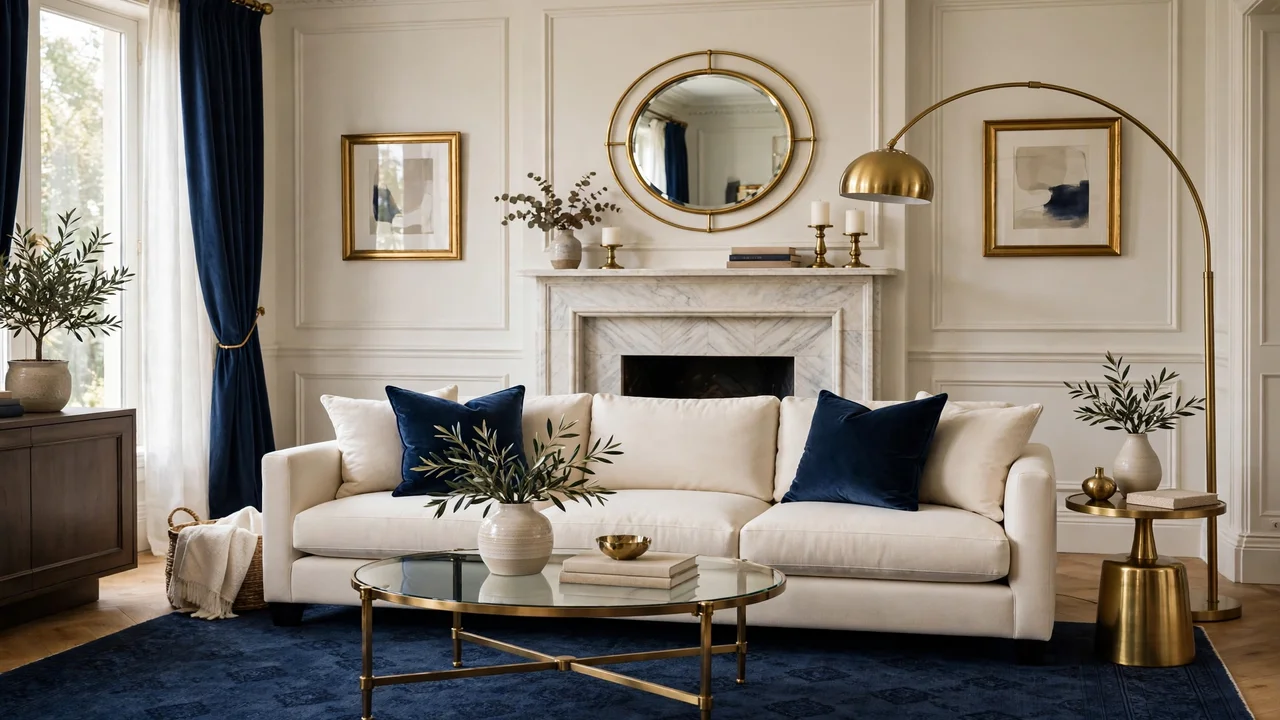
Navy blue and brass is one of those combinations that always looks expensive. Start with navy as your dominant color — a navy area rug, navy drapes, or even a navy painted bookcase or built-in. Then sprinkle brass throughout: a brass arc floor lamp, brass picture frames, a small brass side table, or brass hardware on a cabinet. The warm gold tones of brass make navy feel rich and inviting instead of stark. Balance the deep tones with plenty of cream and white — white walls (if you are not going all-navy), a cream sofa, or ivory sheepskin throws keep the room from feeling too dark. A round mirror with a thin brass frame above the fireplace or console adds light and a focal point. For texture, mix velvet (a navy velvet pillow or ottoman), smooth leather, and natural linen. This look leans traditional-meets-modern and works beautifully in living rooms with classic architectural details like crown molding, wainscoting, or a fireplace, which the navy-and-brass palette makes look even more elegant.
9. Try a Light and Airy Powder Blue Palette
If deep blues feel too heavy for your taste, a powder-blue palette keeps things light, fresh, and serene. Paint the walls a whisper-soft blue — barely there, like a morning sky — and keep the ceiling bright white. Choose upholstery in white, cream, or light gray so the room feels open and breathable. Then layer powder blue through sheer curtains, a soft blue area rug with a subtle pattern, and pillows in pale blue, blush, and cream for a gentle, romantic mix. Silver, chrome, or brushed-nickel accents (a floor lamp, curtain rods, picture frames) suit this palette better than warm metals, keeping the overall feel cool and crisp. Add a glass coffee table to keep sight lines open, and bring in greenery — a fiddle-leaf fig, olive tree, or simple potted ferns — because green and pale blue are a naturally calming pair. This palette is perfect for small living rooms or north-facing rooms that need all the brightness they can get, and it transitions beautifully through the seasons.
10. Add Blue Through Artwork and Wall Decor
Artwork is an underrated way to bring blue into your living room, especially if you are renting or not ready for paint. Choose one large statement piece with dominant blue tones — an abstract landscape, an ocean scene, or a bold color-field painting — and hang it where it will be the first thing you see when you enter the room. Build a small gallery wall around it with complementary pieces: black-and-white photography with blue mats, botanical prints, or vintage maps with blue coastlines. Use consistent framing (all white, all natural wood, or all thin black) so the collection feels curated rather than cluttered. Pull the artwork's blue tones into the room with two or three supporting pieces: a blue throw pillow, a blue ceramic vase, or a stack of books with blue covers on the coffee table. A large piece of blue-toned art above the sofa can even stand in for an accent wall, giving you the color impact without a drop of paint. Rotate art seasonally if you like — lighter blues for spring and summer, deeper indigos for fall and winter.

11. Bring in Blue With a Patterned Throw and Pillows
Sometimes the smallest changes make the biggest difference, and a fresh set of blue pillows and throws is the easiest refresh there is. Mix patterns fearlessly: pair a large-scale blue floral or botanical print with a small geometric stripe and a solid textured pillow in a coordinating blue. The trick is varying the scale (one big print, one small print, one solid) and keeping all the blues in the same family — all dusty, all bright, or all muted. Drape a patterned throw — think blue block print, Turkish towel stripes, or a cozy plaid in navy and cream — over the sofa arm or the back of an accent chair. If your sofa is gray, beige, or white, blue textiles will pop beautifully without clashing. Swap these textiles seasonally for an instant room refresh: light chambray and sky blue for spring and summer, deep navy and indigo with chunky knits for fall and winter. Store the off-season set in a lidded basket or ottoman so the swap takes five minutes. This is also the most budget-friendly idea on the list — a whole new look for the price of a few pillow covers.
12. Paint Built-Ins or a Bookcase Blue
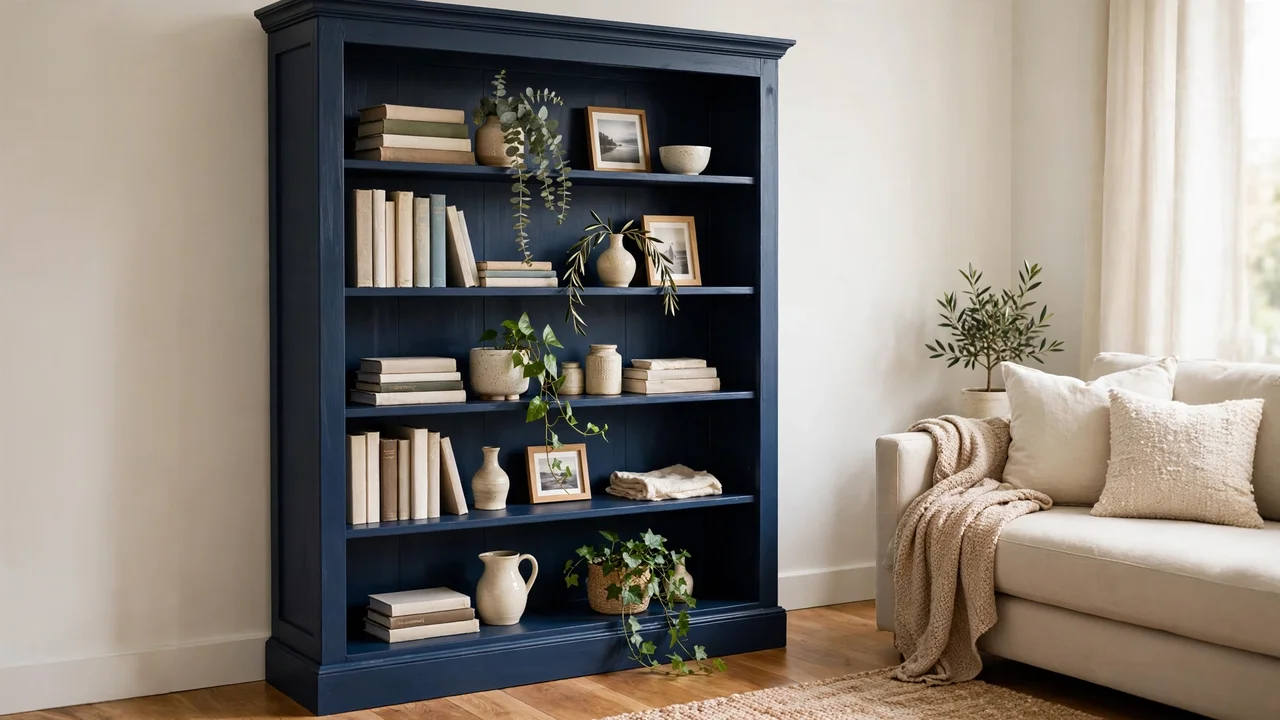
Painted built-in shelving or a freestanding bookcase in blue adds architecture and color in one move. A deep teal-blue, classic navy, or even a dusty slate blue turns ordinary shelving into a stunning focal point. If you have built-ins flanking a fireplace or TV wall, painting them blue frames the center beautifully and adds depth to the whole wall. Style the shelves with a mix of books (turn some spines inward for a neutral look, or group blue-spined books together), white and cream ceramics, small framed photos, and trailing plants. Leave some breathing room on each shelf — overcrowded shelves look cluttered no matter the color. If the bookcase is a standalone piece, paint the back panel only for a subtler effect that still gives you that gorgeous blue backdrop. Pair blue shelving with warm wood floors, a neutral sofa, and brass or black hardware for a look that feels both classic and current. This is a weekend project with a huge payoff, and it is completely renter-friendly if you use a freestanding piece.
13. Combine Blue With Crisp White Trim and Molding
There is a reason the combination of blue walls with bright white trim is a timeless classic: the crisp white makes the blue look richer and the whole room look more polished. Paint your walls a beautiful blue — anything from soft Wedgwood to deep navy — and make sure all the trim, baseboards, crown molding, and window frames are a clean, bright white. The contrast outlines the room's architecture and gives the blue a frame that keeps it feeling fresh rather than heavy. If you have wainscoting or board-and-batten, try painting the lower portion blue and keeping the upper wall white or cream for a charming cottage or farmhouse feel. Hang white or light-wood floating shelves against a blue wall for display space that pops. Keep furniture mostly neutral — cream, natural linen, light wood — and let the wall color be the star, supported by blue and white textiles that echo the palette. This combination photographs beautifully, which is why it is a Pinterest favorite, and it suits traditional, coastal, and transitional living rooms equally well.
14. Create a Cozy Blue Reading Corner
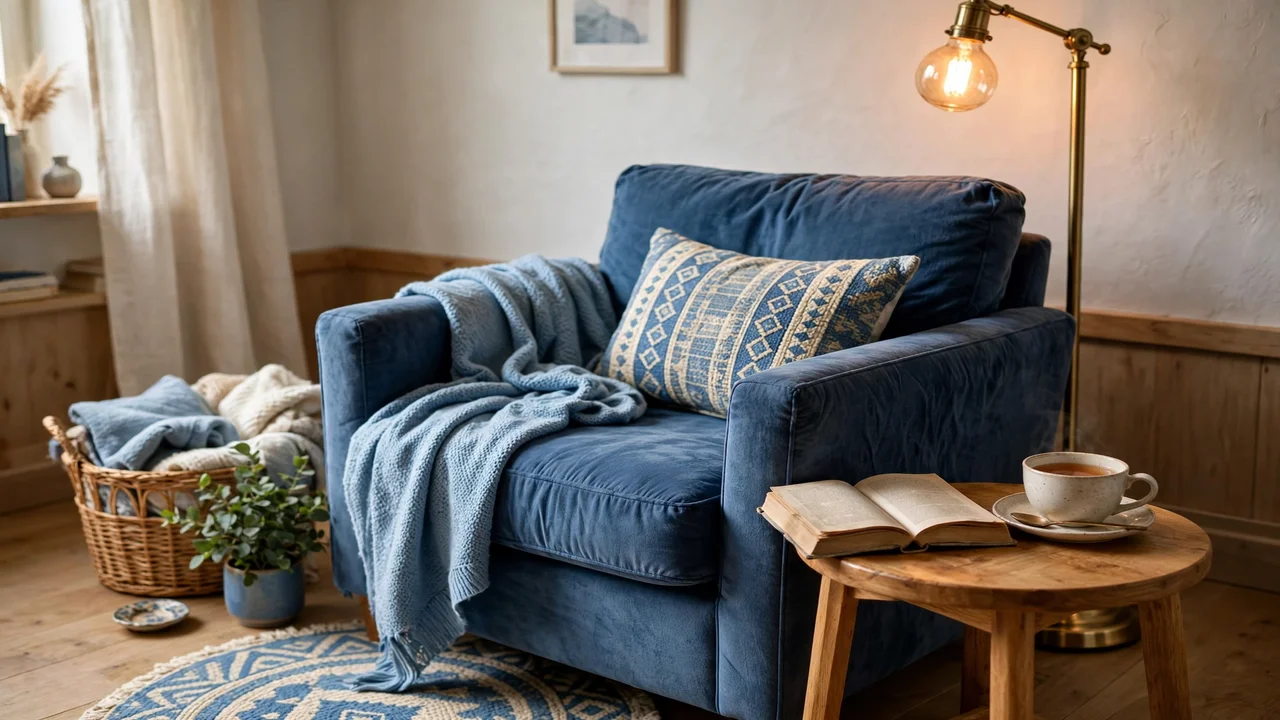
Carve out a reading nook in your living room and dress it in soothing blues for the ultimate cozy spot. Start with a comfortable accent chair — a wingback, a swivel chair, or a deep armchair — positioned near a window or in a quiet corner. Add a soft blue throw blanket and a lumbar pillow in a complementary blue pattern. A small side table in warm wood holds your book, reading glasses, and a cup of tea. Good lighting is essential: a brass or matte-black floor lamp with a warm bulb placed just behind and to the side of the chair gives you perfect reading light. If the corner allows it, paint the wall behind the chair a deep blue or hang a blue textile or tapestry to define the space and make it feel like its own little room. Layer a small round rug in blue and cream under the chair to anchor the nook. Add a floor basket for extra throws and a small plant for life. Even in a busy family living room, a dedicated blue reading corner becomes everyone's favorite seat.
15. Balance Blue With Natural Textures
The secret to a blue living room that feels warm instead of cold is layering in plenty of natural texture. Start with your blue foundation — blue walls, a blue rug, or blue upholstery pieces — then add jute, rattan, seagrass, linen, wool, and raw wood throughout the space. A jute area rug layered under or beside a blue rug adds earthy warmth. Woven seagrass or rattan baskets corral throws, magazines, and toys while adding organic texture. Choose a coffee table in reclaimed or live-edge wood, linen slipcovers or cotton-blend upholstery, and a chunky wool throw in cream or oatmeal. Dried botanicals — pampas grass, dried lavender, or eucalyptus stems — in a blue ceramic or glass vase bring a soft, natural touch. Even the curtains can do double duty: natural linen drapes in a blue-gray tone add both color and texture. These earthy materials keep blue feeling grounded and livable, and they work with every shade from the palest powder blue to the deepest midnight navy. It is the difference between a room that looks decorated and a room that feels like home.
Styling Tips
Getting blue right in your living room comes down to a few simple principles. First, decide on your blue undertone and stick with it — blues with gray undertones (slate, steel, dusty blue) feel calm and sophisticated, while blues with green undertones (teal, turquoise, sea glass) feel fresh and coastal. Mixing undertones is the most common reason a blue room feels "off," so check paint swatches and fabrics together in your room's natural light before committing.
Second, follow the 60-30-10 rule: about 60 percent of the room should be your dominant neutral (white, cream, or light gray walls and large upholstery), 30 percent your secondary blue (rugs, curtains, an accent wall), and 10 percent an accent color or metallic (brass, natural wood, or a warm complementary color like terracotta or mustard). This keeps blue feeling intentional rather than overwhelming.
Third, always balance cool blue with something warm. Blue is a cool color, so it needs warmth to feel cozy — warm wood tones, brass or gold metals, creamy whites instead of stark whites, and soft textured textiles like wool, boucle, or velvet. A room that is all cool blue and chrome can feel chilly; add one warm element for every two cool ones and the space will feel inviting.
Fourth, test paint colors on large swatches and live with them for a few days. Blue paint looks dramatically different in morning light versus evening lamplight, and a color that looks perfect on a tiny chip can feel much darker on a full wall. Paint a large poster board, move it around the room, and check it at different times of day before you commit.
Finally, layer lighting. Blue walls absorb more light than white ones, so a blue living room needs generous lighting: a mix of overhead, task, and ambient sources. Warm-white bulbs (around 2700K) flatter blue tones beautifully, while cool daylight bulbs can make blue look harsh. Add dimmers where you can so you can shift from bright daytime light to a cozy evening glow.
Frequently Asked Questions
What colors go well with blue in a living room?
Blue pairs beautifully with crisp white, warm cream, natural wood tones, and soft gray as neutrals. For accents, try brass or gold metals for warmth, and complementary warm colors like terracotta, mustard, camel, or blush to balance blue's coolness. Green (through plants) and natural textures like jute and rattan also work wonderfully with every shade of blue.
Does a blue living room make the room look smaller?
Not necessarily. Light blues like powder blue and sky blue can actually make a room feel larger and more open, much like white. Dark blues like navy can make walls recede visually, which adds depth — but in a very small, poorly lit room, all-over dark blue may feel enclosing. The safe approach for small rooms is light blue walls with navy accents, or one navy accent wall with light walls elsewhere.
What shade of blue is best for a living room?
It depends on the mood you want and your room's light. For a calm, airy feel, choose soft blues like powder blue, light slate, or pale sea glass. For drama and coziness, go with navy, indigo, or deep teal. North-facing rooms with cool light do best with warmer blues (those with a hint of gray or green), while south-facing rooms with warm light can handle cooler, crisper blues. Always test swatches in your own light.
How can I add blue to my living room without painting?
There are so many no-paint options: a blue area rug, blue curtains or drapes, throw pillows and blankets in blue patterns, blue artwork or framed prints, a painted (freestanding) bookcase, blue ceramic vases and decor, blue lampshades, and even a blue throw draped over the sofa arm. Textiles are the easiest and most renter-friendly route, and you can swap them seasonally.
Is blue a good color for a small living room?
Yes, blue can be wonderful in a small living room when used thoughtfully. Light and mid-tone blues keep the space feeling open, and a single navy accent wall can add depth without closing the room in. Keep larger pieces (sofa, rug) light, use blue in textiles and accents, and make sure the room has good lighting — warm-white bulbs and a mirror to bounce light around help a lot.
Will a blue living room go out of style?
Blue is one of the most timeless colors in interior design — it has been a decorating staple for centuries, from classic Wedgwood to coastal chic to modern navy. While specific trendy shades come and go, blue as a family never really dates. To keep your blue living room feeling current, lean on classic combinations (blue and white, navy and brass, blue and natural wood) and update small textiles every few years rather than repainting.
Conclusion
Blue might just be the hardest-working color in home decor — calming yet full of personality, classic yet endlessly fresh. Whether you go bold with navy walls, keep it breezy with coastal blues and whites, or simply layer in blue pillows and a beautiful rug, there is a shade and a style here for every living room. Start with one idea that speaks to you, live with it for a bit, and let the rest of the room evolve naturally. Your perfect blue living room is closer than you think — happy decorating!