
15 Sleek Contemporary Living Room Ideas
There's a special kind of calm that walks into a room with you when everything in it feels current, clean, and considered. That's the heart of contemporary living room style — not cold, not stark, and definitely not a museum you can't sit in. Contemporary design is about right now: the soft curves, honest materials, and easy neutrals that define how we actually want to live today.
If you've been pinning rooms that feel fresh but still cozy, you're already drawn to it. Contemporary living rooms favor open sightlines, low-profile furniture, and a palette that leans warm rather than gray-box cold. The magic is in the mix — a sleek sofa softened by a nubby throw, polished concrete floors warmed by a hand-knotted rug, minimal lines balanced with a few pieces that tell your story. Below are 15 ideas to bring that sleek, livable, right-now feeling into your own space, whether you're starting from scratch or just refreshing a tired corner.
1. Anchor the Room With a Low-Profile Sectional
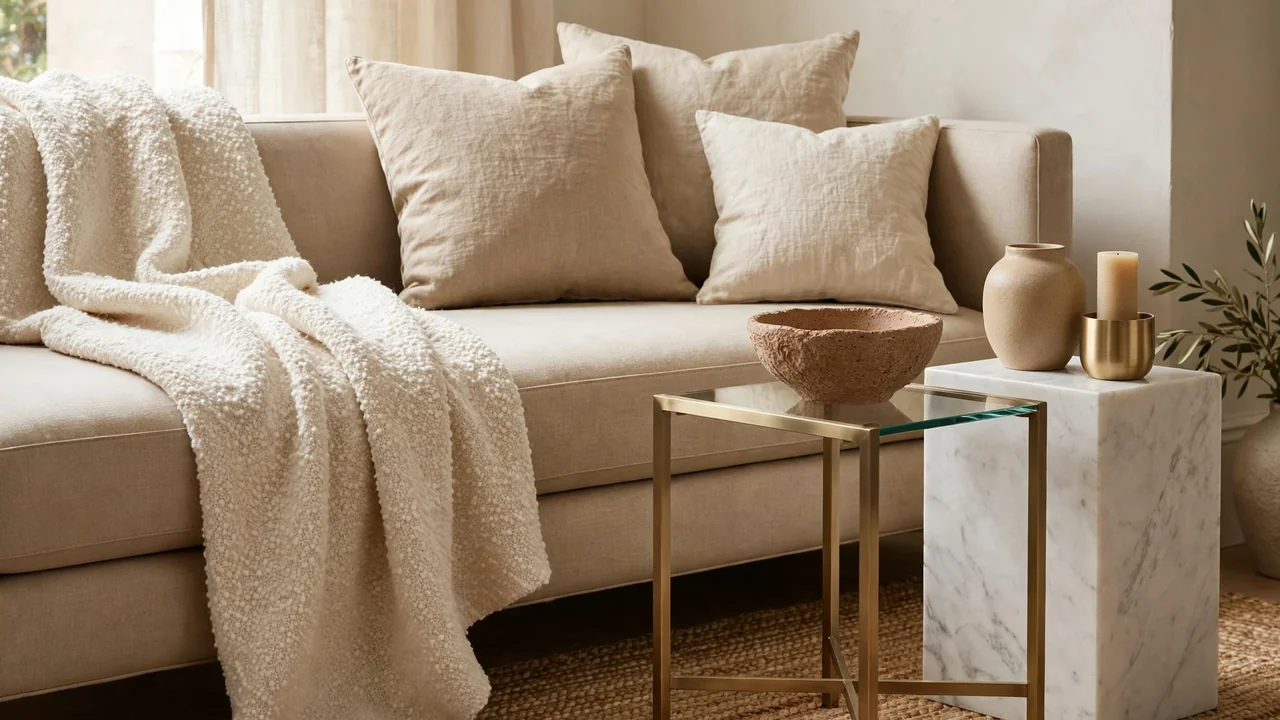
Nothing says contemporary like a sofa that sits low to the ground with clean, unbroken lines. Choose a sectional in a warm neutral — oatmeal, greige, or soft camel — with slim track arms and cushions that look tailored rather than overstuffed. The low profile keeps sightlines open, which makes even an average-sized room feel airy and connected. Float it away from the wall if you can, facing a pair of sculptural accent chairs instead of a bulky loveseat. Let the back stay low enough that you can see the artwork or windows behind it. Finish the vignette with a slim rectangular coffee table in smoked glass or travertine, and dress the sofa with two or three throw pillows in tonal linen plus one textured lumbar pillow. Keep the overall palette tight — three neutrals at most — so the shape of the furniture does the talking, and skip the skirted or pleated extras that fight the tailored look.
2. Layer Warm Neutrals Instead of Cool Grays
The contemporary palette has moved on from the icy grays of a decade ago. Today's rooms glow with warm whites, creamy beiges, soft taupes, and touches of honey and clay. Start with walls in a warm white like ivory or linen, then layer in textiles: a cream boucle throw, sand-colored linen curtains, a jute or wool rug in natural tones. The trick is varying texture rather than color — smooth leather next to nubby wool, matte ceramic next to brushed brass. This keeps a neutral room from feeling flat while staying firmly in contemporary territory. Add one grounding note, like charcoal in the rug border or a black metal floor lamp, so the warmth doesn't turn washed out. When shopping, carry a swatch of your wall color and compare fabrics in natural daylight — warm neutrals can shift pink or yellow under store lighting. Repeat each textile tone at least twice in the room (curtains echoing the rug, throw echoing the chair) so the layering feels intentional.
3. Choose a Statement Light Fixture With Sculptural Curves
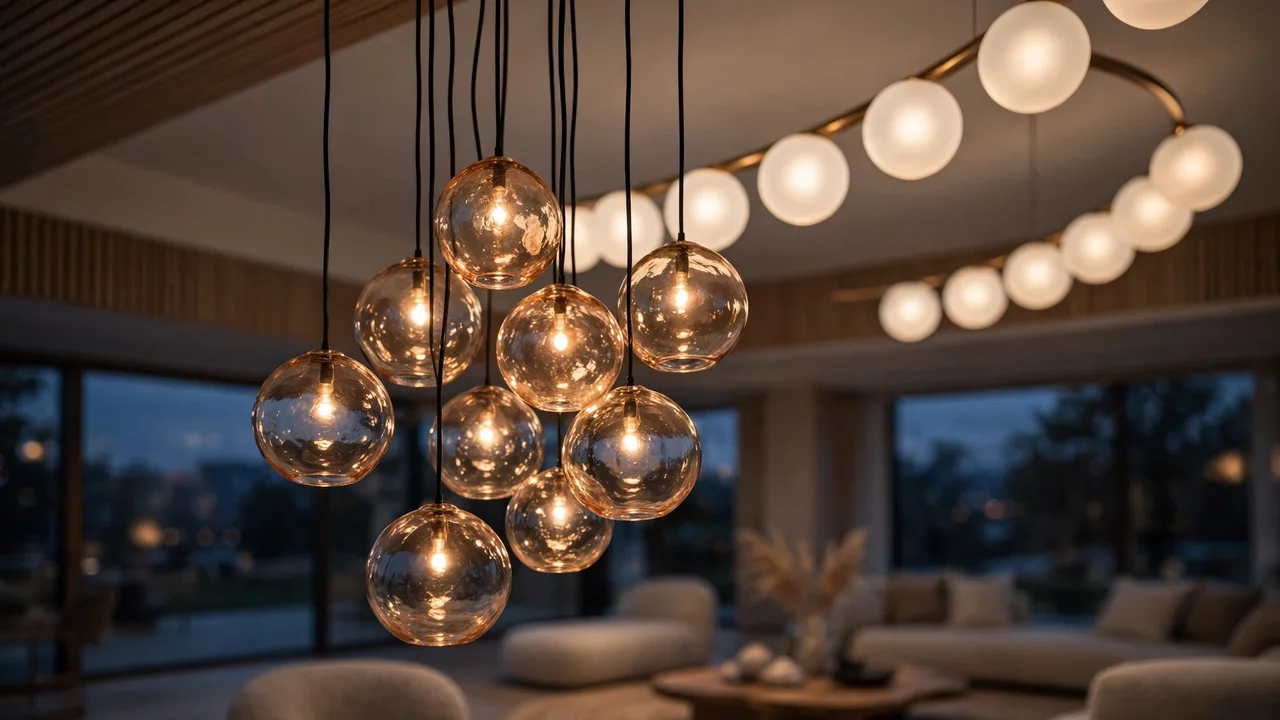
Lighting is jewelry for a contemporary living room, and one sculptural piece changes everything. Think an arched brass floor lamp that reaches over the sofa, a cluster of hand-blown glass pendants at staggered heights, or a globe chandelier in frosted white glass. Curves are key — soft arcs, domes, and pebble shapes keep the sleek lines feeling inviting rather than sharp. Hang your fixture low enough to feel intentional (about 30 to 36 inches above a coffee table for pendants) and put it on a dimmer so the room can shift from bright and functional to moody in one tap. Scale matters: the fixture's diameter should be roughly one-half to two-thirds the width of the furniture beneath it. Let the fixture stand mostly alone — no competing ceiling decor nearby — and echo its finish once elsewhere, like brass on a side-table base, so it feels connected to the room.
4. Float a Media Console in Light Wood or Stone
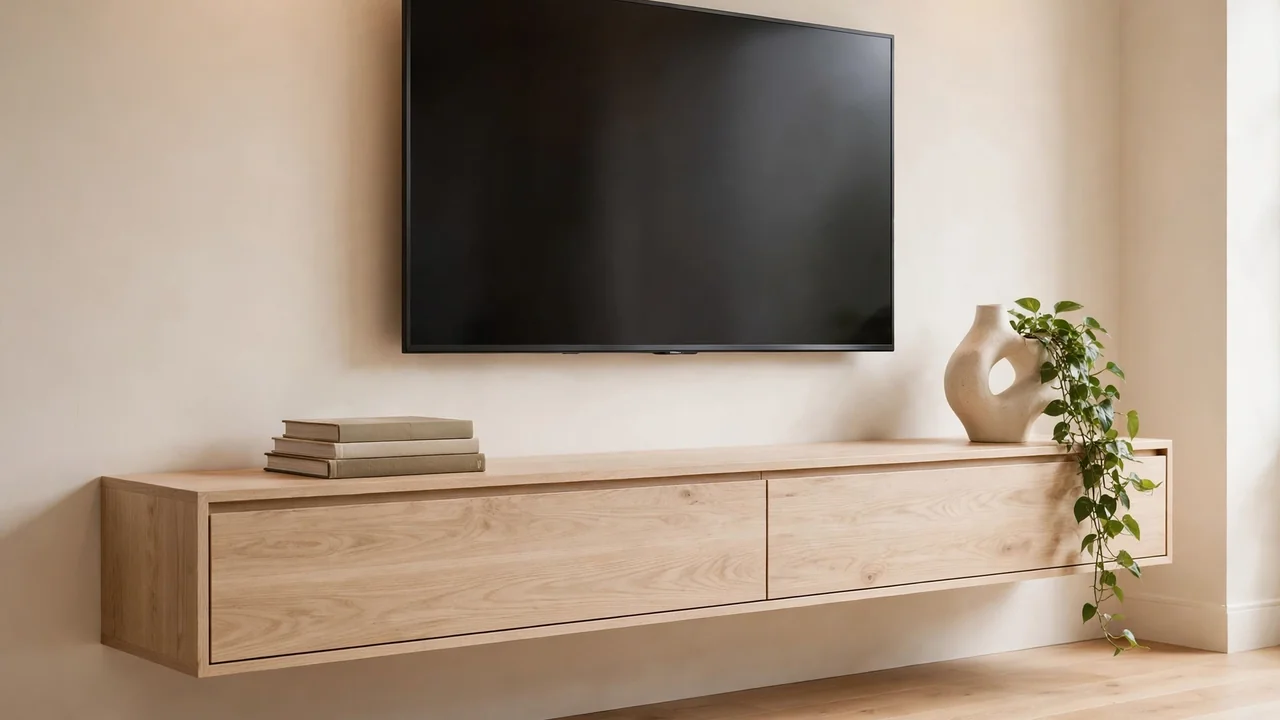
Ditch the bulky entertainment center for a floating media console mounted a few inches off the floor. A wall-mounted unit in white oak, walnut veneer, or honed stone instantly reads contemporary and makes the floor space beneath it feel lighter — a subtle trick that adds visual square footage. Keep the styling on top minimal: a low stack of art books, one sculptural vase, maybe a trailing plant at one end. Hide cables and remotes inside the closed storage so the surface stays clean. Mount the TV at eye level when seated (center of the screen roughly 42 inches from the floor) and center the console beneath it for a composed, gallery-like wall. Leave four to six inches of clear wall between the console top and the TV's bottom edge — that breathing room is what makes the arrangement feel designed rather than crammed. If you rent and can't drill, a low credenza with tall tapered legs gives nearly the same floating effect.
5. Mix Smooth and Textured Materials in Every Vignette
Contemporary rooms feel rich because of contrast, not clutter. The rule is simple: wherever you place something smooth, set something textured beside it. A polished marble side table next to a nubby wool pouf. A sleek leather chair draped with a chunky knit throw. Glass vases grouped with a rough ceramic bowl. This push-pull of textures gives the eye something to explore without adding visual noise. Aim for at least three textures in each corner of the room — think woven, honed, brushed, and soft — and repeat them around the space so the whole room feels intentionally connected rather than randomly assembled. A good formula: something nubby (boucle, chunky knit), something smooth (glass, polished stone), and something organic (raw wood, woven fiber). Touch-test as you shop — if every surface feels the same under your hand, keep mixing.
6. Go Bold With One Oversized Piece of Art
Instead of a gallery wall, contemporary style loves one large-scale artwork that anchors the room. Choose a single abstract canvas — soft brushstrokes in warm neutrals, earthy ochres, or muted blues — and size it generously: it should span roughly two-thirds the width of the sofa or wall it hangs above. Hang the center at about 57 to 60 inches from the floor for gallery height. A thin black or natural-wood frame keeps it crisp, or go frameless with a gallery-wrapped canvas for an even sleeker look. Let it breathe — give it clear wall space on both sides so it reads as the room's confident focal point. Pull one quiet color from the artwork (a clay tone, a sage) and echo it in a pillow or throw; that single thread ties the art to the furniture and makes the whole room feel pulled together.
7. Add Soft Curves Through Accent Furniture
Straight lines are a contemporary staple, but today's version leans into curves to stay welcoming. Bring them in through accent pieces: a barrel-back swivel chair, a round coffee table, a kidney-shaped ottoman, or a crescent loveseat in the reading corner. Curves soften the geometry of rectangular sofas and square rooms, and they invite people to curl up rather than sit at attention. One or two curved pieces are enough — let them be the gentle counterpoint to the room's straighter architecture. Upholster them in performance fabrics like velvet or chenille in a warm tone so they look as soft as they feel. A round coffee table is the easiest entry point: it softens the whole seating group, improves traffic flow since there are no corners to bump, and pairs beautifully with both straight sofas and curved chairs.
8. Style Open Shelving Like a Curated Gallery
If your living room has open shelves or a built-in bookcase, treat it as a gallery, not storage. Contemporary styling favors breathing room: group books both vertically and in short horizontal stacks, and break them up with objects that have interesting silhouettes — a carved wood bowl, a small stone sculpture, a framed art print leaning against the back. Stick to a restrained palette of three to four colors across the whole shelf so it feels cohesive. Leave about a third of each shelf empty; negative space is what makes the styled objects look deliberate. Edit ruthlessly — if a piece doesn't earn its place, it goes in a closed cabinet instead. Step back and squint at the shelves from across the room: you should see a balanced rhythm of tall, medium, and low shapes with no single shelf feeling heavier than the rest. Photograph the arrangement on your phone — the camera reveals clutter your eyes have learned to ignore.
9. Ground the Seating Area With a Large Area Rug
A rug that's too small is the fastest way to make a living room feel choppy. Contemporary layouts call for generous rugs: all front legs of the sofa and chairs should sit on it, which usually means an 8-by-10 or 9-by-12 for a standard seating group. Choose a low-pile wool or wool-blend rug in a warm neutral with subtle pattern — a faint geometric, a tonal border, or a hand-knotted texture that reads almost solid from across the room. The rug defines the conversation zone and visually pulls scattered furniture into one composed arrangement. Keep at least 12 to 18 inches of bare floor between the rug's edge and the walls so it frames the seating rather than swallowing the room. If your sofa floats mid-room, the rug should extend at least 6 inches beyond each arm so the whole group sits confidently inside its borders. Tape the outline on the floor with painter's tape before buying — it's the cheapest way to avoid an expensive sizing mistake.
10. Bring In Natural Wood for Warmth
Sleek doesn't have to mean cold, and natural wood is contemporary design's favorite warming agent. White oak, walnut, and warm ash show up in coffee tables, media consoles, side tables, and even slatted wall panels. The grain adds organic movement that balances the room's clean lines. Mix wood tones carefully — one dominant tone plus one accent is plenty — and repeat each at least twice around the room so nothing looks like an accident. A live-edge or lightly finished piece brings an artisanal note, while wire-brushed or matte-sealed finishes keep it feeling current. Pair wood with black metal or stone for that crisp contemporary edge. One high-impact option is a slatted wood accent wall behind the sofa or TV — narrow vertical battens in white oak add architectural rhythm and warmth in one move, and they photograph beautifully for that Pinterest-worthy finish.
11. Create a Cozy Reading Nook With a Sculptural Chair
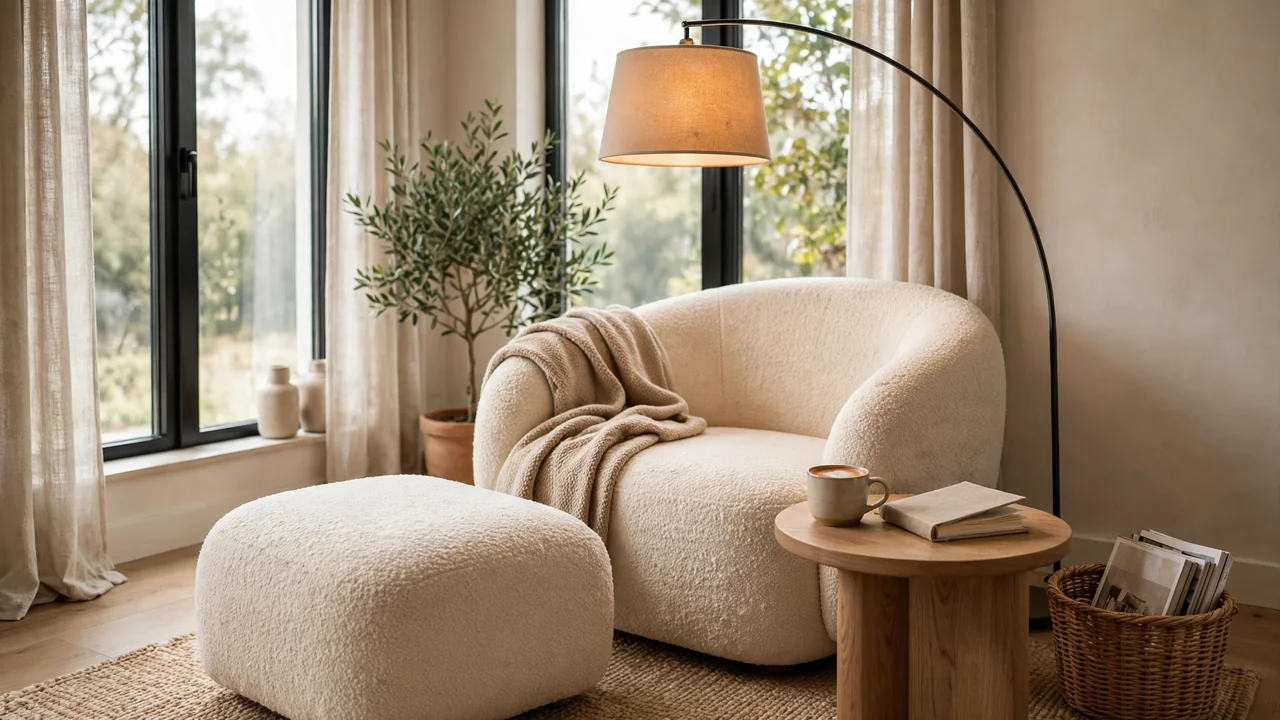
Every contemporary living room deserves one corner that invites you to sink in with a book. Tuck a sculptural accent chair — a curved bouclé armchair or a molded lounge chair with an ottoman — near a window or beside the shelving. Add a slim arc floor lamp for reading light, a small round side table for coffee, and a soft throw folded over the chair's arm. Keep the nook's palette aligned with the rest of the room so it feels like part of the design, not an afterthought. Angle the chair slightly toward the room rather than flat against the wall — it feels more inviting and catches better light. A small woven basket beside the chair corrals extra throws and magazines, keeping the corner tidy. This little zone proves contemporary rooms aren't just for show — they're built for slow Sunday mornings and real life.
12. Use Black Accents as the Room's Eyeliner
Think of black as the eyeliner of a contemporary room: a little goes a long way, and it makes everything else look sharper. Matte black shows up in curtain rods, floor-lamp frames, picture frames, cabinet hardware, and the legs of side tables. Scatter it in small doses at different heights around the room — high (a pendant cord or track), middle (frames, lamp), and low (table legs, a planter) — so the eye travels in a triangle. The contrast keeps light neutrals from floating away and gives the room definition. If pure black feels harsh, oil-rubbed bronze or charcoal achieves the same grounding effect with a softer edge. Matte finishes read more contemporary than glossy ones — they absorb light instead of reflecting it, which keeps the black accents feeling quiet and architectural rather than flashy.
13. Layer Lighting at Three Heights
One overhead light will never make a room feel finished. Contemporary rooms glow because lighting is layered: ambient (a dimmable ceiling fixture or recessed lights), task (a reading lamp by the chair, a table lamp on the console), and accent (a small uplight behind a plant, LED strips under floating shelves, a picture light over art). Distribute all three heights around the seating area and put as many as possible on dimmers or smart plugs. Warm-white bulbs around 2700K keep the sleek lines feeling cozy after dark. The goal is pools of light rather than one flat wash — that's what makes a contemporary room feel atmospheric in the evening. A simple rule of thumb: every seat in the room should be within arm's reach of a light source you can control, and every dark corner deserves at least a small glow so nothing feels forgotten after sunset.
14. Keep Window Treatments Simple and Floor-Grazing
Contemporary windows dress lightly: floor-to-ceiling panels in linen or sheer weave, hung on a slim rod mounted close to the ceiling so the window looks taller. Skip heavy valances, tiebacks, and fussy patterns — a solid warm white, flax, or soft gray lets the architecture shine. For privacy with light, layer a natural woven shade underneath the panels; the texture adds warmth while the sheers keep things airy. Panels should just kiss the floor or puddle slightly — never hover inches above it. If your view is the star, consider simple roller shades in a warm neutral that disappear when raised. Mount the rod 4 to 6 inches wider than the window frame on each side so the panels stack over the wall, not the glass — the window looks bigger and you lose none of your daylight.
15. Finish With Greenery in Minimal Planters
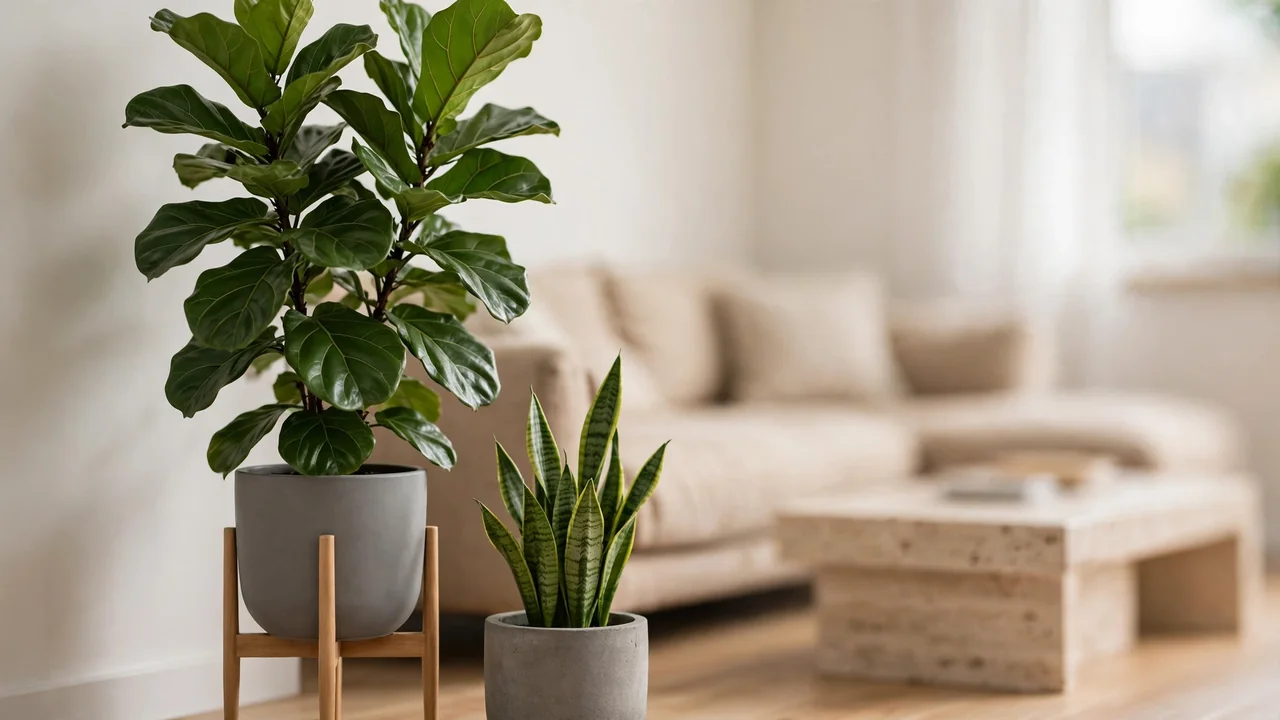
Plants are the living exclamation point in a contemporary room. Choose architectural varieties — a fiddle-leaf fig, an olive tree, snake plants, or a sculptural monstera — and house them in minimal planters: matte ceramic, concrete, or woven seagrass in neutral tones. One large floor plant in an empty corner and one or two smaller ones on shelves or side tables is the sweet spot; more than that tips into jungle territory. The organic shapes and green tones soften all those clean lines and make the room feel alive. Stick to planters in your room's palette so the greenery reads as part of the design scheme, not a separate hobby. Elevate one plant on a slim wooden stand to vary heights, and wipe broad leaves with a damp cloth every few weeks — dust dulls the green, and glossy healthy foliage is half the contemporary plant look.
Styling Tips
Getting the contemporary look right is less about buying everything new and more about editing with intention. Start by clearing the room and bringing pieces back one at a time — you'll be surprised how much sleeker a space feels when every object earns its spot. When you're shopping, choose fewer, better pieces: one well-made sofa beats a matching set of mediocre ones, and a single beautiful rug transforms a room faster than five small accessories.
Keep your color story tight. Pick a base of two warm neutrals, add one mid-tone for depth, and reserve one accent — a muted terracotta, sage, or dusty blue — for small doses in art, pillows, or a single chair. Repeating colors at least three times around the room is what makes a palette feel deliberate.
Scale matters enormously. Contemporary rooms favor fewer, larger pieces over many small ones — a big rug, one oversized artwork, a substantial coffee table. Small accessories scattered everywhere read as clutter; grouped in odd numbers on a tray or shelf, they read as curated.
Finally, live with the room before calling it done. Sit in every seat, walk the traffic paths, and notice where your eye lands. Contemporary style should feel effortless, not staged — if a corner feels stiff, soften it with a throw or a plant. The best contemporary living rooms look current but feel personal, and that balance is always worth an extra week of tweaking.
Frequently Asked Questions
What's the difference between contemporary and modern living room style?
Modern design refers to a specific historical movement — mid-century modernism, with its clean lines, teak furniture, and 1950s–60s roots. Contemporary simply means "of the moment," so it evolves: today's contemporary living rooms feature warm neutrals, soft curves, mixed textures, and sculptural lighting. Think of modern as a vintage style you can date, and contemporary as whatever feels fresh right now. They share a love of clean lines, but contemporary is warmer, softer, and constantly updating.
Can a contemporary living room still feel cozy?
Absolutely — in fact, today's contemporary style is cozier than the stark minimalism of years past. The secret is texture layering: nubby wool throws, boucle upholstery, jute and wool rugs, and warm wood tones all soften the sleek silhouettes. Layered lighting on dimmers, a few well-placed plants, and personal objects on shelves keep the room feeling human. Cozy contemporary is about contrast — clean lines wrapped in touchable materials — rather than piling on clutter.
What colors work best in a contemporary living room?
Warm neutrals are the foundation: ivory, oatmeal, greige, camel, and soft taupe. Layer them tone-on-tone and vary the textures so the room feels rich rather than flat. For depth, add one darker note like charcoal, espresso, or black in small doses. Accent colors stay muted and earthy — terracotta, sage green, dusty blue, or ochre — used sparingly in art, pillows, or a single accent chair. Avoid high-contrast brights and icy cool grays, which fight the warm, current feel.
How do I make a small living room look contemporary?
Scale and editing are everything. Choose a low-profile sofa with slim arms, float it off the wall if possible, and keep the palette light and warm to maximize the sense of air. One large rug beats several small ones, and a single oversized artwork draws the eye up instead of chopping the wall into pieces. Use floating furniture — a wall-mounted console, leggy chairs — so more floor shows, and rely on mirrors or glass tables to keep sightlines open. Every piece should be intentional; in a small contemporary room, less truly is more.
Is contemporary style expensive to achieve?
It doesn't have to be. The contemporary look is more about editing and cohesion than price tags. Start with what you own: declutter ruthlessly, rearrange for better flow, and unify the palette with affordable updates like slipcovers, new pillow covers, and a fresh coat of warm-white paint. Thrift stores and secondhand marketplaces are goldmines for solid-wood tables and sculptural lamps that fit the aesthetic. Spend your budget on the two pieces with the biggest visual impact — usually the rug and the sofa — and style around them.
How often does contemporary style change?
Because contemporary means "current," it does evolve — but slowly, in waves rather than sharp turns. The warm-neutrals-and-curves look dominating today has been building for several years and isn't going anywhere soon. To keep your room feeling current without redecorating constantly, invest in timeless big pieces (a well-made neutral sofa, a quality rug, solid wood tables) and refresh the easy layers: pillows, throws, art, and lighting. Swapping those smaller elements every couple of years keeps the room feeling fresh without a full overhaul.
Conclusion
A contemporary living room isn't about chasing trends — it's about creating a space that feels calm, current, and completely yours. Start with clean-lined, low-profile furniture in warm neutrals, layer in texture and curves to keep it inviting, and finish with sculptural lighting and one confident piece of art. Edit bravely, light warmly, and let a little greenery bring it all to life. Pin your favorite ideas from this list, tackle one corner at a time, and enjoy watching your living room turn into the sleek, cozy retreat you've been imagining.