
12 DIY Coffee Table Ideas on a Budget
There is something deeply satisfying about building your own coffee table. It is one of the few furniture projects where beginners can get truly beautiful, living-room-worthy results without a workshop full of fancy equipment. A coffee table is small, simple in structure, and endlessly forgiving — a wobble here or a rough edge there only adds to the charm when the finish is right.
Whether you are working with a couple of pallets rescued from the curb, a thrifted tabletop begging for new legs, or just a pile of lumber from the hardware store, a DIY coffee table can look every bit as good as a store-bought one for a fraction of the cost. These twelve ideas range from afternoon-easy to weekend-project satisfying, and every one of them can be customized with your choice of stain, paint, and legs. So roll up your sleeves, grab a sander, and let's build a coffee table you'll actually brag about.
1. The Classic Pallet Coffee Table
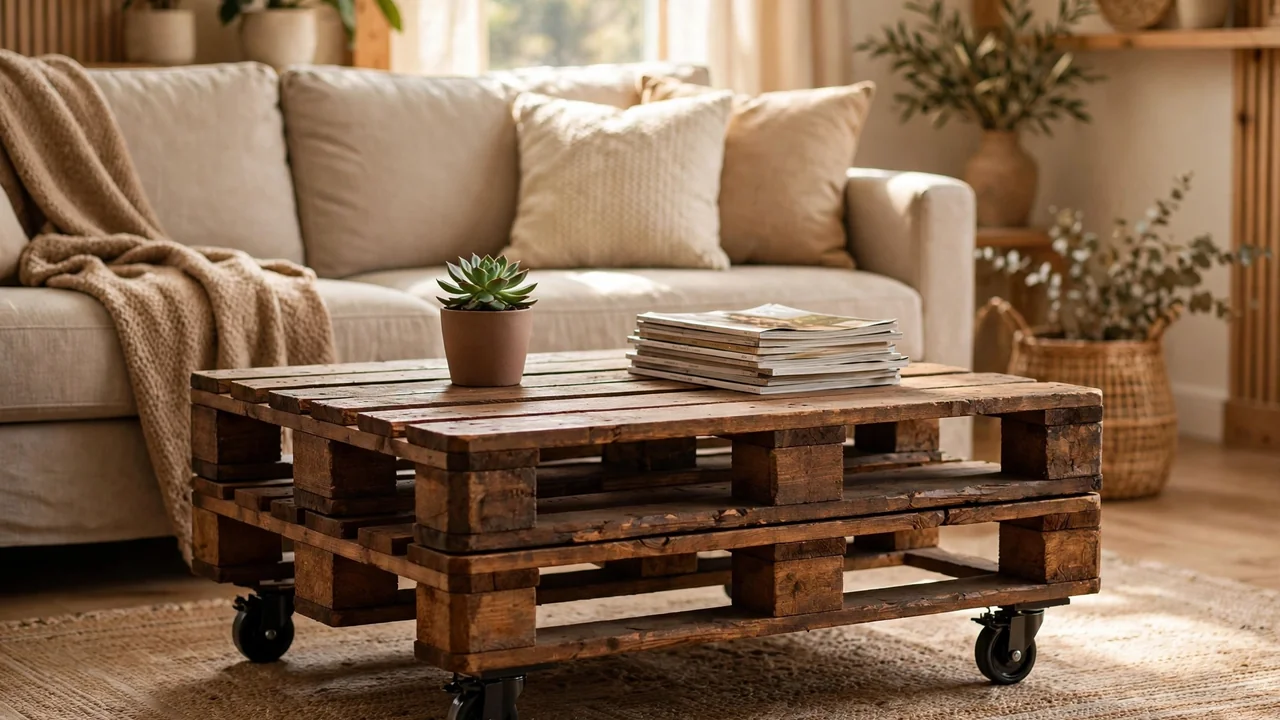
The pallet coffee table is a DIY icon for a reason: it is affordable, sturdy, and almost impossible to get wrong. Start with two matching pallets (standard 48×40 inch ones work best) and stack them for a chunky, rustic profile. Pull any splintered boards first and replace them with spare pallet wood, then sand every surface thoroughly — start with 80-grit to remove roughness, then finish with 120-grit for a smooth touch. Join the two pallets with wood screws through the bottom of the upper one into the top of the lower one. For mobility and a polished look, attach four swivel caster wheels to the underside, making sure at least two have brakes so the table doesn't wander on smooth floors. Finish options are endless: a rich dark walnut stain for farmhouse warmth, whitewash for a beachy feel, or plain matte sealer to show off the weathered wood grain. Add a piece of glass or a thin plywood panel over the top if you want a perfectly flat surface for drinks.
2. Hairpin Leg Plywood Top
Few projects deliver this much style with this little effort. Hairpin legs — those slim, mid-century steel legs — paired with a simple wood top look expensive, but the whole build can come together in a single afternoon. Buy a pre-cut plywood round or rectangle from the hardware store (or have them cut a sheet to your exact dimensions), then edge-band the sides with iron-on veneer tape for a clean, finished look. Sand the top with 120-grit paper, wipe it down, and apply two or three coats of your chosen stain or polyurethane. The legs screw directly into the underside with a mounting plate — just mark your positions with a square so all four sit evenly, pre-drill pilot holes, and drive the screws in. Standard coffee table height is 16 to 18 inches, so choose leg height accordingly. A walnut-stained top with black hairpin legs reads modern and sleek, while a light oak finish with brass-colored legs feels warm and Scandinavian. This is the perfect first project if you have never drilled into anything before.
3. Wooden Crate Coffee Table
Four wooden crates, a piece of plywood, and some screws — that's genuinely all it takes. Arrange the crates in a square with their open sides facing outward, which instantly gives you four hidden storage cubbies for books, blankets, and remotes. Secure the crates to each other with short wood screws through the side walls, then screw a plywood base underneath to keep the whole assembly rigid. For the top, you can either leave the crate tops exposed for a rustic patchwork look or cap it with a plywood sheet sanded smooth and stained to match. Sand everything before assembly so you don't have to work around corners later, and fill any gaps between the crates with wood filler for a cleaner look. A coat of chalky matte paint in a soft color — sage green, warm white, or dusty blue — transforms ordinary shipping crates into a piece that looks like it came from a boutique. This design is a small-space hero because it doubles as storage.

4. Live-Edge Slab Table
A live-edge slab — a piece of wood with its natural bark edge preserved — is the fastest route to a coffee table that looks like a one-of-a-kind work of art. You can find slabs at local sawmills, reclaimed lumber yards, and even online marketplaces, often surprisingly cheaply if you are willing to sand and finish the piece yourself. Choose a slab roughly 40 to 48 inches long and 18 to 24 inches wide, checking that it is reasonably flat and free of major cracks. Sand it progressively from 60-grit up to 220-grit, always working with the grain, and seal any small cracks with tinted epoxy for a professional touch. Finish with several coats of hardwax oil or polyurethane to protect it from rings and spills. For legs, simple options work best so the wood stays the star: hairpin legs, a pair of steel trapezoids, or even two smaller slabs as trestle ends. One coat of food-safe oil can also be used if you prefer a natural, low-sheen look.
5. Farmhouse Plank Coffee Table
Nothing says cozy like a chunky farmhouse coffee table built from thick planks. This design uses two-by boards — typically 2×8 or 2×10 lumber — laid side by side for the top, with a sturdy lower shelf for baskets and books. Cut your planks to about 44 inches long, then join them edge to edge with pocket-hole screws or simple battens screwed underneath; clamp them tightly while fastening so the seams sit flush. Build the base as a simple box frame from 2×4 lumber: four legs joined by apron boards on all sides, with a lower shelf of the same planks resting on cleats inside the frame. Sand everything with 100-grit followed by 150-grit, then apply a weathered gray or warm honey stain — farmhouse style loves visible grain. A final coat of matte polyurethane protects the top from everyday life. Because the pieces are chunky and joined with screws, this table is rock solid and can take years of feet-up, game-night, coffee-spill living room action.
6. Mid-Century Tapered Leg Table
That iconic mid-century look — a clean rectangular top on slender, tapered legs — is easier to build than it appears. The top can be a simple solid-wood panel or a plywood board with edge banding, cut to around 46 by 22 inches for classic proportions. Tapered legs are widely sold as pre-made parts, or you can make your own by cutting 2×2 lumber at a slight angle on each side with a jigsaw and sanding smooth. Attach the legs with angled mounting brackets or simple metal corner plates, which splay the legs outward at the classic mid-century angle. A thin apron frame under the top hides the mounting hardware and gives the table a more finished, furniture-store look. Finish with a warm teak-toned stain and a satin clear coat to capture that 1960s glow, or go with a light natural oil finish for a softer Scandinavian take. Add a small drawer under one end if you want a spot for remotes and coasters.

7. Concrete Top Coffee Table
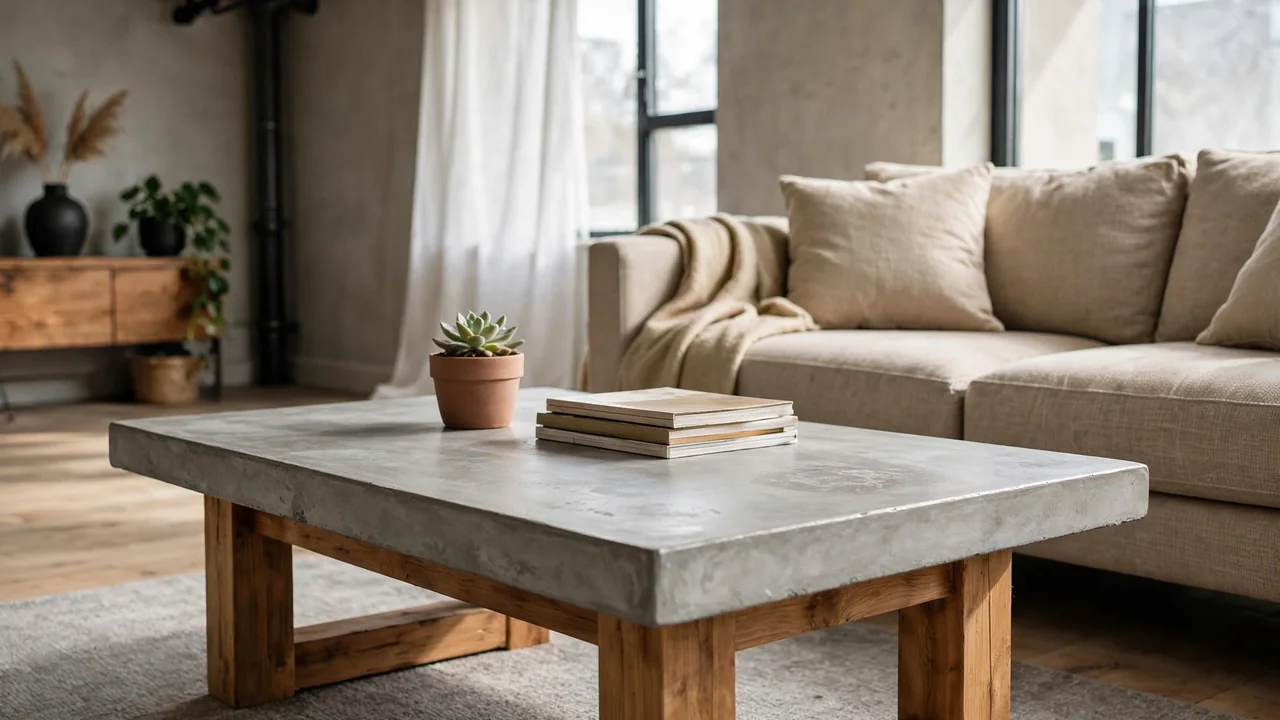
A concrete coffee table sounds intimidating, but a small tabletop is one of the most forgiving concrete projects you can try. Build a simple rectangular mold from melamine-coated particle board (concrete won't stick to the slick melamine surface), sized about 40 by 20 inches with 2-inch sides. Mix a bag of concrete countertop mix to a thick, pourable consistency, pour it in, and vibrate the mold by tapping the sides to release air bubbles — this is the secret to a smooth surface. Let it cure for at least 48 hours before removing the mold, then sand the top with wet diamond pads or fine sandpaper, working up to 400-grit for a silky finish. Seal it with a concrete sealer to resist stains, and pair it with warm wood legs — chunky timber legs balance the cool industrial top beautifully. The result is a genuinely unique, conversation-starting piece with a stone-like feel that stores sell for serious money.
8. Reclaimed Door Coffee Table
An old wooden door has the perfect proportions for a coffee table top — long, sturdy, and full of character. Hunt for solid wood doors at salvage yards, Habitat ReStore-type shops, or curbside finds; paneled doors add instant architectural detail. Cut the door to coffee-table length (about 42 inches), then fill the panel recesses or leave them for texture — either way, sand thoroughly and seal with polyurethane so the surface is drink-safe. For the base, the simplest route is four short wooden legs or a pair of sawhorse-style supports, attached with sturdy brackets. Keep the door's original paint for a shabby-chic look, or strip it back to bare wood and restain for rustic elegance. Check for lead paint on very old doors and seal or strip accordingly. This project is a wonderful way to keep a piece of history in your home, and the worn edges and patina are things money simply can't buy new.
9. Storage Trunk Coffee Table
If your living room needs storage more than it needs another surface, build a coffee table that's secretly a trunk. The simplest version is a plywood box: cut top, bottom, and four sides from 3/4-inch plywood, join them with wood glue and screws, and add a hinged lid using a pair of sturdy hinges plus a soft-close or lid-stay hinge so it doesn't slam on little fingers. Line the inside with felt or leave it bare, and add a lockable latch if you want it child-safe. Dress up the outside with trim molding around the lid edge, corner brackets, and a rich stain or deep paint color — navy, forest green, or classic black all look sharp. Casters on the bottom make it easy to roll aside for cleaning. This is the ultimate family-room piece: blankets, board games, and toys disappear inside, and the lid is a perfectly usable surface for trays and feet alike.
10. Round Drum Table
A round coffee table softens a room full of straight lines, and the drum style is wonderfully simple to build. The body can be a large wooden cable spool, a cut-down barrel, or a cylinder built from flexible plywood bent around two round top and bottom discs — the bent-plywood version is lighter and lets you choose the exact diameter. Aim for about 32 to 36 inches across and 16 to 18 inches tall. Wrap the sides in anything from woven cane webbing to thin vertical wood slats spaced evenly for a ribbed, designer look. The top can be the same material or a contrasting wood round for visual interest. Sand all edges smooth, stain or paint to match your room, and seal well. A round drum table is especially kind in small living rooms and homes with toddlers, since there are no sharp corners to bump into — and it tucks beautifully between a sofa and an accent chair.
11. Industrial Pipe and Wood Table
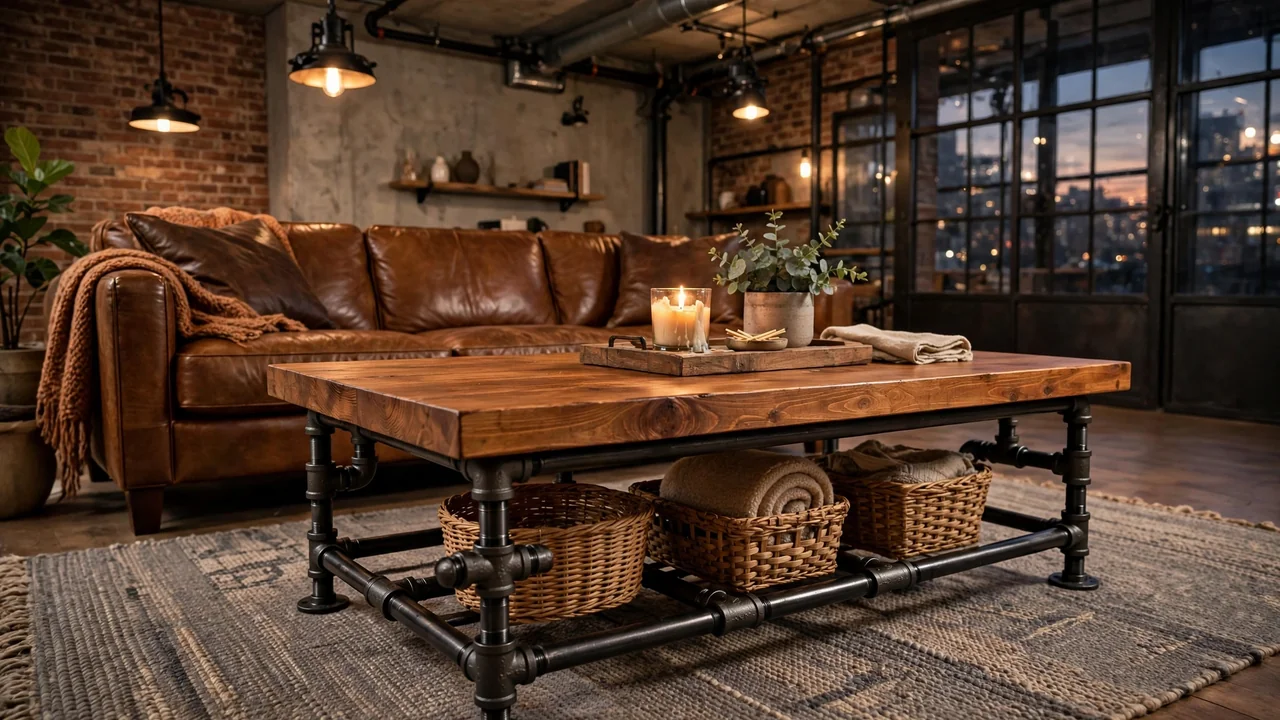
The pipe-and-wood look brings an urban loft vibe to any living room, and it requires almost no woodworking skill. The frame is built from standard plumbing pipe and fittings — flanges for feet, elbows and tees for the structure — all threaded together by hand with a bit of muscle; no welding needed. A typical design uses four vertical pipes as legs, connected by horizontal pipes underneath that double as a lower shelf support. The top is simply a solid wood slab, butcher-block panel, or thick planks laid across the frame and secured with screws up through the flanges. Clean the pipes with mineral spirits to remove the oily coating, then leave them raw, spray them matte black, or seal them with clear coat depending on your style. Sand and stain the wood top warmly to balance the cool metal. Measure twice before buying fittings — pipe threads are unforgiving — and use a level during assembly so your table doesn't rock.
12. Ottoman-Style Upholstered Coffee Table
An upholstered coffee table — essentially a large, firm ottoman — doubles as extra seating and a footrest, and building one is mostly about stapling. Start with a plywood box or a sturdy wooden frame about 36 by 24 inches and 15 inches tall, with a solid plywood top. Wrap the entire thing in 2-inch high-density foam, cutting the foam with an electric carving knife for clean edges, then stretch your chosen fabric over the top and staple it tightly underneath, folding the corners like a gift box. A durable fabric like canvas, denim, or performance upholstery fabric stands up to daily use; a patterned fabric can become the room's statement piece. Finish the bottom with short wooden bun feet or a hidden recessed base. Add a large tray on top and it functions exactly like a coffee table — drinks stay level, remotes stay put — while remaining soft enough to put your feet up without a worry.
Styling Tips for Your DIY Coffee Table
Building the table is only half the fun — styling it is where your personality shines through. The golden rule of coffee table styling is the rule of three: group your decor in odd-numbered clusters of three or five items, which feels naturally balanced to the eye. Start with something tall, like a vase of eucalyptus or pampas grass, then add something flat, like a stack of two or three beautiful books, and finish with something small and textural, like a candle or a little ceramic bowl.
Use a tray to corral smaller items — it keeps the table looking intentional rather than cluttered, and you can lift the whole tray off in seconds when you need the surface for game night. Vary your heights and materials: pair smooth ceramics with rough wood, glass with woven baskets underneath, metallic candle holders with a linen runner. Leave some breathing room too — a coffee table that is completely covered feels chaotic, while one with a little empty space feels calm and curated. And don't forget the lower shelf if your build has one: woven baskets there hide remotes, chargers, and coasters while adding warmth and texture. Finally, style for real life — if you actually put your feet up or eat dinner in front of the TV, keep one side of the table clear and decorative on the other, so the table works as hard as it looks good.
Frequently Asked Questions
What is the standard height for a DIY coffee table?
Most coffee tables sit between 16 and 18 inches tall, which puts the surface roughly level with or just below your sofa seat cushions. If your sofa is particularly low or deep, aim for the lower end of that range; for taller, firmer sofas, 18 inches works better. When in doubt, measure your sofa seat height and match it within an inch or two.
What tools do I need to build a coffee table?
For most of the projects above, the essentials are a drill/driver, a sander (an orbital sander saves hours), a tape measure, a square, clamps, and a saw — a circular saw or jigsaw handles nearly every cut a coffee table needs. Add wood glue, screws, sandpaper in several grits, and your chosen stain or paint. You don't need a table saw, planer, or any advanced shop tools to get great results.
What is the cheapest way to build a coffee table?
Pallets and reclaimed wood are the budget champions — pallets are often free from local businesses, and old doors or crates can be found cheaply at salvage shops. Pairing free or cheap wood with hairpin or simple wooden legs keeps costs minimal. Sanding thoroughly and finishing well is what makes budget materials look expensive, so invest your effort in the finish rather than the lumber.
How do I make a DIY coffee table sturdy and wobble-free?
Wobble usually comes from uneven legs or a loose frame, not from the design itself. Always pre-drill pilot holes before driving screws, use wood glue alongside screws on every joint, and check the table with a level as you assemble it. For leg-mounted designs, mounting plates with multiple screws per leg distribute the load much better than a single screw. If a finished table rocks slightly, adhesive felt pads or adjustable levelers on the feet fix it in seconds.
What finish should I use to protect a coffee table top?
For a table that will hold drinks, polyurethane is the most practical choice — two to three thin coats of water-based poly in satin or matte protect against rings and spills without looking plasticky. Hardwax oil gives a more natural, low-sheen feel and is easy to spot-repair, though it needs reapplication every year or so in hard-use spots. Always let your stain dry fully before top-coating, and lightly sand with fine-grit paper between coats for the smoothest result.
Can a beginner really build a coffee table in a weekend?
Absolutely — several ideas in this list, like the hairpin-leg top, the crate table, and the pallet table, can be finished in a single afternoon once you have your materials. More involved builds like the farmhouse plank table or the concrete top are comfortable weekend projects if you let glue and finishes dry overnight between steps. Start with the simplest project that excites you; success on an easy build gives you the confidence for bigger ones.
Conclusion
A coffee table might be the most rewarding project in all of DIY home decor — it's small enough to finish, simple enough for beginners, and visible enough that you'll enjoy the results every single day. Whether you go rustic with pallets, sleek with hairpin legs, or bold with concrete, the table you build will carry a story no store-bought piece ever could. Pick the idea that speaks to you, gather your materials this weekend, and build something beautiful. Your living room — and your wallet — will thank you.