
12 Kitchen Flooring Ideas
There's something quietly magical about a kitchen floor. It's the surface your bare feet touch every morning, the backdrop to midnight snacks and Sunday breakfasts, and — let's be honest — the workhorse that handles every dropped egg, spilled coffee, and flour-dusted baking session without complaint. Yet when we plan a kitchen refresh, we often fuss over cabinets and countertops while the floor gets whatever is easiest. That's a missed opportunity, because the right flooring can completely change how your kitchen feels: warmer, brighter, bigger, or cozier.
Whether you're renovating from scratch or just dreaming (we've all been there, scrolling inspo at midnight), these 12 kitchen flooring ideas will show you what's possible. From timeless classics like warm wood and marble-look tile to playful patterns like checkerboard and herringbone, each idea below comes with practical styling notes so you can picture it in your own home. Let's find the floor that makes your kitchen feel like yours.
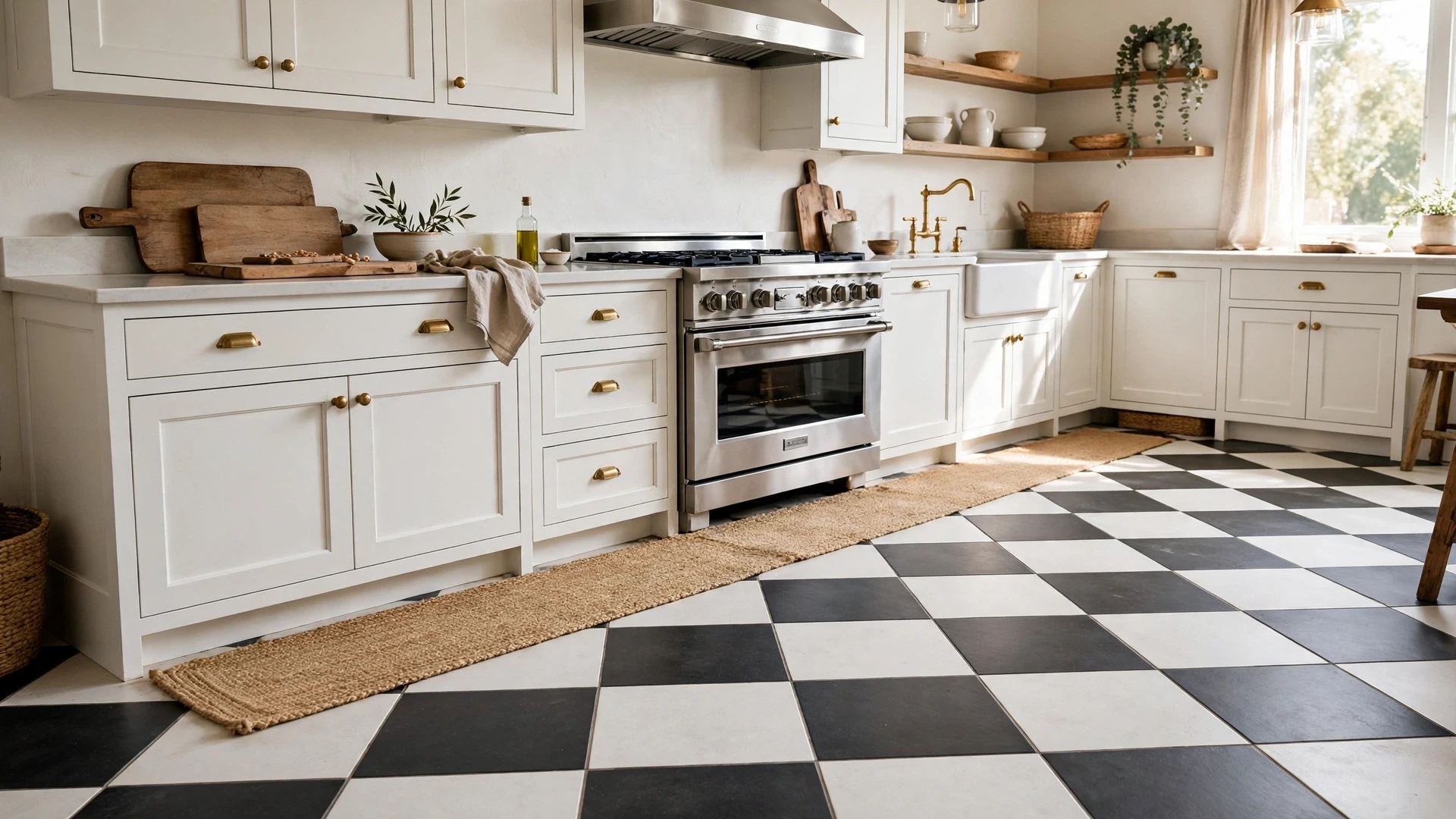
1. Classic Checkerboard Tile
Few floors say "kitchen" quite like black-and-white checkerboard. This timeless pattern has graced farmhouses, bistros, and vintage diners for generations, and it still feels fresh today because it pairs with absolutely everything. The high contrast grounds white cabinetry, pops against soft sage or cream walls, and adds instant character to an otherwise plain space.
For a modern take, try oversized 12-inch tiles in matte finish rather than the small glossy squares of decades past — the bigger scale feels calmer and more contemporary. To keep the look from feeling stark, layer warmth on top: a natural jute or low-pile wool runner along the cooking zone, warm brass hardware, and wooden cutting boards left out on the counters. Grout matters here too — charcoal or light gray grout softens the grid instead of making it look harsh. Checkerboard is wonderfully forgiving of dirt and crumbs, which is exactly what you want in the hardest-working room of the house.
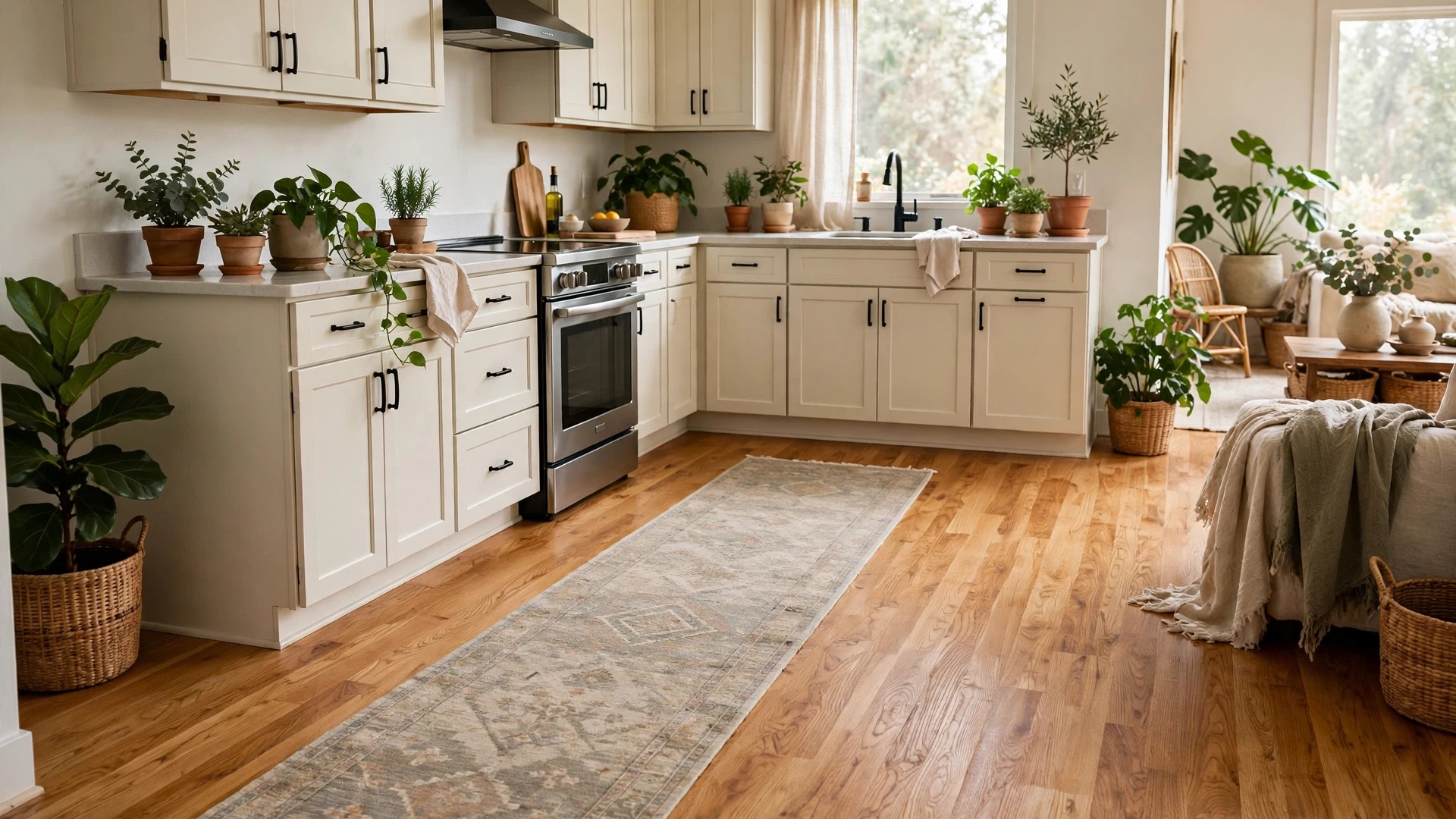
2. Warm Oak Hardwood
Nothing beats the warmth of real wood underfoot, and oak remains the most beloved choice for kitchen floors for good reason. Its natural grain adds texture and movement, its honey tones make white kitchens feel inviting instead of sterile, and it ages gracefully, developing a soft patina that new floors simply can't fake. Oak also visually connects your kitchen to adjoining living spaces, making open floor plans feel seamless and larger.
If you're worried about water, choose site-finished or prefinished oak with a strong polyurethane seal, and wipe up spills promptly — most modern finishes handle everyday kitchen life beautifully. White oak (cooler, more neutral) suits contemporary and Scandinavian kitchens, while red oak (warmer, rosier) feels right at home in traditional and farmhouse spaces. Style it with cream or soft-white cabinets, black or oil-rubbed bronze hardware for contrast, and plenty of greenery. A long runner in a muted pattern over the main walkway adds comfort and protects the finish where you stand most.
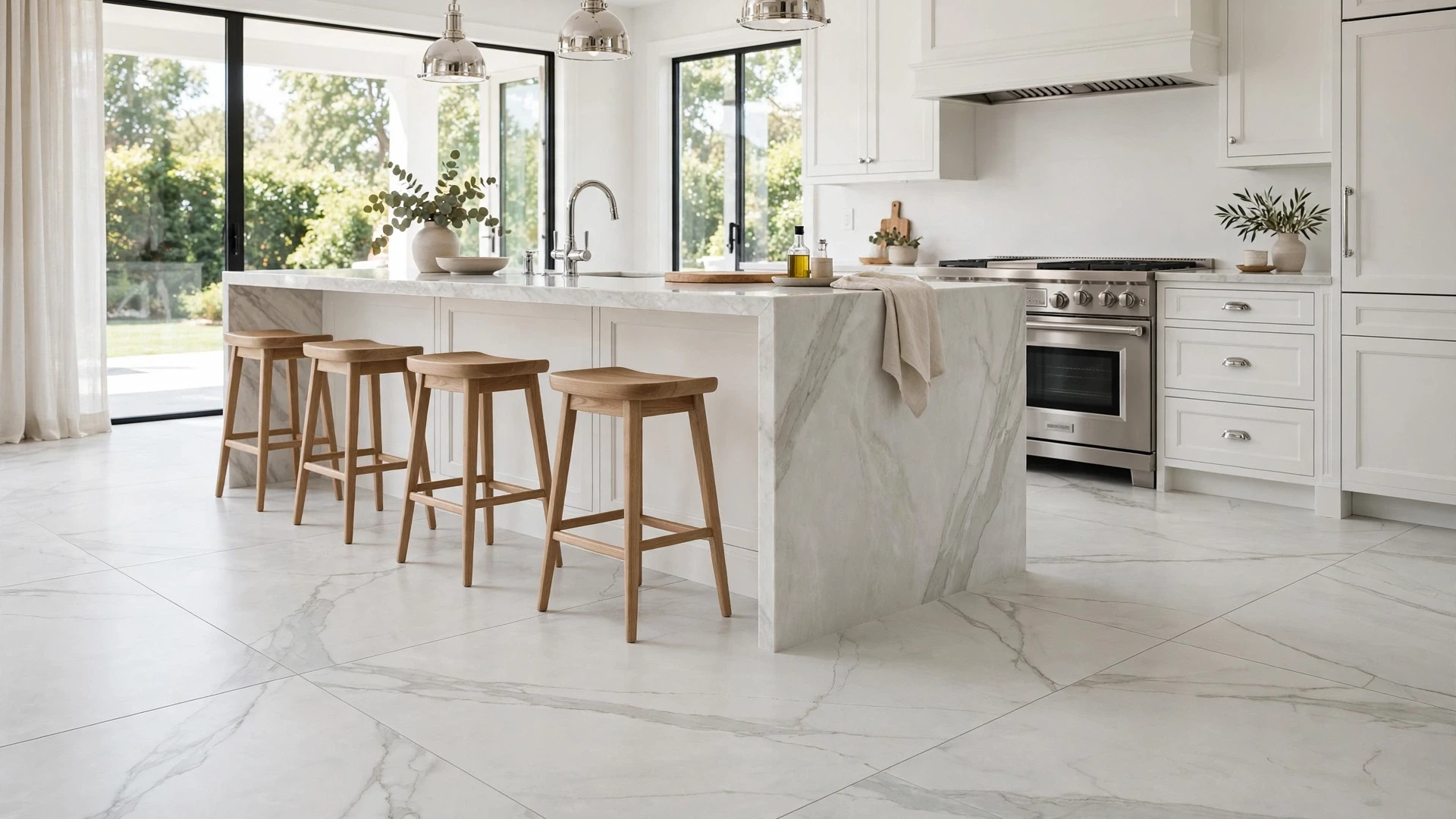
3. Marble-Look Porcelain Tile
Marble floors are breathtaking — and breathtakingly fussy in a kitchen, where lemon juice and tomato sauce wait to etch the stone. Marble-look porcelain gives you the same swirling veining and luminous elegance with none of the anxiety: it's waterproof, stain-proof, scratch-resistant, and needs nothing more than regular mopping. Large-format tiles (24 inches or bigger) mean fewer grout lines and a more continuous, luxurious sweep of pattern.
This flooring shines in kitchens aiming for a light, airy, upscale feel. Pair it with white or pale gray cabinetry, polished chrome or brushed nickel fixtures, and a waterfall-edge island to double down on the luxe vibe. To avoid a cold, echoey feel, bring in warmth through bar stools with wood seats, woven pendant lights, and linen curtains. Keep the grout color close to the tile's base tone so the veins, not the grid, steal the show. It's the closest thing to a worry-free marble floor, and guests will never guess the difference.
4. Herringbone Wood Pattern
If you love wood floors but want something with more personality than straight planks, herringbone is your answer. This zigzag pattern — short boards laid at 90-degree angles — has been dressing European homes for centuries, and it brings instant sophistication and visual movement to a kitchen. The pattern draws the eye along the room, which makes narrow galley kitchens feel wider and more dynamic.
Herringbone works beautifully in both light and dark woods: pale oak herringbone feels Parisian and fresh, while walnut herringbone reads rich and dramatic. Because the pattern is already a statement, keep the rest of the kitchen calm — flat-front cabinets, a simple backsplash, minimal clutter on counters. Rugs can fight with herringbone, so if you want softness underfoot, choose a solid or very subtly textured mat near the sink rather than a bold pattern. It's a premium look that makes even a modest kitchen feel custom and considered.
5. Terracotta Tile
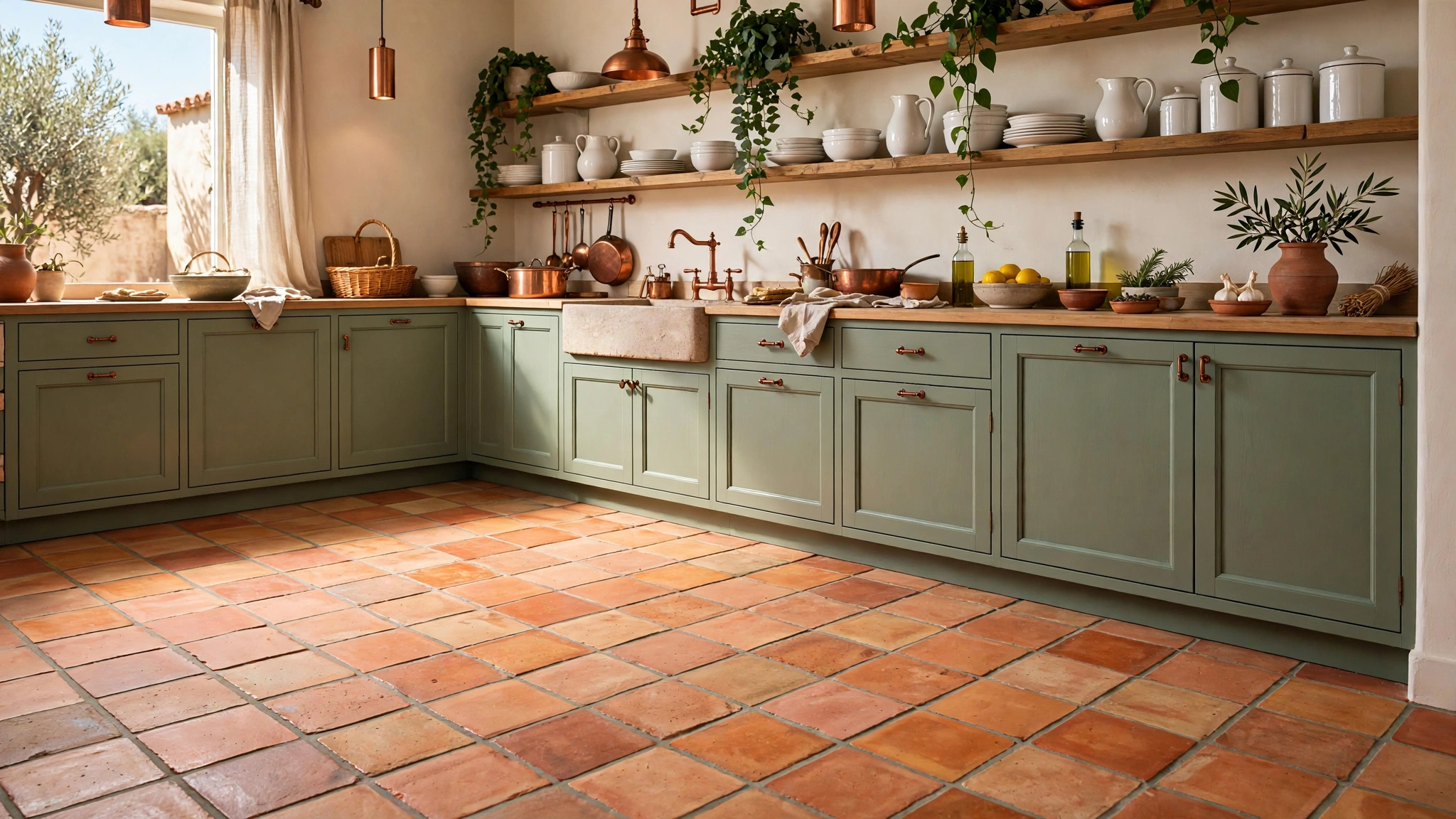
Terracotta brings instant sunshine to a kitchen. These warm, earthy clay tiles — in shades from soft peach to deep burnt orange — feel rustic, Mediterranean, and wonderfully lived-in. Each tile varies slightly in tone, so the floor has a handmade, artisanal quality that manufactured materials can't quite replicate. It pairs beautifully with creamy plaster walls, dark wood beams, sage green cabinets, and copper accents.
Traditional terracotta is porous, so in a kitchen it must be sealed well and resealed periodically — or you can opt for terracotta-look porcelain, which delivers the color without the maintenance. Style it with open shelving holding white ceramics, a chunky wooden dining table nearby, trailing plants, and warm lighting. Avoid cool gray walls, which clash with terracotta's warmth; stick to creams, soft whites, and warm neutrals. This floor turns an ordinary kitchen into somewhere you'd happily linger over coffee — it practically begs for slow Sunday mornings.
6. Luxury Vinyl Plank (Waterproof)
Luxury vinyl plank, often called LVP, has come a long way from the sheet vinyl of the past. Today's planks convincingly mimic wood — complete with grain texture and beveled edges — while being 100% waterproof, softer and warmer underfoot than tile, and far more budget-friendly than hardwood. For busy families with kids, dogs, and daily spills, it's one of the most practical choices you can make.
Choose wide planks in a medium wood tone for the most natural look, and avoid overly glossy finishes, which can look plasticky. LVP pairs with every kitchen style: modern flat-panel cabinets, cozy farmhouse beadboard, or transitional shaker. Because it's so forgiving, this is the floor that lets you live your life — drag chairs, drop pots, let the dog's nails click across it. Style-wise, lean into the easygoing vibe: casual woven rugs, open baskets, and relaxed textiles. It won't impress flooring snobs, but it will quietly handle real life for a decade or more, and that matters more.
7. Slate Tile in Natural Tones
Slate brings a moody, organic richness to kitchens — deep charcoals, rusty coppers, and mossy grays, all with a naturally cleft, textured surface that hides dirt like a dream. It feels grounded and earthy, perfect for rustic, craftsman, or mountain-modern kitchens, and it stays cool underfoot, which is a blessing in warm climates. Each tile is unique, so the floor reads as a piece of the natural world rather than a manufactured surface.
Slate needs sealing to resist stains, and its texture can trap crumbs, so a quick daily sweep keeps it looking its best. Pair it with warm wood cabinetry or painted cabinets in deep green or navy — light cabinets can make dark slate feel heavy, so balance matters. Copper or bronze hardware, stone countertops, and plenty of warm under-cabinet lighting keep the space cozy rather than cave-like. A washable runner in warm tones along the main walkway adds softness. If you want a kitchen that feels like a retreat — calm, natural, and timeless — slate delivers.
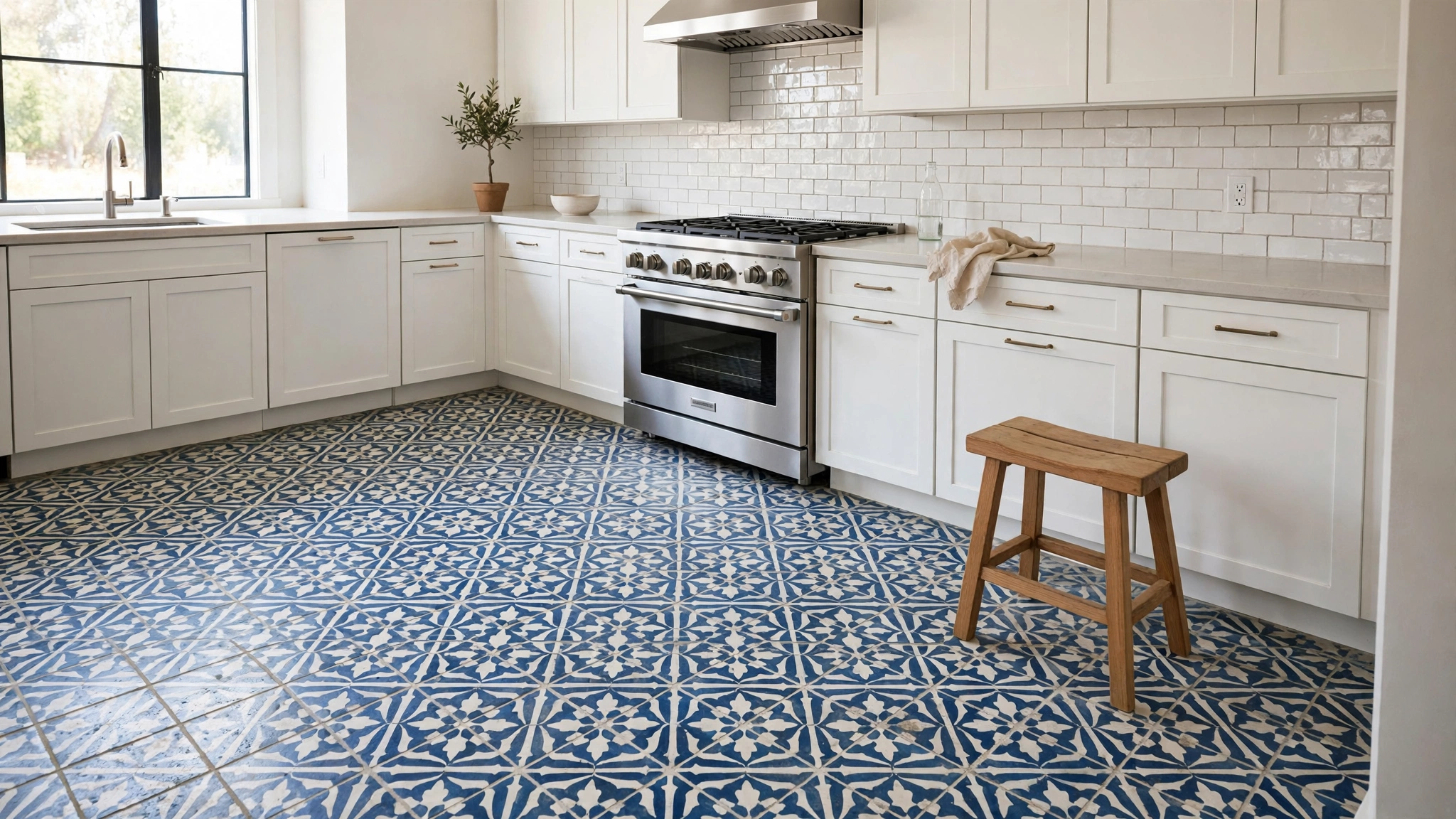
8. Patterned Cement-Look Tile
Patterned tile — the kind inspired by Moroccan zellige, Portuguese azulejos, and vintage encaustic cement — turns your floor into the artwork of the room. These bold, graphic patterns in blues, grays, and warm neutrals add instant personality and a well-traveled, collected feel. It's a favorite for farmhouse, bohemian, and eclectic kitchens, and it photographs beautifully (hello, Pinterest).
The key to styling patterned tile is restraint everywhere else: solid-color cabinets, a simple subway or handmade-look backsplash, and uncluttered counters let the floor be the star. If full-room pattern feels like too much commitment, use it in a smaller zone — an entry landing, a breakfast nook, or just in front of the range — with a quieter tile elsewhere. Choose matte finishes to avoid a slippery surface, and remember that busy patterns hide crumbs and smudges wonderfully. This is the floor for anyone who believes a kitchen should have a little joy in it.
9. Light Gray Porcelain Wood-Look Tile
Wood-look porcelain tile is the ultimate have-it-all flooring: the visual warmth of wood planks with the total waterproof durability of tile. Light gray tones are especially popular because they feel modern and clean while staying neutral enough to work with any cabinet color. The planks come in realistic lengths and grain patterns, and many have a subtle hand-scraped texture that feels surprisingly authentic underfoot.
This flooring is ideal for contemporary, transitional, and coastal kitchens. Pair it with white or light gray shaker cabinets, quartz counters, and stainless or matte black appliances for a crisp, cohesive look. Because gray can read cool, add warmth with wood accents — open shelves, a butcher-block island top, or rattan bar stools — and soft textiles like a patterned runner. Grout in a matching light gray keeps the plank illusion seamless. It's a smart, low-maintenance choice for open-concept homes where the kitchen floor flows straight into the living room.
10. Honed Concrete
For a minimalist, industrial, or modern farmhouse kitchen, few floors are as effortlessly cool as honed concrete. Smooth, matte, and subtly mottled, concrete gives you a continuous, seamless surface that makes small kitchens feel bigger and open plans feel unified. It's incredibly durable, nearly impossible to stain once sealed, and it pairs beautifully with both warm wood and sleek metal.
Concrete's cool gray tone needs warming up to avoid feeling cold or stark: think white oak cabinetry, leather bar stools, warm pendant lighting, and plenty of plants. Area rugs or runners in natural fibers soften the acoustics and add comfort where you stand longest. In the kitchen, make sure the concrete is properly sealed with a food-safe, slip-resistant sealer — raw concrete will absorb every spill. Some homeowners add radiant heating underneath, which transforms concrete from chilly to toasty underfoot. It's a bold, confident choice that says your kitchen is designed, not decorated.
11. Brick Floor (Thin Brick Pavers)
Brick kitchen floors are pure charm — warm, textured, and full of old-world character. Thin brick pavers laid in herringbone or running bond patterns bring a rustic, European farmhouse feel that pairs gorgeously with cream cabinets, apron-front sinks, and open wood shelving. The color variation from brick to brick gives the floor a rich, handcrafted depth that gets better with age.
Real brick is porous, so it must be sealed thoroughly for kitchen use, and the slightly uneven surface means sweeping with a stiff broom works better than mopping. If maintenance worries you, brick-look porcelain tiles offer the same aesthetic with wipe-clean ease. Style brick floors with warm whites and creams, black iron accents, vintage-inspired lighting, and plenty of natural wood. Avoid pairing it with other strong patterns — the brick is already the texture story. It's not the most practical floor on this list, but for sheer cozy character, few can compete.
12. Dark Walnut Wood
Dark walnut floors bring drama, richness, and unmistakable luxury to a kitchen. The deep chocolate tones with their elegant grain make white and cream cabinetry pop, create a stunning contrast with marble or light quartz countertops, and lend even a simple kitchen a high-end, designer feel. Walnut works especially well in larger kitchens and open floor plans, where its depth adds coziness to expansive spaces.
Dark floors do show dust, crumbs, and pet hair more readily than light ones, so be prepared for more frequent sweeping — a cordless stick vacuum makes quick work of it. Balance the darkness with light walls, a white or pale backsplash, and generous lighting, including under-cabinet strips that bounce light off the counters. Brushed brass or gold hardware glows against walnut, and light-colored rugs or runners keep walkways bright. If your kitchen gets plenty of natural light, dark walnut will reward you with a space that feels both grounded and glamorous.
Styling Tips
Let the floor lead, then edit. Your flooring is the largest surface in the kitchen, so choose it first and let it set the tone — then keep cabinets, backsplash, and counters in supporting roles rather than competing for attention.
Mind the grout. Grout color changes everything: matching grout makes tile feel seamless and calm, while contrasting grout turns the grid into a design feature. In kitchens, medium-tone grout hides stains better than bright white.
Layer rugs and runners intentionally. A washable runner along the sink and stove adds comfort, warmth, and a pop of pattern — and it protects high-traffic zones. Choose low-pile, non-slip styles that are easy to shake out or toss in the wash.
Repeat tones, don't match exactly. If your floor has warm undertones, echo them in wood stools, cutting boards, or open shelves rather than trying to match the floor color precisely — near-matches often look like mistakes.
Consider sightlines. In open floor plans, carry the kitchen flooring into adjoining spaces or choose a clear, intentional transition (like a threshold strip) so the change looks deliberate rather than accidental.
Test samples in your light. Flooring looks dramatically different under your kitchen's actual lighting at different times of day. Live with large samples for a few days — including a spill test — before committing.
Balance busy with calm. A statement floor (patterned tile, checkerboard, herringbone) pairs best with quiet cabinets and counters; a quiet floor gives you freedom to go bolder elsewhere.
Frequently Asked Questions
What is the most durable kitchen flooring?
Porcelain tile and luxury vinyl plank are the durability champions. Porcelain is nearly indestructible — waterproof, scratch-resistant, and stain-proof — while waterproof LVP handles drops, pets, and standing water with ease and feels softer underfoot. Both outlast hardwood in a busy kitchen's daily wear and tear.
Is hardwood flooring okay in a kitchen?
Yes, with sensible precautions. Choose a hard species like oak, make sure it's well sealed, wipe up standing water promptly, and use mats at the sink and dishwasher. Many families enjoy hardwood kitchens for decades. If you want the wood look with zero worry, wood-look porcelain or waterproof vinyl plank are excellent alternatives.
What's the best flooring for a small kitchen?
Large-format tiles or wide planks in a light color make small kitchens feel bigger because fewer seams and brighter tones visually expand the space. Laying planks or tiles diagonally, or running them lengthwise toward the longest wall, also stretches the room. Avoid small, busy patterns that can make a compact space feel cluttered.
Is tile or vinyl better for kitchens?
It depends on your priorities. Tile (especially porcelain) wins on longevity, heat resistance, and resale value, but it's hard, cold underfoot, and unforgiving of dropped dishes. Vinyl wins on comfort, warmth, budget, and DIY-friendliness, and modern waterproof options handle spills beautifully. Both are solid choices — pick based on how you live.
How do I make my kitchen floor less slippery?
Choose matte or textured finishes over high-gloss, especially for tile. Look for tiles with a higher slip-resistance rating, add non-slip rugs or runners with rug pads in wet zones like the sink, and keep floors clean — greasy residue is a bigger slip hazard than the flooring itself.
Can I install new kitchen flooring over old flooring?
Sometimes. Luxury vinyl plank can often go over existing tile or vinyl if the surface is flat, clean, and stable — a huge time and money saver. Tile generally needs a proper substrate and often requires removing the old floor. Always check the manufacturer's instructions and your subfloor's condition first; a bad foundation will ruin even the best flooring.
Conclusion
Your kitchen floor does more than handle foot traffic — it sets the entire mood of the room, from the timeless charm of checkerboard to the earthy warmth of terracotta to the sleek confidence of concrete. The best choice is the one that fits how you actually live: your cooking habits, your pets and kids, your maintenance tolerance, and the feeling you want when you walk in each morning. Pick the floor that makes you smile, style it with intention, and enjoy a kitchen that truly feels like home.