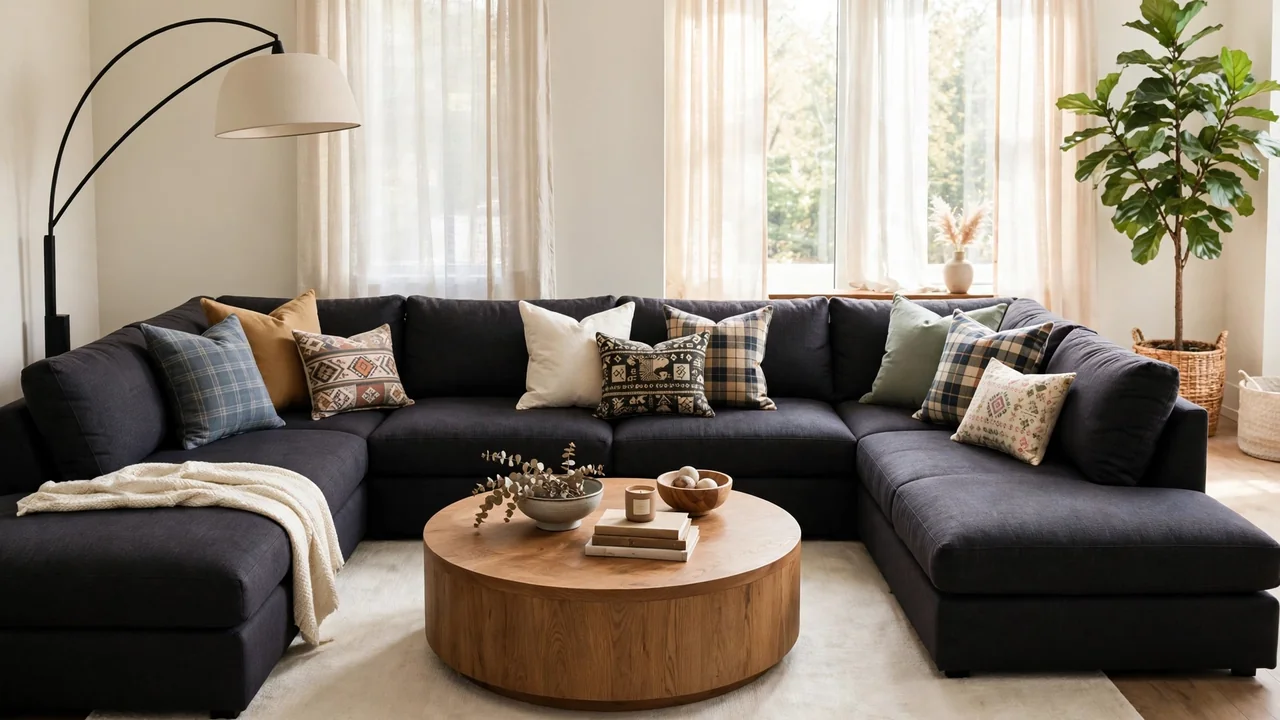

15 Sectional Sofa Ideas for Every Layout
A sectional sofa is the hardest-working piece of furniture you can put in a living room. It seats the whole family for movie night, gives everyone a corner to curl into, and anchors the room the way no three-seat sofa ever could. Whether you are working with a compact apartment, an open floor plan, or a sprawling great room, there is a sectional shape — L-shaped, U-shaped, modular, or chaise — that will fit your space and your style.
The challenge is choosing the right one and styling it so it looks inviting instead of overwhelming. Color, fabric, layout, and the pieces you pair with it all matter. This guide walks you through fifteen beautiful sectional sofa ideas for every layout, from space-saving apartment corners to grand entertaining U-shapes. Each idea comes with specific styling details — colors, materials, placement, and finishing touches — plus practical tips and answers to the questions readers ask most. Let us find the sectional your living room has been waiting for.

1. The Classic L-Shaped Sectional for Open Living Rooms
The L-shaped sectional is the workhorse of living rooms: its clean right angle defines a seating zone even in the most open floor plan. Place the long side facing your focal point — usually the TV or fireplace — and let the short return arm hug the side wall or float to create a natural boundary between the living area and dining or kitchen space behind it.
Choose a medium-tone performance fabric in warm gray, greige, or oat linen so it wears well and pairs with everything. Anchor it with a large 8×10 area rug (the front legs of every section should sit on the rug), then add a rectangular coffee table in light oak or a round one in walnut to soften the angular shape. Layer throw pillows in a mix of textures — bouclé, linen, and a small lumbar in a subtle stripe — in cream, camel, and one deep accent like forest green. A floor lamp arched over the corner seat makes the best reading spot in the house.
2. Chaise Sectional for Stretching Out
If your household fights over who gets the lounge spot, a chaise sectional ends the argument. The extended chaise seat is perfect for full-length naps, reading with your feet up, or a toddler sprawled with a picture book. Place the chaise end away from the main traffic path so nobody has to squeeze past outstretched legs — ideally along a window wall where it doubles as a sunbathing perch.
This style shines in soft, inviting fabrics: a chenille or brushed twill in warm ivory, pale sage, or blush beige. Keep the coffee table compact and off-center so the chaise stays clear, and style a small side table with a lamp at the chaise end for evening reading. Drape a lightweight knit throw across the chaise and add two or three pillows in complementary tones at the corner where the chaise meets the sofa body. A low-profile sectional in this shape also keeps sightlines open in smaller rooms, making everything feel airier.
3. U-Shaped Sectional for Big Gatherings
For households that host game nights, holiday gatherings, or a crowd of teenagers, nothing beats a U-shaped sectional. With seating wrapping around three sides, everyone faces each other — conversation flows, board games work, and nobody ends up perched on a dining chair dragged in from the kitchen. This shape needs room to breathe, so plan for a space at least 14 feet wide.
Style it in a rich, forgiving color like deep charcoal, chocolate brown, or forest green velvet that hides everyday wear. Center the U around an oversized ottoman or a large round coffee table that everyone can reach. Because the U is visually heavy, lighten the room with a pale rug, sheer curtains, and lighter wall colors. Add pillows in varied sizes and patterns — a plaid, a solid, a small global print — distributed evenly so every seat looks inviting. A statement floor lamp in one corner and a tall plant in the other balance the composition beautifully.
4. Modular Sectional You Can Rearrange
Modular sectionals are made of individual pieces — armless chairs, corners, ottomans — that you can rearrange as your life changes. Split them into two loveseats for a party, pull the ottoman out as extra seating, or reconfigure into an L when you move. They are the most flexible choice for renters and anyone whose living room doubles as a playroom, office, or guest space.
Look for modules with hidden connectors so the pieces stay put but separate easily. A light, neutral upholstery — warm white, light gray, or natural linen — keeps the many pieces from looking bulky. Style each arrangement with a rug large enough to ground the whole grouping, and keep throw pillows in a cohesive palette so the look stays unified no matter the configuration. Add one accent ottoman in a contrasting texture, like leather or a woven pouf, which can hop between seating and footrest duty. Slipcovers on modular pieces make cleaning refreshingly simple.
5. Apartment-Sized Sectional for Small Spaces
Small living rooms deserve sectionals too — you just need a scaled-down version. Look for a compact L-shape with a slim profile, narrow track arms, and raised legs that let light flow underneath; those few inches of visible floor make the room feel noticeably larger. A reversible chaise is a bonus, letting you flip the layout if you rearrange.
Keep the upholstery light — cream, pale gray, or soft beige — and choose a low back so the sofa does not wall off the room visually. Pair it with a round glass or light-wood coffee table that keeps the center airy, and a 5×8 rug that fits under the front legs. Wall-mount the TV or use a slim console to save floor space, and add vertical storage like a tall bookcase to draw the eye up. Two or three pillows in a fresh accent color — terracotta, sage, or dusty blue — keep the look cheerful without clutter. The result seats four comfortably in a room that once fit only a loveseat.
6. Curved Sectional for Soft, Modern Lines
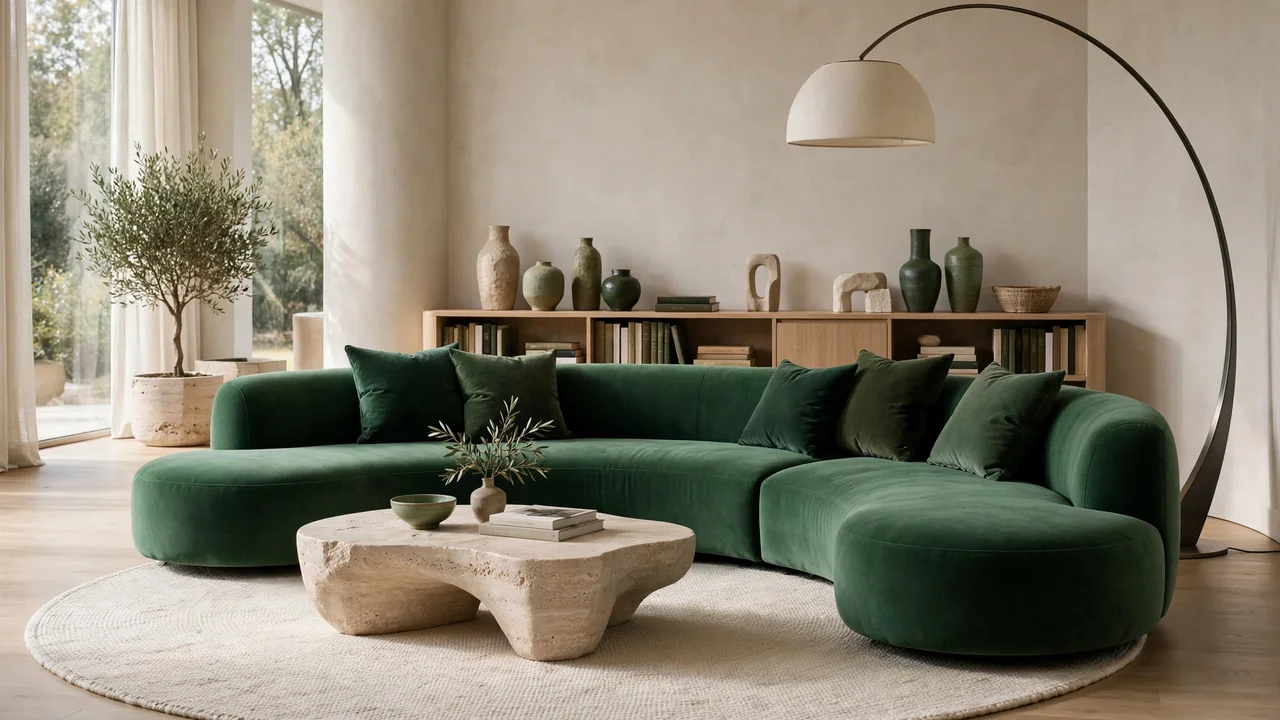
A curved sectional breaks every rule of boxy furniture — and the result is gorgeous. The gentle arc softens the room, improves sightlines for conversation, and creates a sculptural focal point that looks straight out of a design magazine. It works beautifully in square rooms where a standard L would feel cramped in the corner, and in open plans where you want the seating to feel like its own destination.
Choose a luxurious fabric to match the shape: velvet in emerald, cognac, or blush, or a nubby bouclé in ivory. Because the curve is the star, keep everything else simple — a round rug that echoes the arc, a sculptural coffee table in marble or travertine, and minimal pillows in tonal shades. Place it floating in the room rather than pushed against a wall, with a console or bookshelf behind it to define the back. Add a curved or arc floor lamp nearby to continue the soft geometry. This is the sectional for anyone who wants their living room to feel intentional and artful.
7. Sleeper Sectional for Overnight Guests
A sleeper sectional with a pull-out bed or a deep chaise that converts to a twin solves the guest-room problem without a dedicated room. By day it is your everyday family sofa; by night it becomes a comfortable bed for visitors. Look for a memory-foam mattress upgrade and a mechanism that opens smoothly — you will thank yourself at midnight.
During the day, style it like any beautiful sectional: a washable slipcover in a relaxed linen, plenty of pillows, and a soft throw. Keep a lidded storage ottoman nearby stocked with guest essentials — spare sheets, a folded duvet, a small toiletry kit — so hosting feels effortless. Choose a medium-tone fabric that hides the seam lines of the pull-out mechanism, and add a mattress topper stored in a closet for extra comfort. When guests arrive, a small tray with water and a book on the side table turns the living room into a welcoming guest suite.
8. Leather Sectional for Timeless Durability
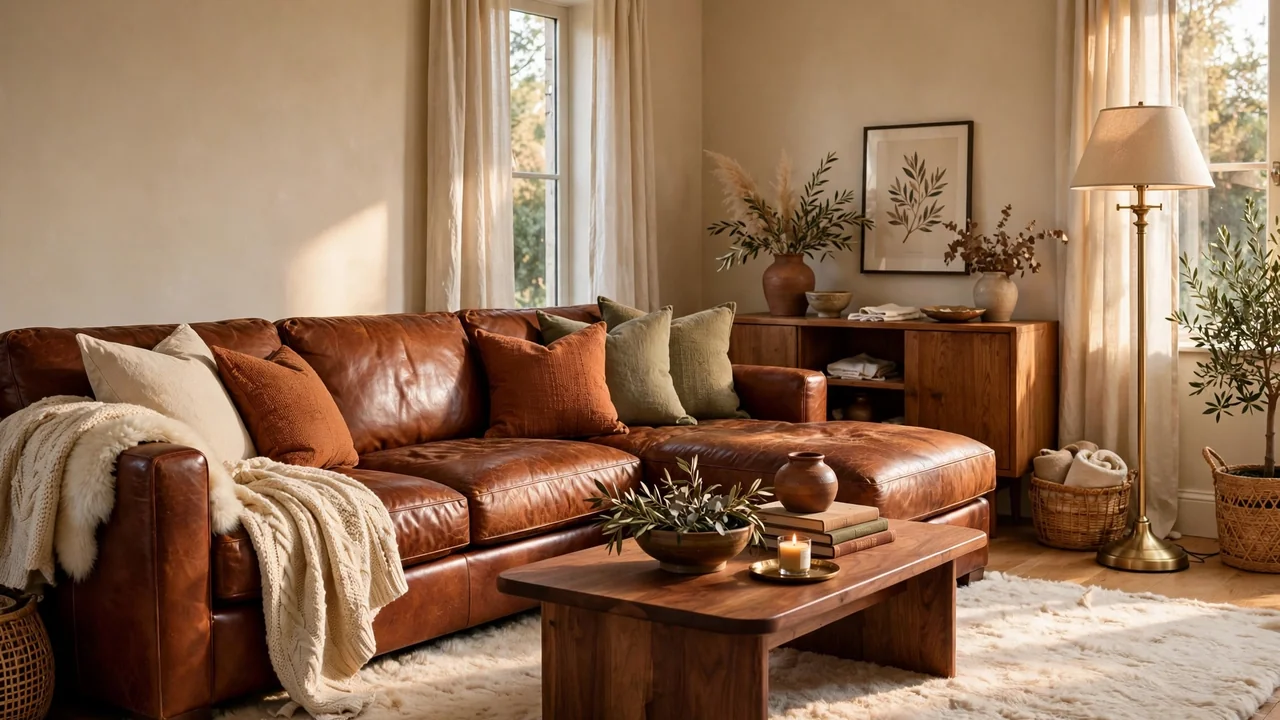
A leather sectional is an investment that gets better with age, developing a rich patina that fabric sofas never achieve. It is also remarkably practical: spills wipe off, pet hair does not cling, and the surface stands up to years of daily use. Cognac, chestnut, and espresso tones bring instant warmth, while black or dark brown leather suits a more tailored, masculine scheme.
Balance leather's weight with soft textures around it — a plush wool rug, linen curtains, and knit or sheepskin throws draped over one arm. Pair it with warm wood furniture (walnut coffee table, oak sideboard) and brushed brass or black metal accents. Pillows in cream, rust, and olive keep the palette earthy and inviting. Condition the leather twice a year to prevent cracking, and keep it out of direct sunlight to avoid fading. A well-cared-for leather sectional anchors a living room for a decade or more, aging gracefully the entire time.
9. Velvet Sectional for Luxe Comfort
Few fabrics say cozy luxury like velvet. A velvet sectional in jewel tones — emerald, sapphire, ruby, or mustard — becomes the undeniable star of the room, catching light beautifully and feeling irresistible to sink into. Performance velvets now resist stains and crushing far better than old-fashioned versions, making them realistic for real family life.
Let the velvet shine by keeping the surrounding palette calm: a neutral rug in ivory or light gray, simple linen drapes, and a coffee table in glass or light wood that does not compete. Add pillows in contrasting textures — silk, faux fur, and a metallic-threaded lumbar — in tones pulled from the sofa's color family. A velvet sectional pairs beautifully with a brass floor lamp and a large piece of abstract art above it. Brush the pile occasionally with a soft clothes brush to keep it looking plush, and rotate seat cushions to wear them evenly.
10. Slipcovered Sectional for Easy Living
With kids, pets, or a love of light-colored furniture, a slipcovered sectional is pure peace of mind. The covers come off and go straight in the washing machine, so white and cream sofas become genuinely livable. The relaxed, slightly rumpled look suits farmhouse, coastal, and casual classic styles perfectly.
Choose a heavyweight cotton or linen-blend slipcover in white, natural, or light gray — prewashed fabrics wrinkle less. Style with washable pillow covers in complementary patterns: a classic ticking stripe, a small gingham, and a solid linen. Layer a washable throw across the most-used seat for extra protection that looks intentional. Keep a second set of slipcovers if your budget allows, so the sofa never sits bare on laundry day. Pair with a jute or indoor-outdoor rug for a fully worry-free zone, and add wooden or rattan accent furniture to complete the relaxed, beachy feel.
11. Sectional as a Room Divider in Open Plans
In an open-concept home, the back of your sectional can do the work of a wall. Float an L-shaped sectional with its back to the dining area or kitchen, and it instantly creates two distinct zones without blocking light or conversation. This trick works best with sectionals that have a finished back — no exposed hardware or raw fabric.
Style both sides: the living-room side gets the rug, coffee table, and media setup, while the back faces a slim console table topped with a lamp, books, and a small plant — making the "wall" look deliberate from the dining side. Choose a mid-tone upholstery that looks good from every angle, and keep the console decor low enough not to block sightlines. A rug under the dining table in a complementary pattern reinforces the two-zone feel. This layout turns one big rectangle into two purposeful rooms, each with its own identity.
12. Pit Sectional for Ultimate Lounging
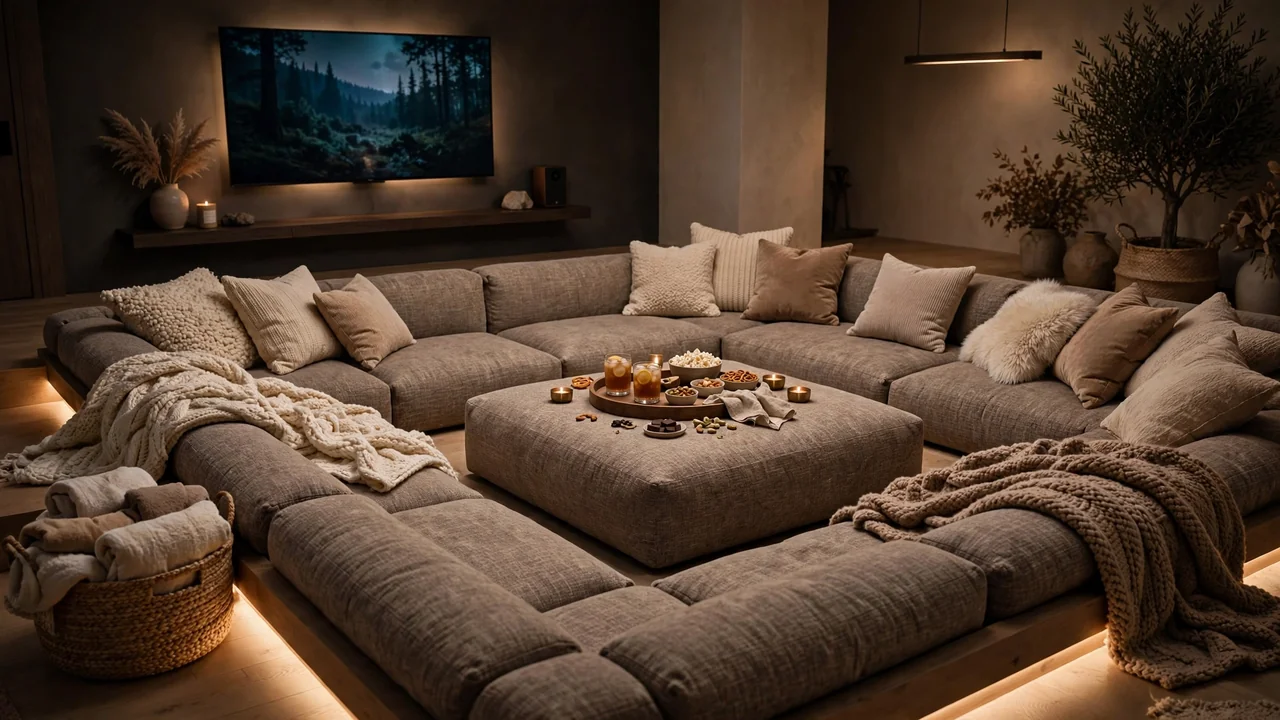
The pit sectional — deep seats, low profile, often with a huge square ottoman that fills the middle — is built for one purpose: maximum sprawling comfort. Movie marathons, lazy Sunday naps, and kids piling in with blankets all happen here. The seats are deeper than standard (often 24 inches or more), so everyone can curl up sideways.
Go for a soft, forgiving fabric in a medium tone — heathered gray, warm taupe, or muted olive — that hides the inevitable popcorn crumbs. Keep pillows plentiful and squishy rather than structured: oversized squares in mixed textures that can be rearranged into forts. The central ottoman doubles as a coffee table with a large tray on top for drinks and snacks. Add a chunky knit throw or two, dimmable lighting, and a basket of extra blankets nearby. This is not a formal sitting room — it is the coziest spot in the house, and it should look the part.
13. Two-Tone Sectional for Visual Interest
A two-tone sectional — say, a neutral body with contrasting chaise, or mixed fabric panels — adds custom, designer-level interest without custom prices. The contrast breaks up the visual mass of a large sectional, making it feel lighter and more intentional. It is also a clever way to introduce a bold color in a contained dose.
Try a warm gray body with a cognac leather chaise, or an ivory sofa with deep navy end sections. Keep the rest of the room's palette drawn from both tones so the combination feels planned: a rug that includes both colors, pillows that echo each one, and art that ties them together. Because the sofa itself makes a statement, keep other furniture quiet — simple wood pieces and minimal patterns elsewhere. This approach works especially well in modern and transitional rooms where you want personality without chaos.
14. Sectional with Built-In Storage
Sectionals with hidden storage — lift-up chaise compartments, under-seat drawers, or hollow ottomans — are a small-space miracle. Blankets, board games, kids' toys, and out-of-season throws all disappear inside, keeping the living room calm without extra furniture. The storage is invisible from the outside, so the sofa looks like any other stylish sectional.
Choose a clean-lined design in a durable fabric so the piece earns its keep for years. Style the top like a normal sofa with pillows and a throw, and let the storage do its quiet work underneath. Pair with other dual-purpose pieces — a lift-top coffee table, nesting side tables — to maximize every square foot. Keep the items inside organized with small bins or bags so the compartments stay useful rather than becoming junk drawers. For apartments and family rooms alike, storage seating means less clutter visible and more room to actually live.
15. Outdoor Sectional for Patio Living
Bring the sectional comfort outside with a weather-ready version for the patio, deck, or screened porch. Outdoor sectionals use powder-coated aluminum or all-weather wicker frames with quick-dry cushions, so they survive rain and sun while looking like indoor furniture. An L-shape tucked into a corner of the patio creates an instant outdoor living room.
Choose solution-dyed acrylic cushions in cheerful, fade-resistant colors — navy and white stripes, terracotta, or tropical greens — and add outdoor throw pillows for the full cozy effect. Ground the arrangement with an outdoor rug, add a fire pit or a round side table for drinks, and string lights overhead for evening magic. Store cushions in a deck box during harsh weather to extend their life, and hose down the frames each spring. An outdoor sectional effectively adds a whole extra room to your home for half the year.
Styling Tips
Getting the most out of a sectional comes down to a few practical rules that work no matter which style you choose. First, size your rug correctly: the front legs of every section should rest on the rug, which usually means an 8×10 for a standard L-shape. A too-small rug makes even a beautiful sectional look adrift.
Second, leave breathing room. Pull the sectional at least a few inches off the wall when possible, and keep 30 to 36 inches of walkway around the main traffic sides so the room flows. Third, vary your pillows in size and texture — a mix of 20-inch squares, smaller accents, and one lumbar in different fabrics looks collected rather than matched. Fourth, balance the visual weight: a large sectional needs a substantial coffee table or ottoman, adequate lighting on both ends (a floor lamp on one side, a table lamp on the other), and something tall nearby, like a plant or bookcase, so the low horizontal mass of the sofa does not dominate.
Finally, think about the view from behind. If your sectional floats in the room, style its back with a console table, and choose upholstery that looks finished from every angle. And do not forget maintenance: vacuum crevices monthly, rotate reversible cushions every few weeks, and treat stains promptly according to your fabric's care code. A little upkeep keeps your sectional looking inviting for years.
Frequently Asked Questions
How do I know what size sectional fits my living room?
Measure your room first, then tape out the sectional's footprint on the floor with painter's tape before you buy. A good rule of thumb is to leave at least 30 inches of walkway on the traffic sides and 18 inches between the sofa and coffee table. In rooms under 12 feet wide, look for apartment-scale sectionals with slim arms and a reversible chaise; larger rooms can handle full L-shapes, U-shapes, or curved designs.
Should a sectional go against the wall or float in the room?
Either works — it depends on your layout. Pushing the sectional into a corner maximizes floor space in small rooms. Floating it away from the walls defines zones in open floor plans and looks more designer, especially with a console table styled behind it. If you float it, make sure the back is finished and looks good from behind, and anchor the arrangement with a large rug.
What is the best fabric for a sectional with kids and pets?
Performance fabrics are your best friend: look for stain-resistant, high double-rub-count upholstery like performance linen, microfiber, or performance velvet. Slipcovered sectionals are another excellent choice since the covers are machine washable. Medium tones and subtle textures hide wear better than very light solids or very dark colors, and leather is surprisingly forgiving since spills wipe right off.
How many throw pillows should I put on a sectional?
For a standard L-shaped sectional, five to seven pillows hits the sweet spot — enough to look lush without burying the seats. Use a mix of sizes: large 20- to 22-inch squares at the corners, medium 18-inch pillows in front, and one lumbar in the middle. Stick to a cohesive palette of two to three colors in varied textures so the arrangement looks styled rather than cluttered.
Can a sectional work in a small living room?
Absolutely. Choose an apartment-scale sectional with a low profile, narrow arms, and raised legs, which keeps sightlines open and lets light flow underneath. A chaise sectional often fits better than a full L in tight rooms. Keep the upholstery light, use a round coffee table to ease traffic flow, and mount the TV on the wall to free up floor space. You will seat four or five people where a loveseat once fit two.
How do I arrange a sectional in an open floor plan?
Float the sectional with its back toward the adjacent zone (kitchen or dining area) to create a natural room divider. Anchor it with a large rug, face the long side toward your focal point like the TV or fireplace, and style a slim console table behind it with a lamp and decor. Keep walkways of at least 30 inches around the arrangement, and use lighting — a floor lamp and table lamps — to define the living zone after dark.
Conclusion
A sectional sofa is more than extra seating — it is the heart of how your living room gets used, from quiet mornings with coffee to crowded holiday gatherings. Whether you choose a space-saving apartment L, a sprawling U for entertaining, or a curved showpiece, the right sectional shapes the whole feel of the room. Measure your space, pick a fabric that fits your real life, and style it with intention. Your perfect sectional is out there, and now you know exactly how to find it — and make it beautiful.