
15 Calm Scandinavian Living Room Ideas
There's a reason Scandinavian living rooms make you exhale the moment you see them. That feeling of walking into a space where everything is soft, uncluttered, and quietly beautiful — pale wood floors, a cloud-soft throw draped over a clean-lined sofa, daylight pouring through sheer curtains. It's the famous Nordic idea of hygge: coziness as a way of life, not just a look. The beauty of Scandinavian style is that it's as much about how a room feels as how it looks. You don't need a big budget or a full renovation to get there. Small shifts — swapping heavy drapes for sheers, layering in natural textures, clearing one overcrowded shelf — can transform a busy room into a calm retreat. In this guide, you'll find 15 practical, room-by-room ideas for creating a Scandinavian living room that feels warm, restful, and effortlessly put together. Grab a cup of coffee, settle in, and let's build your calm space together.
 Living Room Ideas idea 1″/>
1. Start With a Soft, Light-Washed Base
Every serene Scandinavian living room begins with the backdrop: walls and floors in pale, breathable tones. Think warm white, soft ivory, or a whisper of greige — colors that bounce daylight around the room instead of absorbing it. If your walls are currently a deeper shade, a single coat of a warm off-white paint is the highest-impact change you can make. Pair it with light flooring if you can — pale oak, whitewashed laminate, or even a light-toned rug layered over darker wood to fake the effect. Keep trim and ceilings the same light color so the room reads as one continuous, airy envelope rather than a patchwork of edges. This quiet base does the heavy lifting in Scandinavian design: it makes the room feel larger, calmer, and brighter, and it gives every piece of furniture you add a clean stage to stand on. Once the base is right, everything else falls into place more easily.
2. Layer in Natural, Textural Textiles
Scandinavian comfort lives in the textiles. Since the color palette stays restrained, texture does the talking — so layer it generously. Drape a chunky knit throw over the arm of your sofa, fold a lighter linen throw across the seat, and mix in a couple of woven wool blankets in cream or oatmeal tones. Look for visible weaves, fringe edges, and nubby bouclé fabrics that invite touch. Aim for three to four textile layers on your main seating: this is what makes a pale, minimal room feel snug instead of stark. Stick to natural fibers where you can — cotton, linen, wool — because they age gracefully and hold that soft, lived-in look. Toss a couple of them into your pillow rotation too, mixing pillow shapes and weave patterns while keeping the colors in the same calm family. The rule is simple: if the room feels a little too crisp, add another soft layer.
3. Choose Light Wood Furniture
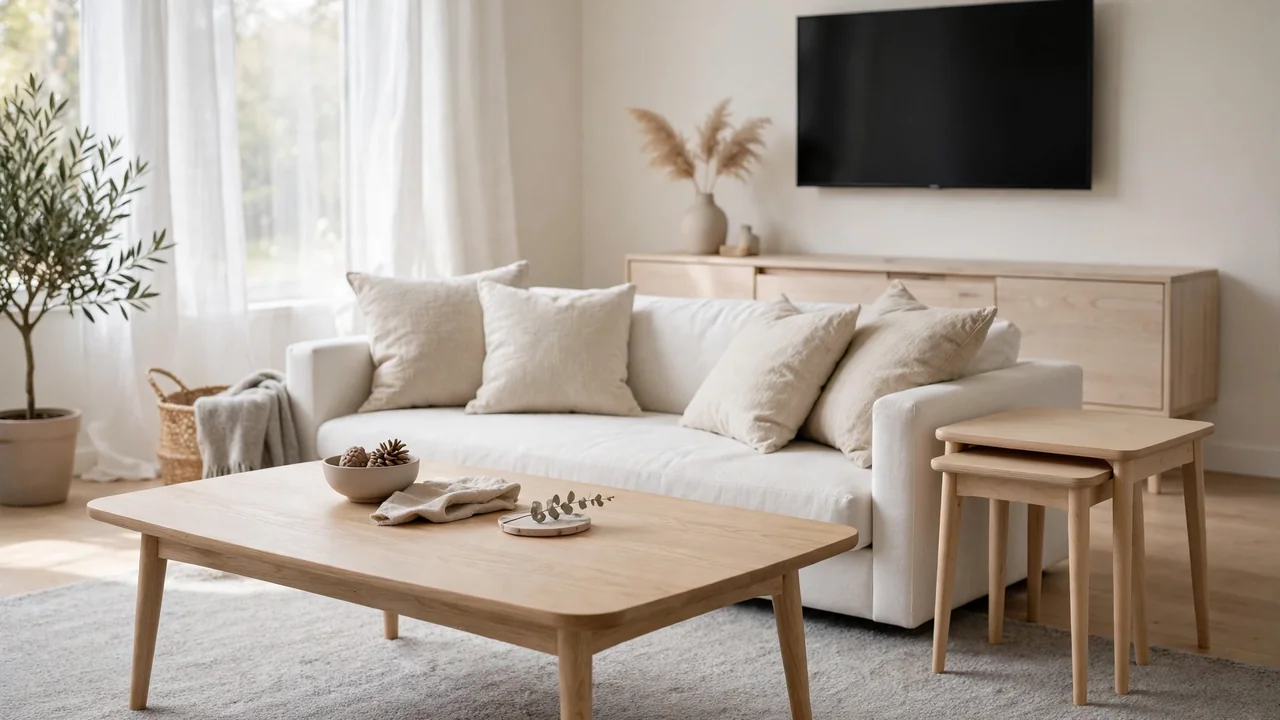
Wood is the soul of Scandinavian design, and lighter species set the tone best. Look for pieces in pale oak, ash, birch, or beech — their honey-blonde grains warm up white walls without darkening the room. A light-wood coffee table, a slim TV console, or a set of nesting side tables instantly roots the space in that Nordic feel. Keep silhouettes simple: tapered legs, rounded edges, and minimal hardware. If you already own darker wood pieces, you don't have to replace them — balance them with light-wood accents like a tray, a magazine holder, or picture frames, and let the pale pieces outnumber the dark ones. Let the wood grain show; avoid heavy stains or glossy finishes, since the matte, natural look is what reads as Scandinavian. Wood brings the one thing an all-white room needs most: organic warmth.
4. Master the Art of Hygge Lighting
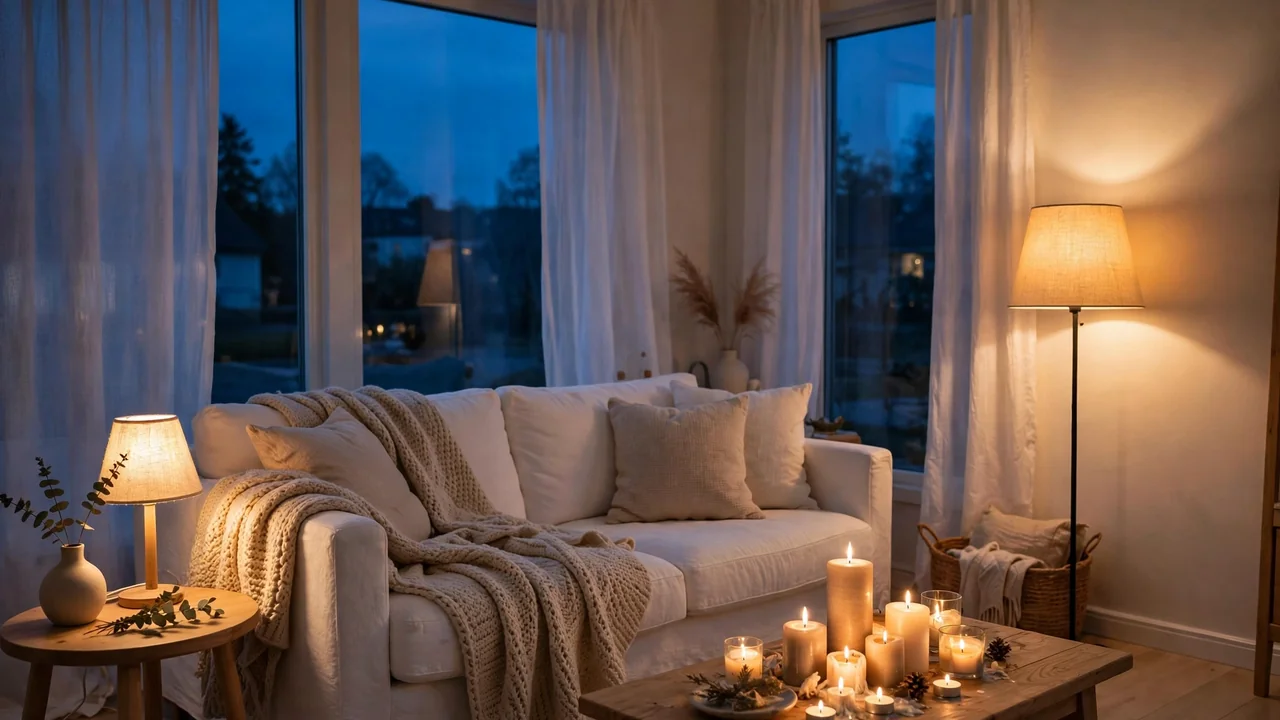
In Nordic countries, where winter days are short, lighting is treated almost like furniture — and it shows. Swap overhead glare for layers of warm, low light. Place a floor lamp with a fabric shade in a dark corner, add a small table lamp on a side table, and keep a few pillar candles or tealights on the coffee table or mantel. The goal is pools of golden light at different heights, which makes the room feel intimate after sunset. Choose bulbs in the warm 2700K range rather than cool daylight tones; that warm glow is the difference between a room that looks nice and one that feels like a hug. String lights aren't just for the holidays here — a delicate strand draped along a shelf or window frame adds year-round magic. And if you have a fireplace or even just a candle cluster, treat it as your evening focal point.
5. Add a Sheepskin or Faux Fur Accent
Few things say Scandinavian cozy faster than a sheepskin throw. Drape one over the back of an armchair, across a bench, or over a dining-style chair pulled into the living room — it softens hard lines and adds a cloud of texture in one move. Don't have a sheepskin? A good faux fur throw in ivory or light gray does the same job and is easy to wash. Try one layered at the foot of the sofa or folded over a reading-chair arm where you can brush it with your hand. Sheepskins also work beautifully on the floor beside a chair, creating a soft landing spot that makes the whole corner feel intentional. This is one of those small additions with an outsized effect: a single throw can tilt an entire seating area from "neat" to "please sit down and stay awhile."
6. Edit Ruthlessly — Less Is the Whole Point
Scandinavian style isn't about owning less for the sake of it; it's about giving each piece room to breathe. Walk through your living room and remove anything that doesn't earn its place: duplicate decor on shelves, stacks of unread magazines, knickknacks you've stopped seeing. Aim for surfaces that are mostly clear — a coffee table with a tray, a candle, and one small stack of books looks styled; the same table crowded with six objects looks cluttered. For open shelving, follow the rule of thirds: leave roughly a third of each shelf empty so the items you keep stand out. What you remove matters as much as what you keep. Store the overflow out of sight in baskets or closed storage, and you'll be amazed how much calmer the room feels overnight. This editing habit is free, takes an afternoon, and is arguably the single most Scandinavian thing you can do.
7. Bring in One or Two Living Plants
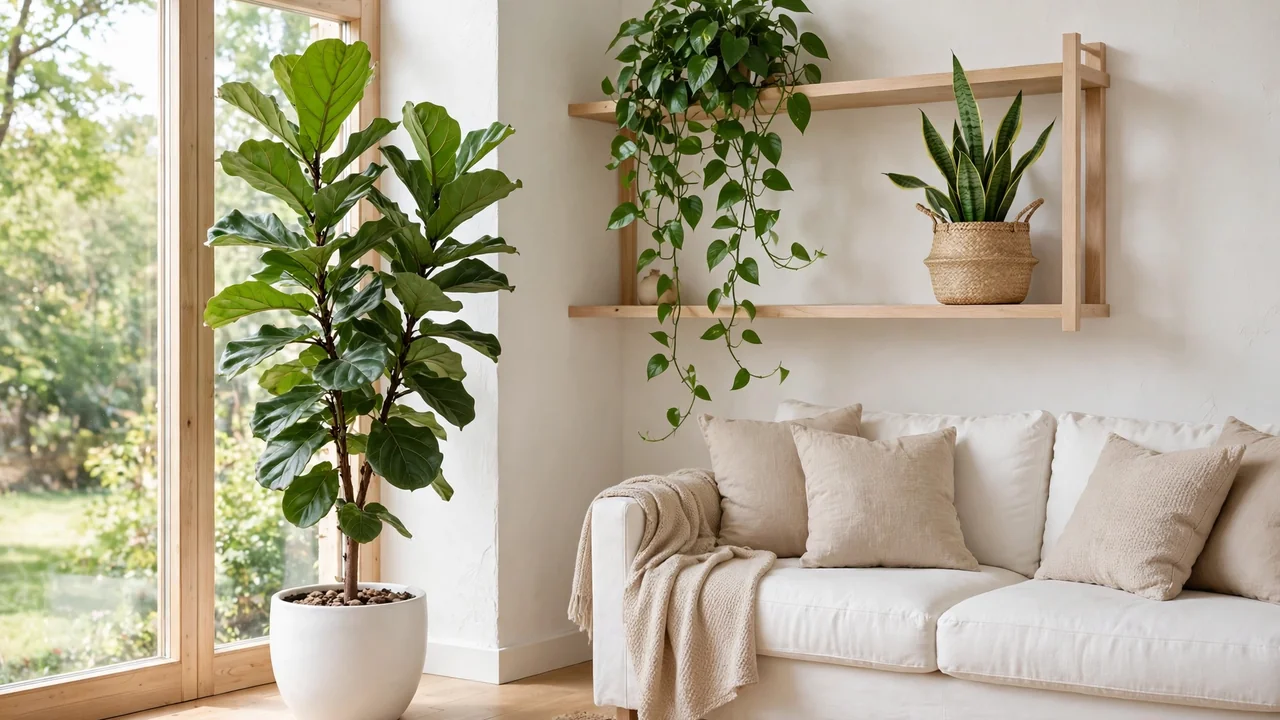
A touch of green is the finishing note in nearly every Scandinavian living room. Plants add life, softness, and a whisper of color without disturbing the calm palette. You don't need a jungle — one statement plant like a fiddle-leaf fig, olive tree, or tall snake plant in a corner, plus a smaller trailing pothos on a shelf, is plenty. Pot them in simple vessels: white ceramic, woven seagrass baskets, or light terracotta. Place the larger plant near a window where it catches daylight, and let the smaller one spill gently over a shelf edge for that relaxed, organic line. If you travel a lot or tend to forget watering, choose forgiving varieties like ZZ plants, snake plants, or pothos. The greenery does double duty: it purifies the air a little and reminds the room that nature is welcome inside — a core Scandinavian belief.
8. Build a Palette of Beige, Cream, and Soft Gray
The classic Scandinavian palette is a study in neutrals done well. Build yours around layers of warm beige, creamy ivory, soft greige, and pale gray — tones that sit next to each other without competing. The trick is staying within a tight range while varying the shade and texture: a cream sofa, oatmeal curtains, a light-gray wool rug, and beige linen pillows read as rich and intentional rather than boring. Add contrast sparingly and deliberately — a charcoal throw pillow, a black picture frame, or a dark-stained wooden bowl gives the eye somewhere to rest. Avoid loud brights and busy patterns; if you want pattern, keep it subtle, like thin stripes or a faint geometric weave. Test paint swatches at different times of day, because northern-style daylight shifts dramatically. When the palette is this harmonious, the room practically styles itself.
9. Create a Cozy Reading Nook
Every Scandinavian living room deserves a corner made for slow mornings. Carve out a small nook with a comfortable armchair — ideally in a light fabric or with a sheepskin draped over it — angled toward the best window light. Add a small side table within arm's reach for coffee and books, and a floor lamp with a warm bulb for evening reading. A soft rug or sheepskin under the chair anchors the spot and separates it from the main seating area. Keep a woven basket beside the chair stocked with your current reads and a folded throw. This doesn't need much space — even a three-foot corner works — but it needs intention: a chair, a light, a surface, and softness underfoot. A dedicated reading nook turns an ordinary corner into the most fought-over seat in the house.
10. Ground the Room With a Natural-Fiber Rug
A rug does more than protect floors — in Scandinavian design, it defines the room's warm heart. Choose natural fibers like jute, sisal, wool, or a cotton flatweave in undyed or lightly bleached tones. A large jute rug under the coffee table adds beautiful texture and works with almost any furniture, while a soft wool rug brings extra coziness underfoot in reading or conversation zones. Size matters: go big enough that at least the front legs of your sofa and chairs sit on the rug — a too-small rug makes the room feel chopped up. Layer a smaller sheepskin or a thin patterned kilim over the base rug for extra depth if you like. Stick to simple weaves and solid or subtly striped designs rather than bold prints. The rug should feel like a quiet foundation, not the loudest thing in the room.
11. Style Your Fireplace the Scandinavian Way
If you have a fireplace, it's your natural focal point — style it with Nordic restraint. Paint or clad the surround in white or pale stone to keep it light, and keep the mantel styling minimal: a row of candles of varying heights, a small stack of art books, or a single vase with dried branches. Stack firewood neatly in a woven basket or a simple black metal log holder beside the hearth — in Scandinavian homes, firewood is decor. If your fireplace is non-working or you don't have one, fake the glow: cluster pillar candles of different heights inside the firebox or on a tray on the hearth for the same flickering warmth. Avoid heavy garlands or crowded mantel displays; the Scandinavian approach is a few beautiful things with breathing room. In winter, this becomes the room's soul — the spot everyone gravitates toward.

12. Hang a Simple, Calm Gallery Wall
Scandinavian gallery walls are quieter than their eclectic cousins — and all the more soothing for it. Choose three to seven frames in matching finishes (thin black, white, or light oak) and hang them in a loose grid or a gentle salon cluster. For the art itself, lean into abstract prints, botanical sketches, landscape photography, and simple line drawings in muted tones. Leave generous white matting around each piece — that negative space is what keeps the wall feeling calm instead of busy. Hang the collection over the sofa or along a hallway-facing wall, keeping the center at about eye level. If you're unsure where to start, begin with two large prints flanking a smaller one and build outward slowly. The goal is a wall that feels collected over time, not decorated in an afternoon.
13. Choose a Low-Profile, Clean-Lined Sofa
The sofa sets the tone for the whole room, so pick one that whispers rather than shouts. Scandinavian sofas sit low to the ground with slim legs, straight arms, and simple, tailored cushions — no oversized rolled arms or heavy detailing. Light upholstery in oatmeal, light gray, or warm white keeps the room airy; if that's impractical with kids or pets, a mid-tone greige hides life beautifully while staying in palette. Look for removable, washable covers — a hallmark of Nordic design that keeps the sofa looking fresh for years. Style it with two to four pillows in mixed textures (linen, knit, bouclé) rather than a rainbow of colors, and drape a throw over one arm or the back corner. Float the sofa slightly off the wall if space allows; seeing floor beneath and behind it makes the room feel lighter and more open.
14. Let Daylight In With Sheer Curtains
Heavy drapes fight the Scandinavian love of light — sheer or semi-sheer curtains are the answer. Hang floor-length panels in white, ivory, or pale linen on a slim rod mounted high and wide, so the window looks larger and daylight floods in even when the curtains are drawn. The fabric should glow softly when the sun hits it, diffusing light across the room like a giant softbox. If you need privacy at night, layer the sheers with a simple roller blind or a light-linen blackout panel behind them that disappears during the day. Skip fussy valances, tiebacks, and heavy hardware; a matte black or brushed-brass rod with simple finials is all the jewelry the window needs. Clean windows matter here too — in Scandinavian design, the view outside is treated as part of the decor.
15. Add Small Doses of Black for Contrast
An all-pale room can drift into blandness without a little grounding — enter black, the Scandinavian secret weapon. Used sparingly, black sharpens everything around it: a slim black floor-lamp frame, matte black picture frames, a black tray on the coffee table, or black candle holders on the mantel. The trick is distribution — scatter three to five small black accents around the room rather than clustering them in one spot, so the eye travels. Keep each piece slim and simple; chunky black furniture can overwhelm a calm palette. This contrast is what gives Scandinavian rooms their crisp, intentional feel — the pale tones stay soft and serene, while the black notes add definition, like punctuation in a sentence. Even something as small as black planter pots or a black-and-white art print counts.
Styling Tips for a Calm Scandinavian Living Room
Layer light in threes. Combine ambient (a ceiling light or floor lamp), task (a reading lamp), and accent (candles or a small shelf light) sources. Warm 2700K bulbs everywhere keep the mood cozy after dark.
Follow the "one in, one out" rule. Scandinavian calm is maintained, not achieved once. When a new decor piece arrives, let an old one go — this keeps shelves and surfaces from slowly re-cluttering.
Mix textures, not colors. When your palette is neutral, interest comes from touch: pair smooth linen with nubby wool, matte ceramics with woven baskets, and pale wood with soft sheepskin.
Keep wood tones consistent. Stick to one or two wood finishes in the same light family. Mixing pale oak with dark walnut and cherry in one room breaks the calm — choose your lane and stay in it.
Style in odd numbers. Groups of three or five — three candle heights on a tray, five frames on a wall — look naturally balanced to the eye. Even groupings can feel stiff and formal.
Leave breathing room. Resist filling every wall and surface. An empty stretch of wall or a clear shelf isn't unfinished — it's the negative space that lets your favorite pieces shine.
Anchor with a rug. A rug that's large enough to catch the front legs of your seating pulls the whole arrangement together and stops furniture from looking like it's floating.
Refresh seasonally, gently. Swap a throw and two pillow covers for slightly deeper tones in autumn, then back to pale linens in spring. Small seasonal shifts keep the room feeling alive without a full restyle.
Frequently Asked Questions
What exactly defines a Scandinavian living room?
It's a design style from Denmark, Sweden, and Norway built on simplicity, natural materials, and light. Key markers: a pale neutral palette, light wood furniture, clean lines, cozy textiles, layered warm lighting, and clutter-free surfaces. The philosophy is hygge — creating warmth and contentment through your surroundings — so comfort matters as much as looks.
What colors work best in a Scandinavian living room?
Warm whites, ivory, oatmeal, beige, soft gray, and greige form the core palette. Add depth with muted sage, dusty blue, or clay tones in small doses, and use black sparingly for contrast. The overall effect should feel like a misty morning — soft, layered, and calm rather than bold or high-contrast.
Is Scandinavian style the same as minimalism?
Not quite. Minimalism often strips a room down to the bare essentials and can feel cold; Scandinavian design keeps things simple but deliberately adds warmth — chunky throws, candles, plants, and natural wood — so the room feels cozy and lived-in. Think of it as minimalism with a hug.
How can I get the Scandinavian look on a small budget?
Start with the free wins: declutter ruthlessly, rearrange furniture for better light flow, and clean your windows. Then make high-impact, low-cost swaps — paint walls a warm white, add sheer curtains, layer in affordable knit throws and pillow covers, and cluster candles you already own. Secondhand light-wood furniture and simple frames from thrift stores finish the look for very little.
Can a Scandinavian living room work with kids or pets?
Absolutely — Nordic homes are famously family-friendly. Choose washable sofa covers, durable flatweave or low-pile rugs that clean easily, and rounded furniture edges. Keep precious or breakable decor up high, use baskets for fast toy tidy-ups, and pick performance fabrics in mid-tone neutrals that hide everyday life gracefully.
How do I keep a light, neutral room from feeling boring?
Vary texture instead of color: mix linen, wool, knit, rattan, and sheepskin. Add one organic shape — a round mirror, an arched floor lamp, a trailing plant — to break up straight lines. And use those small black accents for punctuation. A neutral room with rich texture and good lighting never reads as boring; it reads as calm.
Conclusion
A calm Scandinavian living room isn't about perfection — it's about creating a space that welcomes you home and lets your shoulders drop. Start with a light base, layer in natural textures and warm light, edit what you own, and let a few well-chosen pieces do the talking. You don't need to do all fifteen ideas at once; even two or three will shift the mood of your room noticeably. Pick the one that speaks to you, try it this weekend, and enjoy the quiet transformation. Your cozy Nordic retreat is closer than you think — probably just a sheer curtain and a candle cluster away.