

15 French Country Kitchen Ideas
There’s something about a French country kitchen that feels like a deep, happy breath. Think sun-warmed stone, creamy cabinets with soft curves, copper pots catching the light, and a table that looks like it’s hosted a thousand long, laughter-filled dinners. French country style is rustic elegance at its most welcoming — it borrows from the farmhouses of Provence and Normandy, mixing weathered wood and aged stone with refined touches like toile fabric, ornate ironwork, and beautiful ceramics. Unlike American farmhouse style, which leans practical and casual, French country adds a layer of old-world romance: curved lines, antique details, sun-washed colors, and a color palette pulled straight from the countryside. Whether you’re doing a full kitchen remodel or just craving a touch of that Provençal magic in your space, these 15 ideas will help you create a kitchen that feels warm, timeless, and unmistakably French — the kind of room where every meal feels like a small celebration.
1. Creamy Off-White Cabinetry with Curved Lines
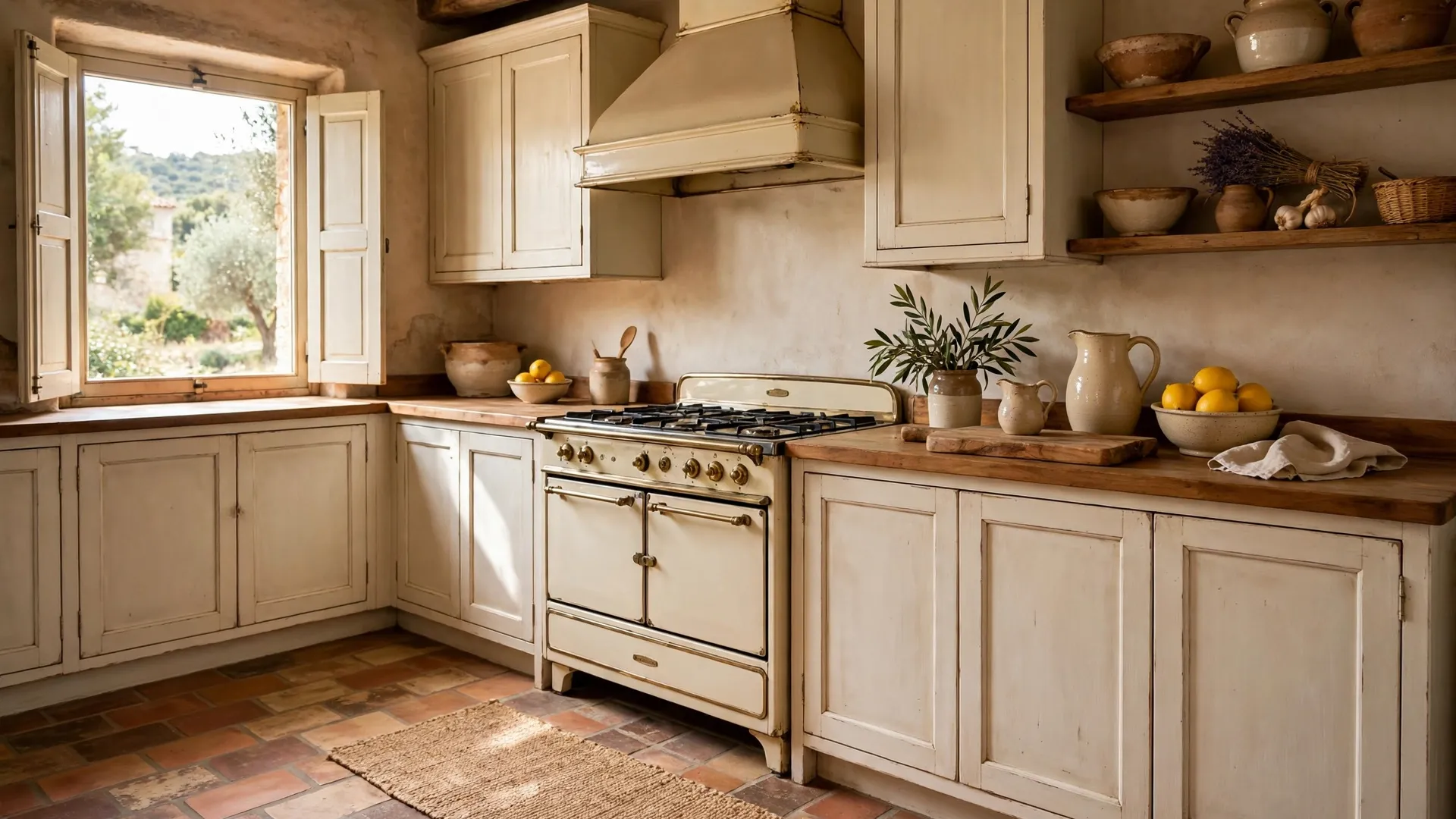
French country kitchens almost always start with soft, creamy cabinetry. Think warm whites, ivory, and pale buttermilk rather than stark white — colors that glow gently in natural light. Look for cabinets with raised-panel doors, beadboard details, and softly curved elements like an arched valance over the sink or rounded corbels at the range. If a full cabinet replacement isn’t in the cards, you can capture the look by painting existing cabinets in a warm cream and swapping in cup pulls or porcelain knobs. Glaze the crevices lightly to suggest age, and leave a few doors glass-fronted to display pretty dishware. The goal is cabinetry that feels handcrafted and time-worn, as if it’s been lovingly used by generations of cooks before you.
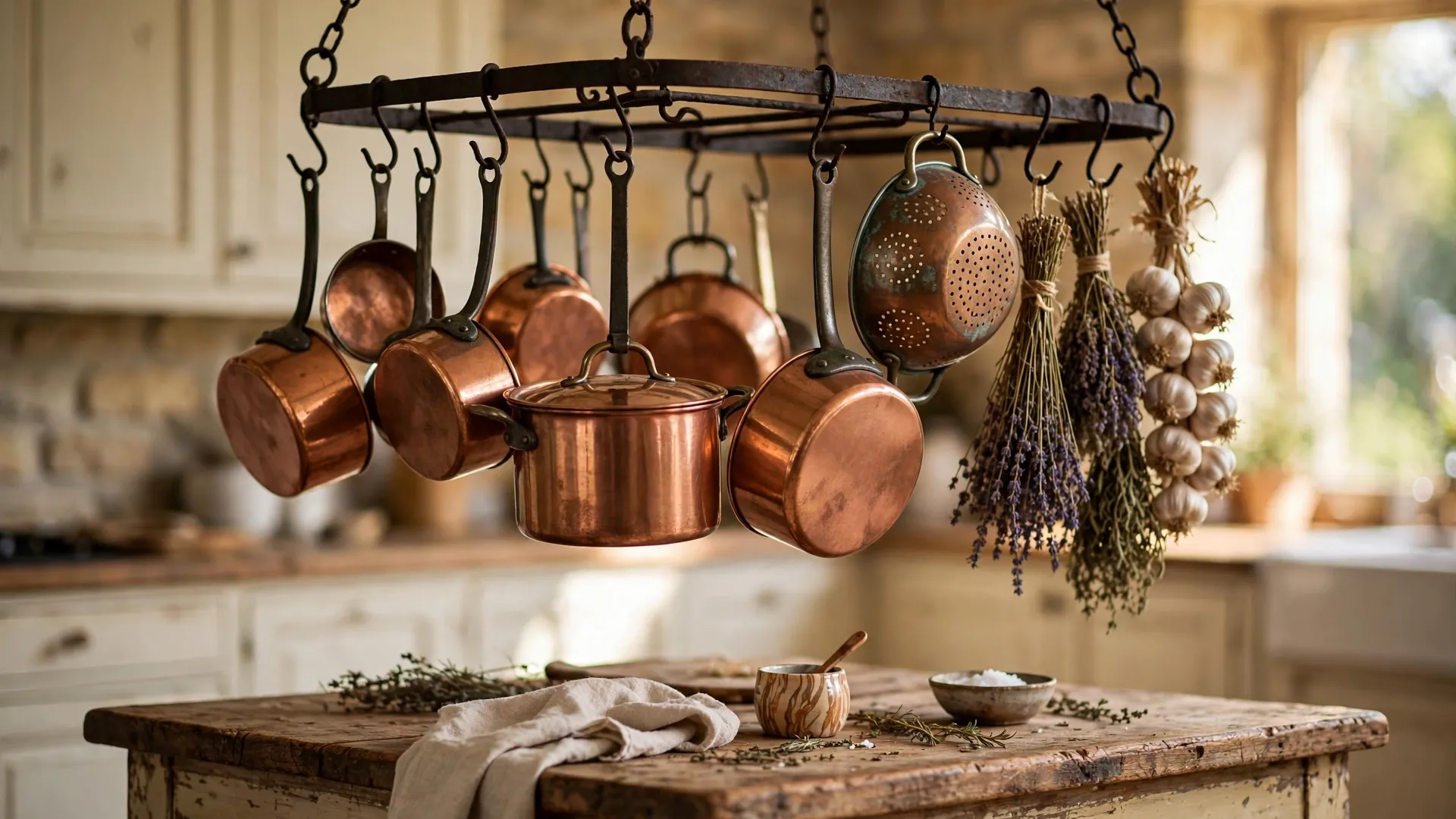
2. Hang a Copper Pot Rack Over the Island
Nothing says French country faster than gleaming copper pots. A wrought-iron or wooden pot rack hung over the island or range does double duty: it frees up cabinet space and becomes a living piece of décor. Collect copper saucepans, stockpots, and colanders in varying sizes, and let them develop a natural patina — the slightly aged look is part of the charm. If your copper is new and shiny, don’t polish it obsessively; a softer glow looks more authentic. Pair the rack with dried herb bundles, a string of garlic, or wooden utensils tucked in a nearby crock. Even three or four copper pieces on a simple wall-mounted rail can transform a plain kitchen wall into something straight out of a Provençal farmhouse.
3. Install a Farmhouse Sink with a Bridge Faucet
The farmhouse sink is a cornerstone of French country kitchens, but give it a French twist. Choose a fireclay or cast-iron apron-front sink in warm white, and pair it with a bridge-style faucet in aged brass or oil-rubbed bronze. The high, arched spout echoes the curved lines found throughout French design. Style the sink area with a striped linen hand towel draped over the edge, a small potted herb on the windowsill, and a wooden dish brush in a ceramic holder. Keep the counter around the sink relatively clear so the sink itself remains the star. This combination of a practical deep basin and elegant vintage-look hardware captures the French country balance of beauty and function perfectly, and it makes everyday tasks like washing produce or filling tall stockpots feel just a little more special.
4. Choose Warm Stone or Butcher-Block Countertops
French country kitchens favor natural, imperfect surfaces over sleek, polished ones. Butcher-block countertops in warm oak or walnut bring instant rustic charm and are wonderfully practical for a working kitchen — they only look better with a few knife marks and oil stains that tell a story. If you prefer stone, look for honed (matte) finishes in creamy limestone tones or soft gray, which feel more Old World than glossy granite. Travertine and soapstone are also beautiful choices. Whichever you pick, let the edges be slightly eased rather than razor-sharp, and style the counters with a wooden cutting board leaned against the backsplash, a ceramic pitcher, and a bowl of fresh lemons or apples for that effortless French market feel.

5. Style Open Shelving with French Ceramics
Replace a few upper cabinets with open wooden shelves and fill them with the prettiest dishes you own. French country shelving is a curated mix: creamware pitchers, blue-and-white faience plates, stacked ironstone bowls, and the occasional copper julep cup. The key is restraint — leave breathing room between groupings so each piece can shine, and stick to a tight palette of creams, soft blues, and warm wood tones. Tuck in small touches like a framed botanical print leaning at the back of a shelf or a trailing pothos plant for softness. Dust the shelves weekly and keep everyday dishes within easy reach so the display stays both beautiful and functional, never just a museum. The charm of open shelving is that it invites you to actually use your prettiest pieces instead of hiding them away in a dark cabinet.
6. Add Toile Fabric Accents
Toile de Jouy — the classic French pastoral print — is one of the easiest ways to signal French country style. You don’t need much: a toile table runner, a pair of Roman shades in a red or navy toile, or seat cushions on kitchen chairs can completely shift the mood of the room. If toile feels too traditional for your taste, try a smaller dose like a framed toile panel or a fabric-wrapped bulletin board. Mix toile with solid linens in cream, sage, or dusty blue so the print has room to breathe. Because toile tells a story in every repeat — shepherds, farm animals, village scenes — it adds narrative charm that plain fabrics can’t. It’s a textile that instantly makes a kitchen feel collected over time rather than decorated overnight.
7. Use a Distressed Wooden Table as Your Island
Instead of a built-in island with matching cabinetry, consider a freestanding distressed wooden table as your kitchen island. This is a hallmark of French country design: furniture pieces that feel found rather than fitted. Look for a long farmhouse-style table in weathered oak with turned legs and a worn top, then slide woven baskets underneath for storage and hang a pendant or two above. The table doubles as a prep surface, a baking station, and a casual gathering spot — pull up a couple of stools and suddenly it’s the heart of the kitchen. If the top is too rough for food prep, place a large wooden cutting board on top as a working surface. The slightly mismatched, unfitted look is exactly what makes it feel authentically French.
8. Light the Room with Wrought-Iron Fixtures
Lighting in a French country kitchen should feel hand-forged and timeless. Wrought-iron chandeliers with candle-style bulbs, scrolled pendants over the island, and simple iron sconces flanking the range hood all fit the bill beautifully. Look for fixtures with graceful curves, leaf or vine motifs, and an aged black or bronze finish — never shiny chrome. A single statement chandelier over the dining table anchors the whole space, while smaller pendants keep task areas warm and inviting for cooking and gathering. Dimmer switches are a must so you can shift from bright cooking light to a soft, candlelit glow for evening meals. Good iron lighting ages gracefully and adds an architectural quality that makes even a modest kitchen feel grand and full of character.
9. Lay Terracotta or Checkerboard Tile Floors
The floor sets the foundation for the whole French country look. Terracotta tiles in warm, sun-baked tones bring instant Provençal warmth and hide kitchen wear beautifully — their natural color variation means crumbs and scuffs practically disappear. For a more classic French bistro feel, consider a checkerboard floor in cream and soft gray or pale blue, which adds pattern and old-world charm. If replacing floors isn’t possible, a large flat-weave rug in a vintage-inspired pattern can suggest the same feeling. Whichever route you take, choose matte finishes over glossy ones; the aged, low-sheen look is essential. Pair tile floors with a few woven or braided runners near the sink and stove for softness underfoot and an extra layer of texture.
10. Show Off Glass-Front Cabinets
Glass-front cabinets are a French country staple because they turn everyday dishware into décor. Replace the solid doors on a few upper cabinets with mullioned glass fronts — the divided panes add that old-world, almost cottage-window charm. Inside, arrange creamware, glass canisters of flour and pasta, and a few blue-and-white pieces in loose, artful groupings. Keep the palette light and cohesive so the cabinet reads as calm rather than cluttered. If your cabinets are too deep for pretty displays, add a shallow plate rail inside the door. Under-cabinet lighting makes glass-front cabinets glow in the evening and shows off your prettiest pieces. It’s storage that doubles as a display case, and it makes the kitchen feel larger and more open at the same time.
11. Display Lavender and Fresh Herbs Everywhere
No French country kitchen is complete without the scent and sight of herbs. Bundle dried lavender with twine and hang it from the pot rack, tuck sprigs into a ceramic pitcher on the counter, or keep a row of potted herbs — rosemary, thyme, basil, and sage — on a sunny windowsill. Lavender is the signature scent of Provence, and even a small bundle in a linen sack perfumes a whole corner of the kitchen. Use terracotta pots or aged zinc containers rather than plastic for an authentic look. Beyond decoration, fresh herbs are practical: snip rosemary for roast chicken or basil for a quick sauce, and the kitchen feels like it’s part of a working French farmhouse. Rotate bundles seasonally so they always look fresh, not dusty.

12. Create a Statement Range Hood with Curved Lines
The range hood is often the visual centerpiece of a French country kitchen, so make it count. Look for hoods with soft curves, arched details, or a gently tapered silhouette rather than a boxy stainless rectangle. A plaster-finished hood in warm white, a hammered copper hood, or a wooden hood with carved corbels all capture the look beautifully. If a new hood isn’t in the budget, you can dress up an existing one with a wood mantel-style surround, applied molding, or a fresh coat of creamy paint. Style the mantel shelf with a small framed art print, a trailing plant, and a couple of copper or ceramic pieces. A beautiful hood draws the eye upward and gives the kitchen the architectural presence of a French country estate.
13. Set Up a Bistro Corner with Upholstered Chairs
Carve out a small eating nook that feels like a Parisian café. A round pedestal table — marble-topped if you can find one — paired with two or four upholstered chairs in a French stripe, small floral, or solid linen slipcover creates an irresistible breakfast spot. Tuck the nook into a bay window or a sunny corner, and layer it with a striped runner, a tiny vase of fresh flowers, and a woven placemat or two. Bentwood chairs with cane seats are another classic French choice and fold the bistro feeling in even further. This corner doesn’t need to seat a crowd; its charm is in its intimacy. Morning coffee tastes better in a spot that feels like it belongs on a quiet street in Lyon.
14. Hang a Plate Wall or Vintage Wall Décor
French country walls love a good display. A plate wall — an arrangement of creamware, blue-and-white, or hand-painted plates — adds instant charm above a sideboard or along an empty stretch of wall. Mix sizes and patterns loosely but keep the color palette tight so it reads as intentional. Beyond plates, consider vintage-inspired wall décor: an old French market sign, a framed botanical or herb print, an antique clock with Roman numerals, or a wrought-iron wall rack holding cutting boards. The trick is to let walls feel collected rather than decorated — pieces gathered over time, each with a story. Leave some breathing room between groupings; French country is layered, never cluttered, and a little empty wall space makes each display feel intentional.
15. Expose Rustic Beams and Layer Natural Textures
If your kitchen has the bones for it, exposed wooden beams are the ultimate French country statement. Dark, rough-hewn beams against a creamy ceiling add warmth, history, and architectural drama in one move. Even faux beams in stained wood can deliver the effect convincingly. Beyond beams, layer natural textures throughout the room: a nubby linen runner, woven seagrass baskets for produce, a sisal or jute rug under the table, and rough ceramic vases. These tactile materials are what keep a French country kitchen from feeling precious — they ground the elegant details in rustic reality and make the room feel hand-touched rather than showroom-perfect. Mix smooth with rough, refined with worn, and the room will feel like it’s been loved for a very long time.
Styling Tips
Getting the French country look right is less about buying specific pieces and more about mastering a few guiding principles. First, commit to a warm, muted palette: creamy whites, soft grays, sage green, dusty blue, warm terracotta, and touches of aged gold. Avoid anything neon, stark white, or high-gloss — French country lives in the soft, sun-faded middle of the color wheel. Second, mix old with new deliberately. Pair a genuine antique (even a small one, like a vintage scale or an old bread board) with newer pieces that echo its character; the blend is what makes the style feel authentic rather than themed. Third, embrace imperfection. Distressed finishes, slightly uneven handmade tiles, and a patina on metals are features, not flaws — they tell the story of a well-loved home. Fourth, think in curves. From arched cabinet valances to rounded chair backs to scrolled ironwork, gentle curves soften the room and distinguish French country from sharper, more angular styles. Finally, edit as you style. Layer generously, then step back and remove one or two items. French country is collected and cozy, but every piece should earn its place. When in doubt, let natural light, fresh herbs, and simple ceramics do the talking.
Frequently Asked Questions
What is the difference between French country and farmhouse kitchen style?
American farmhouse style leans practical and casual, with clean lines, shiplap, and a mostly neutral palette. French country shares the rustic warmth but adds old-world European refinement: curved lines, ornate details, toile fabrics, copper accents, and antique-inspired pieces. Think of farmhouse as the hardworking American barn and French country as the romantic Provençal estate — cousins, not twins.
What colors work best in a French country kitchen?
Stick to warm, sun-washed tones: creamy off-whites, warm beige, soft sage green, dusty blue, pale lavender gray, and terracotta. Accents of aged gold, warm copper, and dark bronze add richness. The overall feeling should be like the Provençal countryside — soft, natural, and gently faded by the sun.
How can I get the French country look on a budget?
You don’t need a full remodel. Paint cabinets a warm cream, swap hardware for cup pulls or porcelain knobs, hang a few copper pots on a simple wall rail, add toile or striped linen textiles, and style open shelves with thrifted creamware. Small changes — a plate wall, dried lavender bundles, a vintage-style rug — deliver outsized French charm for very little money.
Does a French country kitchen have to look old-fashioned?
Not at all. The style is timeless rather than dated. You can absolutely pair French country bones — creamy cabinets, a farmhouse sink, natural stone — with modern appliances and good task lighting. The key is choosing appliances and fixtures with soft, classic lines and warm metallic finishes so they blend with the room instead of fighting it.
What backsplash suits a French country kitchen?
Handmade-look subway tile with slightly uneven edges, small square zellige-style tiles in creamy or pale blue tones, or natural stone in a honed finish all work beautifully. Keep the grout lines soft and the finish matte. A simple tile laid in a classic pattern lets your copper, ceramics, and textiles be the stars.
Conclusion
A French country kitchen isn’t really about following rules — it’s about creating a space that feels warm, storied, and deeply welcoming. Start with creamy cabinetry and natural textures, layer in copper, toile, and ceramics, and let the room grow more charming with every meal cooked in it. Whether you embrace all fifteen ideas or just borrow a few favorites, you’ll end up with a kitchen that invites people to linger a little longer around the table. And really, that’s the whole point of French country style: a home that celebrates good food, good company, and the beauty of everyday life. Bon appétit!


