

15 Living Room Wall Art Ideas
Your living room walls are basically a blank canvas waiting for a personality — and wall art is the fastest, friendliest way to give them one. Whether you're staring at a big empty stretch above the sofa or a lonely corner that never quite feels finished, the right piece of art can pull your whole room together in an afternoon.
The best part? You don't need a gallery budget or a degree in interior design. A mix of framed prints, oversized canvases, and thoughtful gallery walls can work in any space, any style, and any rental situation. In this guide, we'll walk through 15 living room wall art ideas with real styling details — frame colors, placement heights, what to hang where, and how to pair pieces with the furniture you already own. Grab a tape measure and a little inspiration, because your walls are about to get a whole lot happier.

1. Oversized Canvas Above the Sofa
Nothing anchors a living room like one big, bold canvas hanging over the sofa, and this is the look designers reach for again and again. Go for a piece that's about two-thirds the width of your sofa — if your couch is 84 inches wide, aim for art around 55 to 60 inches across. Hang it so the bottom of the frame sits 6 to 8 inches above the sofa back; any higher and the art feels like it's floating away from the furniture. Abstract landscapes in soft blues, warm taupes, and creamy whites are a safe-but-beautiful bet that works with almost any palette. A chunky natural wood frame or no frame at all (gallery-wrapped canvas) keeps the look modern and relaxed. Pair it with a textured throw and a couple of solid linen pillows pulled from the artwork's colors, and suddenly your sofa area looks styled on purpose instead of just furnished.
2. Classic Gallery Wall
A gallery wall is the ultimate way to show off your personality — family photos, travel snapshots, vintage finds, and pretty prints all mixed together in one happy collage. Start by laying your frames out on the floor first, playing with the arrangement until it feels balanced, then take a photo of your layout before you touch a hammer. Stick to two or three frame finishes (black, white, and natural wood is a classic trio) so the mix feels curated instead of chaotic. Keep the center of the whole arrangement at about 57 inches from the floor — that's average eye level and the sweet spot galleries use. Leave 2 to 3 inches between frames for breathing room. Above a console table or along a hallway-facing wall, a gallery wall turns blank space into a conversation starter your guests will actually stop and look at.
3. Symmetrical Pair of Framed Prints
If gallery walls feel too busy for your taste, a neat symmetrical pair of framed prints gives you art with a calm, orderly feel. This works beautifully flanking a fireplace, a window, or a tall bookshelf — anywhere two matching pieces can frame a focal point. Choose prints from the same series or artist so the colors and style echo each other; botanical prints, architectural sketches, or matching abstract duos all work wonderfully. Hang them at the same height with 3 to 4 inches of space between them, centered on whatever sits below. Matching thin black or brass frames keep the pair feeling intentional. This is also a great trick in smaller living rooms, where one huge piece might overwhelm but two medium prints (around 16×20 inches each) fill the wall just right without crowding it.
4. Leaned Oversized Art on a Console
Not every piece of art needs a nail — leaning a large framed print or canvas against the wall on top of a console table is effortlessly chic and totally renter-friendly. Choose one oversized piece (at least 24×36 inches) with a sturdy frame, and let it rest against the wall with the bottom edge a few inches from the wall's base. Layer a smaller framed print or a little stack of coffee-table books in front of it for depth. This casual styling looks especially good with abstract art, moody landscapes, or black-and-white photography. A console in an entryway-adjacent living room wall, a low credenza, or even a mantel all make great leaning spots. Bonus: you can swap the art seasonally in seconds, no patching holes required.
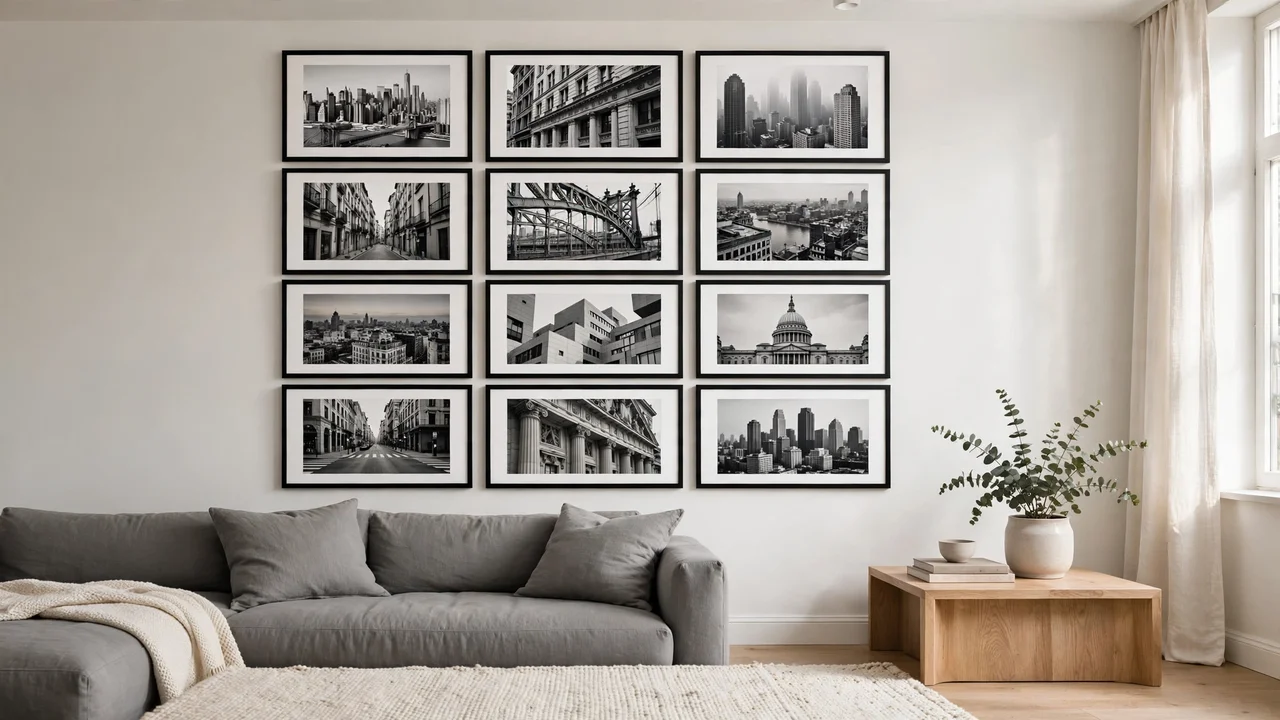
5. Black-and-White Photography Collection
There's something timeless about black-and-white photography — it adds drama and sophistication without introducing a single new color to your palette. Build a small collection of 3 to 5 prints in matching slim black frames with white mats; the mats give each photo breathing room and make even affordable prints look gallery-worthy. City skylines, misty forests, architectural details, and candid street scenes all photograph beautifully in monochrome. Hang them in a tight grid for a modern feel, or a loose salon-style cluster for something more eclectic. This look shines in neutral living rooms — think gray sofas, cream rugs, and natural wood — where the high-contrast photos become the room's graphic punch. Keep the glass non-glare if the wall faces a window, so reflections don't wash out the images.
6. Botanical and Nature Prints
Bring the outdoors in with botanical prints — leafy greens, pressed-flower illustrations, and soft watercolor ferns never go out of style. Vintage-style botanical plates in warm cream and sage tones look gorgeous in thin gold or light oak frames, especially against white or pale gray walls. For a modern twist, go oversized: one large-scale monstera leaf or eucalyptus print in a simple black frame makes a fresh statement above a reading chair. Pair botanical art with real plants nearby — a fiddle-leaf fig or a trailing pothos echoes the artwork and doubles the organic feel. This is also a forgiving choice for color-shy decorators, since greens and earth tones blend with nearly every sofa color, from navy to beige to rust.
7. Textured and Woven Wall Hangings
Wall art doesn't have to live behind glass. Woven tapestries, macramé hangings, and textured fiber art add warmth and softness that framed prints simply can't. A large cream or oatmeal-colored woven piece above the sofa instantly makes a room feel cozier, especially in spaces with lots of hard surfaces like leather chairs or glass tables. Look for pieces with tassels, fringe, or chunky knit textures for extra dimension. Hang them from a natural wooden dowel or a slim brass rod, letting the textile drape naturally. These pair beautifully with boho, farmhouse, and Scandinavian styles — add a jute rug and some rattan baskets nearby and the whole corner feels collected and calm. Just keep them out of direct sunlight to prevent fading, and give them a gentle shake outdoors now and then to dust them off.
8. Floating Shelves with Layered Art
Picture ledges and floating shelves let you display art like a gallery curator — layered, overlapping, and easy to rearrange whenever the mood strikes. Install one or two long shelves (48 to 60 inches works well) at about eye level, and lean a mix of framed prints, small canvases, and even a decorative object or two along them. Vary the sizes: a large 18×24 print at the back, medium 11×14 frames in front, and a tiny 5×7 tucked to one side. Overlap the frames slightly so the display feels collected rather than lined up like soldiers. This is perfect above a desk area in the living room or on a narrow wall where one big piece won't fit. The best part is flexibility — rotate in seasonal prints, holiday cards, or your kids' artwork without a single new nail hole.

9. Bold Abstract Statement Piece
When you want your living room to have a clear focal point, a bold abstract painting does the heavy lifting. Look for large-scale pieces with confident brushstrokes and a palette that pulls from — or playfully contrasts with — your room's colors. A rust, ochre, and charcoal abstract sings against a neutral beige sofa; cool blues and grays electrify a white-walled modern space. Don't be afraid of size here: art that feels "too big" in the store usually looks just right once it's on the wall. A floating frame (where the canvas sits inside a frame with a small gap) gives abstracts a polished, gallery-like finish. Keep the surrounding decor simple — a couple of solid pillows, a clean-lined coffee table — so the artwork stays the star. One brave piece beats five timid ones every time.
10. Vintage and Thrifted Finds
Some of the most character-filled wall art comes with a past. Thrift stores, flea markets, and estate sales are treasure troves for vintage oil paintings, retro travel posters, ornate gilt frames, and quirky prints you won't see in anyone else's home. A moody vintage landscape in a chunky gold frame adds instant soul above a fireplace, while a set of retro national-park posters brings playful color to a family room. Don't worry if the art itself is a little faded — patina is part of the charm. Reframe tired prints in fresh mats and simple frames to give them new life. Mix one or two vintage pieces with newer art for a collected-over-time look that feels personal rather than decorated-from-a-catalog. Set a budget before you hunt, because the thrill of the find makes everything tempting.
11. Mirrors as Wall Art
Mirrors earn their place in any wall-art roundup — they reflect light, make rooms feel bigger, and come in frame styles as pretty as any painting. A large round mirror with a thin brass frame above a console is a classic that works in modern, traditional, and transitional living rooms alike. For drama, try a sunburst mirror or an arched floor mirror leaned against the wall in a corner; the arch shape is having a major moment and softens rooms full of square furniture. Hang mirrors where they'll catch something lovely — a window view, a chandelier, or your gallery wall opposite — so the reflection becomes part of the decor. In small living rooms, one oversized mirror can visually double the space. Just skip hanging a mirror directly opposite clutter, since it will faithfully double that too.

12. Typography and Quote Art
Words on walls get a bad rap when they're generic, but the right typography art feels personal and intentional. Choose quotes that actually mean something to your family — a line from a favorite book, your wedding song lyric, or simply your family name and established date in beautiful lettering. Black script on a cream background in a distressed wood frame suits farmhouse style; bold sans-serif prints in black and white fit modern spaces. Keep it to one typographic piece per room so it stays special rather than shouty. Scale matters: a small 8×10 quote gets lost on a big wall, so go at least 16×20 or pair it with complementary prints in a small grouping. Place it somewhere you'll actually read it daily — above a reading nook or near the entry — and it'll make you smile instead of blending into the background.
13. Kids' Art in Grown-Up Frames
Your kids' masterpieces deserve better than the fridge door — and professionally framed children's art is one of the most heartwarming trends in family living rooms. Pick a few favorites with great color, then frame them in real frames with proper mats; suddenly that rainbow scribble looks like modern abstract art. A grid of four matching white frames with colorful kid art inside is cheerful, cohesive, and deeply personal. Rotate the pieces every few months so every child gets wall time. This works especially well in the TV or play-adjacent corner of the living room, where the vibe is already relaxed and family-focused. Use acid-free mats if you want to preserve the originals, or scan and print copies so the originals stay safe in a keepsake box while the prints take the spotlight.
14. Sculptural and 3D Wall Decor
Flat art is wonderful, but dimensional pieces add a layer of interest that changes as the light shifts through the day. Think carved wood panels, metal wall sculptures, ceramic wall hangings, or a cluster of woven baskets arranged artfully. A large carved-wood mandala or a set of graduated metal discs above the sofa creates shadow and depth no print can match. These pieces are fantastic for minimalist rooms that need texture without visual clutter — one sculptural moment on an otherwise clean wall feels deliberate and high-end. When hanging 3D art, give it more breathing room than flat pieces; about 8 to 10 inches of clear space around it lets the shadows play. Pair with simple furniture and let the texture be the talking point.
15. Seasonal Rotating Display
Here's a secret of effortlessly stylish homes: they don't hang the same art all year. Dedicate one spot — a picture ledge, a pair of matching frames flanking the mantel, or clipboards on the wall — to rotating seasonal art. Autumn gets warm landscape prints and botanical leaves; winter brings snowy scenes and cozy cabin photography; spring calls for florals and pastels; summer shines with beach scenes and bright abstracts. Affordable prints, downloadable art you print yourself, and even beautiful calendar pages keep the rotation budget-friendly. Store the off-season pieces flat in a portfolio case. This little ritual keeps your living room feeling fresh and current without redecorating, and guests will notice the thoughtful touch. Start with just one rotating spot — once you see how fun it is, you'll want more.
Styling Tips
Getting the art is only half the job — hanging it well is what makes it look like a designer did it. Here are the practical rules that make all the difference.
Hang at eye level. The center of your artwork (or the center of a grouping) should sit about 57 to 60 inches from the floor. When hanging above furniture, leave 6 to 8 inches between the furniture top and the bottom of the frame — close enough to feel connected, not floating.
Scale to the wall, not the store. Art almost always looks smaller on your wall than it did in the shop. As a rule of thumb, artwork above a sofa or console should span about two-thirds the width of the furniture below it. When in doubt, go bigger — undersized art is the most common wall-decor mistake.
Plan before you hammer. Trace your frames onto kraft paper or newspaper, cut them out, and tape the templates to the wall with painter's tape. Live with the layout for a day, adjust freely, then hang once. Your walls will thank you.
Mind the lighting. Art near windows can fade, so use UV-protective glass for valuable pieces or hang them on walls that don't get direct sun. A small picture light or an adjustable wall sconce above a favorite piece makes colors glow in the evening and gives the whole room a gallery feel.
Coordinate, don't match. Your art doesn't need to match your sofa perfectly — it needs to relate. Pull two or three colors from the artwork into pillows, throws, or a rug, and the room will feel pulled together without looking like a showroom set.
Mix frame styles with intention. Combining black, wood, and brass frames looks curated when you repeat each finish at least twice. One lone orphan frame in a different finish tends to look accidental, so echo your choices across the arrangement.
Frequently Asked Questions
How high should I hang art above my sofa?
Hang it so the bottom edge of the frame is 6 to 8 inches above the top of the sofa back. The center of the piece should land around 57 to 60 inches from the floor. If your ceilings are very tall, you can nudge things slightly higher, but keep the art visually connected to the sofa — art that floats too high looks disconnected from the room.
How do I choose art that matches my living room?
Start with your existing palette: pick artwork that includes two or three colors already present in your rug, pillows, or curtains, plus maybe one accent color you'd like to introduce. Consider your style too — abstract and photography suit modern rooms, botanical prints and vintage pieces warm up traditional spaces, and woven textiles shine in boho or farmhouse rooms. If you love a piece but the colors clash, a neutral mat and simple frame can bridge the gap.
Can I mix different frame colors in one room?
Absolutely — mixed frames look collected and personal when done with intention. Limit yourself to two or three finishes (for example, black, natural wood, and brass) and repeat each one at least twice across your displays. Keep the frame styles in a similar weight — all thin and modern, or all chunky and traditional — so the mix feels harmonious rather than random.
What size art works best for a small living room?
In a small living room, one medium-to-large piece usually looks better than several tiny ones — small frames scattered around can make walls feel busy and the room feel smaller. Aim for art that fills about two-thirds of the wall section or furniture width it's above. Mirrors are also a secret weapon in small spaces since they bounce light and create the illusion of more square footage.
How do I hang heavy art safely?
For pieces over 20 pounds, skip the basic nail and use proper wall anchors, toggle bolts for drywall, or a French cleat for the heaviest canvases and mirrors. Always hang into a stud when possible — a stud finder is a ten-dollar tool that prevents disasters. For gallery walls with many lighter frames, adhesive picture-hanging strips rated for the frame's weight are a renter-friendly option that won't damage walls.
Is it okay to lean art instead of hanging it?
Yes — leaning large art on a console, credenza, or mantel is a legitimate designer styling trick, not a shortcut. It works best with oversized pieces (24×36 inches and up) that have sturdy frames. Make sure the piece is stable, keep it a few inches from the wall's base edge, and layer smaller items in front for a collected look. It's also ideal for renters and for anyone who likes to rotate art seasonally.
Conclusion
Your living room walls have been waiting patiently — and now you have 15 beautiful ways to dress them up, from a single oversized canvas to a full personality-packed gallery wall. The real secret isn't finding the "perfect" piece; it's choosing art you genuinely love, hanging it at the right height and scale, and letting a few colors echo through your pillows and rug to tie it all together. Start with one wall this weekend — the one above the sofa is always a winner — and enjoy watching your room come to life. Happy decorating!


