

Pink Kitchen Decor: 20 Sweet & Sophisticated Ideas
Pink in the kitchen? For years the answer would have been a firm no — kitchens were supposed to be serious spaces of stainless steel, dark wood, and safe neutrals. But that thinking is long gone. Today, pink kitchen decor is one of the warmest, most welcoming trends in home design, and it is here to stay. From the softest blush to rich dusty rose, pink brings a sense of comfort, playfulness, and personality to the heart of the home that no shade of gray ever could.
If you have been scrolling through kitchen inspiration and feeling a pull toward the rosy side, this guide is for you. We will walk through 20 sweet and sophisticated ideas for bringing pink into your kitchen — whether you want to go bold with blush cabinets or simply test the waters with a pink kettle and a set of rose-toned dish towels. Along the way, you will find practical styling tips, shade-matching advice, and answers to the most common questions about decorating with pink.
The beauty of pink is its range. It can read feminine and romantic, but it can also feel modern, earthy, or even quietly masculine depending on the shade you choose and what you pair it with. A dusty rose backsplash in a farmhouse kitchen feels entirely different from hot pink bar stools in a city loft — yet both belong to the same family. This article covers the full spectrum so you can find your version of a pink kitchen.
Let us start with why pink works so beautifully in kitchens, and then move through every layer of the room — cabinets, walls, backsplashes, accessories, furniture, and finishing touches — so you leave with a complete plan you can actually follow.
Why Pink Belongs in the Kitchen
Before we get to the ideas, it helps to understand what makes pink such a natural fit for kitchens. Kitchens are the most-used room in most homes — they are where mornings begin, where family gathers, and where guests drift during parties. A color that feels cold or severe can make all of that activity feel a little less inviting. Pink does the opposite.
The Warmth Factor
Pink is, quite simply, a warm and welcoming color. It softens hard edges — and kitchens have plenty of those, from countertops to appliances to tile. Even a small dose of pink, like a set of blush ceramic canisters or a rose-toned rug, can take the clinical edge off an all-white kitchen and make it feel like a place where someone actually lives and cooks. Designers often describe pink as the friendliest color in the palette, and kitchens benefit from friendliness more than almost any other room.
Pink as a Modern Neutral
Here is the secret that has converted so many pink skeptics: in its softer forms, pink functions as a neutral. Blush, nude, and dusty rose sit quietly alongside whites, creams, beiges, and even grays. They do not shout; they glow. This means you can treat a soft pink the way you would treat a warm white — as a background color that plays well with everything else. Once you think of pink as a neutral rather than a statement, decorating with it becomes far less intimidating.
Tip: If you are nervous about committing, start with the lightest version of pink you like. Pale blush on a wall or cabinet can almost read as warm white in certain light, which gives you the softness of pink without the commitment of a clearly pink room.
Pink Kitchen Cabinets: Finding Your Shade
Cabinets are the biggest visual surface in most kitchens, so pink cabinets make the biggest statement. But “pink cabinets” covers an enormous range, from barely-there blush to rich, moody rose. Choosing the right shade is the single most important decision in a pink kitchen.
Blush and Powder Pink Cabinets
Blush pink cabinets are the gentlest entry into the trend. Think of the color of the inside of a seashell — pale, warm, and luminous. In a kitchen with good natural light, blush cabinets can look almost creamy, with just a whisper of rose. They pair beautifully with white marble or quartz countertops, brushed brass or champagne bronze hardware, and light wood floors. This combination feels fresh, airy, and timeless rather than trendy, which is exactly why it works so well in main living spaces.
Practical tip: Blush cabinets look best with warm whites rather than cool, blue-based whites. A cool white next to blush pink can make the pink look muddy by comparison. Sample your whites next to your pink swatch in the actual kitchen light before committing.
Dusty Rose and Mauve Cabinets
If blush feels too pale for your taste, step up to dusty rose or mauve. These shades have a little more depth and a touch of gray or purple in their undertones, which makes them feel grounded and sophisticated. Dusty rose cabinets work wonderfully in kitchens that lean traditional or transitional — they look stunning with marble backsplashes, classic shaker-style cabinet fronts, and aged brass fixtures. Mauve, with its slightly cooler undertone, pairs nicely with gray stone and polished nickel.
Dusty shades are also more forgiving in rooms with less natural light. Where blush can look washed out in a dim kitchen, dusty rose holds its color and keeps the room feeling rich rather than flat.
Two-Tone Pink and White Cabinets
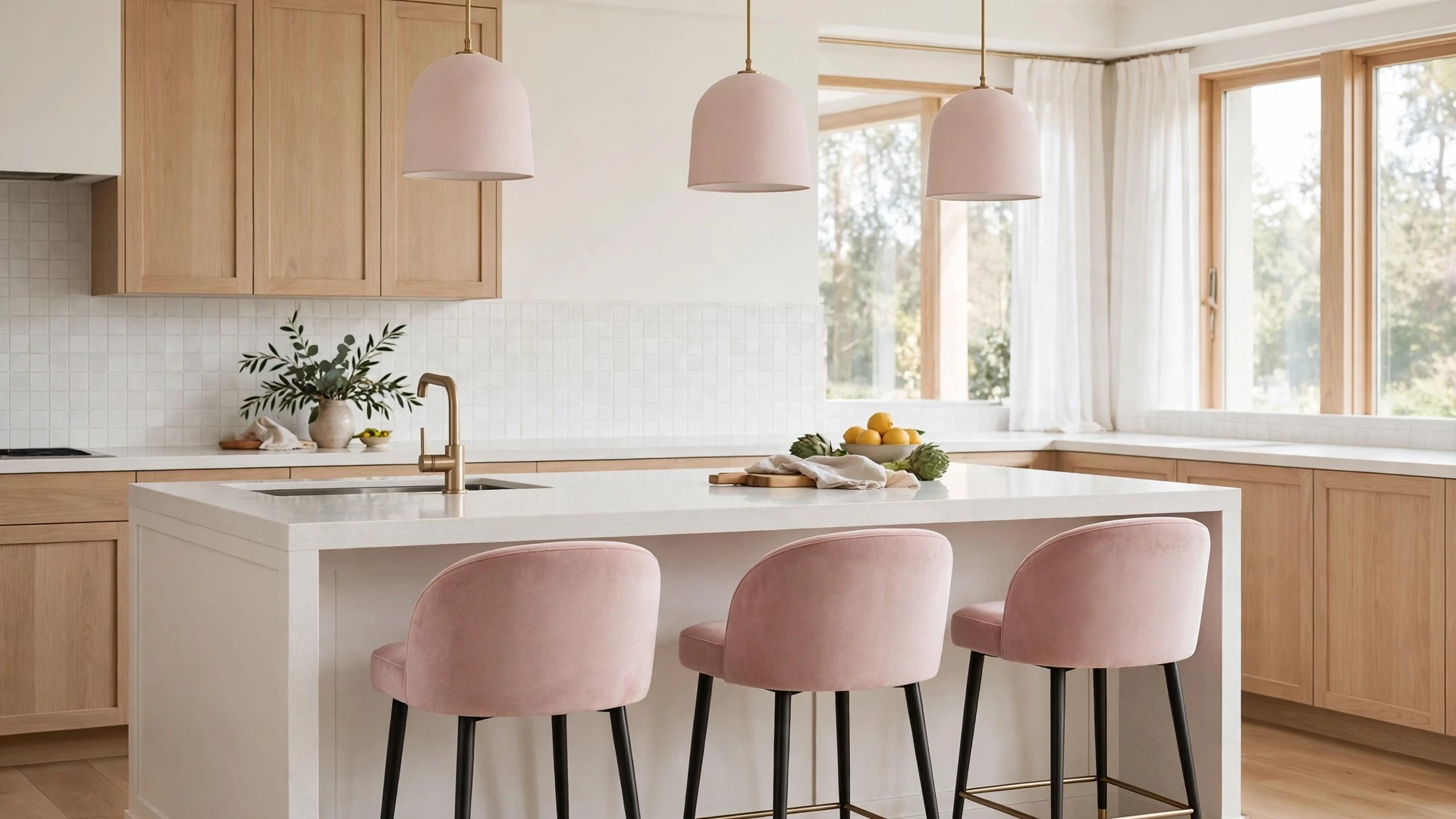
Not ready to pink the whole kitchen? Two-tone cabinetry is your answer. Paint the lower cabinets pink and keep the uppers white, or make the island the pink star of the show while the perimeter stays neutral. This approach gives you the joy of pink at eye level — where you see it most — while the white uppers keep the room feeling open and bright.
A pink island is one of the most popular ways to try the trend, and for good reason. It anchors the room, creates a natural gathering spot, and can be repainted later if your tastes change — far less commitment than a full set of pink cabinets. Tip: When going two-tone, keep the countertop the same on both colors so the room still feels unified.
Pink Walls and Backsplashes
If new cabinets are not in the cards, walls and backsplashes offer another big surface where pink can shine — and both are far easier (and cheaper) to change down the road. A pink wall or backsplash sets the tone for the entire room.
Painting Your Kitchen Walls Pink
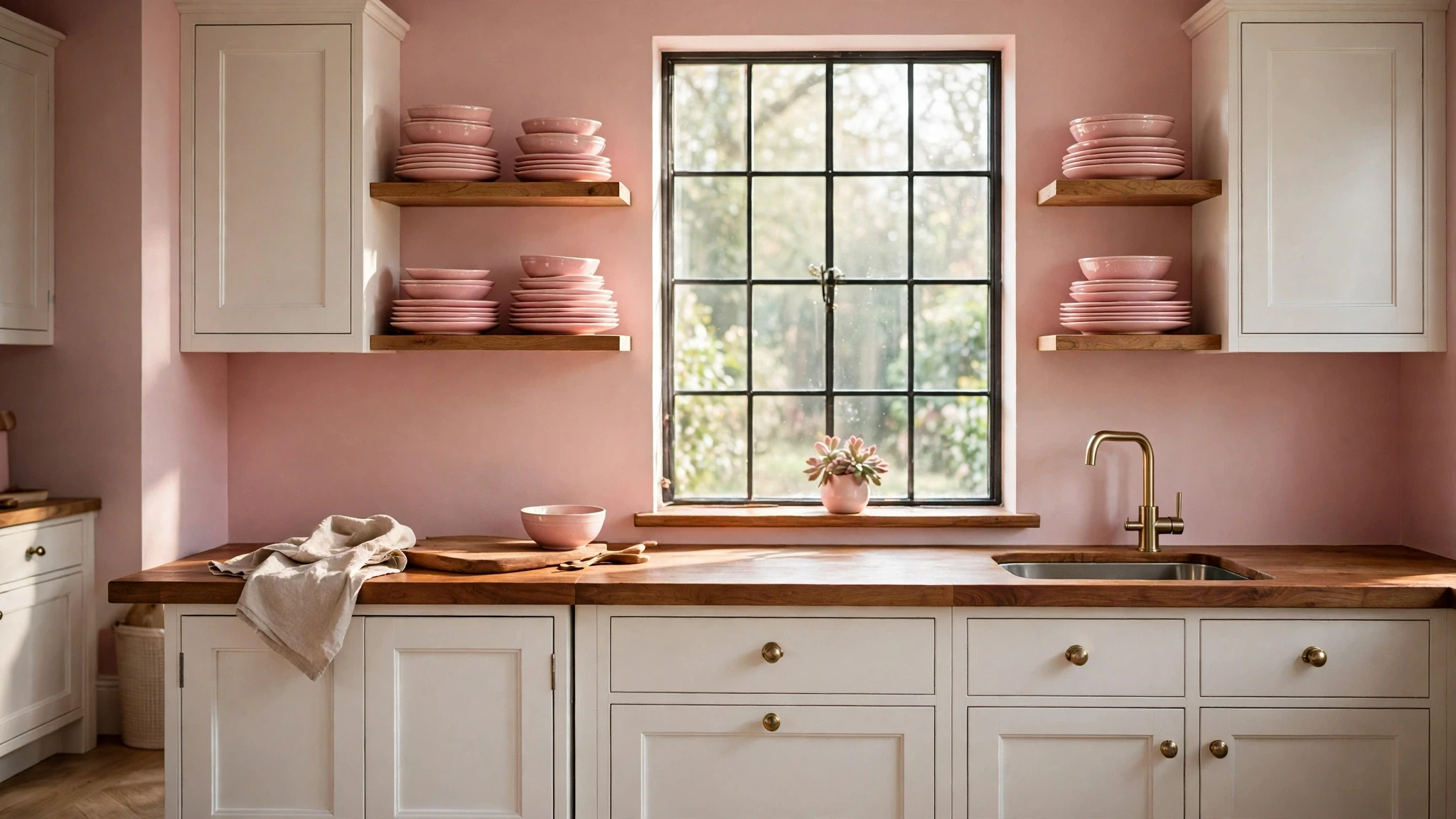
Pink walls are a classic move for a reason: paint is affordable, and it transforms a room in a weekend. For kitchens, the sweet spot tends to be soft, warm pinks — think pale rose, peachy blush, or a warm plaster pink. These shades make the room feel cozy and sunlit, even when the weather outside is gloomy.
Before you commit, test large swatches on the wall and observe them at different times of day. Pink is famously light-sensitive: a shade that looks soft and rosy in morning light can turn surprisingly intense under warm evening bulbs. Tip: In kitchens with a lot of wood tones, lean toward pinks with warm, peachy undertones so everything harmonizes. In kitchens with gray or black accents, a pink with cooler, mauve undertones usually works better.
If a whole room of pink feels like too much, try a single accent wall — the wall behind open shelving or the breakfast nook is a natural choice. You get the color impact exactly where your eye lands, without overwhelming the space.
Pink Tile Backsplash Ideas
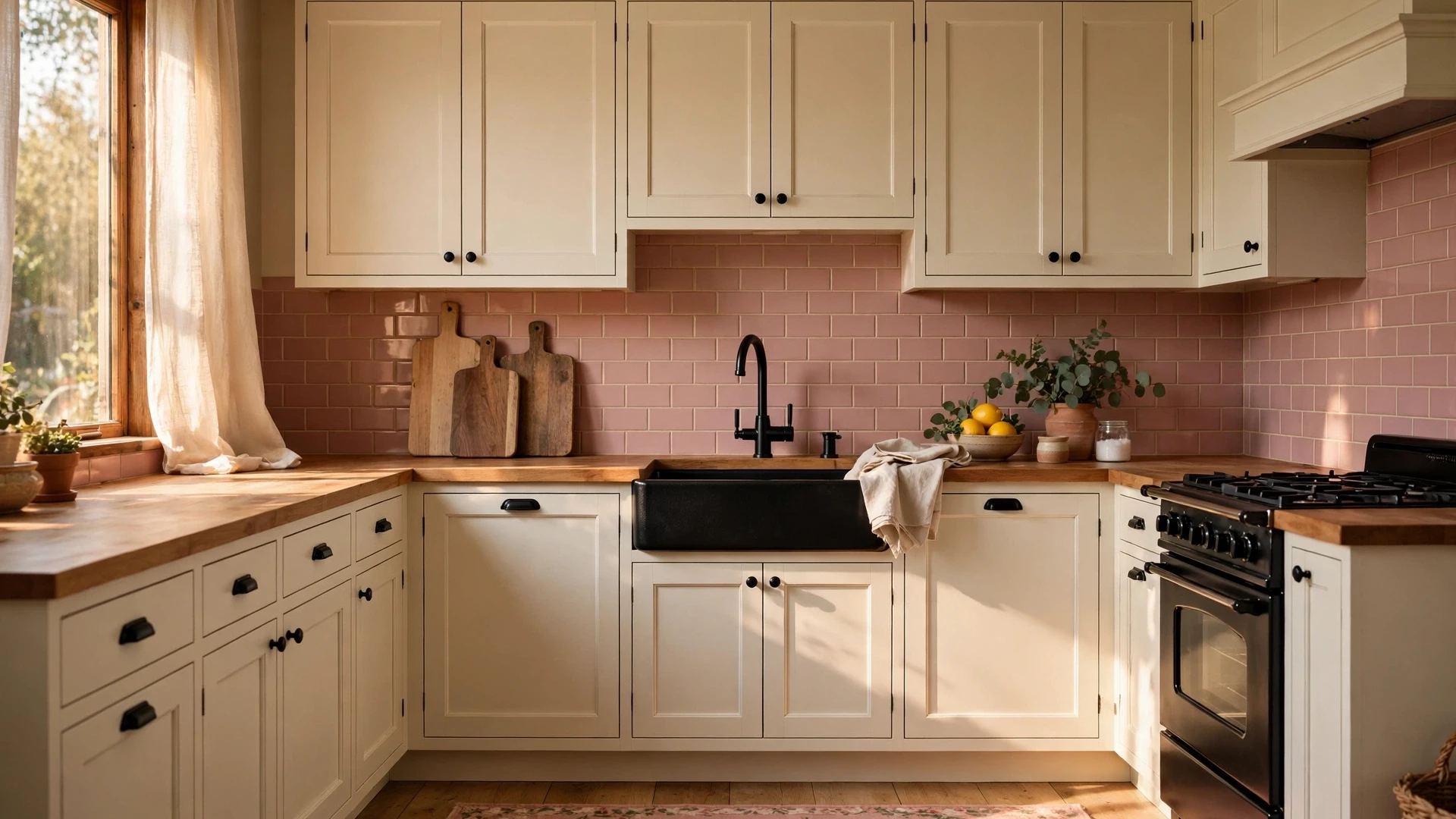
A pink backsplash is the jewelry of the kitchen — a relatively small surface with outsized style impact. Subway tiles in blush or rose are a timeless choice, especially with contrasting grout: white grout keeps the look soft and seamless, while a darker grout makes each tile pop for a more graphic feel.
For something with more character, consider handmade-look tiles with slight color variation — the uneven glaze catches the light and gives the wall a handcrafted, artisanal quality. Zellige-style tiles in a soft pink are particularly beautiful in kitchens that mix modern and rustic elements. Tip: Carry the backsplash tile all the way to the ceiling behind open shelving or a range hood for a high-end, custom look that makes standard cabinets feel bespoke.
Pink mosaic or penny-round tiles are another option, especially for smaller kitchens — the scale of the tile suits compact spaces, and the grout lines add texture that keeps pink from feeling flat.
Pink Kitchen Accessories and Small Touches
Here is the good news for renters and commitment-phobes: you do not need to paint a single thing to get a pink kitchen. Accessories are the lowest-risk, highest-reward way to bring pink into your cooking space, and they let you experiment freely.
Pink Small Appliances
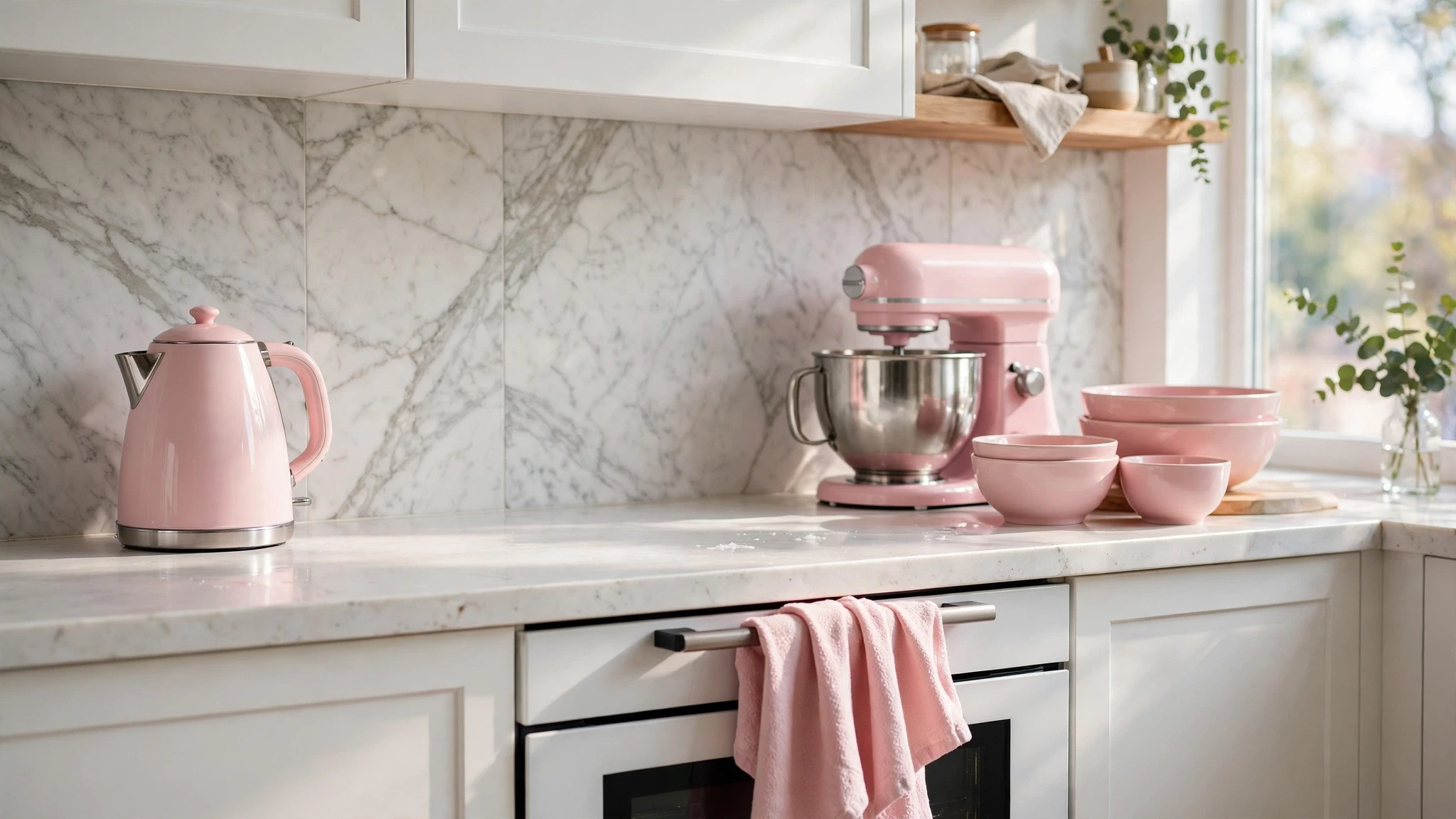
The pink small appliance is practically a design icon at this point. A blush or rose stand mixer, kettle, or toaster sitting on the countertop adds a cheerful focal point to the busiest surface in the kitchen. Because appliances are functional objects, they earn their place — the color is a bonus.
Tip: You do not need a full matching set. One or two pink appliances is plenty; more than that can start to look like a theme rather than a style. Let the rest of your countertop appliances stay neutral so the pink pieces get to be the stars.
Textiles: Curtains, Rugs, and Dish Towels
Kitchen textiles are the easiest pink to add and the easiest to change. A pink café curtain or a set of blush linen curtains softens windows and filters light beautifully. A washable runner rug in rose or blush tones protects the floor in front of the sink while adding color exactly where you stand most. And dish towels — perhaps the lowest-commitment decor item in existence — are the perfect place to play with pink patterns, from stripes to florals.
Textiles also let you test how pink feels in your kitchen before investing in bigger pieces. Live with pink curtains for a month; if you still love the color, you will know it is safe to go bigger.
Dishware and Countertop Decor
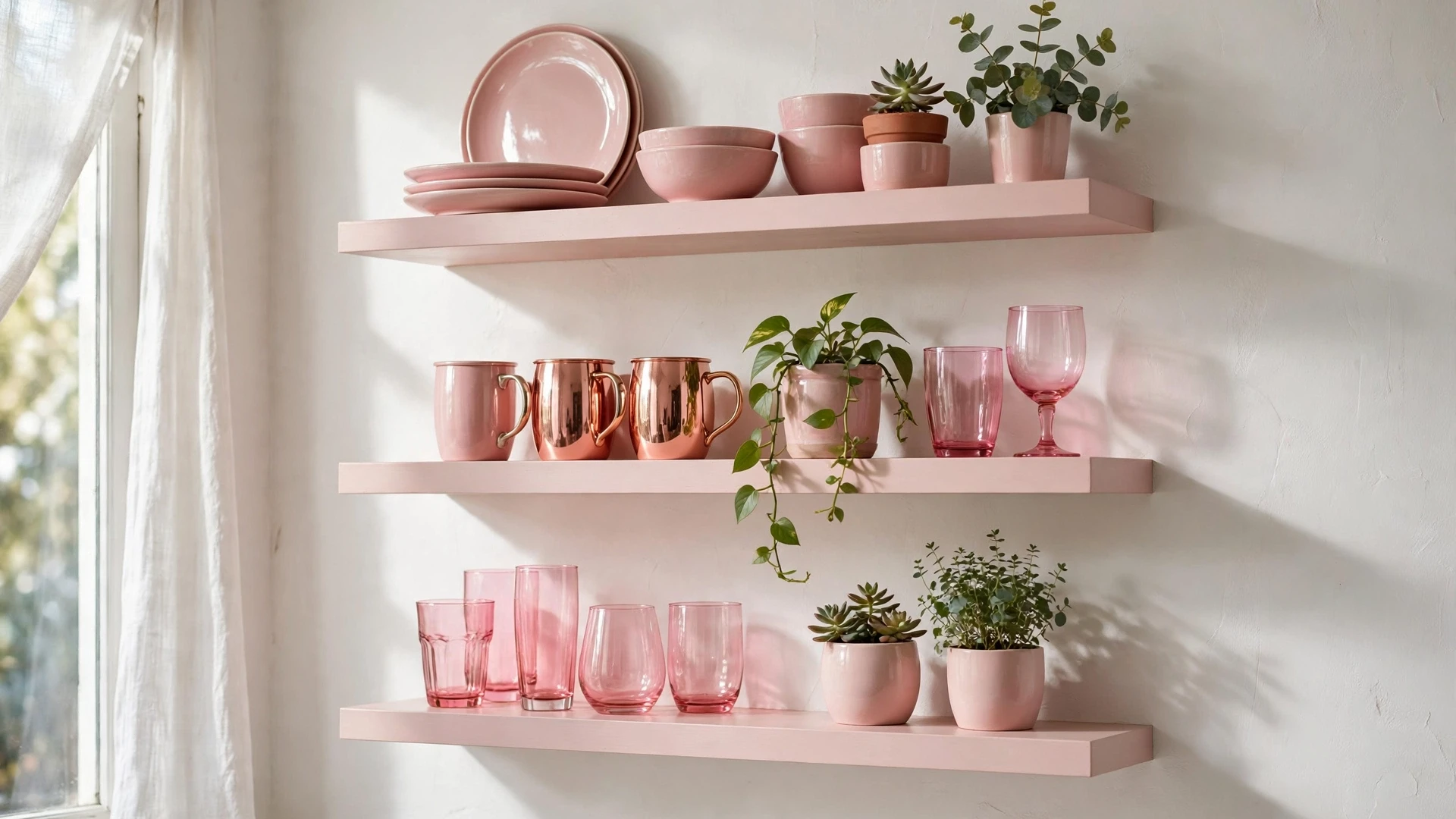
Pink dishware — plates, bowls, mugs, and serving pieces — brings color to open shelves and glass-front cabinets, where it doubles as decor. A stack of rose-colored ceramic bowls or a row of pink mugs turns storage into styling. On the countertop, group pink pieces in odd numbers for the most natural look: a pink canister set, a small vase of fresh or dried flowers in pink tones, and a pink cutting board leaning against the backsplash make a simple, pretty vignette.
Open Shelving Styled in Pink
If you have open shelves, they are a ready-made display for pink. Mix pink dishware with white pieces and natural wood or greenery so the shelves feel styled rather than color-blocked. A few pink glass tumblers catching the light, a blush ceramic pitcher, and some trailing plants create a shelf display that feels collected over time. Tip: Repeat your pink in at least three spots on the shelves so it looks intentional rather than accidental.
Pink Furniture and Seating
Furniture is the middle ground between paint and accessories — more commitment than a dish towel, less than new cabinets. Pink seating, in particular, has a way of making a kitchen feel designed rather than merely functional.
Bar Stools and Dining Chairs
Pink bar stools at the island or peninsula are one of the most effective pink kitchen moves there is. They add color at seating height, they are visible from across the room, and they can be recovered or replaced without touching the kitchen itself. Blush velvet stools bring a soft, luxe texture; molded pink plastic or metal stools feel playful and modern; pink-upholstered counter stools with wood legs suit Scandinavian and farmhouse kitchens alike.
Tip: If you choose a bold pink for seating, keep the rest of the furniture neutral. Four pink stools plus a pink rug plus pink curtains is a lot — let the stools carry the color and keep everything else quiet.
Breakfast Nooks and Dining Corners
A breakfast nook is a wonderful place to go a little bolder with pink, since it is a distinct zone within the kitchen. A blush banquette with patterned pink cushions, a small round table, and a pink pendant light above creates a cozy corner that feels like a café. Even in a simple dining corner, pink dining chairs around a wood or white table add warmth and personality.
Styling Tips for a Balanced Pink Kitchen
Pink is easy to love and easy to overdo. These styling principles will help you keep your pink kitchen sophisticated rather than saccharine.
Balance Pink with Neutrals
The golden rule of pink kitchens: let pink be the accent, not the entire palette — unless you are going for a fully immersive look on purpose. White, cream, warm beige, light gray, and natural wood are pink’s best friends. They give the eye somewhere to rest and make the pink look richer by contrast. A good starting ratio is about 60 percent neutrals, 30 percent secondary tones like wood or gray, and 10 percent pink — then adjust to taste.
Metallics That Love Pink
Few color-metal combinations are as happy as pink and warm metallics. Brushed brass, champagne bronze, copper, and rose gold all enhance pink’s warmth and add a touch of glamour. Use them for cabinet hardware, faucets, light fixtures, and small decor pieces. If your kitchen leans modern, polished chrome or matte black can also work with pink — black, in particular, gives pink a chic, graphic edge that keeps it from feeling too sweet.
Tip: Stick to one metal finish for the big fixtures (faucet, hardware, lighting) and use the second metal only in small decor accents. Mixed metals work, but they need a clear hierarchy to look intentional.
Lighting Makes the Pink
Lighting changes how pink reads more than almost any other color. Warm bulbs (around 2700K) deepen pinks and make them feel cozy; cool daylight bulbs can wash pale pinks out or give them a gray cast. If your pink looks different at night than during the day, your bulbs are probably the reason. For pink kitchens, warm-white lighting is almost always the better choice.
Natural light matters too. A north-facing kitchen gets cooler light, which can make pink look slightly muted — in that case, choose a pink with warm undertones to compensate. A south-facing kitchen bathes everything in warm light, so even a cool mauve pink will look rosy and inviting.
Mix Textures to Keep Pink Sophisticated
Texture is what separates a sophisticated pink kitchen from a flat, one-note one. Pair smooth pink surfaces (glossy tile, lacquered cabinets) with tactile naturals: wood cutting boards, woven baskets, linen curtains, a jute rug. Velvet upholstery in blush, nubby bouclé on dining chairs, and honed stone countertops all add depth that keeps pink feeling layered and interesting.
Pink Kitchen Styles to Try
Pink is not one style — it is a color that adapts to many. Here are four distinct directions to help you find yours.
Modern Minimal Pink
Flat-front blush cabinets with no visible hardware, white quartz countertops, a single pink pendant light, and almost nothing on the counters — this is pink at its most restrained and contemporary. The key is discipline: one shade of pink, clean lines, and plenty of negative space. It proves that pink can be as sleek as any all-white minimalist kitchen, with more warmth.
Vintage and Retro Pink
Pink has deep roots in mid-century kitchens, and the retro look is back in a big way. Think pastel pink paired with chrome, checkerboard or black-and-white floors, and vintage-style appliances. The trick to keeping retro pink from feeling like a costume is to mix in modern elements — a contemporary faucet, current lighting — so the kitchen reads as inspired by the past rather than stuck in it.
Farmhouse Pink
Farmhouse style and pink are a natural match. Shaker cabinets in dusty rose, a farmhouse sink, butcher-block counters, open shelves with pink dishware, and gingham or floral textiles in rose tones create a kitchen that feels like a warm hug. Keep the pink muted and the wood tones warm, and the look stays timeless.
Glam Pink with a Luxe Feel
For maximum drama, pair pink with high shine: lacquered blush cabinets, mirrored or metallic backsplash tile, crystal or brass chandeliers, and marble with dramatic veining. A touch of black — bar stools, window frames, or a dark island base — keeps the glam grounded. This is the pink kitchen for entertaining, and it photographs beautifully.
Frequently Asked Questions
Is pink too trendy for a kitchen? Will it look dated?
Pink has been appearing in kitchens for decades — from 1950s pastel appliances to today’s blush cabinetry — which suggests it is more of a recurring classic than a passing fad. The key to longevity is choosing muted, sophisticated shades (blush, dusty rose, mauve) rather than neon or bubblegum pinks, and keeping the pink easy to change if you use it in accessories and textiles. A pink you love in a timeless shade will not feel dated.
What colors go best with a pink kitchen?
White, cream, warm beige, and light gray are the safest partners for pink — they let it shine without competing. Natural wood tones add warmth and keep pink grounded. For contrast, deep green, navy, charcoal, or black create a striking, modern pairing. Metallics like brass, copper, and rose gold enhance pink’s warmth, while chrome and matte black give it a contemporary edge.
Does pink work in a small kitchen?
Yes — in fact, soft pinks can make a small kitchen feel larger and brighter than darker colors would. Pale blush reflects light beautifully, and a pink backsplash or light pink walls can make a compact kitchen feel airy rather than cramped. The main rule for small spaces: keep the pink light and pair it with white or cream so the room stays bright.
How do I add pink to my kitchen without painting?
Start with accessories and textiles: pink dish towels, a runner rug, curtains, and small appliances like a kettle or stand mixer. Open shelving styled with pink dishware, pink bar stools, and countertop decor like canisters and vases all add pink with zero paint. These are also renter-friendly options that you can take with you when you move.
What shade of pink is best for kitchen cabinets?
For most kitchens, muted shades work best: blush, dusty rose, or mauve. These read as sophisticated and pair easily with common countertop and flooring materials. Very pale pinks can look washed out in dim kitchens, while very saturated pinks can overwhelm — the middle ground is the sweet spot. Always test large swatches in your actual kitchen light before committing.
Can pink work in a masculine or gender-neutral kitchen?
Absolutely. The trick is in the shade and the styling: dusty rose or clay-pink paired with black hardware, dark wood, concrete, or matte black fixtures reads earthy and modern rather than feminine. Terracotta-adjacent pinks and salmon tones feel particularly gender-neutral. Avoid pairing pink with other traditionally feminine cues (florals, ruffles, glitter) if you want a neutral feel.
How do I keep a pink kitchen from looking too sweet or childish?
Balance is everything. Ground pink with sophisticated materials — marble, brass, dark wood, black accents — and keep the shade muted rather than bright. Limit pink to a controlled portion of the palette, mix in plenty of texture, and choose grown-up patterns (stripes, geometrics) over cutesy ones in your textiles. A pink kitchen styled with restraint looks chic, not childish.
A pink kitchen is really a happy kitchen. Whether you dip a toe in with a blush kettle and rose dish towels or dive in with dusty rose cabinets and a pink tile backsplash, pink brings a warmth and personality that few other colors can match. Start small if you are unsure, pay attention to undertones and lighting, and let the color grow on you — chances are, once pink moves into your kitchen, it will never want to leave.


