

15 Sage Green Living Room Ideas
15 Sage Green Living Room Ideas for a Calm, Earthy Retreat
There's something quietly magical about sage green. It's not loud, it's not trendy-for-a-minute — it's the color of eucalyptus leaves, garden herbs, and soft afternoon light filtering through a window. Sage green brings the calm of the outdoors inside, and in a living room it works like a deep breath: soothing, grounding, and effortlessly stylish. Unlike bolder greens that demand attention, sage sits back and lets your whole room feel harmonious, which is exactly why designers keep reaching for it year after year.
The best part? Sage is wonderfully easy to live with. Whether you paint a whole wall, invest in a sage sofa, or just tuck the shade into cushions, curtains, and plants, this versatile green pairs beautifully with creams, warm woods, terracotta, brass, and even blush pink. It works in farmhouse cottages, modern apartments, and everything in between — and it flatters both bright, sun-filled rooms and cozy, lamp-lit ones. If you're dreaming of a living room that feels fresh yet cozy, one you'll never tire of coming home to, these 15 sage green living room ideas will get you there.
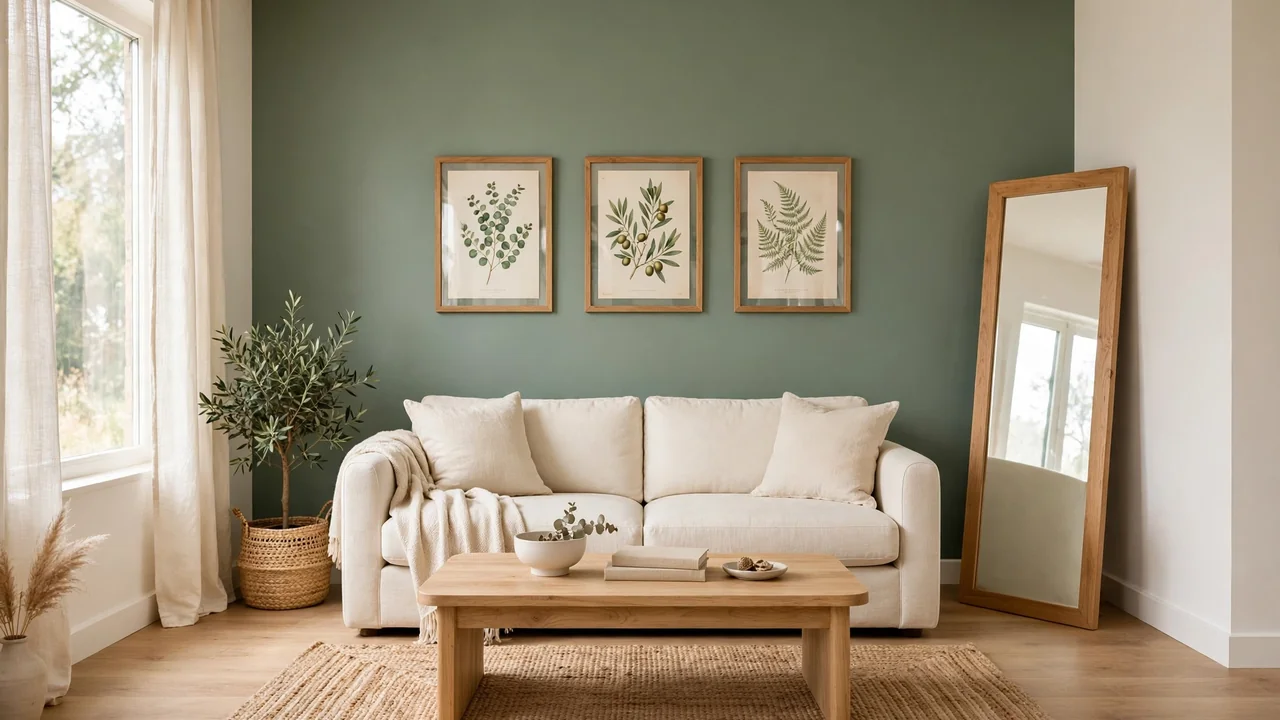
1. Paint One Accent Wall in Soft Sage
Start simple: paint a single wall in a muted sage green and let it anchor the room. Choose the wall your sofa sits against for the biggest visual payoff, or the wall behind your TV to help the screen visually recede. Pair it with warm white on the other three walls so the sage reads as calm, not cave-like, and choose a matte or eggshell finish — it keeps the color soft and avoids harsh glare from lamps. Finish the look with a light-toned sofa, a jute or cream area rug, and wooden accents like a walnut coffee table or oak floating shelves that warm up the green's cool undertone. The sage wall becomes a natural backdrop for framed botanical prints, a small gallery of family photos in wood frames, or a leaning floor-length mirror that bounces light around the room. If you're nervous about commitment, try peel-and-stick sage wallpaper on that one wall first — many patterns mimic painted plaster beautifully and remove cleanly.
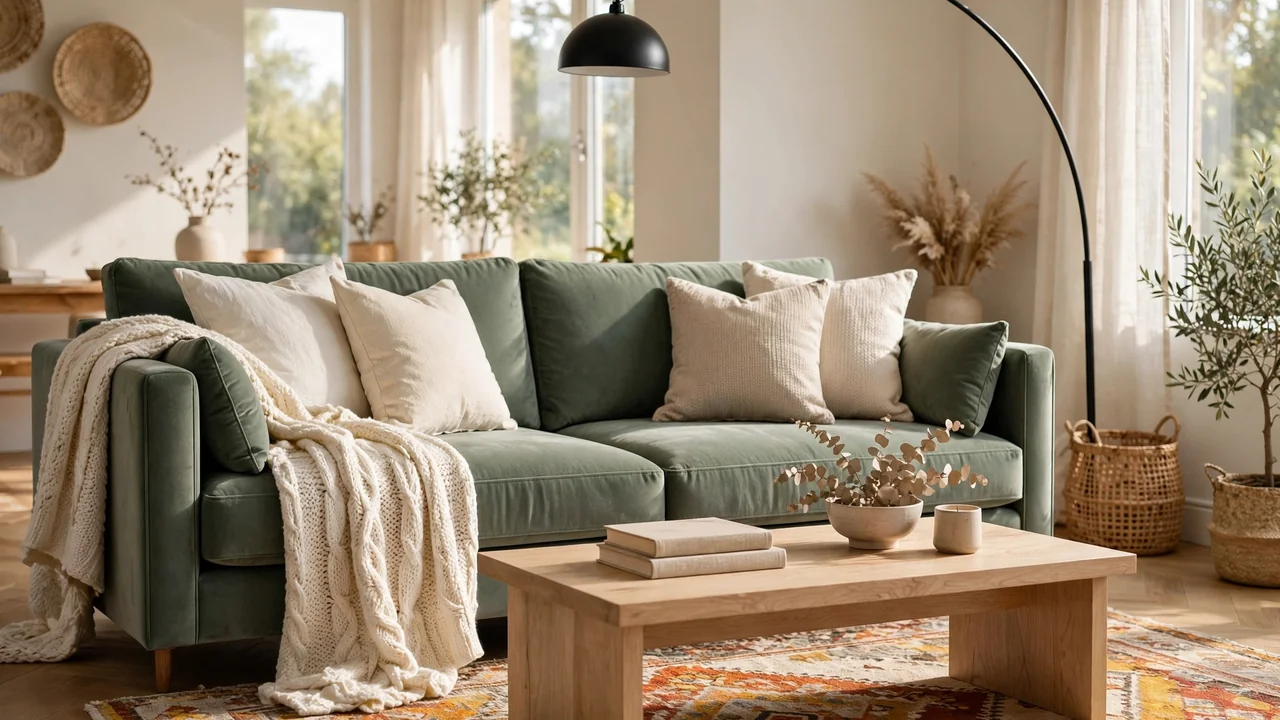
2. Choose a Sage Green Sofa as the Centerpiece
A sage green sofa is the kind of statement piece that never shouts. Look for a clean-lined silhouette — a low-profile modern sofa or a classic roll-arm — in a durable performance fabric that can handle real life, pets, and the occasional coffee spill. Style it with cream and oatmeal throw pillows, a chunky knit throw in ivory draped over one arm, and a light wood coffee table to keep things airy and grounded. If the room feels flat, add contrast through darker accents: a black metal floor lamp arcing overhead, a patterned rug with hints of rust or mustard underfoot, or a gallery wall in dark wood frames above. A sage sofa plays beautifully with both warm and cool palettes, so it's a flexible long-term choice you won't regret in five years. When shopping, bring fabric swatches home and check them in your room's daylight and lamplight — sage shifts noticeably between the two.
3. Layer Sage Throw Pillows on a Neutral Sofa
Not ready to commit to a green sofa? Pillows are the zero-commitment way in. Mix four to six cushions in varying sage tones — a velvet solid, a linen stripe, a botanical print, and one with a subtle geometric pattern — on a cream, beige, or light gray sofa. Vary the sizes for that styled-but-effortless Pinterest look: 22-inch squares at the back, 18-inch squares in front, and one lumbar pillow centered in the middle. Add a sage throw blanket folded over one arm or the back corner to tie the whole arrangement together. This approach lets you test-drive the color for a season, then swap shades when the mood changes — and it's the most budget-friendly idea on this list. For extra polish, choose pillow inserts one size larger than the covers so they look plump and inviting rather than flat.
4. Hang Sage Green Curtains for Soft Color
Floor-to-ceiling curtains in sage linen or cotton voile add color and softness in a single move. Hang the rod four to six inches above the window frame and two to three inches wider than the frame on each side, letting the panels just kiss the floor — or puddle slightly for a romantic feel — to make ceilings look taller and windows grander. Lighter sage sheers let daylight filter through with a gentle green tint that makes the whole room glow, while lined sage drapes add warmth, privacy, and better insulation. Pair them with cream walls, a natural-fiber rug, and brass curtain hardware for a polished finish. If your sofa is also green, vary the tones — deeper curtains against a lighter sofa, or vice versa — so the room has depth instead of blending into one flat shade of green.
5. Add a Sage Area Rug to Ground the Space
A rug in sage — whether a solid wool piece, a vintage-style faded pattern, or a flat-weave with cream motifs — instantly grounds a living room and defines the seating zone. Size it generously: the front legs of your sofa and armchairs should all sit on the rug, so aim for an 8×10-foot rug in most rooms and go larger if your space allows. A patterned sage rug hides everyday wear beautifully, which makes it a smart pick for busy households, and it pairs well with both light and dark furniture. Layer a smaller cream or jute rug on top at an angle for texture if you like the relaxed boho look. Keep the surrounding textiles simple — solid curtains, a couple of patterned pillows — so the rug stays the star without the room feeling busy. And always use a quality rug pad underneath for comfort and to protect your floors.
6. Style Sage Built-Ins or a Bookshelf Wall
Painting built-in shelves, a bookcase wall, or even just the back panels of open shelving in sage green turns everyday storage into a genuine design feature. The color makes books, ceramics, and framed photos pop, especially against cream book spines and white pottery. Style the shelves with a thoughtful mix: vertical book stacks broken up by horizontal piles, small potted plants trailing over edges, woven baskets corralling clutter, and a few larger art pieces leaned casually rather than hung. Add warm lighting — a small picture light or a string of fairy lights tucked along one shelf — to make the green glow beautifully in the evening. If you rent, achieve the same effect with a tall sage-painted bookcase or peel-and-stick backing paper cut to fit your existing shelves. Either way, the green backdrop makes even ordinary belongings look curated.
7. Pair Sage Walls with Warm Wood Tones
Sage green and natural wood are a match made in design heaven. If you have oak floors, a walnut sideboard, rattan chairs, or exposed ceiling beams, sage walls will make that wood grain sing. Keep the wood tones warm and medium — think honey oak, teak, or light walnut — rather than very dark or orange-stained finishes, which can fight the green instead of flattering it. Add woven textures like a seagrass basket, linen upholstery, and a jute rug to deepen the organic feel, and finish with cream textiles — curtains, throws, lampshades — so the palette stays light and breathable. This combination suits farmhouse, Scandinavian, and mid-century styles alike, and it always feels collected rather than decorated. It's also wonderfully forgiving: wood and sage hide dust and wear better than most high-contrast pairings.
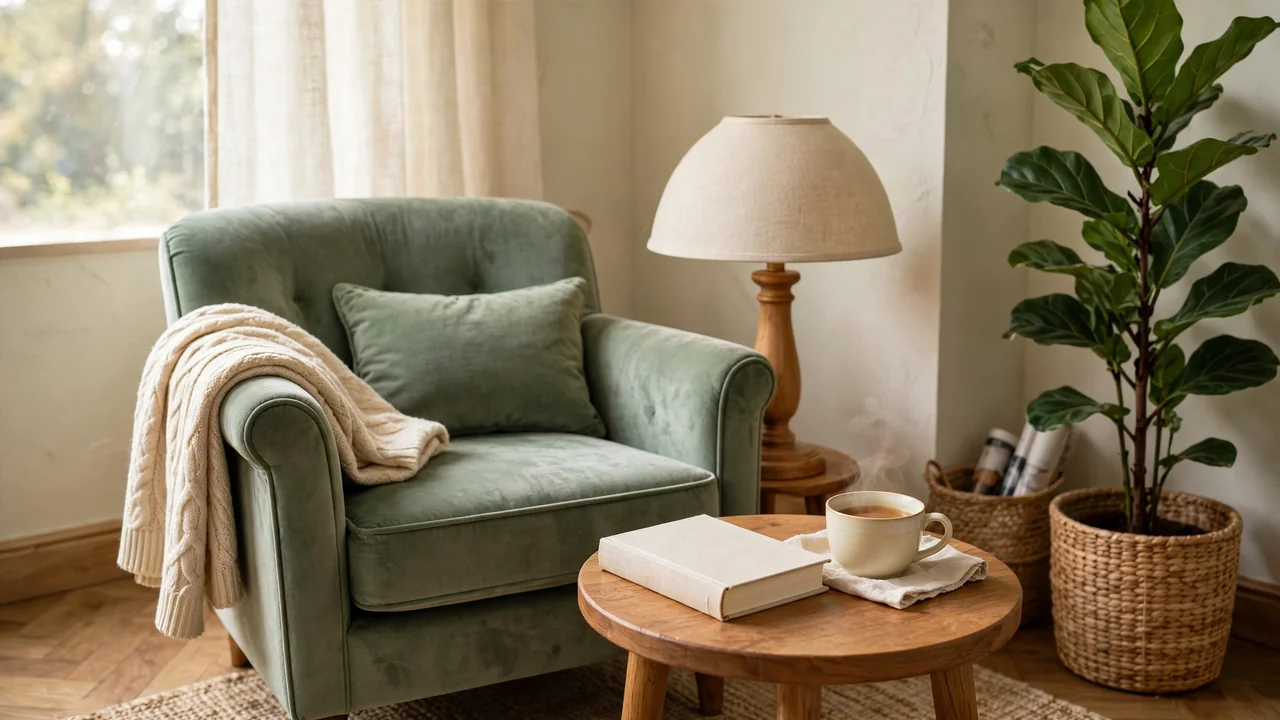
8. Create a Cozy Reading Corner in Sage
Carve out a corner with a comfortable armchair in sage — velvet for a touch of luxury, linen for a relaxed everyday look — paired with a small round side table and a warm reading lamp with a fabric shade. Add a floor cushion or a small sage ottoman for your feet, a folded throw over the chair's arm, and a tall plant like a fiddle-leaf fig or olive tree standing beside it. If space allows, mount a small floating shelf above or alongside for your current reads and a cup of tea. Keep the corner's palette tight: sage, cream, and one warm wood tone, so it feels like a deliberate vignette rather than leftover furniture. Even in a small living room, this dedicated nook feels like a private retreat and makes the whole room feel more intentional. Position it near a window and you'll have the best seat in the house.

9. Mix Sage with Terracotta and Clay Accents
Sage's cool, gray-green undertone comes alive next to warm terracotta, clay, and rust. Try terracotta throw pillows on a sage sofa, a cluster of clay-colored vases on the mantel, or a rust-toned throw blanket folded over the arm of a cream chair. A patterned area rug that weaves both colors together ties the whole scheme up beautifully and gives you a built-in color roadmap for accessories. This earthy pairing feels sun-baked and Mediterranean — think olive groves and handmade clay pots — and it works especially well in rooms with lots of natural light. Add cream walls and jute textures to keep it grounded, and aim for roughly a 60/40 split between sage and terracotta so the green stays the hero. A few brass accents — a tray, a lamp base — bridge the two tones elegantly.
10. Use Sage Green in a Gallery Wall
A gallery wall doesn't have to be all neutrals. Mix sage-toned art — botanical prints, abstract landscapes, soft watercolor washes — with black-and-white photography and cream mats in a blend of natural wood and brass frames. Lay the entire arrangement on the floor first, keeping two to three inches between frames, and aim for one large anchor piece placed slightly off-center to give the composition a focal point. On a cream or white wall, sage artwork adds gentle color without the commitment of paint; on a sage wall, cream-matted prints in dark frames create striking contrast. Include one or two small mirrors in the mix to bounce light around and keep the wall from feeling heavy. Start the bottom row at about eight inches above your sofa back so the art feels connected to the furniture.
11. Bring in Sage with Live Plants and Botanicals
The easiest, most literal way to add sage green? Real greenery. An olive tree in a cream ceramic pot, trailing pothos cascading from a high shelf, eucalyptus stems in a simple glass vase — plants deliver the exact soft green tone you're after, plus life, movement, and cleaner air. Group plants in odd numbers at varying heights for a natural look: a tall floor plant anchoring a corner, a medium one on a side table, and a trailing one on a bookshelf. Choose cream, terracotta, or woven baskets as planters to keep the palette cohesive rather than introducing random colors. If your thumb isn't green, high-quality faux stems in eucalyptus or olive tones give the same visual effect with zero watering — just dust them occasionally. Either way, greenery is the one sage accent that literally never clashes.
12. Try a Sage Green Ottoman or Pouf
A sage ottoman or pouf is small, movable, and mighty. Use a round velvet ottoman as a coffee table alternative — top it with a sturdy tray for drinks and remotes — or tuck two small poufs under a console table, ready to pull out as extra seating when guests arrive. In front of a neutral sofa, a sage ottoman adds a punch of color at a low price point, and you can relocate it to the bedroom or reading corner whenever the mood strikes. Choose a washable, durable fabric if you have kids or pets, and pair it with a cream or jute rug so the green really pops against a light base. It's the kind of flexible, hardworking piece every living room benefits from — and one of the simplest ways to test whether you love living with sage before committing to bigger pieces.
13. Paint the Ceiling (Yes, the Ceiling) in Pale Sage
For a truly enveloping feel, paint the ceiling in a pale, whisper-light sage while keeping the walls warm white. It sounds daring, but a soft sage ceiling reads as a gentle wash of color overhead — cozy rather than dark — and it makes white crown molding, beams, or a ceiling medallion stand out beautifully. This works best in rooms with decent natural light and ceilings at least eight feet high; in very low or dark rooms, keep the ceiling white. Keep furniture and textiles light — a cream sofa, a pale rug, airy curtains — so the room stays bright, and add warm lighting like brass fixtures or Edison bulbs to enhance the glow after sunset. It's a designer trick that guests always notice and compliment, and it costs no more than a gallon of paint and a weekend.
14. Style a Sage and Cream Two-Tone Wall
Can't decide between color and neutrals? Do both. Paint the lower half of the wall — or the wainscoting, if you have it — in sage green and the upper half in warm white, divided by a crisp chair rail or a simple painted line. This two-tone treatment adds architectural interest even in a plain rental box, and it lets you enjoy sage at eye level, where you see it most, while keeping the upper walls bright and airy. Style the sage half with framed art, a slim console table, or a leaning mirror; keep the white half minimal so the division feels intentional. It pairs beautifully with traditional, cottage, and transitional living rooms. For a modern twist, skip the chair rail and use a sharp horizontal line about three feet up — the graphic edge feels fresh and contemporary.
15. Go Moody with Deep Sage and Brass Accents
For evening drama, take sage deeper — think eucalyptus-shadow or muted moss — on the walls or a velvet sofa, then warm it up with brass and gold. A brass arc floor lamp, gold-framed art, and a marble-topped coffee table with brass legs turn deep sage into pure sophistication. Add plenty of texture to keep the dark tones inviting rather than heavy: a plush cream rug underfoot, velvet pillows in blush or caramel, and a chunky knit throw within arm's reach. Keep at least one element light — cream curtains or a pale rug — so the room doesn't close in on itself. This moody-sage look shines in living rooms used mostly in the evening, where warm lamplight makes the green glow richly. Finish with a large mirror opposite a window to bounce daylight in during the day.
Styling Tips for Sage Green Living Rooms
Find your undertone first. Sage greens range from gray-green to yellow-green, and the difference matters. Hold paint swatches against your existing furniture in natural daylight — a gray-based sage suits cool gray sofas, while a warmer, yellow-based sage loves cream and beige upholstery. Getting the undertone right is the difference between a room that feels effortless and one where something feels slightly off.
Follow the 60-30-10 rule. Let a neutral — cream, white, or light wood — cover about 60% of the room, sage take 30%, and an accent like terracotta, brass, mustard, or blush the final 10%. This classic ratio keeps the green feeling intentional and balanced rather than overwhelming, and it gives you a simple formula whenever you shop for new pieces.
Mix textures, not just colors. Sage looks richest when it appears in several textures at once: velvet pillows, linen curtains, a wool rug, glazed ceramic vases, and a live plant. The variety of surfaces catches light differently and keeps a single-color scheme from falling flat. A good rule of thumb: if everything sage in your room is the same fabric, add at least two new textures.
Test paint in your light. Sage shifts dramatically between morning and evening light — a shade that looks soft at noon can turn minty by day and muddy by lamplight. Paint large swatches, at least 12×12 inches, on two different walls and live with them for 48 hours before committing. It's the cheapest insurance against a repaint.
Balance cool with warm. Sage is naturally cool, so warm it up with wood tones, brass or gold metals, and warm-white bulbs around 2700K. A sage room lit with cool daylight bulbs can feel chilly and clinical — warm lighting makes the green glow and the whole room feel inviting.
Repeat the color three times. For a cohesive, designer look, echo sage in at least three places — say, the curtains, two pillows, and a plant, or a rug, a throw, and a vase. The repetition tells the eye the color was a deliberate choice, not an accident, and it pulls the whole room together.
Frequently Asked Questions
What colors go well with sage green in a living room?
Sage green pairs beautifully with warm whites, creams, and beiges for a soft, serene look; natural wood tones and rattan for an organic feel; terracotta, clay, and rust for earthy warmth; brass and gold for a touch of elegance; and blush pink or mustard as playful accents. Avoid pairing it with stark cool grays or neon brights, which can make sage look muddy instead of fresh.
Is sage green too trendy for a living room?
Not at all — sage is a classic, nature-inspired neutral rather than a fad color. It has been used in interiors for decades precisely because it behaves like a neutral: calming, versatile, and easy to pair with changing accessories. Unlike bolder trend colors, a muted, gray-based sage is unlikely to feel dated in a few years, so it's a safe long-term choice for big pieces like sofas.
Does sage green work in a small living room?
Yes, beautifully. Lighter sages actually make small rooms feel airy and fresh, especially when combined with plenty of white and natural light. Keep large surfaces — walls, sofa, rug — in pale sage or cream, and use deeper sage only in small doses like pillows or a pouf. Mirrors, glass tables, and light wood furniture enhance the spacious feel even further.
Should I paint all walls sage or just one?
For most living rooms, one sage accent wall — or sage on the lower half with white above — gives you the full color payoff without overwhelming the space. Painting all four walls works best in larger rooms with high ceilings and generous natural light, and even then, choose a pale, muted sage rather than a saturated one so the room stays bright and restful.
What style of decor suits sage green?
Sage is remarkably flexible: it shines in farmhouse and cottage styles with wood and linen, in Scandinavian rooms with white and light oak, in mid-century spaces with walnut and brass, and in modern boho rooms with rattan and layered textiles. It even works in traditional rooms when paired with classic patterns like florals or stripes and darker wood furniture.
How do I keep a sage living room from feeling cold?
Warm it up with natural wood, brass or gold metals, warm-white lighting, and cozy textures like wool, velvet, and chunky knits. Adding a warm accent color — terracotta, caramel, or rust — in pillows, art, or a throw instantly balances sage's cool undertone. A soft area rug underfoot also does wonders, since bare hard floors can make any cool color feel chillier.
Conclusion
Sage green is one of those rare colors that feels both fresh and timeless — calm enough to live with every day, yet interesting enough to make your living room feel truly designed. Whether you go bold with painted walls or keep it subtle with pillows, plants, and a pouf, these 15 ideas give you plenty of ways to bring this soothing shade home. Start with one change, live with it for a while, and let the room grow around it. Your calm, earthy retreat is closer than you think — sometimes all it takes is a single brushstroke of green.


