

Small Space Living Room Ideas for Stylish Homes
Living in a compact apartment or a cozy house doesn’t mean you have to sacrifice style. A well-planned small space living room can feel just as inviting, functional, and beautiful as a sprawling one. With the right furniture choices, color palette, and layout tricks, you can transform even the tiniest room into a chic retreat that reflects your personality.
In this guide, we’ll walk through practical, designer-approved small space living room ideas that maximize every square foot without compromising on comfort or aesthetics. Whether you’re working with a studio apartment, a narrow city flat, or a snug family home, these tips will help you make the most of your small space living room.
Why Designing a Small Space Living Room Requires a Different Approach?
Designing a small space living room isn’t just about shrinking furniture to fit. It’s about rethinking flow, storage, and visual perception. Every piece you add should earn its place, and every design decision should work double duty — either saving space or creating the illusion of more of it.
Homeowners with a small space living room often struggle with clutter, poor lighting, and awkward furniture arrangements that make the room feel cramped. The good news is that with a few strategic changes, you can open up your living room and make it feel airy, organized, and stylish.
Common Challenges in a Small Space Living Room
- Limited floor area for furniture and walkways
- Difficulty balancing storage with open space
- Poor natural light distribution
- Multi-functional needs (living, dining, working, sleeping)
- Visual clutter from mismatched decor
Understanding these challenges is the first step toward solving them in your own small space living room.
Essential Design Principles for a Small Space Living Room
Before diving into specific ideas, it helps to understand the core principles that guide every successful small space living room design.
1. Scale and Proportion
Choose furniture sized appropriately for your room. Oversized sofas and bulky coffee tables overwhelm a small space living room, while too-small pieces can make the room feel empty and disconnected.
2. Light and Color
Light, neutral colors reflect natural light and make a small space living room feel larger. Dark, saturated tones can work too, but they require balance with brighter accents and good lighting.
3. Vertical Thinking
When floor space is limited, look up. Tall bookshelves, wall-mounted storage, and floor-to-ceiling curtains all draw the eye upward, making a small space living room feel taller and more spacious.
Pro Tip: Hang curtains close to the ceiling rather than directly above the window frame. This simple trick adds several inches of perceived height to your small space living room.
Furniture Selection Tips for a Small Space Living Room
Furniture is the backbone of any small space living room. The right pieces can make a huge difference in how functional and open the room feels.
Multi-Functional Furniture
Multi-purpose furniture is a game-changer in a small space living room. Consider these options:
| Furniture Type | Space-Saving Benefit | Best For |
| Sleeper sofa | Doubles as a guest bed | Studio apartments |
| Storage ottoman | Hides blankets, remotes, magazines | Extra seating and storage |
| Nesting tables | Stacks away when not in use | Flexible entertaining |
| Wall-mounted desk | Folds flat against the wall | Home office corners |
| Extendable dining table | Expands only when needed | Dual living/dining rooms |
Furniture Placement Tips
- Float furniture away from walls slightly to create breathing room
- Use furniture with exposed legs to show more floor and reduce visual weight
- Angle a sofa or chair diagonally to open up a corner
- Keep walkways at least 30 inches wide for comfortable movement
Recommended Furniture Checklist for a Small Space Living Room
- Sofa scaled to room size (loveseat or apartment-size sofa)
- Multi-functional storage pieces
- Furniture with slim, exposed legs
- Nesting or stackable tables
- Wall-mounted shelving instead of bulky bookcases
- Mirrors to enhance light and depth
- Light-colored or transparent materials (glass, acrylic)
Color Schemes and Lighting for a Small Space Living Room
Color and lighting work together to shape how spacious your small space living room feels.
Best Color Palettes
- Soft neutrals (white, cream, greige) — timeless and light-reflective
- Monochromatic schemes — different shades of one color create depth without visual clutter
- Warm pastels — soft blush, sage, or pale blue add personality while staying airy
- Dark accent walls — used sparingly, a single dark wall can add coziness without shrinking the room
Lighting Strategies
Good lighting is essential in a small space living room. Layer your lighting with:
- Ambient lighting — overhead fixtures or recessed lights for general illumination
- Task lighting — reading lamps or desk lamps for specific activities
- Accent lighting — wall sconces or string lights to highlight decor and add warmth
Important Note: Avoid relying on a single overhead light. A small space living room with only one light source often feels flat and uninviting. Layered lighting adds dimension and warmth.
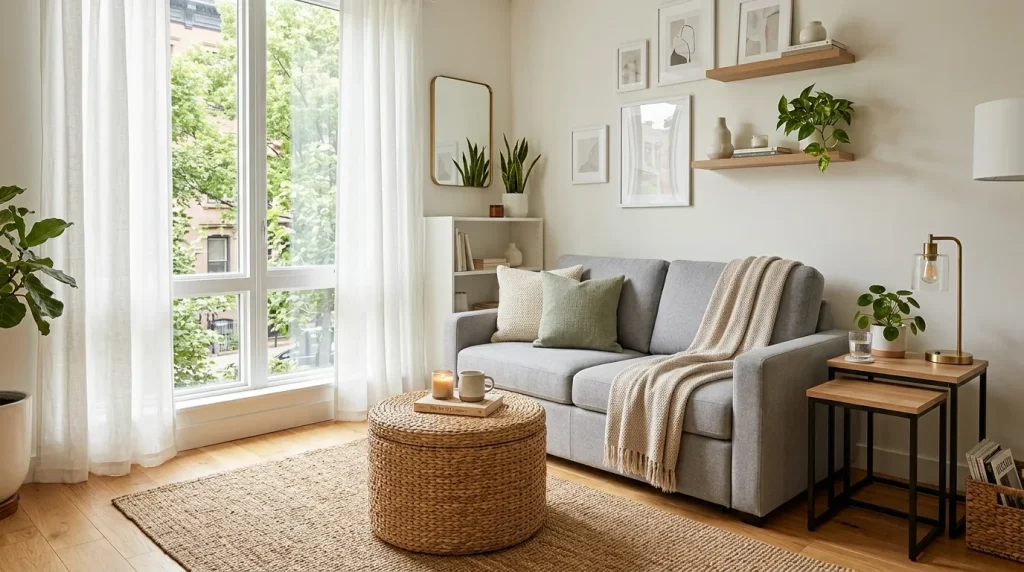
Smart Storage Solutions for a Small Space Living Room
Clutter is the enemy of any small space living room. Smart, hidden, and vertical storage solutions keep your room tidy while maintaining a stylish appearance.
Vertical Storage Ideas
- Floor-to-ceiling bookshelves that draw the eye upward
- Wall-mounted floating shelves for decor and books
- Over-the-door organizers for small items
- Tall, narrow cabinets in unused corners
Hidden Storage Ideas
- Ottomans and benches with lift-top storage
- Under-sofa storage bins
- Built-in window seats with storage drawers
- Baskets tucked under console tables
Small Space Living Room Storage Checklist
- At least one piece of furniture with hidden storage
- Vertical shelving installed on an empty wall
- Decluttered surfaces (coffee table, console table)
- Baskets or bins for loose items
- Labeled storage for easy organization
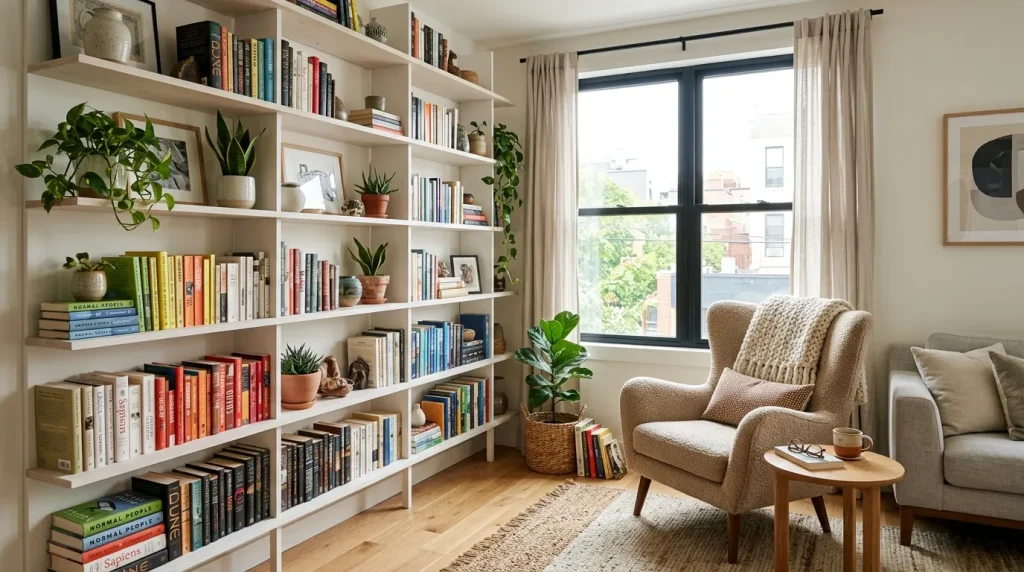
Layout Ideas to Maximize a Small Space Living Room
The layout of your small space living room determines how functional and comfortable it feels day to day.
Zoning Techniques
If your small space living room doubles as a dining area, home office, or guest room, define zones using:
- Area rugs to visually separate spaces
- Furniture arrangement (like a sofa back facing a desk)
- Lighting changes between zones
- Different wall colors or textures
Popular Layout Styles
| Layout Style | Best For | Key Features |
| L-shaped seating | Corner rooms | Maximizes seating without extra footprint |
| Floating furniture | Open-plan spaces | Creates flow and defines zones |
| Wall-hugging layout | Narrow rooms | Keeps center open for movement |
| Circular arrangement | Conversation-focused rooms | Encourages interaction, saves space |
Design Tricks That Add Visual Space
- Use a large area rug to visually expand the floor
- Choose a sofa with a low back to keep sightlines open
- Add a statement mirror opposite a window to double natural light
- Keep window treatments minimal and light-colored
Warning: Avoid pushing all furniture against the walls in a small space living room. While it seems logical, it often creates a stiff, awkward layout. Floating even one piece slightly away from the wall can make the room feel more balanced.
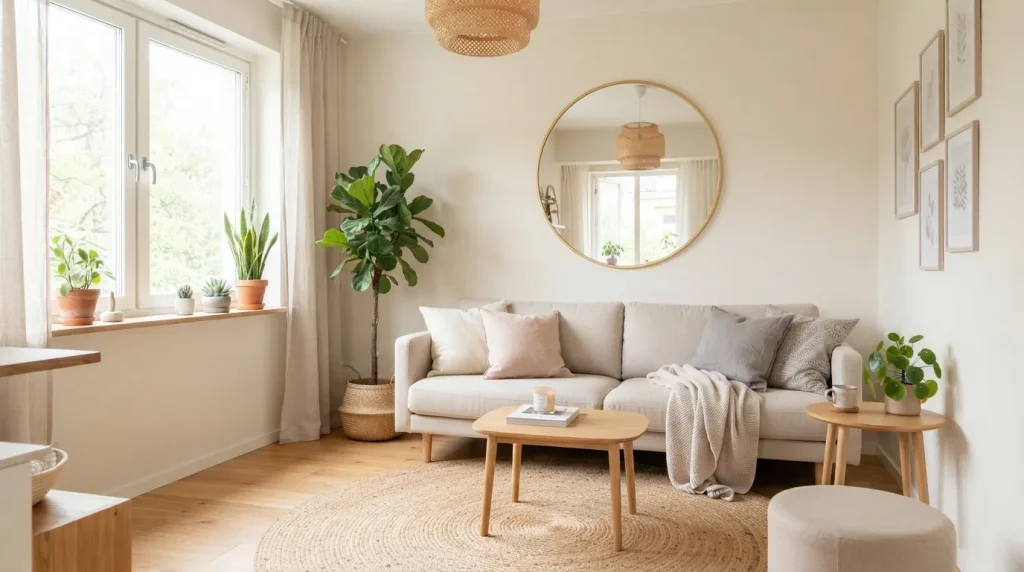
Decor and Styling Tips for a Small Space Living Room
Once the furniture and layout are set, decor is what gives your small space living room personality and warmth.
Choose Decor Wisely
- Stick to a few statement pieces rather than many small ones
- Use textiles (throws, pillows) to add texture without taking up floor space
- Hang art at eye level to draw attention upward and outward
- Incorporate greenery with trailing or upright plants that don’t crowd the floor
Semantic Design Elements to Consider
When styling a small space living room, think about cohesive design elements such as compact furniture layouts, space-saving decor, apartment-friendly interiors, and cozy minimalist styling. These related concepts help create a unified, intentional look throughout your small living space.
Small Space Living Room Styling Checklist
- 2-3 statement decor pieces (not overcrowded)
- Textiles for warmth (throw blanket, accent pillows)
- Art or wall decor at eye level
- One or two plants for freshness
- Consistent color palette throughout
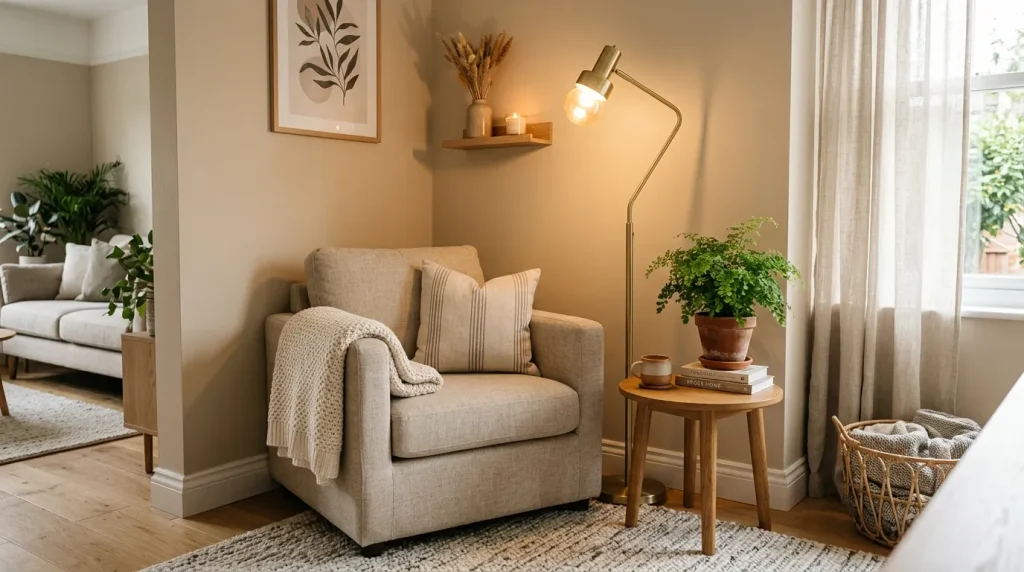
Quick-Reference Table: Small Space Living Room Do’s and Don’ts
| Do | Don’t |
| Use light, reflective colors | Overcrowd with dark, heavy furniture |
| Choose multi-functional pieces | Buy furniture that serves only one purpose |
| Add vertical storage | Ignore wall space |
| Use mirrors and good lighting | Rely on a single light source |
| Keep walkways clear | Block natural pathways with furniture |
Final Small Space Living Room Checklist
Before you consider your small space living room complete, run through this final checklist:
- Furniture is scaled appropriately to the room
- At least one multi-functional furniture piece is included
- Storage is both vertical and hidden where possible
- Lighting is layered (ambient, task, accent)
- A mirror is used to enhance light and depth
- Walkways are clear and at least 30 inches wide
- Color palette is cohesive and light-enhancing
- Decor is curated, not cluttered
Conclusion: Making Your Small Space Living Room Shine
A small space living room doesn’t have to feel restrictive. With thoughtful furniture choices, smart storage, layered lighting, and a cohesive color palette, you can create a room that feels open, functional, and full of style. The key is to make every piece and every decision count.
By applying these small space living room ideas — from multi-functional furniture to vertical storage and mirror placement — you’ll transform your compact living area into a space that feels both stylish and comfortable. Start small, prioritize function, and let your personality shine through the details.


